


Reindeer meat as a stew instead
Renskav, root vegetables and cream simmered in a pot over the fire – for when you want a hot dinner in your cup.
To the wilderness stewSalty, smoky reindeer meat, soft bread and tart lingonberries

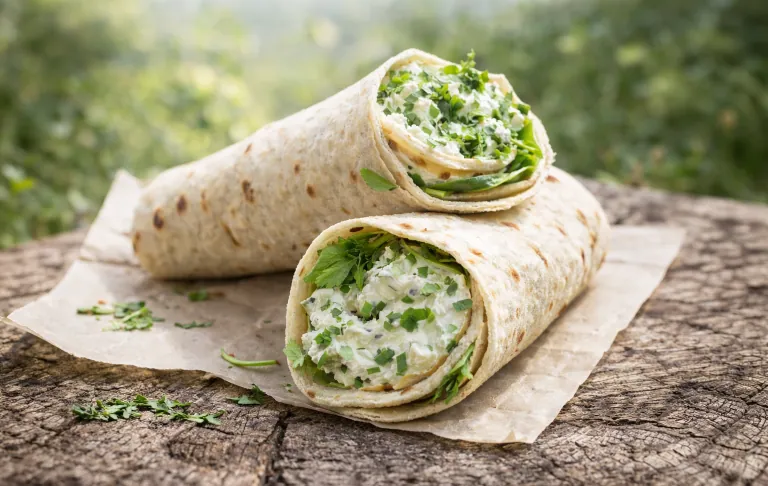
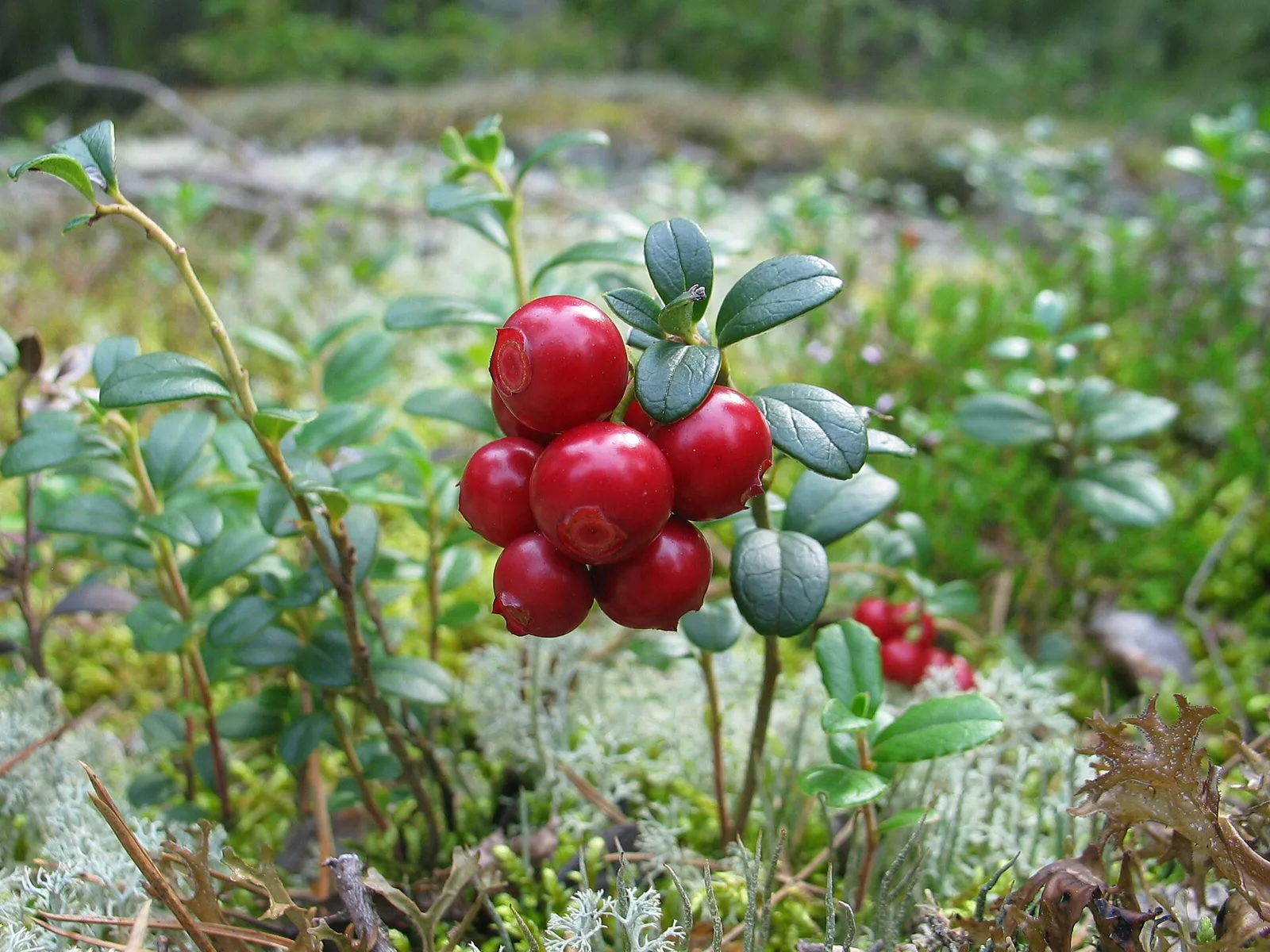
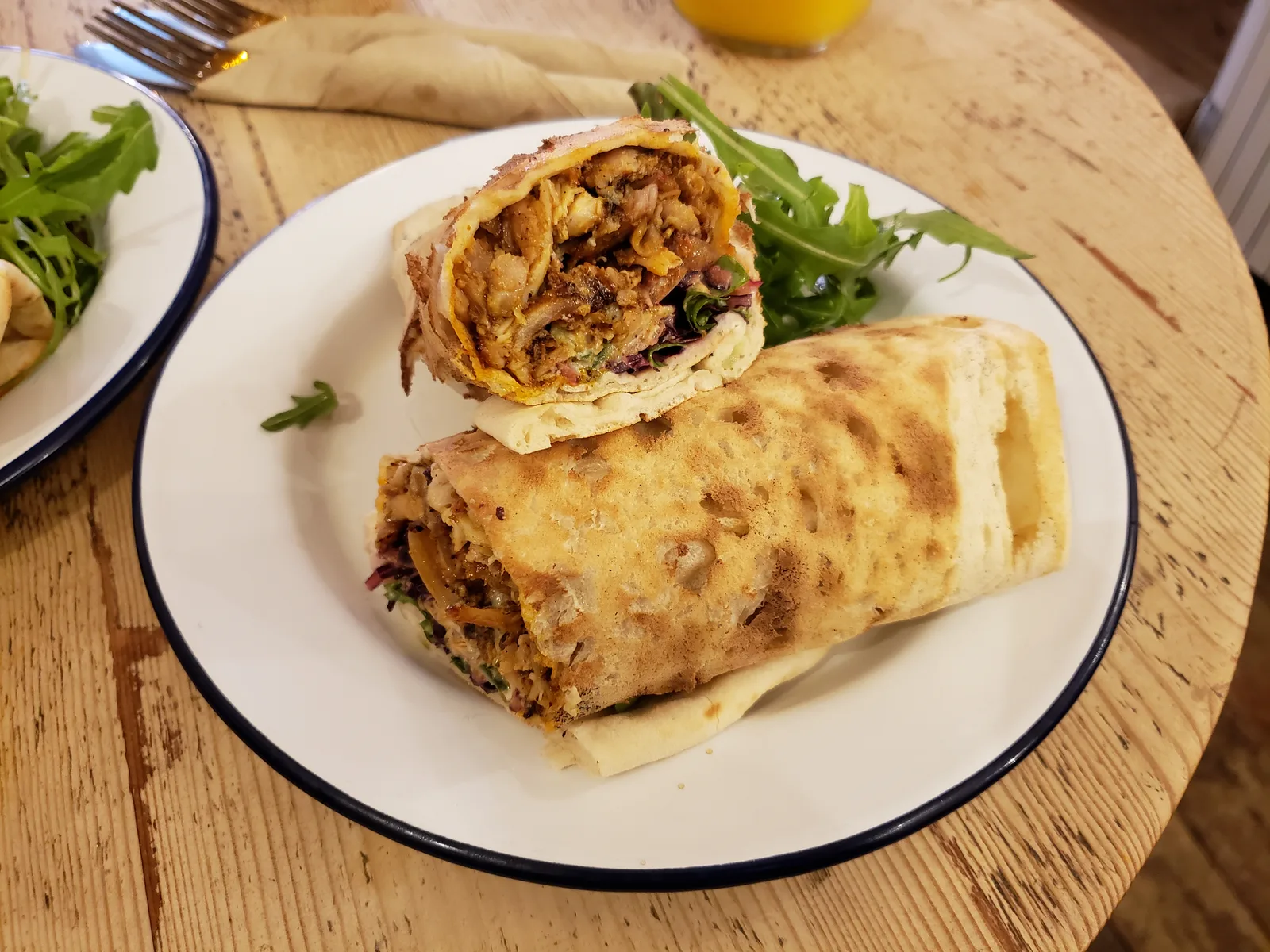
Suovas has a scent all of its own. When the first thin slices land in the hot pan, a smoke rises that is nothing like the woodsmoke from the fire: sweet, salty and with a hint of the kåta, the Sami hut. The slices shrink and darken at the edges in half a minute, and by then it is already time to turn them. Someone holds out a flatbread that has been kept inside their jacket, a dollop of soured cream and a spoonful of lingonberries go on it, and the wrap is ready before it has had time to cool.
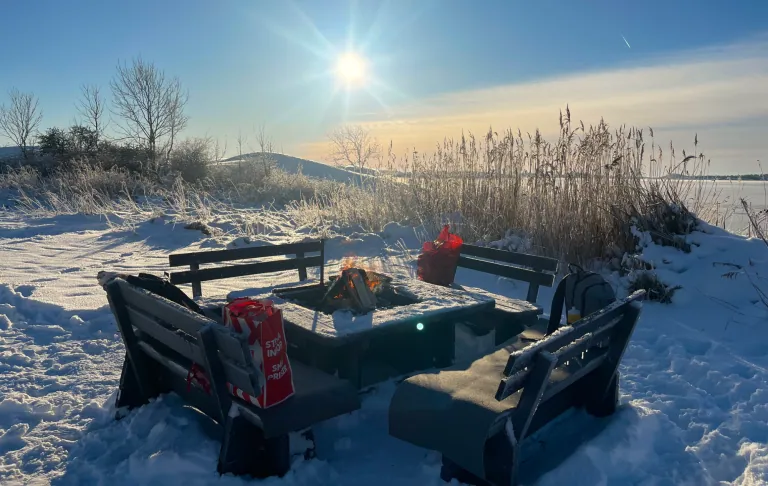
It is hard to find a lunch better suited to a fire pit on a cold day in March, with the skis in the snow and the ice auger leaning against the lean-to shelter. Suovas weighs almost nothing in the rucksack, needs no pot and no boiling, and it was made for exactly this from the start: food that would keep and fill you up on long journeys in the cold.
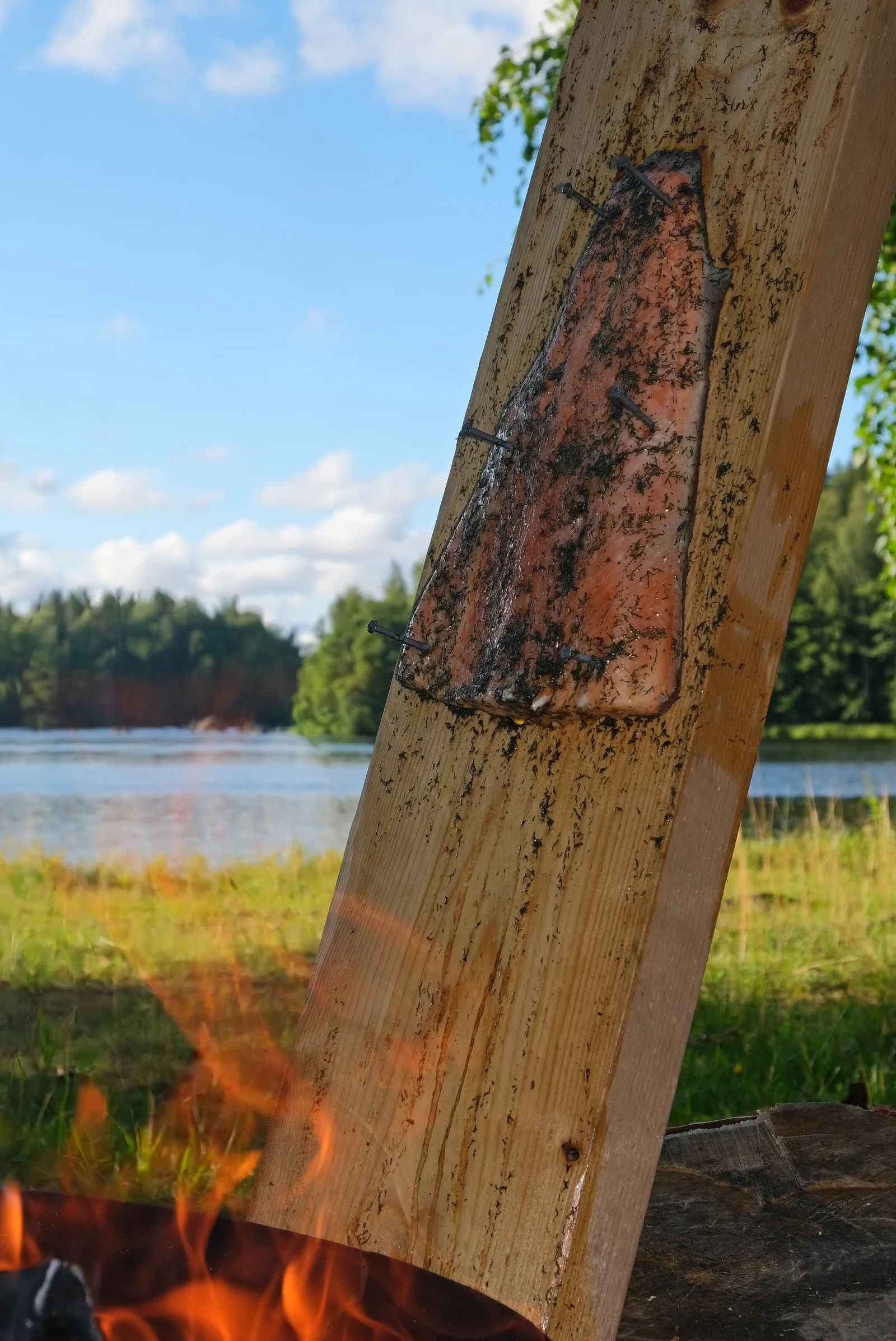
Suovas is Sami smoked reindeer meat: reindeer meat that is salted and then lightly smoked. The word means smoked in Northern Sami and Lule Sami. The meat is dry-salted or put in brine for about a day and then smoked over a fire, traditionally in a kåta and often with sallow, which gives a mild smoky flavour. The salt and smoke were originally a way of making the meat keep when the family moved with the reindeer between forest and mountains, and suovas was packed together with unleavened bread as provisions for the journey. Today the meat is sliced thinly and fried quickly over a high heat just before serving.
In Sweden, reindeer herding is a Sami livelihood reserved for the Sami, and suovas is part of Sami food culture, with a Sami name. It is worth checking who has salted and smoked the meat. More dishes with roots in the mountains and the forest are in swedish outdoor food and history.
Is suovas a protected name? No. Suovas is not in the EU register of protected designations of origin and geographical indications, either as a registered name or as an application. Instead, the traditional craft in Swedish Sápmi is supported by a preservation project run by the non-profit organisation Slow Food, but that is not legal protection. In Finland, cold-smoked reindeer meat from Lapland has been protected as a designation of origin since 2011, but that is a different product with Finnish rules.
Where do you buy suovas? Often thinly sliced and frozen, in the freezer section of larger supermarkets, especially in northern Sweden. It is also sold directly by Sami reindeer-herding businesses and reindeer abattoirs, at winter markets and in their online shops. Read the packet to see where the reindeer comes from and who has salted and smoked the meat.
Suovas or renskav? Renskav is frozen, thinly shaved reindeer meat without salt or smoke, which is fried and then simmered with cream or stewed in a pot. Suovas is already salted and smoked, only needs a brief fry and needs no sauce.
Have you made this recipe? Rate it
0.0 out of 5 · 0 votes
out of 5
vote
votes
Be the first to rate this recipe.
Thanks for your vote!
Your vote could not be saved right now. Please try again later.
 🔥 Over fire
 🔥 Over fire
 🔥 Over fire
 🔥 Over fire
It is not the meat that causes trouble in the cold. It is everything around it. Flatbread that has been in a pulk at ten below cracks when it is rolled. Butter goes as hard as a bar of soap. Soured cream thickens and turns grainy if it freezes, and the lingonberries become an icy lump. So almost all of the preparation is about keeping the trimmings soft.
At home:
By the fire:
More about what to cook at home, what to carry in a flask and what to do by the fire when it is cold is in cooking outdoors in winter.
Butter in a hot cast-iron pan spits, and the slices sizzle up when they go in. Put the meat in with a spatula or tongs, and keep the children an arm's length from the pan. The handle gets hot all the way out, so use fire gloves.
If someone gets burnt, 1177 (the Swedish healthcare advice line) says the burn should be cooled with cool water straight away, but never with ice or snow, and for no longer than 15 minutes, as the risk of hypothermia increases. So keep a water bottle in an inside pocket so it does not freeze. A child who is 12 months old or younger and gets a burn should always see a doctor. More about first aid and about where and when you can make a fire is in fire safety in nature.
Pregnant: Suovas is salted and smoked, but the meat is not cooked, so the advice from Livsmedelsverket (the Swedish Food Agency) on cold-smoked meat applies. Cold-smoked meat can contain the parasite toxoplasma, and pre-sliced meat can also contain listeria, which survives both salt and freezing. Livsmedelsverket advises pregnant women to freeze cold-smoked meat for at least three days or to eat it in a dish that is heated until piping hot. So fry the slices for a pregnant person until they are piping hot all the way through, even if they turn a little drier.
Allergens: Gluten in the flatbread, which is usually baked with wheat, barley or rye. Milk in the butter and soured cream. Suovas is basically reindeer meat, salt and smoke, but read the packet.
The children can make most of their own wrap themselves. Let them spread butter, add the lettuce, help themselves to lingonberries and soured cream, and roll. It is easiest if they stand at a chopping board or a lid a little way from the fire, and an adult puts the hot meat on their bread. More ideas for little cooks are in cooking with children over a fire.
The salt: Suovas is salty – that is part of what it is. Livsmedelsverket states the maximum amount of salt children should have in a whole day: under 1 gram for children aged 7–11 months, 2.75 grams for 1–3 years, 3.5 grams for 4–6 years and 4.25 grams for 7–10 years. So babies should only have a taste. How much salt the suovas contains is shown in the nutrition information on the packet, per 100 grams. Give the youngest children a few slices instead of a full wrap, and fill the rest of the wrap with more lingonberries, soured cream and lettuce. The smoky taste is also unfamiliar to many children, so it is a good idea to start with one slice.
Suovas is Sami reindeer meat that is salted and then smoked, traditionally over sallow. The name means smoked in Northern Sami and Lule Sami. It is sliced thinly and fried quickly just before serving, and is often eaten in bread or with mash and lingonberries.
Renskav is frozen reindeer meat that has been shaved into thin slices but not salted or smoked. It is fried and then simmered, often with cream. Suovas is already salted and smoked and only needs a brief fry.
No. Suovas is not in the EU register of protected designations of origin and geographical indications, either as a registered name or as an application. In Finland, cold-smoked reindeer meat from Lapland is protected, but that is a different product.
Often frozen and thinly sliced in the freezer section of larger supermarkets, especially in northern Sweden. It is also sold directly by Sami reindeer-herding businesses and reindeer abattoirs, at winter markets and in their online shops.
Thinly sliced suovas is sometimes eaten without frying, but the meat is not cooked. According to Livsmedelsverket, pregnant women should only eat cold-smoked meat that has been frozen for at least three days or heated until piping hot, and pre-sliced meat can also contain listeria, which is not killed by freezing. So fry the slices until they are piping hot all the way through when a pregnant person is going to eat them.
Yes, but suovas is salty. Give the youngest children a few slices in a wrap with plenty of lingonberries, soured cream and lettuce, and add no extra salt. For example, Livsmedelsverket gives a maximum of 2.75 grams of salt a day for children aged 1–3, so babies should only have a taste.
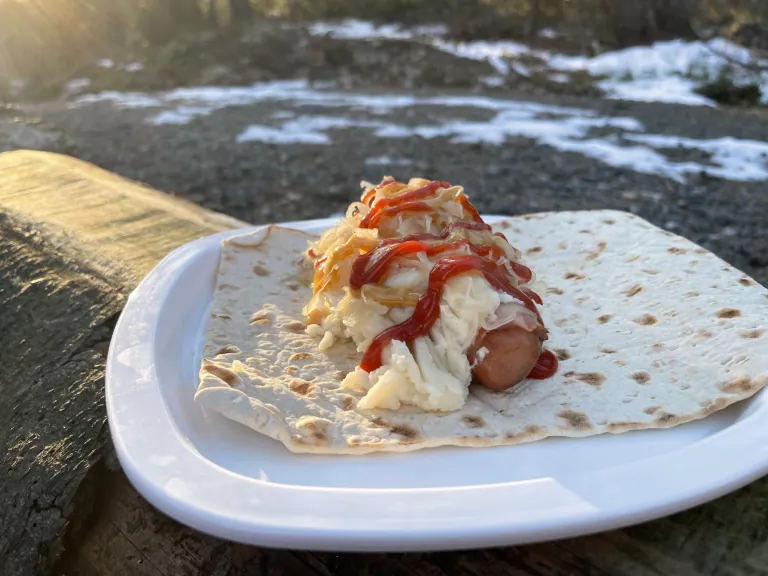
If you would rather have sausage in the wrap, there is a classic flatbread roll with bacon-wrapped cheese sausage with mash and sauerkraut, which you can also make by the fire.
More for the wrap and the trip
Reindeer meat as a stew instead
Renskav, root vegetables and cream simmered in a pot over the fire – for when you want a hot dinner in your cup.
To the wilderness stewPack the pulk properly
Where the lingonberries, soured cream and bread should go in the pulk so they do not freeze solid before lunch by the fire.
Read about packing the pulkLunch by the fire below freezing
What to do at home, what to carry in the flask and what to cook by the fire when the cold is nipping at your fingers.
To the winter kitchen