

Sausages while the potatoes bake
The potatoes need an hour in the embers – grill the falukorv on a stick over the flames alongside and eat everything at the same time.
To the falukorvLarge floury potatoes, embers all around and a topping from the tub

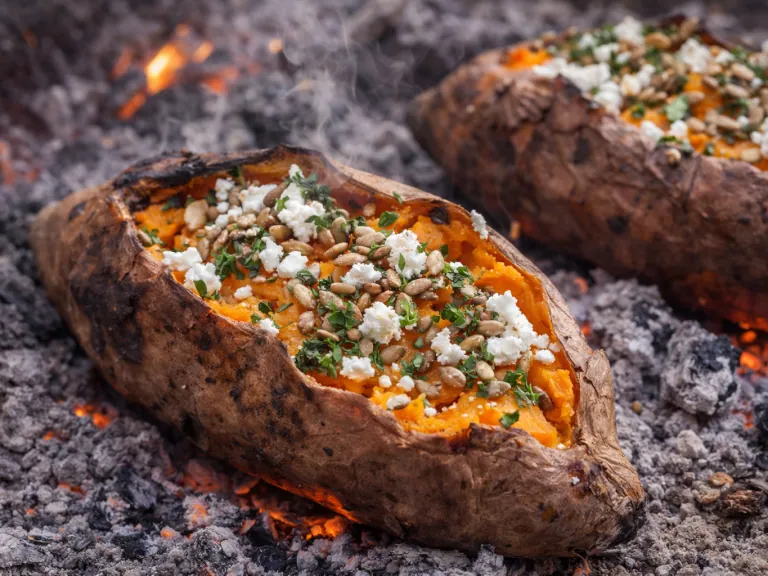
There's something about digging a potato out of the embers. The parcel looks like a black stone when the tongs lift it out of the ashes, the foil crackles as it's unfolded, and then the steam billows out into the cold like a little cloud. A cross with the knife, a squeeze on the ends, and the fluffy middle bursts open, ready for a spoonful of cold västerbottenröra.
A potato baked in the embers is slow food, and that's exactly why it suits a winter day at the fire pit. It bakes away while the children go sledging on the hill and the adults grill sausages on sticks over the flames at the side. What decides whether it turns fluffy all the way through is the size, even embers, and that the potato hasn't had time to freeze in the pulk on the way there.
Have you made this recipe? Rate it
0.0 out of 5 · 0 votes
out of 5
vote
votes
Be the first to rate this recipe.
Thanks for your vote!
Your vote could not be saved right now. Please try again later.

 🔥 Over fire
 🔥 Over fire
 🔥 Over fire
Make one or two of the toppings – each one is enough for four potatoes.
The potatoes at home. Scrub the potatoes clean and dry them. Check them in the kitchen, not at the fire – green patches and sprouts need to be removed. Choose potatoes of roughly the same size, and they'll all be ready at the same time. Large potatoes are better than small ones here, both because they don't dry out as easily in the embers and because they have less skin relative to their weight.
The potatoes on the way. Raw potatoes freeze at just one to two degrees below zero. A potato lying still can tolerate a little more cold for a while, but knocks and jolts start ice forming straight away – and a pulk pulled over crusty snow jolts all the way. A potato that has frozen turns soft and watery when it thaws and never gets fluffy in the embers. So pack the potatoes in the middle of your rucksack, ideally wrapped in a jumper, or in an insulated food bag in the middle of the pulk. How to pack the load is explained in pulk sled with gear.
Par-boil if the day is short. Boil the potatoes at home for 10–15 minutes, so they're half-soft. Then cool them quickly: drain the water, let them cool in cold water or outdoors in the cold, and put them in the fridge. Pack them cold in the cool bag together with the toppings. Par-boiled potatoes should not sit lukewarm wrapped in a towel for hours. In starchy food that cools slowly, bacteria that survive boiling can start to grow and produce a toxin that doesn't disappear when the potato is reheated. A cold, par-boiled potato needs about 30–40 minutes in the embers and should be piping hot all the way through before it's eaten. If you want the potato fully cooked from the start, that works too: bake it at home, put it piping hot in a preheated food flask and eat it as soon as you arrive.
The toppings at home. Mix the toppings at home, where there's a fridge and a clean counter. The västerbottenröra tastes better after a few hours in the fridge, and the skagenröra is best made the same morning. Put each topping in an airtight tub with a lid. The lemon and the skagenröra belong in the tub and never in the foil – more about why under safety below.
The toppings on the way. On a winter day it isn't heat that threatens the toppings but the cold. Crème fraîche and mayonnaise that freeze turn grainy and split when they thaw. Put the tubs in the cool bag with something insulating around them, but not right next to the flask and not left in a warm car during the day. The prawns in the skagenröra must be kept cold the whole time.
By the fire. The potatoes take the longest of everything, so they go in first. Build the fire as soon as you arrive and let it burn down. While the embers are forming, you can keep a smaller fire going at the side for the sausages and the coffee.
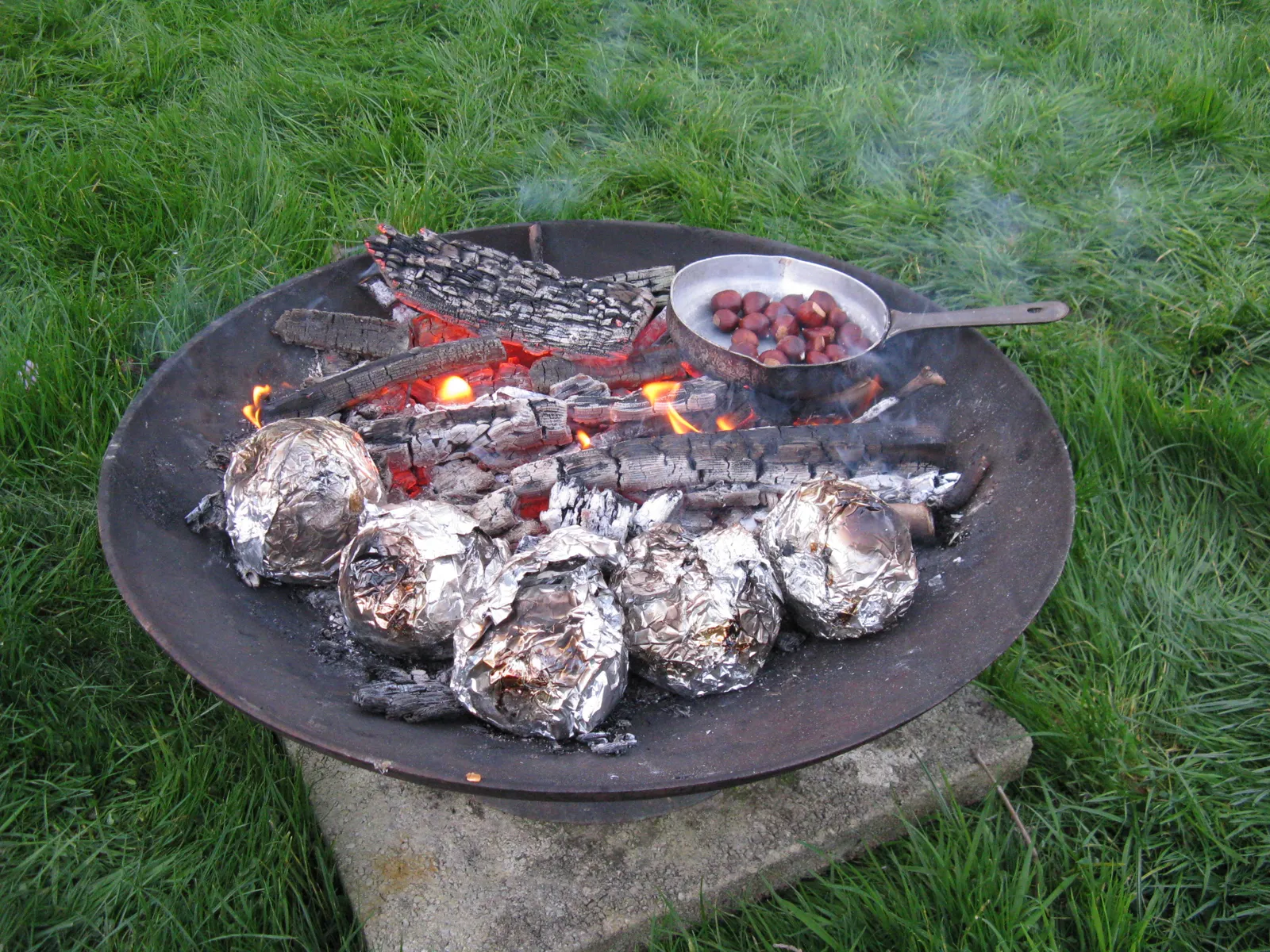
The oldest way is to put the potato straight into the embers with nothing around it. Do as above, but skip the oil and the foil. Put large potatoes in the hollow and cover them completely with embers and hot ash. Allow about 50–60 minutes for a large potato and up to an hour and a half for a really big one.
The skin turns black and charred and can't be eaten. That's intentional. It works like a casing, and the potato tastes slightly smoky. Brush off the worst of the ash, cut the potato in half and scoop the fluffy inside straight into the cup with a spoon, with butter and salt. The skin goes back into the fire. More ways to cook straight in the coals are collected under embers and foil.
A baked potato holds its heat for a long time. The skin can feel pleasantly warm while the middle is almost 100 degrees. Let the potato rest, cut it open and let the steam out before the children eat, and put the topping on top – a cold topping quickly cools the top layer. Lift and open the parcels with tongs and a fire glove, and have the children stay outside the bed of embers when the adults are shovelling.
If someone burns themselves: cool with cool water. Never use snow or ice on a burn. On a winter day there's a risk of hypothermia if the cooling goes on too long, so only cool the burnt area, for no more than about 15 minutes, and keep the rest of the body warm – more about that in hypothermia and frostbite. Seek medical care if blisters cover an area larger than the injured person's own hand, if someone has breathed in hot steam, and always if the child is 12 months or younger. More about safe fires in fire safety in nature, and always check whether there's a fire ban – the rules are in lighting fires outdoors.
Foil and acidic toppings: Livsmedelsverket (the Swedish Food Agency) advises against cooking and storing acidic food in contact with aluminium foil. The potato itself isn't acidic, so it's fine to bake in foil. But don't squeeze lemon over the potato before wrapping it, don't put the skagenröra in the foil and don't wrap leftovers with topping in foil. The toppings belong in tubs with lids.
Green potatoes: green or damaged parts contain more glycoalkaloids, which can cause nausea and stomach ache. Cut them away generously at home, and throw away a potato that is green all the way through. Most of it sits in and just under the skin.
Burnt skin: the darker the potato is baked, the more acrylamide forms. Feel free to eat the skin of a potato baked in foil, but leave any black, charred bits.
Prawns and leftovers: skagenröra is a chilled product. Livsmedelsverket specifies 4 degrees in the fridge and says chilled food should not be left out for longer than four hours, even at no more than 20 degrees. Only bring as much as will be eaten at the fire, and throw away any skagenröra that has been out all day instead of saving it. Leftover baked potatoes should cool quickly outdoors in the cold and go into the fridge as soon as you're home – then they're fine to fry the next day.
Allergens: the toppings contain milk (crème fraîche, cheese, quark and butter), the skagenröra contains crustaceans and egg, and the mayonnaise often contains mustard. A dairy-free herb quark can be made with oat-based cream cheese.
Baked potatoes are a fire dish where children can do most of the work before and after the embers. At home they can scrub the potatoes, peel the prawns for the skagenröra and snip the chives. At the fire they can prick the holes with the fork, rub in salt and wrap their own potato in foil.
Let each child choose a slightly smaller potato than the adults – it's ready first, and that makes the wait shorter. The children can also keep the time and say when it's time to turn them, and push the roasting stick through the foil with an adult beside them. The adults handle the bed of embers, the tongs and the opening.
For the youngest: scoop out the potato and mash it with a little butter in the cup. Livsmedelsverket advises always peeling potatoes for children under one year old, so leave the skin for the adults. More jobs to suit different ages can be found in cooking with children over a fire.
About 35–45 minutes for a medium potato and 50–70 minutes for a large one, wrapped in foil and covered with embers. Turn and move the parcels every 15 minutes. A very large potato in weak embers can take up to an hour and a half. Cold, par-boiled potatoes need about 30–40 minutes.
Push a roasting stick or thin skewer through the foil into the middle. If it slides in without resistance all the way, the potato is done. With a meat thermometer it should read close to 99 degrees in the middle.
No. The potato can be baked straight in the embers and ashes, but then the skin is charred and can't be eaten. Scoop out the inside with a spoon and throw away the skin. The foil protects the skin so it can be eaten.
Yes. Livsmedelsverket advises against cooking and storing acidic food in contact with aluminium foil, but potatoes aren't acidic. Don't squeeze lemon over the potato before wrapping it, and keep the skagenröra and other toppings with lemon in a tub.
Yes, on a potato baked in foil. Don't eat black, charred bits, and cut away green parts before the potato is baked. For children under one year old, the potato should always be peeled.
Yes, it's a good trick on a short winter day. Boil them for 10–15 minutes, then cool them quickly in cold water or outdoors in the cold, put them in the fridge and transport them cold in the cool bag. Don't let them sit lukewarm and wrapped up for hours, because bacteria can then grow in the potatoes. In the embers they take about 30–40 minutes and should be piping hot all the way through before they're eaten.
More for the bed of embers
Sausages while the potatoes bake
The potatoes need an hour in the embers – grill the falukorv on a stick over the flames alongside and eat everything at the same time.
To the falukorvPack the pulk so nothing freezes
Where the food should go, how the flask stands and how the load is kept still – so the potatoes and toppings arrive intact.
To the pulk guideLeftover potatoes for breakfast
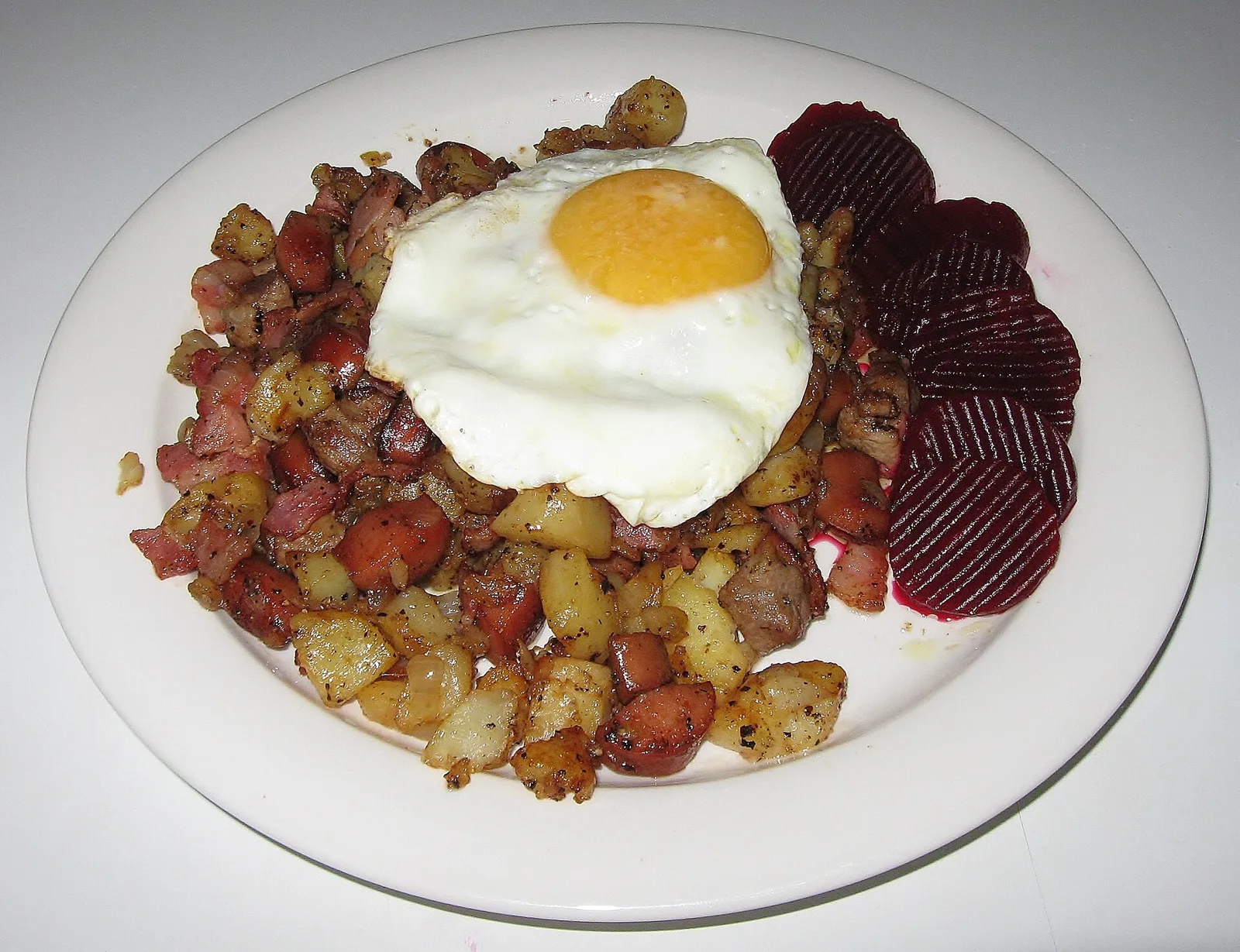
Leftover baked potatoes are diced and fried the next morning – pyttipanna, Swedish hash, in the cast-iron pan over the fire.
To the pyttipanna