

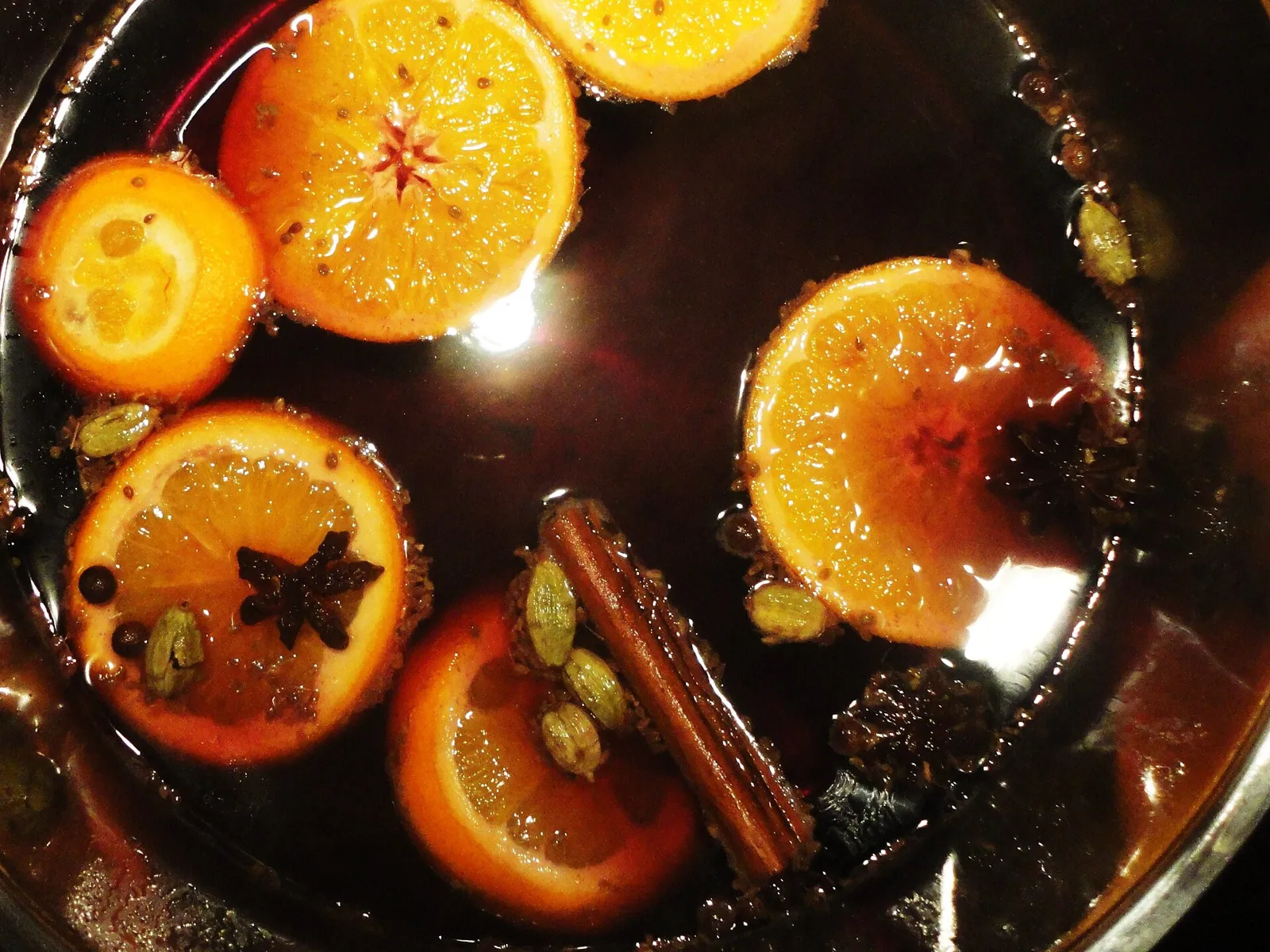


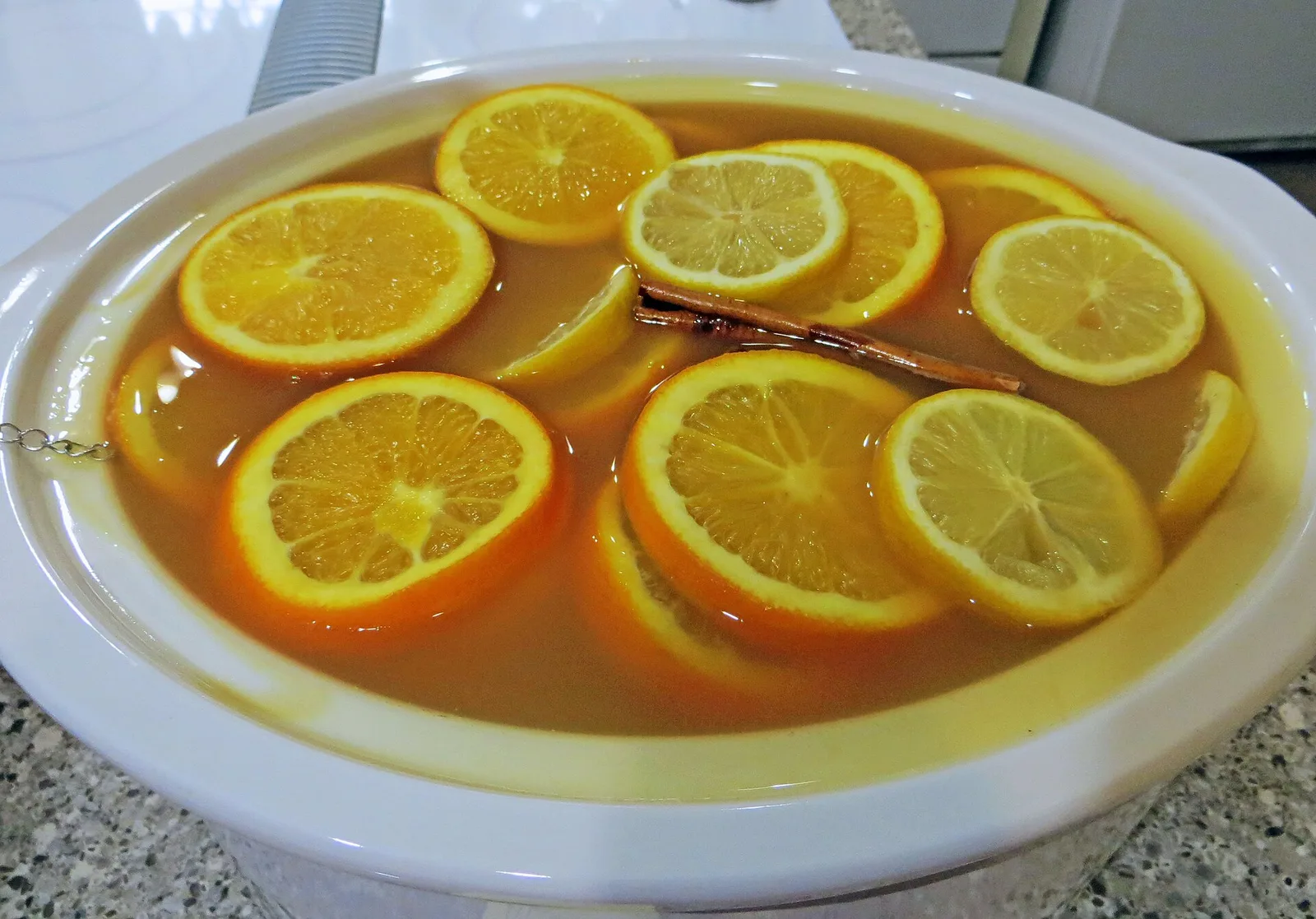
Children's glögg with the apples
Cinnamon in the apple and cinnamon in the cup – glögg made with cordial for the children and with wine for the adults, steeped at home and heated at the fire.
Get the glögg recipeCinnamon butter in the middle, embers all around and a cup of custard
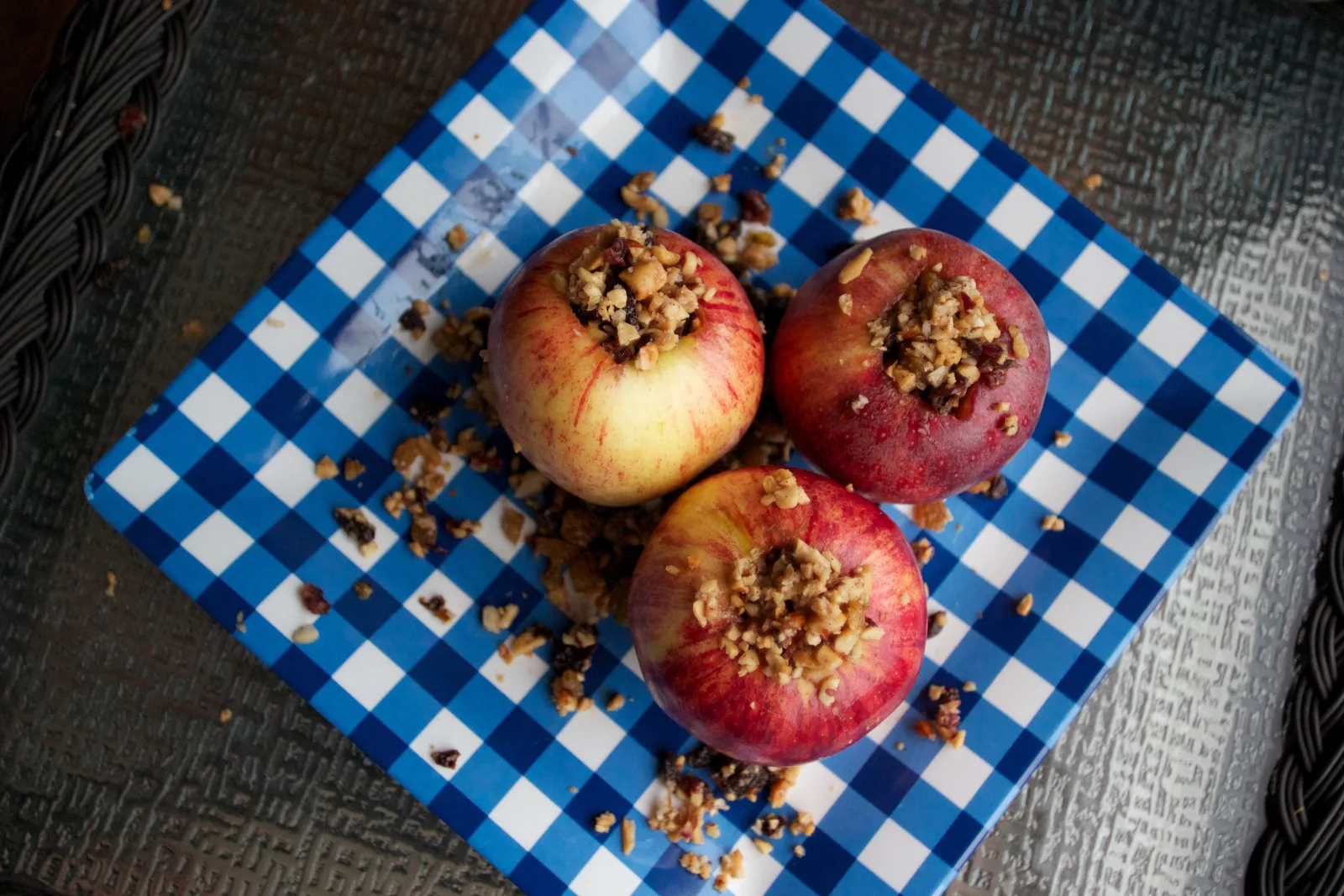
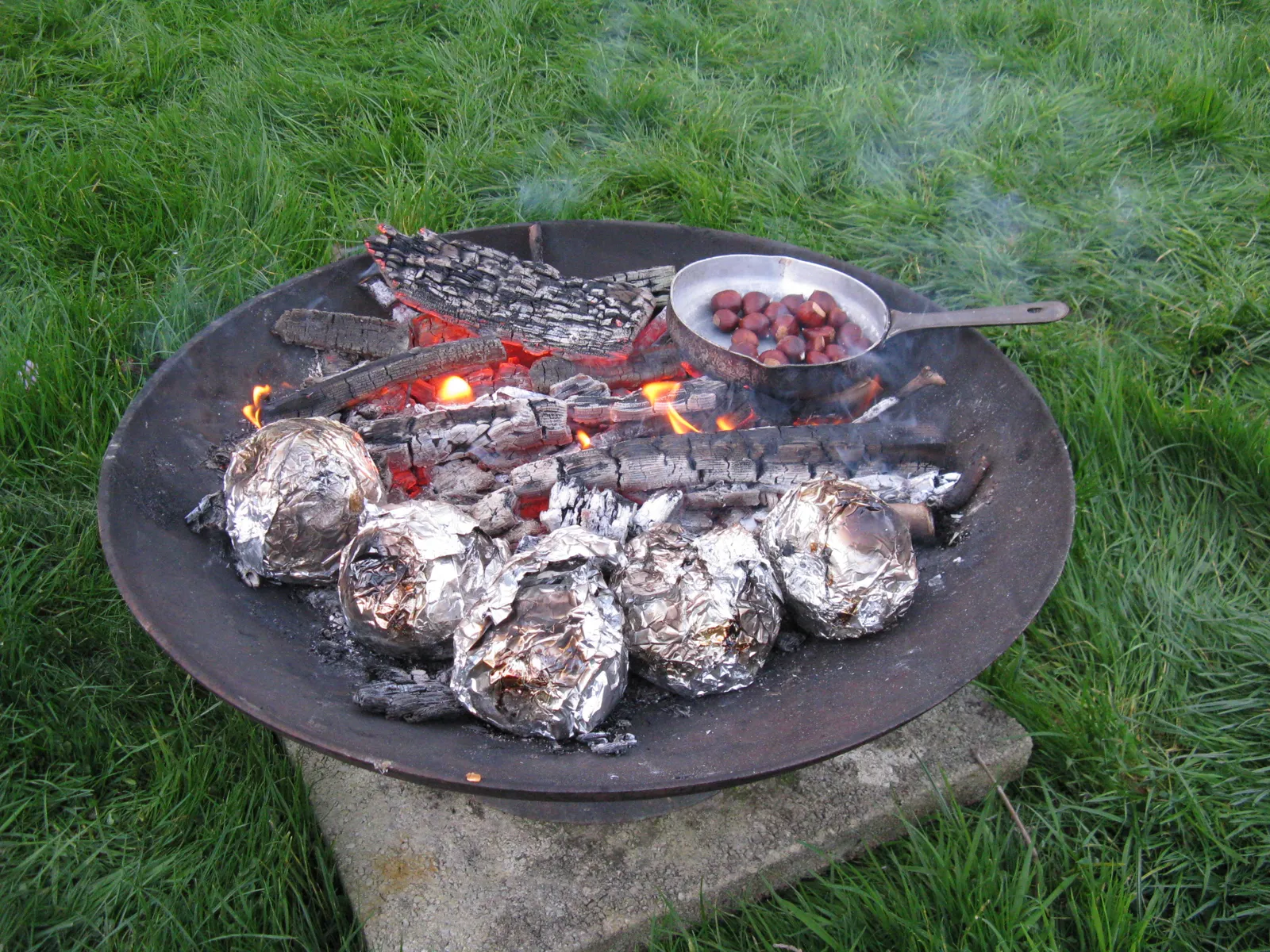
There's a moment at the fire pit when the sausages have been eaten, the fire has sunk to an orange bed and nobody quite wants to go home yet. That's when the apples go in. Four silver parcels stand upright in a ring of embers, the children keep track of whose is whose, and after half an hour the whole place smells of cinnamon and caramelised sugar.
Baked apples are a dessert that almost takes care of itself. A tart apple, a dollop of cinnamon butter with oats and nuts in the middle and heat all around – that's all it takes. The only things that need a little thought on a winter day are that the apples mustn't freeze on the way, that the filling is mixed before the butter goes hard, and that the melted filling in the middle is hotter than it looks.
Have you made this recipe? Rate it
0.0 out of 5 · 0 votes
out of 5
vote
votes
Be the first to rate this recipe.
Thanks for your vote!
Your vote could not be saved right now. Please try again later.
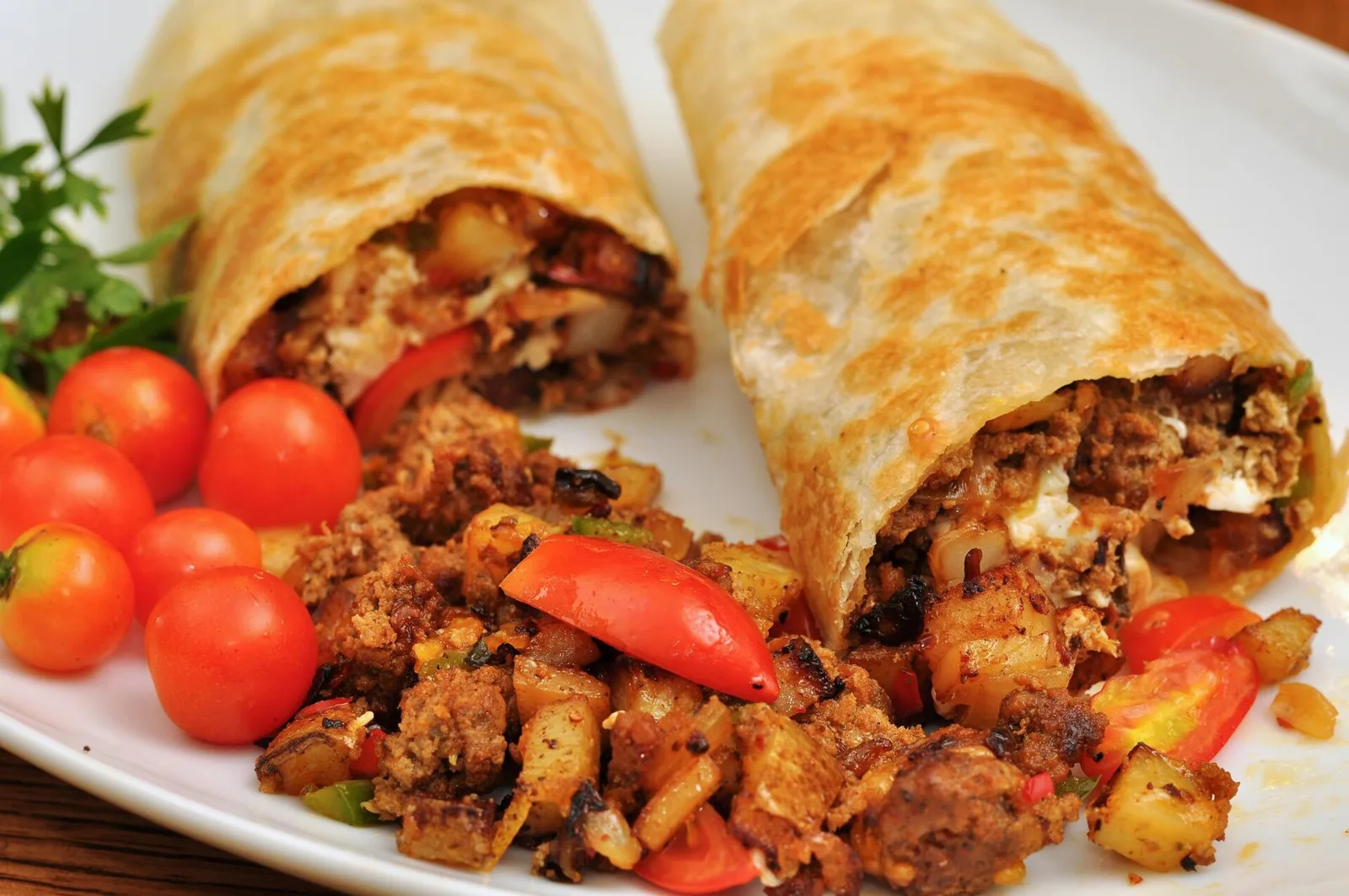 🔥 Over fire
 🔥 Over fire
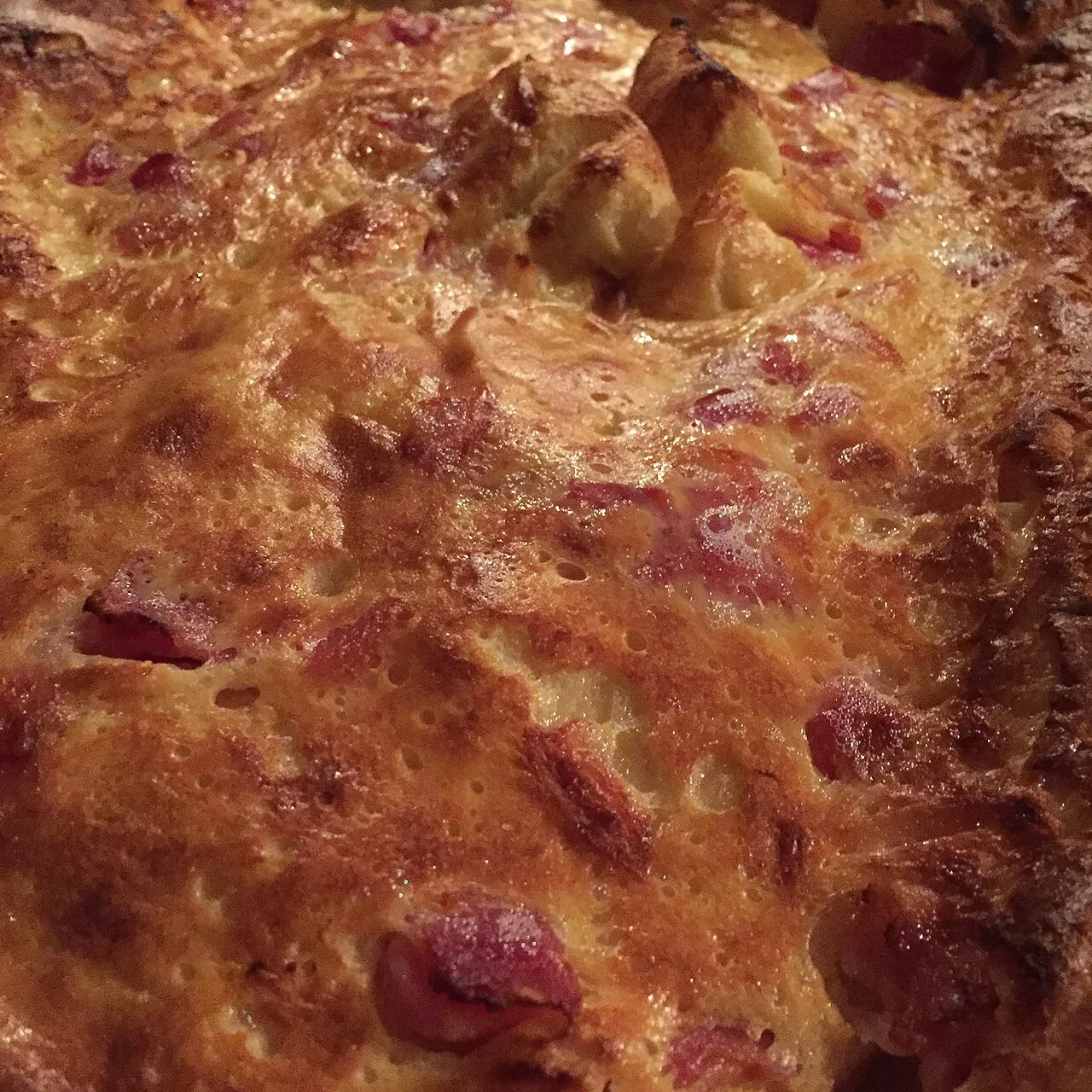 🔥 Over fire
 🔥 Over fire
At home. Mix the filling while the butter is soft. Stir together the butter, sugar or honey, cinnamon, salt, oats, nuts and raisins into a sticky mixture and divide it into four lumps in the tub. At minus ten the butter is as hard as putty and you can't mix anything – but ready-made lumps are easy to press into an apple even when they're cold. Whip the cream at home if you want cream, or bring the custard in a leakproof bottle.
The apples on the way. An apple that has frozen turns soft and brown when it thaws and collapses in the heat. So pack them in the middle of your rucksack, ideally wrapped in a spare jumper, or in the food bag in the pulk with something insulating around them. How to pack the picnic in the pulk is explained in pulk sled with gear. The custard should be cold, but it doesn't do well frozen either – put it next to the apples.
By the fire. It's nice to core the apples at the fire, so the children can fill them themselves. If you've cored them at home, drip a little lemon into the hole and wrap the apple in cling film, otherwise the cut surface will turn brown. It doesn't affect the taste, only the look.
The apples are the last thing to go in – cook something else while the fire burns down. More about cooking in the cold in cooking outdoors in winter.
If you'd rather skip the foil altogether, baking the apples in a cast-iron pot works just as well. Stand the filled apples upright in the pot, pour a decilitre of water or apple juice into the bottom and put the lid on. Put the pot on the embers and add a shovelful of embers on the lid, so the heat comes from both below and above. Allow 25–35 minutes. The juice in the bottom mixes with the butter running out of the apples and becomes a thin cinnamon syrup to spoon over. How to set the pot securely and control the heat is covered in cooking in a pot.
For baked apples you usually choose firm, preferably tart varieties. The acidity balances the sweetness of the filling.
Varieties that tend to turn to purée collapse more easily in the heat. If that's all you have at home, keep a closer eye on them with the roasting stick and eat them as warm cinnamon apple purée from the cup if they give way – it tastes just as good, it just doesn't look as nice.
The part of a baked apple that burns worst isn't the skin but the middle. The melted butter and sugar filling holds its heat for a long time and sticks to the skin. So let the apple rest for five minutes, stir the filling before the children eat, and let them eat with a spoon from the cup instead of biting into a whole apple.
The steam when the parcel is opened and foil that has been in the embers burn just as easily. Let an adult lift out and open the parcels with tongs and a glove.
If someone burns themselves: cool with cool water for about 15 minutes. Never use snow or ice on a burn. On a winter day there's a risk that a child gets chilled in the meantime, so only cool the burnt area and keep the rest of the body warm – more about that in hypothermia and frostbite. Seek medical care if blisters cover an area larger than the injured person's own hand, and always if the child is 12 months or younger. More about safe fires in fire safety in nature, and always check whether there's a fire ban – the rules are in lighting fires outdoors.
Allergens: the filling contains milk (butter), gluten (oats, unless labelled gluten-free) and nuts. Swap the nuts for sunflower seeds and the butter for a plant-based spread if needed. The custard often contains milk and egg.
Honey: don't give honey to children under one year old. Use brown sugar in their apple, or skip the sweetener altogether – a baked apple is sweet enough.
This is a dessert the children can make almost entirely by themselves. Let them core the apples with an apple corer, which is both easier and safer than a knife, and show them how to press and twist instead of stabbing. Then they fill their own apple, and they're free to add more raisins than any adult would have.
Give each child their own shape for the foil knot – a star, two ears, a long tail – so everyone knows which parcel is theirs. The children can also be in charge of the clock and say when it's time to turn the parcels, and push the roasting stick through the foil at the end with an adult beside them. The adults handle the embers and the tongs. More ideas about which tasks suit which age in cooking with children over a fire.
More sweet parcels in the embers in banana in foil with chocolate and cinnamon, and the same technique with a savoury filling in fire-baked root vegetables in foil.
Firm, preferably tart varieties. Belle de Boskoop is the classic baking apple, and Gloster and Cox's Orange are also often recommended. Varieties that tend to turn to purée collapse more easily.
About 20–30 minutes for a large apple, with the parcel upright at the edge of the bed of embers and a quarter turn every five to seven minutes. Test with a roasting stick – if it goes in without resistance, the apple is ready.
Livsmedelsverket advises against cooking acidic food, such as fruit and berries, in contact with aluminium foil, because aluminium can then leach into the food. A protective layer between the food and the foil prevents that. So put a sheet of baking paper on the inside and the foil on the outside, or bake the apples in a pot with a lid.
Fill the apples the same way, stand them in an ovenproof dish with a splash of water in the bottom and bake them at about 200 degrees for 25–40 minutes, until soft. No foil needed.
Yes, ideally mashed in the cup once the filling has cooled. Chop the nuts finely or leave them out for the youngest, and don't give honey to children under one year old.
A cup of warm children's glögg with the same cinnamon as in the apple, or hot chocolate for anyone who prefers it.
More winter treats by the fire
Children's glögg with the apples
Cinnamon in the apple and cinnamon in the cup – glögg made with cordial for the children and with wine for the adults, steeped at home and heated at the fire.
Get the glögg recipeWinter camping with kids
The first night close to home, the child's sleeping bag and how to tell if your child is cold – before a night outdoors in winter.
To the winter guideMore in the embers
Fish, potatoes and sweet parcels baked straight in the coals – more recipes for when the bed of embers is ready anyway.
To the ember recipes