


The whole winter kitchen
What to cook at home, what to carry in the flask and what to do by the fire when it is below freezing.
To the winter kitchenA piece of cheese against the flames, hot potatoes and tangy pickled onions

Raclette is not really a dish so much as a movement. A piece of cheese stands with its cut face turned towards the fire, the surface starts to bubble and turn golden, and someone draws the knife down at an angle so that a hot, glossy layer slides down over a boiled potato. Then the cheese is turned back towards the flames, and the next person holds out their plate.
On a winter's day at the fire pit it is hard to imagine a better lunch. The fire has to burn anyway, and all you need is potatoes, a piece of cheese and a jar of pickled silverskin onions. At the edge of a ski trail or a frozen lake it suddenly smells like an alpine hut, and the children queue up with their plates in their mittens.
Raclette comes from the canton of Valais in Switzerland. The herders who drove the cows to and from the summer pastures took cheese with them and stood it next to the campfire in the evening, so the surface softened and could be scraped onto bread. Melting cheese in front of the fire in Valais was written about as early as 1574. The name comes from the French racler, to scrape.
The electric raclette grill with its little pans is a later invention. So over an open fire you are doing it the original way, and it is actually easier than it sounds. If you want to see the area where it all started, we have a guide to Crans-Montana, right in Valais.
Raclette or fondue? In raclette only the surface of the cheese melts, and it is scraped down onto the potatoes. In a cheese fondue all the cheese is melted with wine or apple juice in a pot, and you dip bread in it. Raclette copes better with uneven heat, since there is no cheese sauce that can split.
Have you made this recipe? Rate it
0.0 out of 5 · 0 votes
out of 5
vote
votes
Be the first to rate this recipe.
Thanks for your vote!
Your vote could not be saved right now. Please try again later.
 🔥 Over fire
 🔥 Over fire
 🔥 Over fire
 🔥 Over fire
Raclette is one of the few fire dishes where the cold is a bigger problem than the fire. Cheese melted in the middle of a winter lunch sets again within a minute if it lands on a cold potato on a cold metal plate. So almost all of the preparation is about getting everything there hot.
At home:
By the fire:
Livsmedelsverket, the Swedish Food Agency, uses 60 degrees as the guideline for hot food. The potatoes should be piping hot when they are served. Potatoes that have been sitting lukewarm in the flask for several hours are better eaten straight away than saved for the next day. More basic ideas about food in the cold are in cooking outdoors in winter.
If you only have an ordinary frying pan and want to keep it simpler, slice the cheese at home. Put potato halves in the pan, cover with slices of cheese and put on a lid or a piece of foil. Set the pan on a grate over even embers for 3–5 minutes until the cheese has melted over the potatoes. It is more of a cheese gratin than a true raclette, but it works even when the wind is in the wrong direction for side heat.
Melted cheese behaves like hot fat with glue in it. It sticks to the skin and keeps on burning. 1177 (the Swedish healthcare advice line) says a burn should be cooled with cool water straight away, and that you should never use ice or snow, as it does more harm than good. Do not cool it for more than 15 minutes, or the risk of hypothermia increases – and in the cold that happens fast. So keep a bottle of cool water in an inside pocket so that it does not freeze. More about fire and first aid is in fire safety in nature.
After a few rounds the pan is hot all the way out to the handle. Use a barbecue glove and put it down on a chopping board, not directly in the snow, where it can tip over or crack from the temperature shock.
Pregnant: Livsmedelsverket (the Swedish Food Agency) says all cheeses firm enough to slice with a cheese slicer are fine to eat, including those made from unpasteurised milk, and raclette cheese can be sliced that way. The authentic cheese from Valais is made from unpasteurised milk. With raclette only the surface gets hot, not the whole cheese piping hot. If you want to be extra careful, choose a raclette cheese made from pasteurised milk. It says so on the packet.
Allergens: Milk in the cheese. Some pickles contain mustard seeds, so read the label if anyone is allergic to mustard.
Fire bans apply in winter too, even though it is unusual. Check the rules in lighting fires outdoors before you light the fire.
Children cannot hold the hot pan, but they can handle most things around it themselves:
An adult holds the pan and scrapes, and the child holds the plate low and still. Never scrape cheese over a child's hands. Let the child blow on it and wait half a minute before the first bite. Melted cheese is much hotter than it looks. More ideas for little cooks are in cooking with children over a fire, and how to stay warm through the day itself is in how cold is too cold on the slopes.
In raclette you melt the surface of a piece of cheese and scrape it onto boiled potatoes. In cheese fondue all the cheese is melted with wine or apple juice and starch into a sauce in a pot, and you dip bread in it. Raclette is easier over an open fire because the cheese cannot split.
Yes, that is how raclette started. Stand a piece of cheese in a cast-iron pan or on a flat stone with the cut face towards the fire and scrape the surface when it bubbles. At home you can do it with a piece of cheese in the oven under the grill.
The classic is boiled potatoes in their skins, cornichons and pickled silverskin onions. Black pepper and paprika are sprinkled over. Traditionally it is served with black tea or another hot drink.
Allow 200–250 grams of raclette cheese per person when the raclette is the whole meal, with just potatoes and pickles alongside. As a snack by the fire, about half that is enough.
Another semi-hard cheese that melts evenly will work, for example prästost (a mild Swedish cheese) or a mild Gruyère. Avoid soft fresh cheese and mozzarella – they go stringy and are hard to scrape. Very mature hard cheeses turn oily and burn easily.
Yes. According to Livsmedelsverket, all cheeses firm enough to slice with a cheese slicer are fine to eat during pregnancy, including those made from unpasteurised milk, and raclette cheese can be sliced that way. If you want to be extra careful, you can choose a raclette cheese made from pasteurised milk, since only the surface gets hot with raclette.
More dishes for the winter fire, from soups in a pot to puddings in the embers, are gathered under fire food.
More winter food by the fire
The whole winter kitchen
What to cook at home, what to carry in the flask and what to do by the fire when it is below freezing.
To the winter kitchenA sweet finish on the same fire
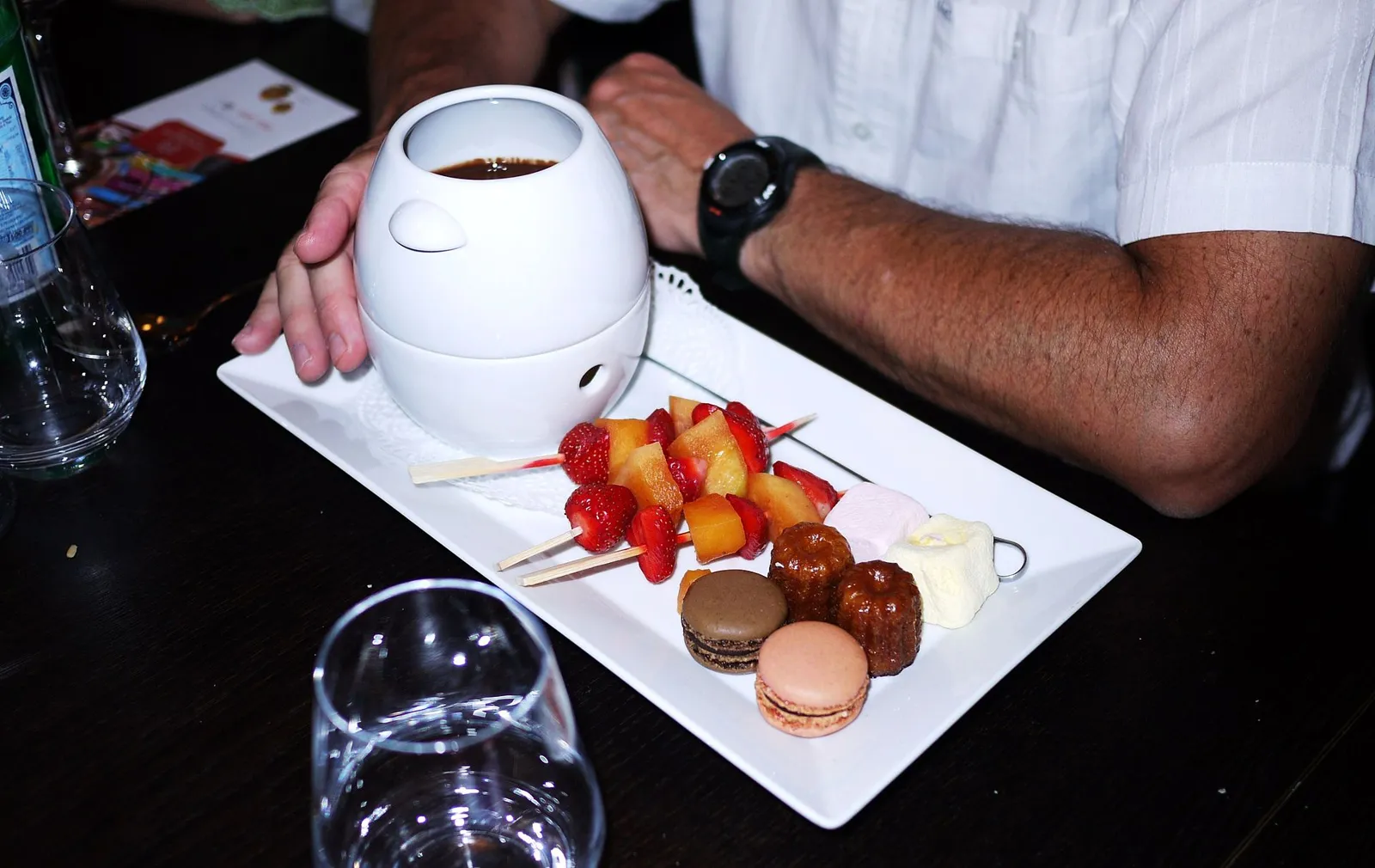
When the cheese is gone and the embers are still alive – fruit and stick bread dipped in melted chocolate.
To the chocolate fondueCold fingers by the fire
Raclette is eaten in rounds and lunch goes on for a while. How to tell when a child is starting to get too cold, and what to do about it.
To hypothermia and frostbite