Popular searches

    Stekt fläsk med löksås – crispy fried pork belly, smooth onion sauce and boiled potatoes over the fire

    Crispy pork belly, soft onion and a smooth sauce made in the frying fat
    • 4 servings
    • Time: 20 min at home + 1 hr over the fire
    • Difficulty: Easy
    • 12 ingredients
    • 11 steps
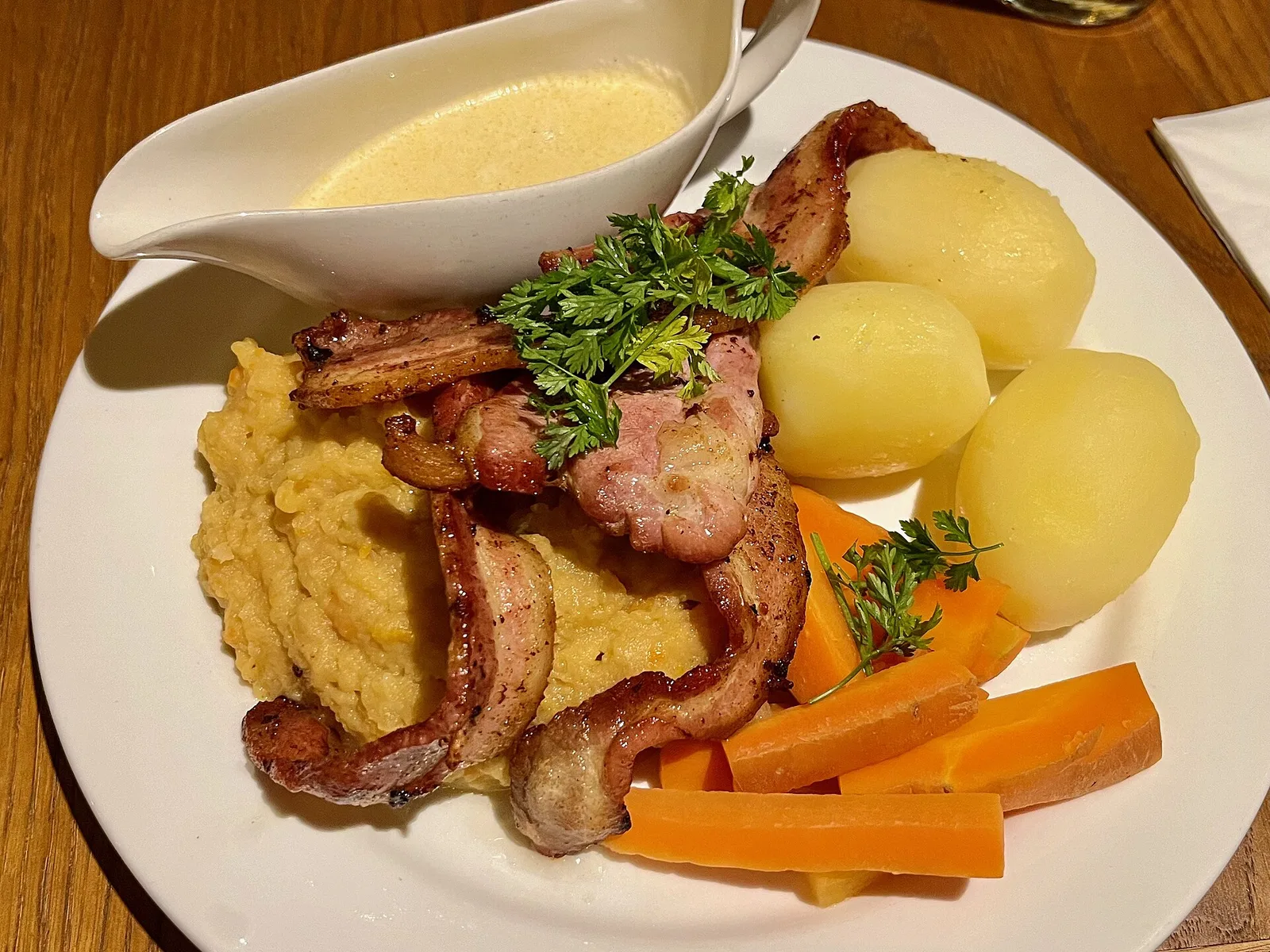
    A plate of fried slices of pork belly, boiled potatoes, swede mash and carrot sticks under fresh herbs, and beside it a sauce boat of pale sauce.
    Photo: Kjetil Ree, Wikimedia Commons (CC BY-SA 4.0)

    It is early afternoon in January, eight below and not a breath of wind at the fire pit. The pork slices are lying in the cast-iron pan and have stopped sizzling angrily. Now they crackle, the edges have turned brown and translucent, and the smell of fried pork reaches all the way to the track where the children are skiing their last laps. Next to the pan, the potato pan bubbles away with the lid ajar.

    Stekt fläsk med löksås – fried pork belly with onion sauce – is traditional Swedish home cooking that copes with the cold better than most things. It is salty, rich and hot, and everything you need fits in one frying pan and one saucepan. But it is the sauce that makes the dish. It is made with the fat the pork leaves behind, with soft yellow onion and milk, and it is also what can go wrong outdoors: flour that goes lumpy in the wind, milk that burns on and sauce that sets on the plate before anyone has had time to eat. That is why this recipe starts at the kitchen worktop at home.

    Method

    1. Let the fire burn down to an even bed of embers. Set the potato pan right over the embers, pour in the hot water from the flask, top up with water so it covers the potatoes and put the lid on. Salt lightly.
    2. Set the cast-iron pan at the edge of the embers and let it heat up for several minutes. Cast iron that has been standing out in the cold takes much longer than at home.
    3. Lay the pork slices in the dry pan in a single layer. The pork has its own fat and needs no butter. Fry over a medium heat, turning a few times, for about 12–15 minutes per batch, until the slices are golden brown and crisp. Fry in two batches if they will not all fit. Salt fresh pork belly while it fries. The lightly salted kind needs no salt.
    4. Pour the fat off into the tin mug between batches, so the pork fries rather than stewing in its own dripping. Lift the pan away from the embers with fire gloves before you pour, and put the mug on a flat stone out of the children's reach. The hot fat makes the mug hot.
    5. Wrap the finished pork in foil and set the parcel on the lid of the potato pan, where the steam keeps it warm.
    6. Put the butter and 2 tablespoons of the fat in the pan. Fry the onion over a low heat, right at the edge of the embers, for 8–10 minutes. It should turn soft and glossy, ideally light golden, but not burnt.
    7. Shake the milk bottle again and pour the milk over the onion, stirring. Move the pan closer to the embers and stir all the time until the sauce boils and thickens.
    8. Let the sauce simmer for 3–4 minutes so the floury taste disappears. Stir the bottom with the wooden spoon, as milk quickly burns on in cast iron. If it gets too hot, pull the pan to one side.
    9. Season with pepper. Only add salt once you have tasted it, as the fat from lightly salted pork already adds salt.
    10. The potatoes are ready when they are easy to pierce, after 15–20 minutes. Pour off the water a little way from the fire, tip the peas into the hot pan and put the lid on for two minutes.
    11. Serve the potatoes and peas, pour the sauce over and put the pork on top so it stays crisp. Scatter over parsley and eat straight away.

    Have you made this recipe? Rate it

    Be the first to rate this recipe.

    More recipes to try

    All recipes →
    • 🔥 Over fire

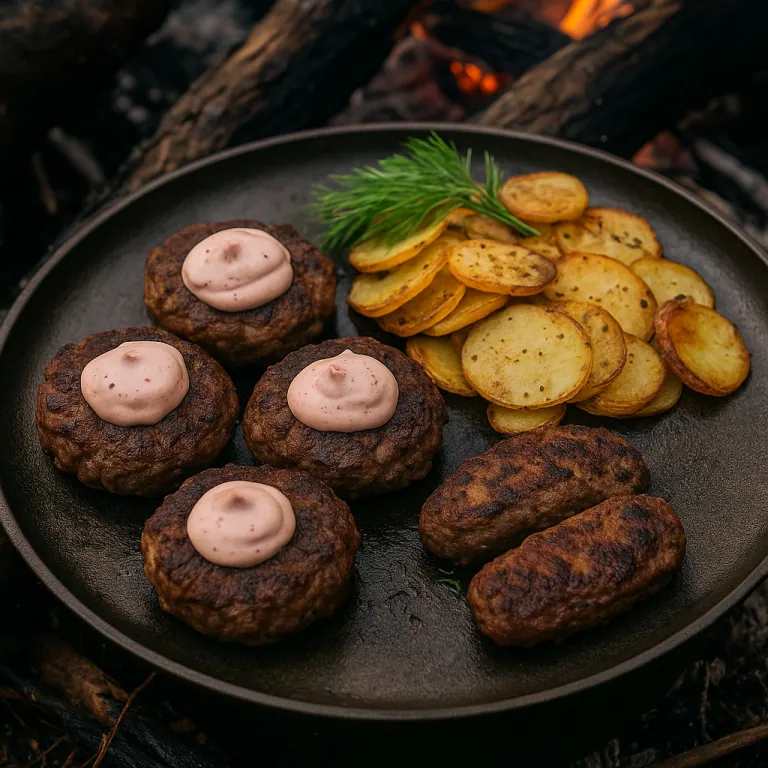
      Wild boar patties

      🥕 18 ingredients 👣 8 steps

    • Slices of smoked reindeer meat on baking paper on a wooden tray, with green leaves, orange pieces of root vegetable, fine white strips and crispy breadsticks. 🔥 Over fire

      Suovas in flatbread – Sami smoked reindeer meat from the frying pan by the fire

      🍽️ 4 servings 🥕 8 ingredients 👣 7 steps

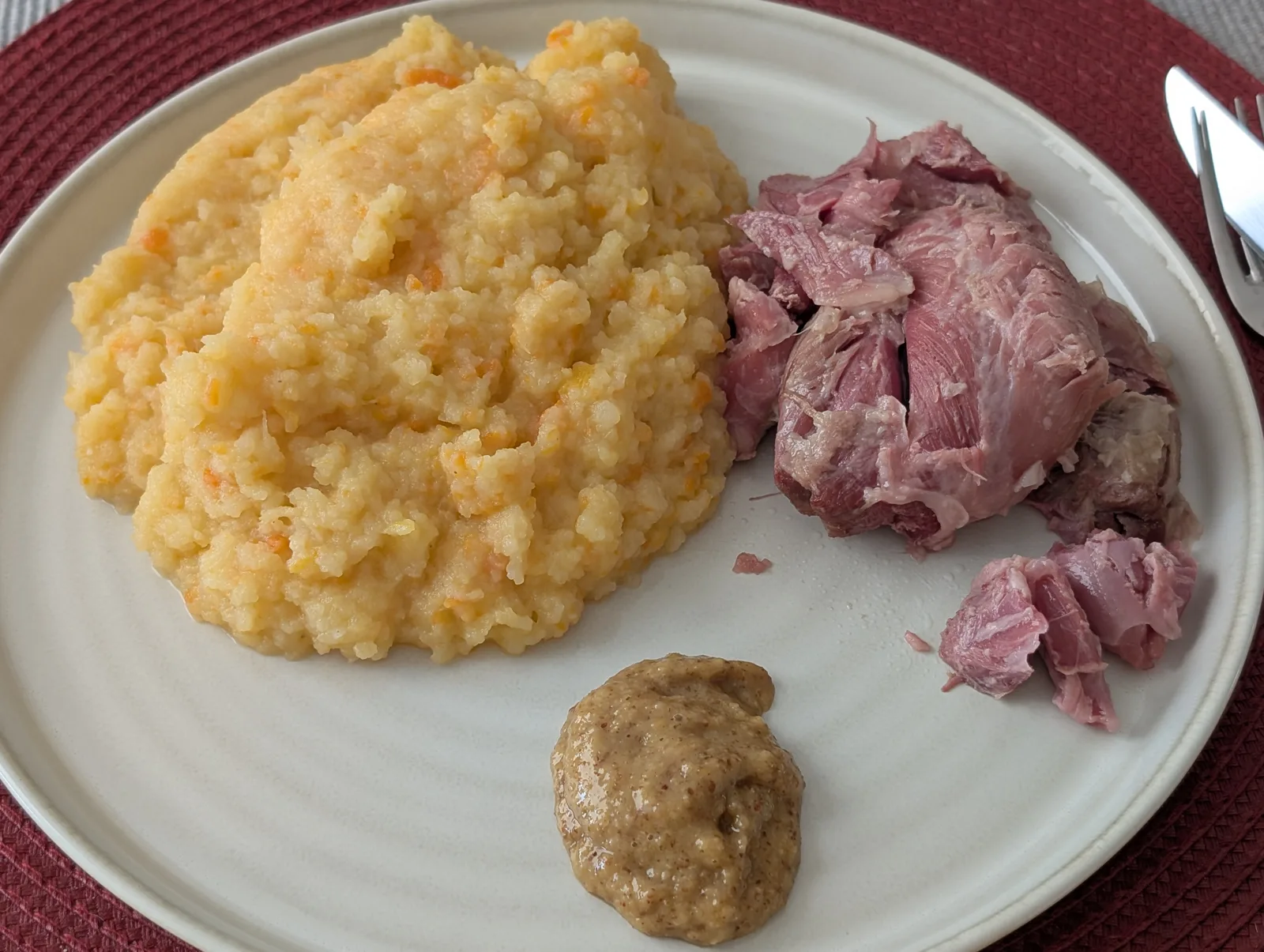
    • A yellow swede mash with small pieces of carrot on a pale plate, next to a boiled lightly salted pork knuckle and a dollop of coarse mustard. 🔥 Over fire

      Rotmos with sausages over an open fire – swede mash in the pot, sausages fried alongside

      🍽️ 4 servings 🥕 12 ingredients 👣 9 steps

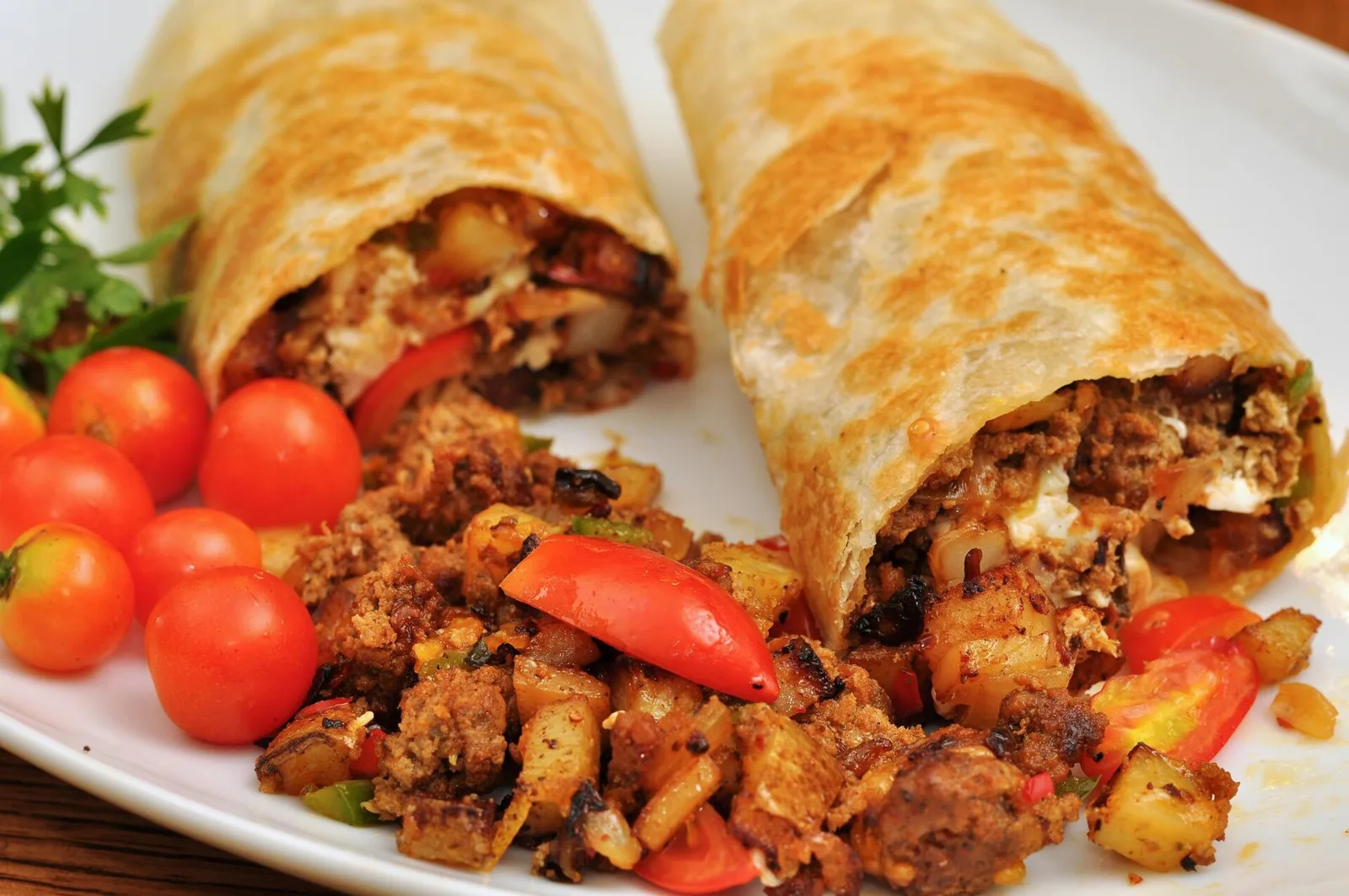
    • Two golden breakfast burritos filled with egg, potato and meat on a plate with cherry tomatoes. 🔥 Over fire

      Breakfast burrito over an open fire – egg, bacon and potato in a tortilla

      🍽️ 4 burritos 🥕 10 ingredients 👣 9 steps

    At home and by the fire

    At home

    • The shaker bottle. Pour the milk into the plastic bottle, add the flour and sugar, screw on the lid and shake hard for half a minute. This is the whole secret behind a lump-free sauce outdoors. The flour sinks to the bottom during the day, so the bottle gets another shake by the fire.
    • The onion. Peel and thinly slice the onion and put it in a tub. Thin slices soften in half the time, and that matters a lot when the pan is sitting in sub-zero temperatures.
    • The pork. Score the rind or the hard edge of fat on each slice with two or three small cuts. That stops the slices curling up in the pan. Put the slices in a bag or tub.
    • The peas. Put the bag of frozen peas tight up against the pork. It acts as an ice pack that keeps the pork cold all the way out.
    • The potatoes. Scrub or peel them and halve the biggest, so all the pieces are about the same size and are ready at the same time.
    • Water. Fill the flask with boiling water for the potatoes.

    By the fire

    Everything happens on one bed of embers, but in three places: the saucepan sits where it is hottest, the frying pan at the edge and the foil with the fried pork on the saucepan lid. The order is potatoes first, pork next and sauce last, because the sauce needs the fat and the pork turns chewy if it has to wait too long.

    What the cold does to the pork and the sauce

    • The dripping sets in minutes. The fat in the tin mug is white and solid long before the sauce is ready. That does not matter. Scrape it into the pan with a spoon and it melts straight away.
    • The sauce thickens as it cools. An onion sauce that is perfect in the pan turns into a solid mass in a cold cup. Add a splash of milk to the pan if it has been standing and thickening, and serve on plates that have been warmed with hot water from the flask.
    • The fat on the plate turns white. Eat as soon as it is served, and give small portions with seconds straight from the pan instead.
    • The milk can freeze. Carry the milk bottle inside the rucksack, wrapped in a jumper, and not in an outside pocket. If it has turned slushy it is fine to use, but shake it for extra long.
    • The pork can freeze together. If the slices have frozen together, prise them apart and wipe off the ice with kitchen roll before they go in the pan.

    Safety with hot fat

    Sizzling fat is hot enough to burn hands and faces, and children do not see the spatters coming. An adult handles the pan wearing fire gloves, and the children stand at least an arm's length from the embers while the pork is frying. Never put wet or frozen slices straight into hot fat. Ice and water make the fat spit.

    If the fat in the pan gets so hot that it starts to smoke, lift the pan off the embers. Keep the lid within reach the whole time. If the pan catches fire, smother the flames by putting on the lid and leave it on until the pan has cooled. Never pour water, and never put snow, on burning fat. The water turns to steam in an instant and throws the burning fat out.

    Hygiene, fat and leftovers

    • Raw and cooked kept apart. Do not put the fried pork back in the bag or on the board where the raw pork was, and use a clean fork or spatula for the cooked meat. That is why the foil comes along.
    • Cooked through by itself. Pork belly fried until crisp is always cooked through. Trichinella is very rare in Swedish farmed pigs, which are checked at slaughter. Wild boar meat, on the other hand, should always be cooked through unless you know it has been tested.
    • Warm sauce is hot sauce. If the sauce has to wait, keep it at the edge of the embers so it is steaming the whole time. Livsmedelsverket (the Swedish Food Agency) uses 60 degrees as a guideline for keeping food hot.
    • Leftovers. Leftover sauce and potatoes should cool quickly. Below freezing, that works fine outdoors with the lid on. Then keep them cold and reheat the leftovers until the sauce boils before you eat them again.
    • The fat comes home with you. Never pour the fat out in the snow. It stays there in lumps when the snow melts. If you pour fat on the fire, it flares up. Let the fat set in the tin mug, scrape it into a bag and take it home.

    Stekt fläsk med löksås with children

    Tips for a smooth onion sauce

    • Low heat for the onion. The onion should turn sweet and soft, not burnt. Burnt onion makes the whole sauce bitter.
    • Flour in the milk, not in the pan. The classic way is to sprinkle the flour over the onion and add the milk a little at a time. That works nicely at the hob but is hard with mittens and wind. The shaker bottle gives the same sauce without lumps.
    • Stir the bottom. Milk burns on in cast iron when the pan is too close to the embers. Better to pull the pan aside than to leave it where it is.
    • The right thickness. The sauce should run slowly off the spoon. If you want it thicker, shake 3 tablespoons of flour into the milk instead of 2. If it is too thick, thin it with milk.
    • The fat gives the flavour. Two tablespoons of the pork fat is enough. More makes the sauce greasy when it cools.

    Common mistakes

    • The pan is not hot when the pork goes in – the slices stew in their own fat and turn chewy instead of crisp.
    • The fat is not poured off – the pork never crisps up.
    • The onion is fried over too high a heat – it goes brown at the edges and raw in the middle.
    • The milk bottle is not shaken again by the fire – the flour stays at the bottom and the sauce is thin.
    • The sauce is salted before it is tasted – with lightly salted pork it ends up too salty.
    • The pork is put under the sauce – the crisp surface goes soggy.

    Vary the stekt fläsk med löksås

    • With fried potatoes: boil the potatoes at home and fry them in the pork fat after the pork. It saves the saucepan and the cooking water.
    • With paltbröd: dried paltbröd (Swedish blood bread) is blanched in salted water and is traditionally served with exactly this – fried pork and white sauce or onion sauce. You can do that in the potato pan.
    • Vegetarian: fry thick slices of smoked tofu or halloumi in butter and make the sauce with butter instead of pork fat.
    • With bacon: thick-cut bacon crisps up faster than pork belly, but gives less fat for the sauce.

    Allergens

    The onion sauce contains milk and wheat flour, which means gluten. Gluten-free sauce: shake 1 tablespoon of cornflour into the milk instead of the wheat flour. Lactose-free milk works just like ordinary milk.

    Frequently asked questions

    How long should you fry pork belly?

    Slices about a centimetre thick need 12–15 minutes over a medium heat in a hot pan, and they should be turned a few times. The pork is done when it is golden brown and crisp and the fat has stopped bubbling hard.

    Should you use lightly salted or fresh pork belly with onion sauce?

    Both work. Lightly salted pork belly is the classic and is saltier, so the sauce needs hardly any salt. Fresh pork belly is salted while it fries and gives a milder dish that many children prefer.

    How do you make onion sauce without lumps?

    Shake the flour into cold milk in a leakproof bottle before it goes into the pan, and pour the mixture over the soft onion, stirring. Stir until the sauce boils. Lumps usually form when dry flour meets hot liquid.

    What do you eat with stekt fläsk med löksås?

    Boiled potatoes are the classic, ideally with green peas and parsley. Some people like lingonberries or pickled beetroot on the side for the acidity.

    Can you make the onion sauce the day before?

    Yes. Let it cool quickly, keep it cold in an airtight tub and heat it in the pan until it boils. It thickens in the cold, so thin it with a little milk. The pork tastes best fried on the spot.

    Does the pork have to be cooked through?

    Pork belly is always fried until crisp, and then it is cooked through. Pork from Swedish farmed pigs is checked for trichinella at slaughter, and infection is very rare. Wild boar meat, on the other hand, should always be cooked through.

    More guides and recipes to read

    More Swedish home cooking at the winter fire

    The cast-iron pan on the embers

    Heat the pan for a long time and move it instead of chasing the fire – how to fry evenly over an open fire.

    To the frying guide

    The pork in the pulk

    Packing, harness and the child in the pulk – how to haul everything to the fire pit without anything leaking or freezing on the way.

    To the pulk guide

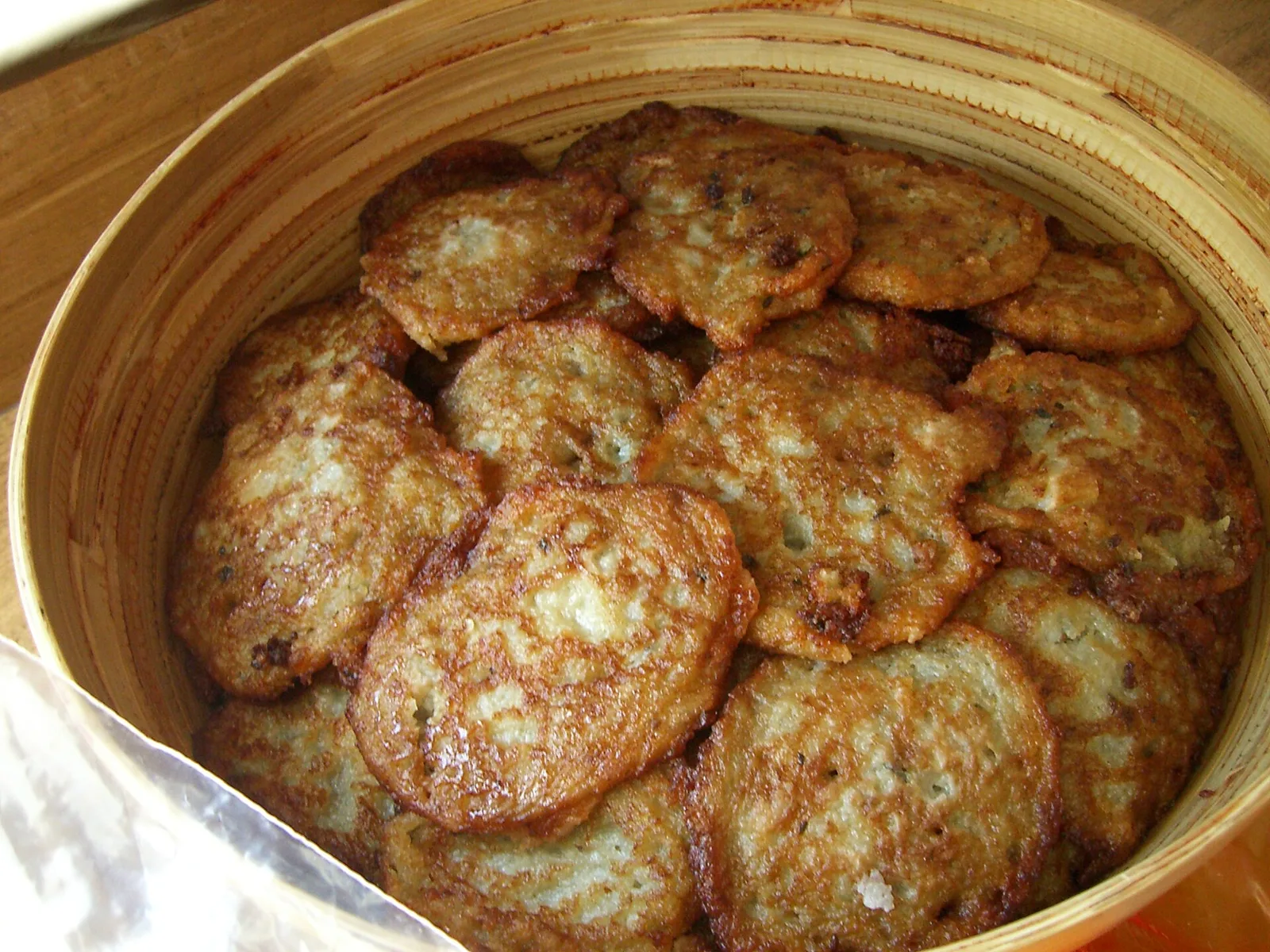
    Pork left over? Raggmunk tomorrow

    Same pan, same pork – with grated potato and stirred lingonberries, the leftovers become raggmunk (Swedish potato pancakes), a new dinner by the fire.

    To the raggmunk