
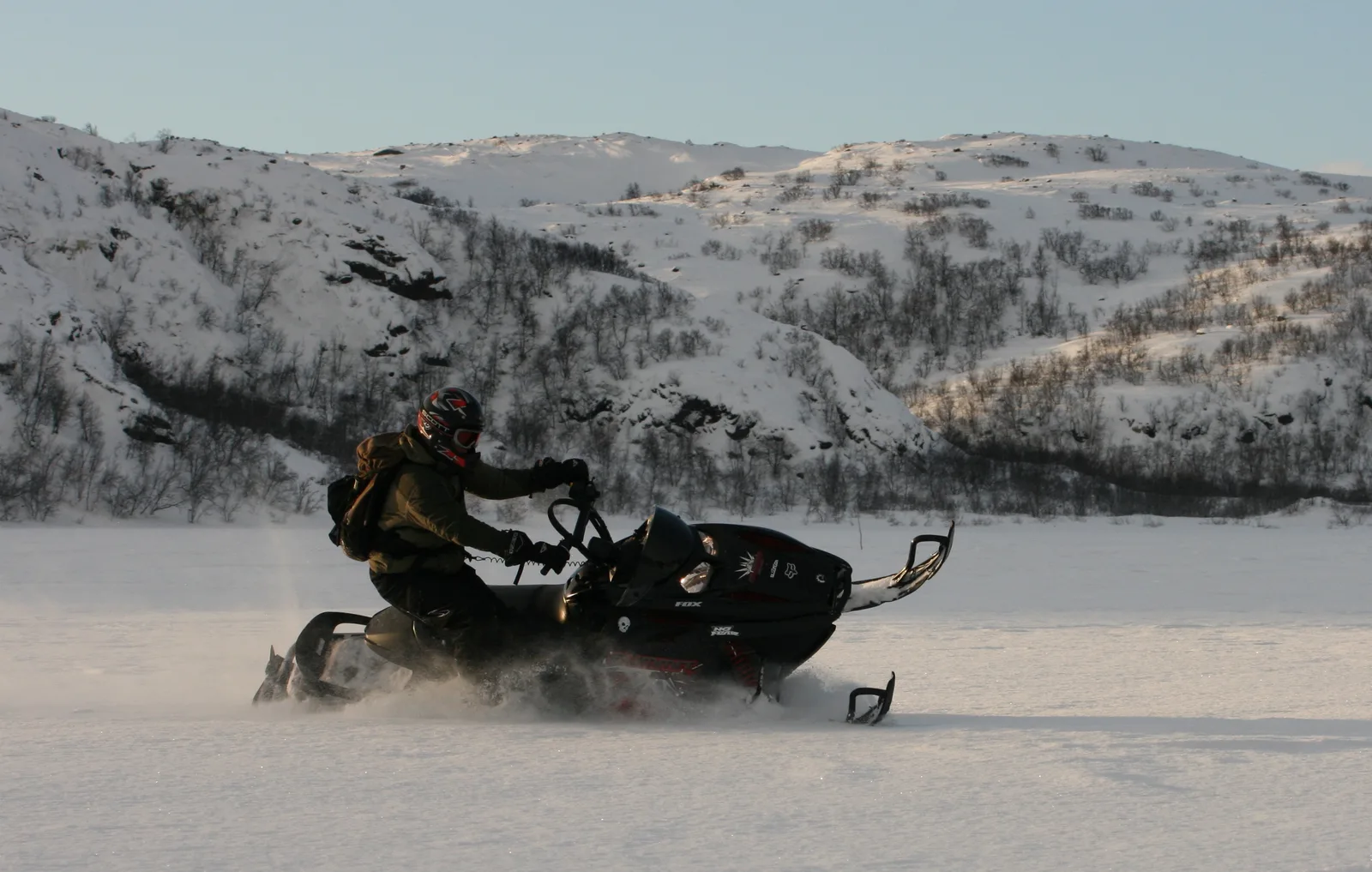
Short answer
Bring food that is cooked or prepared at home and cannot spill when the snowmobile shakes: suovas (Sami smoked reindeer meat) in flatbread, beans and sausages frozen flat, soup in a food flask and hot drinks. Carry whatever must not freeze on your body, the fragile things in the cargo box and the heavy things in the sled. And allow for the wind from the ride: at 36 kilometres an hour and minus ten, it feels like minus 20 for someone sitting still.
The menu for the snowmobile trip – what is done where
| Dish | Time of day | At home | On the snowmobile | By the fire |
|---|---|---|---|---|
| Suovas (Sami smoked reindeer meat) in flatbread | Lunch by the fire | Thaw the suovas, fill tubs with lingonberries and soured cream | Breads in your jacket, tubs in the box | About 30 minutes |
| Beans and sausages | Lunch by the fire | Cook the sauce, freeze it flat in a bag | Frozen bag in the sled, sausages next to it | About 30 minutes |
| Rotmos (mashed swede and potato) with sausages | Lunch by the fire | The whole mash in a food flask | The food flask in the box | Just the sausages, 2 to 3 minutes per side in the pan |
| Vegetarian chilli | Lunch by the fire | Two dry bags, chopped vegetables | Tomatoes and beans in the middle of the pack | About 40 minutes |
| Ärtsoppa (Swedish yellow pea soup) | Flask stop | Cook it through the day before | The food flask in the box | No fire needed |
| Potato and leek soup | Flask stop | Cook and blend smooth | The food flask in the box | No fire needed |
| Blåbärssoppa (warm bilberry soup) | Flask stop or fika | Cook it thin and blend | The flask in the box | No fire needed |
| Kokkaffe (boiled coffee) | Fika (a coffee break) by the fire | Coffee in a tin, hot water in a flask | The pot in the sled | 15 to 25 minutes |
| Warm apple juice | Fika (a coffee break) by the fire | Spices in the bottle overnight, or heated and strained into a flask | Plastic bottle in the middle of the pack | 10 to 15 minutes in the pot |
| Kolbullar | Fika (a coffee break) by the fire | Flour and salt in a bottle | The frying pan in the sled, the pork in the box | The pork first, then a few minutes per kolbulle |
| Apples baked in the embers | Dessert on a long break | Mix the filling | The apples wrapped up in the box, so they do not freeze | About 40 minutes |
The times at the fire come from the recipes and apply once the fire has already burned down to embers. Allow another half hour to get the wood going on a cold day.
The snowmobile is parked at the edge of the trail, and the engine ticks as it cools. It is completely quiet for the first time in an hour. The child in the sled has been completely still for the last stretch, and when you lift off the hat, one cheek is pale. Someone has to get the wood going, someone has to find the flask, and nobody remembers whether the flatbreads are in the cargo box or at the bottom of the sled under the frying pan.
A snowmobile trip is a different kind of day from a ski outing. You get far and fast, but nobody is moving. The food is shaken for hours, the wind blows at 50 kilometres an hour through everything on the outside, and anyone sitting still gets cold without noticing. That is why the menu looks different here from the one at the fire pit at home.
This page gathers the winter campfire recipes that suit a snowmobile trip: a lunch by the fire, a flask stop and a fika. The recipes have their own pages. Here you will find out why they work, what you do differently when they have to travel by snowmobile and how the day fits together. Everything about fire in the cold, firewood in the snow and why the embers take longer is in the hub page winter campfire food.
The rule of thumb: the jacket, the box and the sled
On a snowmobile there are three places the food can travel, and they have completely different climates. Decide at home what goes where.
- The jacket is warm. Inside pockets and pockets under the snowsuit hold body heat. This is where you carry whatever becomes useless if it freezes: flatbreads and tortillas that would otherwise crack, butter that turns hard as soap, a water bottle and the children's snacks.
- The box is sheltered. The cargo box, or a rucksack in the middle of the load, is cold but sheltered from the wind of the ride. This is where the flasks, the food flask and the tubs of lingonberries, soured cream and salsa travel, wrapped in a jumper so they do not knock against each other.
- The sled is cold and bumpy. In the sled or the pulk behind the snowmobile go the things that can take both cold and knocks: the firewood, the frying pan, the pot, the sit mats and food that is already frozen.
The rule of thumb is simple: the more something can take, the further back it travels. If a child is going to sit in the sled, nothing hard goes in there. How to pack a sled or pulk so the weight sits low and nothing slides forward on a downhill is covered in pulk sled with gear.
Three things that set a snowmobile trip apart from other winter outings
The shaking
Hours on a trail full of bumps and ruts does the same thing to food as a washing machine. Lids unscrew, bags rub through and bread turns to crumbs. So:
- Plastic with screw lids, never glass. A glass jar that both freezes and gets shaken will crack.
- Frozen means leakproof. Anything frozen into a hard slab cannot spill. A stew frozen flat in a bag is the safest cargo in the whole sled, and it keeps the sausages cold on the way.
- The flask stands upright. Wedge it between clothes in the box, so the lid does not shake loose and nothing leaks.
- Soft against hard. Put the frying pan in a bag or a towel, so it does not wear holes in everything else.
The wind of the ride
The wind from riding is wind, and it chills like wind. 36 kilometres an hour is 10 metres per second, and 54 kilometres an hour is 15 metres per second. According to the wind chill table from SMHI, the Swedish weather service, minus ten degrees feels like minus 20 at 10 metres per second and like minus 22 at 15 metres per second. At minus 15 and 10 metres per second it is minus 27. If there is also a headwind, that wind comes on top.
The same goes for the food. Whatever is on the outside of the sled is chilled as if it were out on the bare fells on a windy day. That is why the sensitive things belong in the middle of the load.
Liquids freeze
A water bottle in the sled turns to ice within an hour or so on a really cold day. Water and drinks travel either in a flask or on your body. Leave juice, milk and beer in glass bottles at home. It helps to put the water bottle upside down in the box, so the ice forms at the bottom and not in the cap.
The menu
The day is built on three kinds of stop: a long one by the fire in the middle of the day, short flask stops in between and a fika by the fire if there is time. Every dish can be prepared at home, and none of them requires anyone to stand chopping with stiff fingers.
Lunch by the fire
Suovas (Sami smoked reindeer meat) in flatbread is the obvious lunch for a snowmobile trip. The Sami smoked reindeer meat was originally made as provisions for long journeys in the cold, it weighs almost nothing and needs no pot, just a hot pan. What is different on the snowmobile is the bread: put it in your jacket for the last stretch, not in the sled, where the wind of the ride makes it as stiff as cardboard. The lingonberries and the soured cream go in the box.
Beans and sausages is the best stew for a bumpy sled. The sauce with the beans is frozen flat at home into a hard slab that cannot leak, and it keeps the sausages cold on the way. By the fire you thaw it, heat it and add the sausages.
Rotmos (mashed swede and potato) with sausages is best made in the shortest version of the recipe: the whole mash made at home and put in a preheated food flask. Then the fire only needs to fry or grill the sausages, and lunch is ready in a few minutes once there are embers. It suits a windy day when nobody wants to stand still for long.
Vegetarian chilli is the alternative for anyone who does not eat meat. It travels as two dry bags and a bag of chopped vegetables, which come to no harm if they freeze. The only things that cannot take the cold are the tins of tomatoes and beans, so they go in the middle of the load and never on the outside of the sled.
Flask stops without a fire
Between the rest stop by the fire and the ride home you need short stops, where everyone gets off, moves about and has something hot. You do not light a fire there. You open a flask.
Ärtsoppa (Swedish yellow pea soup) (Swedish yellow pea soup) is cooked through at home, ideally the day before, because it tastes better then. Pour it piping hot into a preheated food flask and eat it from mugs with handles.
Potato and leek soup blended smooth can be drunk straight from the mug, even with mittens on. It is mild enough for children who do not like peas.
Blåbärssoppa (warm bilberry soup) (warm bilberry soup) is the sweet thing in the flask. Make it a little thinner than usual and blend it smooth, so it runs easily through the neck of the flask. Sugar and warmth are exactly what a cold child needs.
Fika (a coffee break) by the fire
Kokkaffe (boiled coffee) (boiled coffee) belongs to a break by the trail. Bring hot water in a flask instead of melting snow, and the pot will boil in a few minutes. The children's drink is heated first in the same pot.
Warm apple juice is the children's answer to coffee. Let the spices steep in the bottle overnight and heat the juice in the pot by the fire. The bottle should be plastic and travel in the middle of the load, because apple juice freezes much like water.
Kolbullar with sugar-stirred lingonberries and fried pork (thin Swedish pancakes of flour and water fried in pork fat over a fire) were the charcoal burners' food in the forest, and the frying pan is already in the sled. Put the flour and salt in a bottle at home. At the fire, top up with water, shake and pour the batter straight into the pork fat.
If the break turns into a long one
Apples baked in the embers need about 40 minutes, so they only suit a day when you have decided to stay a while, for example at a fire pit with a view on a sunny day in March. Mix the filling at home while the butter is soft. Apples cannot take freezing, so they travel wrapped in a jumper in the box and not in the sled. At the fire, the children can core and fill their own.
The snowmobile also takes you out onto the ice, and there the menu is different. The catch in the pan and long hours by the hole are covered in campfire food for ice fishing.
The snowmobile carries the firewood
In winter the sticks are under the snow, so the firewood has to come from home. What is heavy for a skier is light for a snowmobile: a sack of dry wood, birch bark and kindling in the sled is the difference between a fire that is burning in ten minutes and half an hour with wet sticks while the children freeze. There is sometimes firewood at the lean-to shelters and rest shelters along the trails, but not always, and it is there for whoever needs it most.
The fire by the trail
The snowmobile trail is a road for other snowmobiles. So stop completely off to the side of it, where you can be seen from a distance, and park the snowmobile so it is not standing in the track. Make the fire a little way from the trail, never on it.
Use a permanent fire pit where there is one. If the trail runs through a nature reserve or a national park, fires may be banned except at designated sites, so read up on the county administrative board's (länsstyrelsen) website before you go. Put the fire out completely and take rubbish and leftover food home. Which rules apply and who is responsible are covered in lighting fires outdoors, and how to make a fire on snow is in the hub page on winter campfire food.
The rest hut and the rest shelter
Along many trails there are rest huts and rest shelters, in the mountains often roughly halfway between the overnight cabins. The trails are maintained by the state, municipalities, tourist resorts or snowmobile clubs, and it is good to know what the rest shelters are for:
- For rest and shelter, not for planned overnight stays. Everyone who needs a roof over their head should have room, so make space once you have eaten.
- The camping stove stays outside. Fjällsäkerhetsrådet, the Swedish mountain safety council, writes that camping stoves must only be used outdoors, because they can give off carbon monoxide and cause fires, and that applies to every kind of fuel.
- The wood stove is for emergencies. It is there for anyone who really needs warmth after an accident or in very bad weather.
- Close the door when you leave, otherwise it can be blown to pieces.
So cook the food outside by the fire and go in to eat, warm your hands and write in the visitors' book if there is one. The emergency phones and how to make a route plan are covered in winter camping in the mountains.
Timetable for a day on the snowmobile
The length of the day is set by the daylight and by the child who is sitting still. An example for a day in February:
- 9 am: have a proper breakfast at home or in the cabin. The food flask and the flasks are filled with boiling water to preheat them, and the food is poured in just before you leave.
- 10 am: departure. The children's snacks are in their pockets, not in the sled.
- After just under an hour: the first flask stop. Everyone gets off, walks around the snowmobile, gets some blåbärssoppa and a face check.
- 12 noon: the lunch break by the fire, ideally a whole hour. The fire is lit first, then the food goes on the embers and the children fetch snow or grill sausages.
- After lunch: another flask stop on the way home, with the soup or the hot apple juice.
- Before dusk: back home. A trip that ends in darkness and wind is always colder than one that ends in afternoon sunshine.
If the child is sitting in the sled or behind an adult on the snowmobile, make the stops more frequent when it is cold or windy. There is no fixed time that applies to every child, but someone sitting still needs to get off and move more often than the driver.
Children on the snowmobile trip
The cold for passengers
Children have thin skin and little muscle, and 1177 (the Swedish healthcare advice service) writes that they are especially sensitive to cold. Whoever sits behind an adult or in the sled gets the full wind of the ride and does not move. Frostbite is most common on the cheeks, nose, ears, fingers and toes, and the skin first becomes colder and paler than the skin around it.
So do a face check at every stop. Look at cheeks, nose and ears. Warm a pale patch with a warm hand against the skin until the colour and feeling come back. Do not rub it, and do not warm it with hot water or anything hot from the fire. Give the child something warm and sweet to drink, out of the wind. How to recognise hypothermia and what to do if it goes further are covered in hypothermia and frostbite.
Helmets and rules
Everyone on the snowmobile must wear a helmet, including passengers. Children under seven may use other suitable head protection instead, for example a ski helmet. A pulk or sled towed behind the snowmobile counts as a separate vehicle, and there the law does not require a helmet, but Transportstyrelsen, the Swedish Transport Agency, recommends a helmet there too, because the risk of an accident is just as great. When you cross a road, all passengers, both on the snowmobile and in the sled, must get off and walk across. The driver must be at least 16 and hold a snowmobile driver's certificate, unless they got a driving licence or tractor licence before 2000.
A job at the fire
A child who has been sitting still for an hour needs to move. Give them a job: tramp down a spot for the fire, fetch snow for the pot, lay out the sit mats or grill their own sausage on a stick. More ideas for little cooks are in cooking with children over an open fire. Keep the children an arm's length from the frying pan, and keep the water bottle in an inside pocket, because a burn should be cooled with cool water and never with snow.
When the food froze anyway
It happens. The bread is stiff, the butter is rock hard and the soup in the cold flask is lukewarm. Here is how to rescue lunch:
- Stiff bread is warmed for a few seconds per side in the dry pan.
- Frozen butter is sliced thinly and put straight onto the hot food.
- Lukewarm soup is heated in the pot on the embers until it is piping hot, and never saved for later.
- Frozen lingonberries sit by the fire for a while or go frozen onto the hot roll.
How the kitchen at home, the flask and the camping stove share the work on a cold day, and how to keep the flask hot for longest, are covered in cooking outdoors in winter.
Packing food and kitchen kit on the snowmobile
Frequently asked questions
What is good food to bring on a snowmobile trip?
Food that is prepared at home and cannot leak when the snowmobile shakes. Suovas in flatbread is almost made for it: light, no pot and ready in half an hour. Beans and sausages frozen flat in a bag work as an ice pack on the way and are heated in the pot. Soup in a food flask comes out at a short stop without a fire, and there should always be a hot drink in a flask.
How do you stop food from freezing on the snowmobile?
Put whatever must not freeze on your body, for example bread, tortillas, butter and a water bottle, in an inside pocket or under your snowsuit. Flasks and tubs travel in the cargo box, wrapped in a jumper. The sled carries whatever can take cold and knocks: firewood, the frying pan, the pot and food that is already frozen. The wind of the ride chills everything on the outside, so pack the sensitive things in the middle.
Are you allowed to make a fire along the snowmobile trail?
The right of public access does not give you an automatic right to light a fire. Use a permanent fire pit where there is one, otherwise a spot off to the side of the trail where the fire cannot damage the ground, rock slabs or trees. Do not take branches or bark from living trees, and check whether special rules apply in national parks and nature reserves. Never make a fire on the trail itself, where other snowmobiles come through at speed.
Are you allowed to cook in the rest hut or rest shelter?
Not with a camping stove. Fjällsäkerhetsrådet writes that camping stoves must only be used outdoors, because they can give off carbon monoxide and cause fires. The rest shelters in the mountains are for breaks and for shelter in bad weather, not for planned overnight stays, and the wood stove should only be used in an emergency. Cook your food on a fire or a stove outside, and go in to eat and warm up.
How cold does it get for children riding along on the snowmobile?
Much colder than the thermometer shows. The wind of the ride counts as wind: at 36 kilometres an hour, roughly 10 metres per second, and minus ten, it feels like minus 20 according to the SMHI table. The child sitting still on the snowmobile or in the sled does not move and gets cold first. Stop often, look at cheeks, nose and ears, and warm pale patches with a warm hand.
Does a child need a helmet in the sled behind the snowmobile?
On the snowmobile everyone must wear a helmet, including passengers. Children under seven may use other suitable head protection instead, for example a ski helmet. A pulk or sled towed behind the snowmobile counts as a separate vehicle, and there the law does not require a helmet, but Transportstyrelsen recommends one because the risk of an accident is just as great. When you cross a road, all passengers must get off and walk across.