


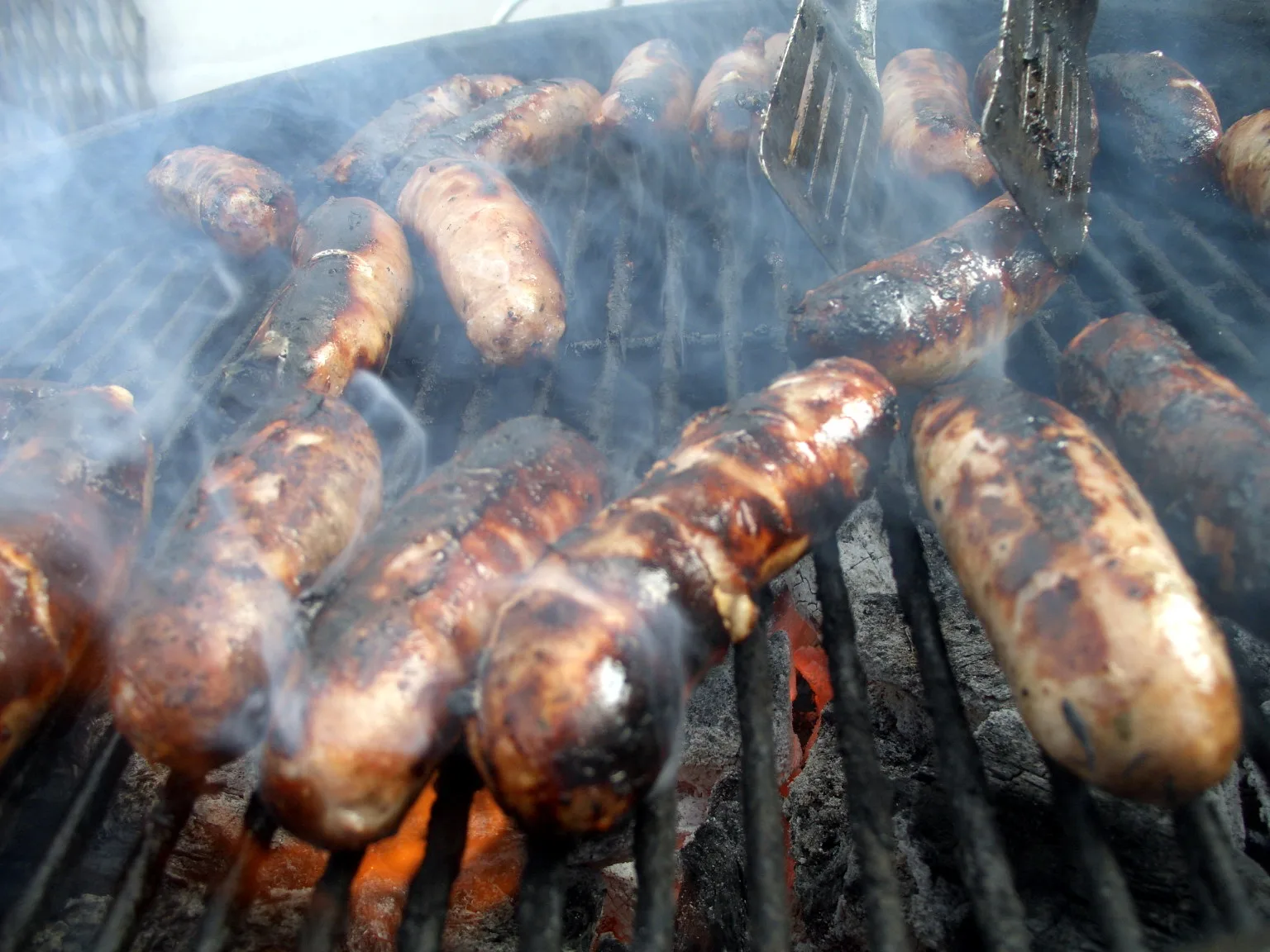

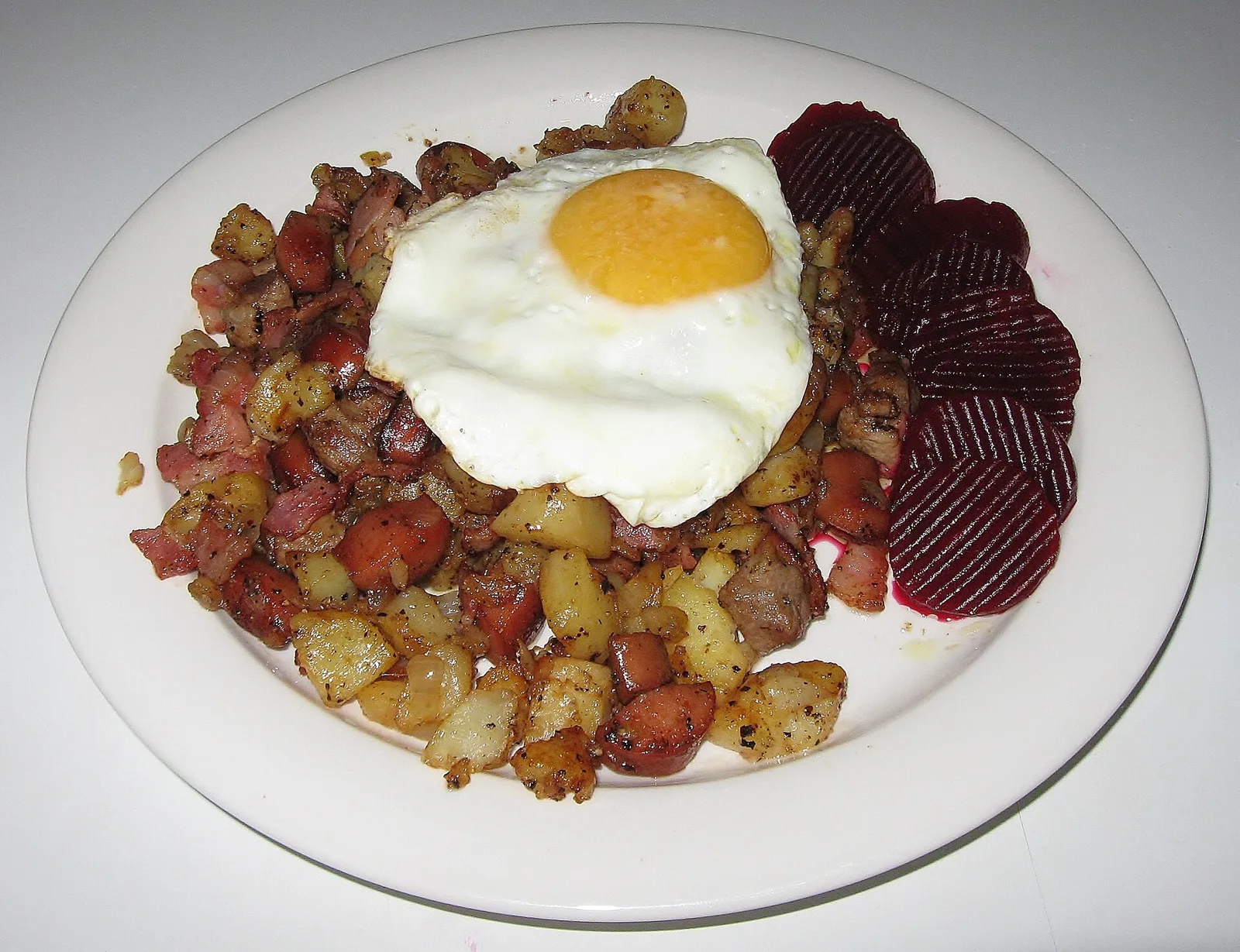
Which sausage for the mash?
Firm falukorv that browns without splitting, or a mild sausage that keeps its shape – how to choose the sausage.
To the falukorv pageSwede, potato and carrot mashed in the pot, sausages fried alongside
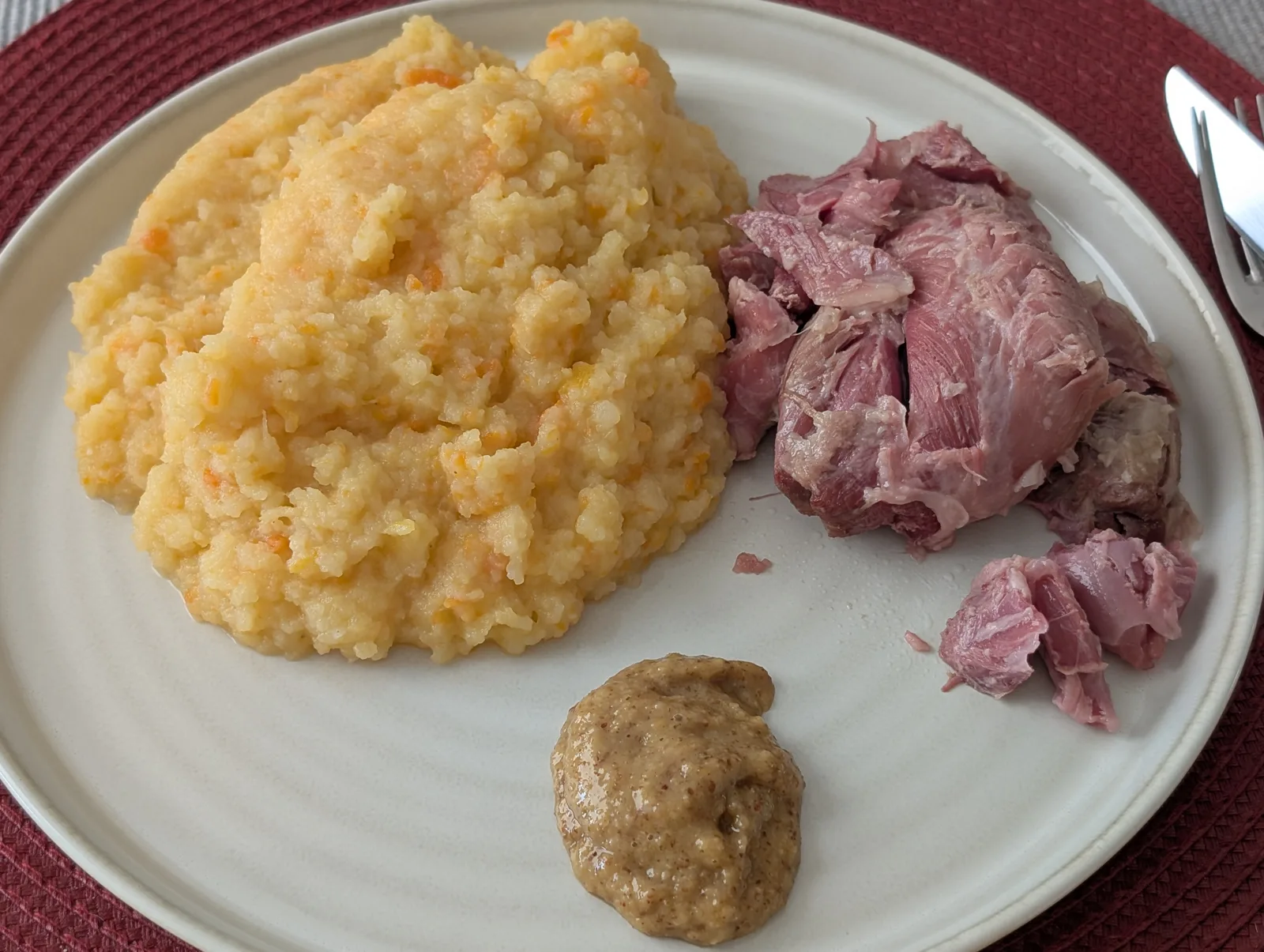
The lid rattles on the pot, and a yellow cloud of steam drifts off across the snow with the smell of swede. Someone pokes a knife into a cube and nods. Time to drain. Next to the pot the sausage slices sizzle in the frying pan, and the children who have been waiting with a bowl each in their mittens creep closer to the fire.
Rotmos (mashed swede with potato and carrot) has always been winter food. Swede, potato and carrot keep for a long time, weigh little in the pack and turn into a mash that really fills you up in the cold. Over a fire it is easy as long as you know where the difficulties lie: the swede is much harder than the potato and has to be cut smaller, it takes time to bring things to the boil below freezing, and a thick mash easily burns on the bottom but goes cold quickly on the plate. If it is your first time cooking in a pot outdoors, read about cooking in a pot over the fire first.
If you have ready-cooked pork sausage, it can be heated in the pot instead of the frying pan. Lay it whole on top of the vegetables for the last ten minutes, let it heat through in the steam and lift it out before you drain the water.
Have you made this recipe? Rate it
0.0 out of 5 · 0 votes
out of 5
vote
votes
Be the first to rate this recipe.
Thanks for your vote!
Your vote could not be saved right now. Please try again later.
 🔥 Over fire
 🔥 Over fire
 🔥 Over fire
 🔥 Over fire
There are three ways to split rotmos between the kitchen and the fire. Choose according to how cold it is and how long the children can stand still.
How the ingredients cope with the cold on the way out:
Water is the heaviest thing to carry. A litre of almost boiling water in a flask brings the pot to the boil much faster, and you can top up the rest with cold water or melted snow. More about what to do at home and what to do outdoors on a winter's day is in cooking outdoors in winter.
Draining is the most dangerous step. A pot of boiling water is heavy, and the steam that billows out in the cold can scald just as badly as the water. That is why you ladle out most of it before pouring off the rest. The children stand well back while the pot is lifted and the water is poured off. Do not pour the water into the fire, as it sends up a cloud of ash and hot steam.
Hot mash sticks to the skin. A thick, hot mash sticks like porridge and can cause deeper burns than water. Stir the children's portion and let it cool for a while in the bowl, and test the middle with a spoon before you hand it over.
Burns outdoors in winter. Cool the burn with cool water for about a quarter of an hour, never with snow or ice, and keep the rest of the body warm. Seek medical care for blisters larger than the child's hand, for burns on the face, hands or feet, and always if the child is 12 months old or younger. More about staying safe at the fire in fire safety in nature.
Raw pork sausage must be cooked through. Swedish pork sausage, including värmlandskorv, comes both raw and ready-cooked, and it says which on the packet. The raw kind is thick and must be cooked through before it is eaten. Over a fire it is hard to be sure of that, especially if the sausage has been out in the cold. So cook it at home according to the instructions and bring it cold. Then it only needs to be heated by the fire, just like the falukorv.
Hot in the flask, and leftovers. Mash that is to be eaten later from a food flask should go in piping hot, at least 60 degrees, and be eaten the same day. Leftovers can cool in an airtight tub in the snow when it is a few degrees above freezing or colder, and should go in the fridge as soon as you get home.
Allergens: the butter contains milk. Sausage can contain milk protein and sometimes gluten, so read the packet. Mustard is an allergen in itself. If you swap the swede for celeriac, the mash will contain celery.
At home, school-age children can peel carrots and potatoes with a peeler. Swede is so hard that the knife easily slips, so an adult cuts it. By the fire the children can thread sausage pieces or hot dog sausages onto sticks and cook them at a distance from the embers, see food on a stick.
The most fun part is the mashing. Once the water has been poured off and the pot stands steadily on a flat stone, with an adult holding the handle in fire gloves, the child can mash with the potato masher. The pot is still hot on the outside, so the child should wear mittens and not lean over the steam.
Swede has a distinct flavour that not every child likes the first time. More carrot and potato and a little less swede gives a milder, sweeter mash. More about sharing responsibility around the fire is in cooking with children over a fire.
If sausage is what the children want most but you would like something easier than mash, beans and sausage over an open fire works in the same pot.
Rotmos is made from swede, potato and often carrot, and is classically mashed with the cooking water and butter. Mashed potato is made from potato alone and mashed with milk or cream. So rotmos is a little coarser, more yellow and has a clear taste of swede.
It depends on how big the pieces are. Cubes of about one centimetre usually turn soft in 15–25 minutes once the water is simmering. Large pieces can take twice as long, and swede that has been in storage for a long time takes longer than fresh. Always check with a knife: it should go through without resistance.
Pork sausage is the classic with rotmos, but outdoors ready-cooked pork sausage or falukorv is easiest, since they only need heating. Sliced falukorv gets a nice browned surface in the pan. More about what makes a good falukorv better than a poor one is on the falukorv page.
No. Traditional rotmos is mashed with the cooking water and butter. If you want it creamier you can loosen it with a little milk or cream, but outdoors in winter it is easier without.
Yes. Preheat a food flask with boiling water, pour it out and fill the flask right to the top with piping hot rotmos. Eat it the same day. If it has gone lukewarm, heat it in the pot by the fire and stir well.
Yes, rotmos can be frozen in portions. It often turns a little looser after thawing, but that goes away when you stir and heat it. Frozen rotmos will not thaw on the way out on a winter's day, so take it hot in a flask instead.
For the children, a mug of warm apple juice goes down well while the pot is boiling. More dishes for the same fire are gathered under fire food.
More for the sausage and the pot
Which sausage for the mash?
Firm falukorv that browns without splitting, or a mild sausage that keeps its shape – how to choose the sausage.
To the falukorv pageSausage on a stick
The children cook the sausage pieces themselves while the mash boils – sticks, distance and what else you can cook on a stick.
See food on a stickThe pot and the flask in the pulk
A heavy pot, a food flask and a bag of diced swede – how to pack the pulk so nothing freezes, leaks or tips over.
Pack the pulk properly