


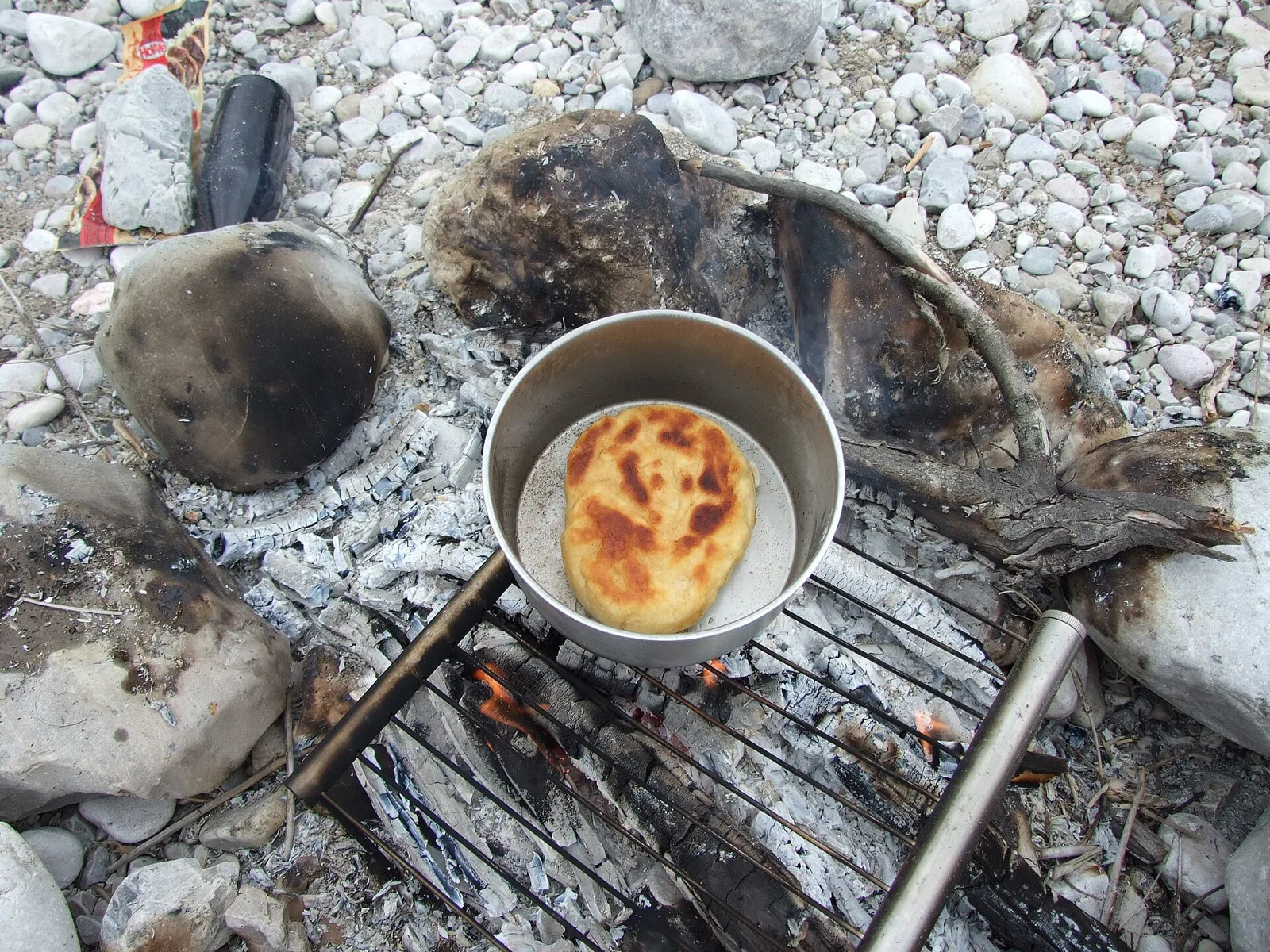

The pot over the fire
Tripod, grate or stones, cast iron or steel – how to give the pot an even heat you can control.
Read about pot cookingSliced beef, onion and potatoes bubbling under the lid for an hour

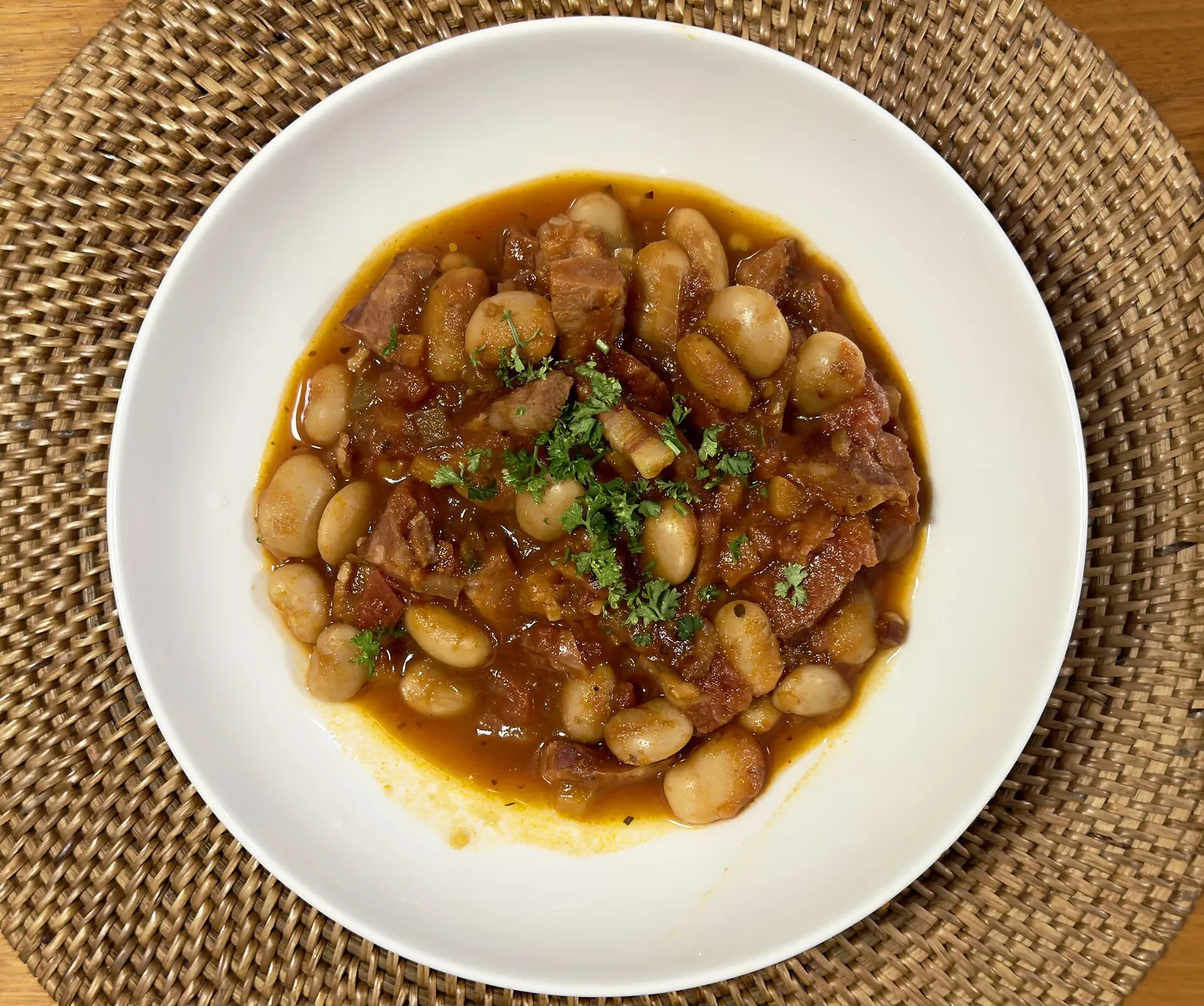
The pot has been sitting on the embers for a good half hour when someone lifts the lid to take a peek. The steam rises like a cloud in the cold, and suddenly the whole fire pit smells of onion, bay leaves and dark beer. The skis are leaning against the woodshed, and whoever is coldest has moved closest to the fire without anyone having to say a word.
Sjömansbiff, Swedish "sailor's beef" – a beef and potato casserole with beer – is made for exactly this: everything in one pot, nothing that needs turning and a sauce that makes itself while you wait. The tricky part over a fire is not the flavour but the bottom of the pot. With the layers in the right order, the lid on and the pot on embers rather than in flames, the meat turns tender and the potatoes stay whole. If it is your first time cooking in a pot outdoors, read about cooking in a pot over the fire first.
If the whole family is to eat the same casserole without alcohol, swap the beer for the stock with syrup and soy sauce and follow the same steps. In that case hold back the salt until you taste it in step 10, since twice the amount of stock plus the soy sauce already adds salt. If the adults want to keep the beer, make two smaller pots with half the quantity of everything in each, and keep track of which is which.
Have you made this recipe? Rate it
0.0 out of 5 · 0 votes
out of 5
vote
votes
Be the first to rate this recipe.
Thanks for your vote!
Your vote could not be saved right now. Please try again later.
 🔥 Over fire
 🔥 Over fire
 🔥 Over fire
 🔥 Over fire
Below freezing there are three things that cause trouble on the way out, and all three can be solved at home.
It is a good idea to slice the onion at home, so you do not have to stand with a knife and thin gloves by the fire. Cut the butter into pieces before you leave, because a whole block of butter goes as hard as a bar of soap in the cold.
If you want to eat as soon as you arrive, or it is too cold to stand still for an hour and a half, make the whole sjömansbiff at home and take it in a preheated food flask. More about how the home kitchen and the flask share the work is in cooking outdoors in winter, and how to pack the heavy pot safely is in pulk sled with gear.
The alcohol does not cook off completely. It is a common belief that all the alcohol disappears when the beer boils. Measurements on simmering food show that about a third usually remains after half an hour and about a quarter after an hour. Only after a couple of hours is almost all of it gone, and with the lid on probably even less evaporates. The amount per portion is small, but if you want the children's food to be alcohol-free, make the casserole with stock. Swedish svagdricka (a sweet, low-strength malt drink) and low-alcohol beer are not alcohol-free either – they often contain around two per cent.
Scalding sauce in the cup. The juices in a sjömansbiff are as hot as boiling water and stick to the skin. Let the children's portion cool for a while in the bowl before handing it over, and give them a bowl with a rim rather than a wooden cup that tips over in thick mittens.
Burns outdoors in winter. Cool the burn with cool water, for example from the flask once it has cooled, for about a quarter of an hour but no longer, as the risk of hypothermia increases after that. Never use snow or ice – it damages the skin more. Cool only the injured area and keep the rest of the child warm. Seek medical care for blisters covering an area larger than the child's hand, for burns on the face, hands or feet, and always if the child is 12 months old or younger. More about staying safe at the fire in fire safety in nature.
Hot food should be hot. Anything to be eaten later, from a flask or as a second helping, should be piping hot, at least 60 degrees. Food that has gone lukewarm is eaten straight away or reheated until it boils. Leftovers can cool outside in the snow in an airtight tub or bag when it is a few degrees above freezing or colder, and should then go in the fridge as soon as you get home.
Allergens: beer contains gluten from barley, butter contains milk, and stock cubes can contain celery and gluten. Soy sauce contains soya and often wheat. With gluten-free stock and without beer and soy sauce, the casserole is gluten-free.
School-age children can peel the potatoes at home with a peeler. By the fire they can set out potato slices, meat and onion in three piles on a chopping board in the order they go in, so all an adult has to do is add them once the pot is hot. The pot is already hot after browning, so whoever adds the layers needs fire gloves and should stand to the side of the fire, not over it. The youngest can count the bay leaves and make sure they all come out of the pot before the food is served. An adult handles the pot lifter and the lid, which gets very hot.
It takes an hour before the food is ready, and an hour standing still in the cold is a long time for a child. Let them do a lap of the ski track, build a snow chair or fetch wood in the meantime, and have something hot to drink while you wait. Tips on keeping the children warm are in how cold is too cold on the slopes and more about responsibility around the fire in cooking with children over a fire.
Not quite. After an hour of simmering about a quarter of the alcohol is still there, and only after a couple of hours is almost all of it gone. The amount per portion is small, but if you want to give the children completely alcohol-free food, cook their portion in beef stock with a little dark syrup.
Yes. Swap the beer for the same amount of beef stock and flavour it with a tablespoon of dark syrup, which gives the slightly sweet, dark note the beer otherwise provides. Svagdricka and low-alcohol beer often contain around two per cent alcohol, so they are not an alcohol-free alternative. Alcohol-free beer may contain no more than 0.5 per cent and also works if you want to keep the beer flavour.
Chuck and shoulder turn the most tender when they simmer for an hour, as they have a little fat and connective tissue that melts. Topside and silverside are leaner and quicker but turn dry if they cook for too long.
Allow 50–60 minutes under the lid once it is simmering, plus the time it takes to brown and bring it to the boil. In hard frost and wind it can take another quarter of an hour. It is ready when the potatoes are soft all the way through and the meat is tender.
Yes, it is a good option on a really cold day. Cook the casserole at home, preheat a food flask with boiling water and fill it right to the top with the piping hot casserole. Eat it the same morning or at lunch, and heat it in a saucepan by the fire if it has gone lukewarm.
Let them cool in an airtight tub in the snow and put them in the fridge when you get home. Reheat them until they boil the next day, or dice the meat and potatoes and fry up a pyttipanna over an open fire.
You will find more dishes for the same embers under fire food, and for pudding you can put apples baked in the embers in while the pot bubbles away.
More for the pot by the fire
The pot over the fire
Tripod, grate or stones, cast iron or steel – how to give the pot an even heat you can control.
Read about pot cookingThe pot in the pulk
A heavy cast-iron pot, a flask and lunch boxes – how to pack the pulk so nothing tips over, leaks or freezes.
Pack the pulk properlyThe leftovers become pytt
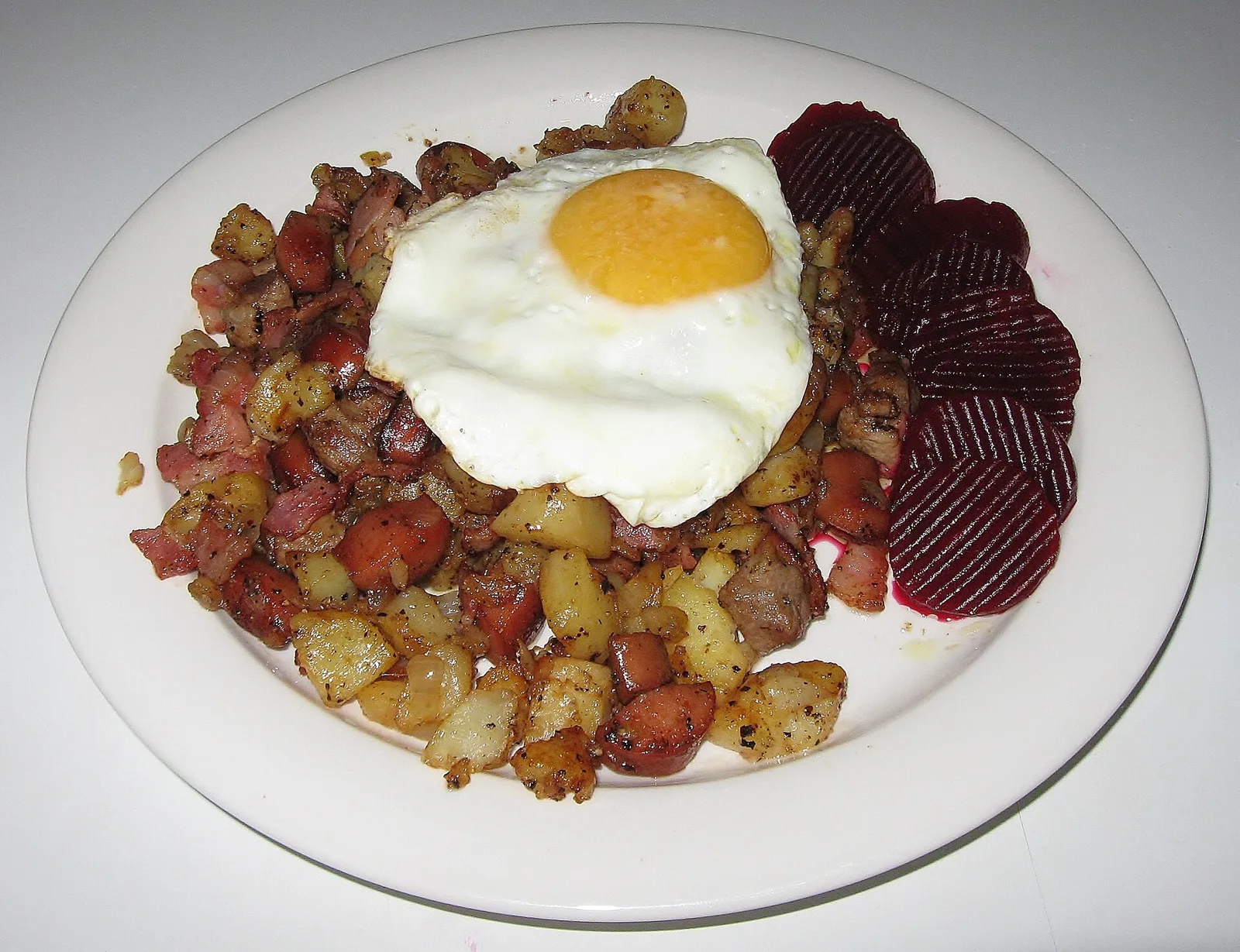
Was there meat and potato left in the pot? Dice the leftovers and fry up a pyttipanna (Swedish hash) in the frying pan the next day.
To the pyttipanna