


The food flask carries the heat
Preheat it, fill it right to the top and do not open it unnecessarily – and the soup arrives hot at the fire pit.
To the winter kitchenYellow peas, lightly salted pork and mustard – from the pot or the flask

It is a Thursday in February and five below at the fire pit. The skis are standing in the snow, someone has got the birch wood going and the pot is already on the grate. The lid rattles a little as the soup starts to bubble, and the smell of thyme and lightly salted pork spreads between the spruces. The children are stamping their feet with their wooden cups in their hands.
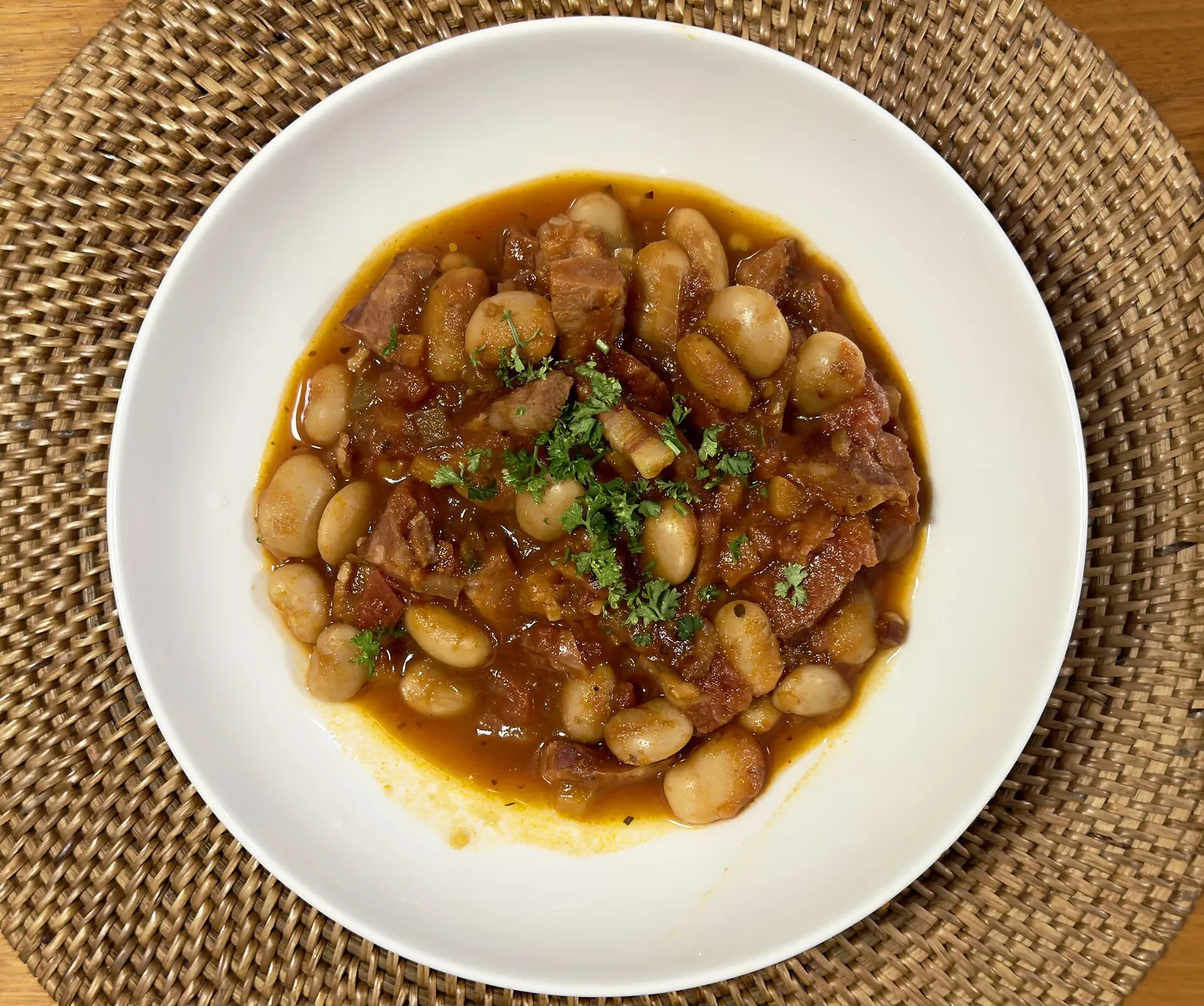
Ärtsoppa, Swedish yellow pea soup with pork, is perhaps the most Swedish dish there is to cook over a fire. In the old days it was cooked in a cauldron over an open hearth, and it is happy to stand and bubble away. But it also has its quirks in the cold: it thickens like porridge as it cools and easily sticks and burns on the bottom when you heat it. Here is how to make it at home and heat it outdoors, or cook it from scratch over a whole day at winter camp.
If you cook the soup at home, do the same thing on the hob. At the fire you then heat it in the pot: pour a splash of water into the bottom first, set the pot at the edge of the embers and stir often. Allow 20–30 minutes before cold, thick soup is piping hot all the way through. If it has frozen in its tub during the day, it takes longer.
Have you made this recipe? Rate it
0.0 out of 5 · 0 votes
out of 5
vote
votes
Be the first to rate this recipe.
Thanks for your vote!
Your vote could not be saved right now. Please try again later.
 🔥 Over fire
 🔥 Over fire
 🔥 Over fire
 🔥 Over fire
Ärtsoppa has a long cooking time, and that decides how you plan the day.
A short trip to the fire pit. Cook the soup all the way at home. Bring it cold in a sealed tub and heat it in the pot by the fire, or pour it piping hot into a preheated food flask and eat it as soon as you arrive. That is the simplest approach, and ärtsoppa tastes even better the next day.
A whole day at winter camp. Soak the peas at home the evening before, drain off the water and carry them in a sealed bag. The peas have soaked up water and weigh about twice as much as dry ones, and below freezing they freeze into a lump in the bag. That does not matter – put the lump straight into the pot with the water. Pack the bag tightly in the pulk, so nothing leaks into the sleeping bag. You melt the cooking water from snow – allow just over two litres, and read how to do it in melting snow for water. The pot then needs to bubble away for a couple of hours, so it uses a lot of firewood.
Soup from the freezer. On an overnight trip the soup can come along frozen in a tub. It thaws in the pot over a low heat with a splash of water in the bottom, but it takes time. Stir often and scrape the bottom until the whole lump has melted.
More about the food flask and why most winter food is best cooked at home is in cooking outdoors in winter.
Piping hot ärtsoppa is thick and sticky. It sticks to the skin and holds its heat for a long time, rather like porridge, and 1177 (the Swedish healthcare advice service) mentions boiling porridge specifically as an example of something that can cause deep burns. Fill the children's cups halfway, let the soup cool for a while and have the children sit down to eat with the cup on a steady surface, not on their lap.
If someone gets burnt: cool it with cool water straight away, ideally from the flask or a bottle. Never use snow or ice – it does more harm than good. Do not cool it for longer than about 15 minutes, so the child does not get chilled. Contact a health centre or an out-of-hours clinic immediately if the burn is on the face, hands or feet, if blisters have formed and the burn is larger than the child's own hand, or if the child is one year old or younger. Call 1177 if you are unsure.
What applies to the fire itself, and how to set up the pot safely, is covered in fire safety in nature. Also check that there is no fire ban – read more in lighting fires outdoors. Never cook the soup in a closed tent – see carbon monoxide in a tent.
Livsmedelsverket, the Swedish Food Agency, uses 60 degrees as the guideline for food that is kept hot. So a soup that has been sitting lukewarm in the flask or the pot for several hours should be eaten straight away or brought properly to the boil, not saved for the next day.
If there is soup left over, it should cool quickly. This is where winter helps: according to Livsmedelsverket, larger amounts of food can be cooled outdoors when it is a few degrees above freezing or colder. Put the pot with the lid on in the snow, or pour the soup into smaller tubs so it cools faster. Then it goes in the fridge or freezer at home.
The soup itself contains no gluten, milk or eggs. Mustard, on the other hand, is one of the common allergens, so put it out on the side instead of stirring it in. The pancakes afterwards contain milk, eggs and wheat. Peas are legumes, so anyone sensitive to legumes should be careful.
Ärtsoppa splits children into two camps, but being allowed to help often makes a difference. Children can sort the peas the evening before and look for small stones, skim the soup with the slotted spoon together with an adult and snip the pork into pieces once it has cooled. The mustard is more fun if everyone gets to add their own dollop.
An adult handles the pot of boiling soup. Have the children keep their distance when the pot is lifted, and decide where the cups should stand. More ideas for what children can do at the fire are in cooking with children over a fire, and if you are sleeping outdoors, read winter camping with kids.
And yes, peas give you wind. In a tent with four people it can be a memorable night. Air it out a little extra, and laugh about it.
Eating peas with pork on Thursdays is an old Swedish tradition. It has to do with the Friday fast in Catholic times, and later with poorhouses, regiments and school canteens that cooked to a fixed weekly schedule. The pancakes for dessert came later.
By the fire the pancake fits perfectly: mix the batter at home, bring it in a bottle and fry the pancakes in a frying pan on the grate once the soup pot is empty. The basic batter is in pancakes for the whole family, and more old dishes by the fire are in swedish outdoor food and history. If you want something warm and sweet in your cup afterwards, try warm bilberry soup.
Whole yellow peas should be soaked for about 12 hours. Otherwise they take much longer to cook soft, and you rarely have time for that by a fire. Split peas need a shorter soak or none at all – follow the packet.
Soaked whole yellow peas need about 1½–2 hours on a low heat, until they are soft and starting to fall apart. Over a fire it can vary with how even the heat is, so taste the peas.
It depends on the flask and the cold. Preheat it with boiling water, fill it right to the top with soup that has just boiled and do not open it unnecessarily. If the soup has gone lukewarm, it should be eaten straight away and not saved.
Yes, ärtsoppa freezes well in portions. It is a good way to bring it on a longer trip – it thaws in the pot with a little water in the bottom over a low heat.
The peas keep absorbing liquid as the soup cools. Thin it with water, a decilitre at a time, while you heat it, until it has the right consistency again.
A coarse, sweet and strong mustard is the classic. Put it out on the side, so everyone can help themselves – and so anyone who cannot tolerate mustard can avoid it.
More winter food by the fire
The food flask carries the heat
Preheat it, fill it right to the top and do not open it unnecessarily – and the soup arrives hot at the fire pit.
To the winter kitchenThe pancake after the soup
Thursday's obvious dessert – the batter is mixed at home and fried in the pan once the soup pot is empty.
To the pancakesTwo litres of water from snow
Soup from scratch at winter camp needs a lot of water. Here is how to melt snow without a burnt taste.
To melting snow