


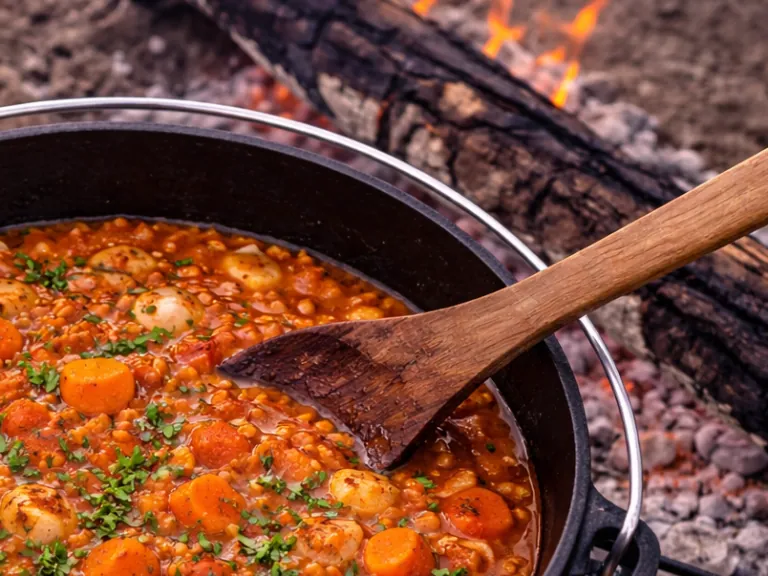
Kalops in the food flask
Preheat, fill it right to the top and eat while it's piping hot – that's how you carry dinner out into the cold.
To the winter kitchenChuck steak, allspice and bay leaves – with beetroot and boiled potatoes
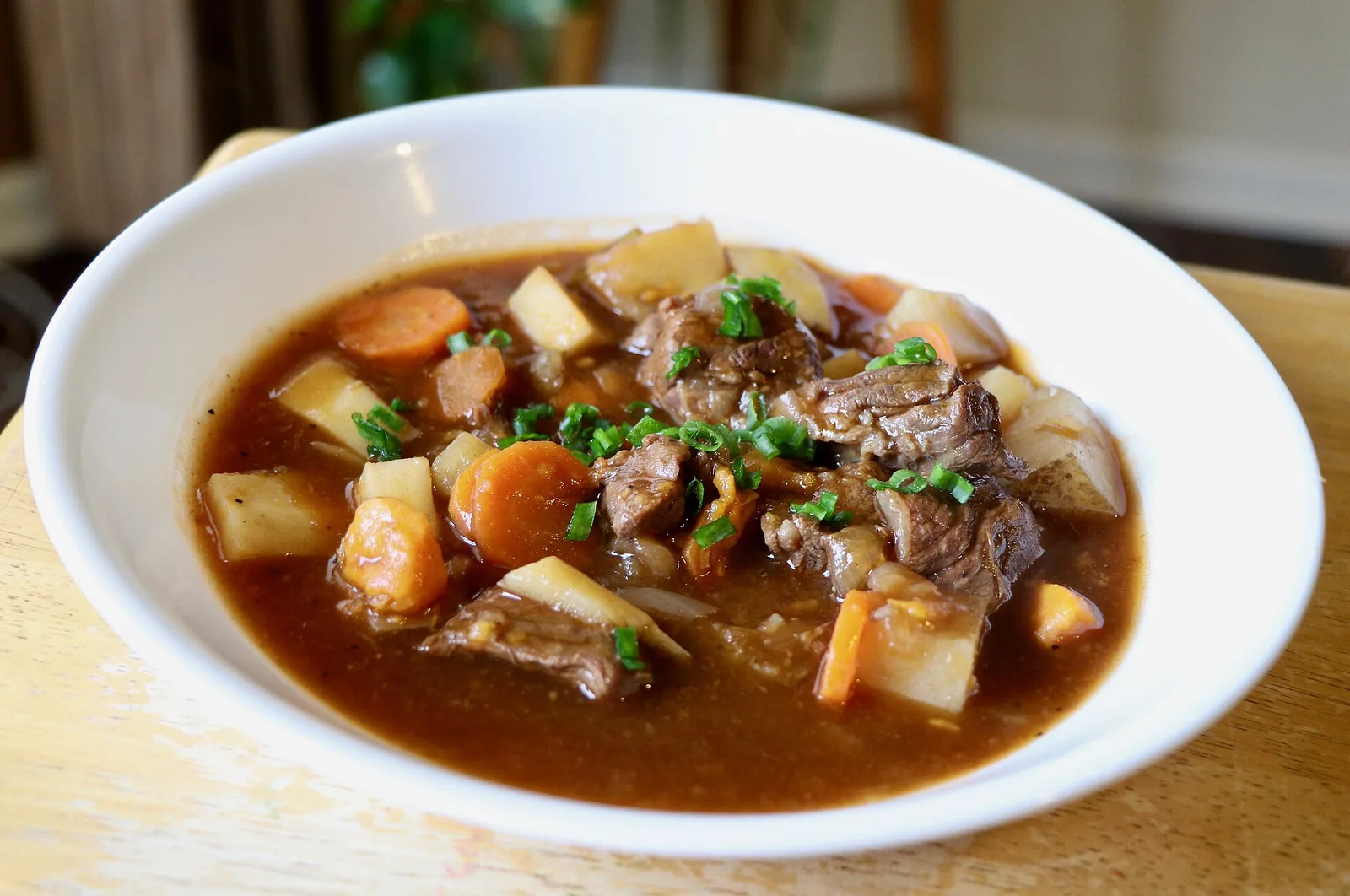
Kalops, a Swedish beef stew with allspice, is one of the oldest stews in Swedish cooking. It already appears in Cajsa Warg's cookbook from 1755, and the name comes from the English word collops, meaning slices of meat. Chunks of stewing beef simmer until they fall apart, with onions, carrots, a handful of allspice berries and a few bay leaves. It is served with boiled potatoes and pickled beetroot, and it is the sweet-and-sour bite of the beetroot that makes kalops kalops.
On a January day by the lean-to shelter, when the snow creaks underfoot and the daylight runs out by three o'clock, kalops is almost unfairly good. It is also one of the few dishes that gets better if you make it the day before. The only problem is time: the meat needs about two hours over low heat. So this kalops starts with a choice – where will those two hours be spent?
Have you made this recipe? Rate it
0.0 out of 5 · 0 votes
out of 5
vote
votes
Be the first to rate this recipe.
Thanks for your vote!
Your vote could not be saved right now. Please try again later.
 🔥 Over fire
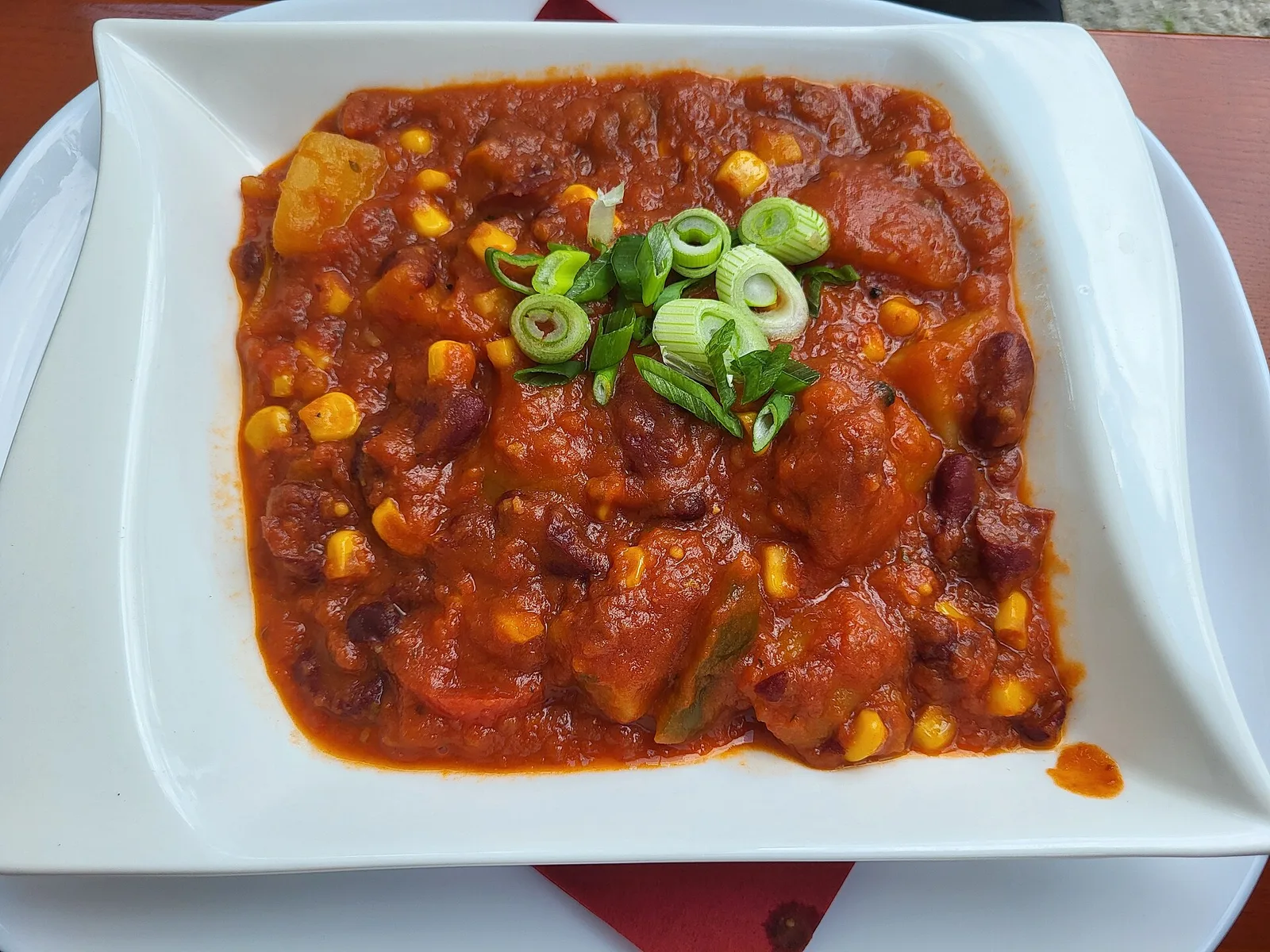 🔥 Over fire
 🔥 Over fire
 🔥 Over fire
Nobody wants to stand for two hours at a fire pit by the ski tracks with frozen children. So decide in advance where the cooking will happen.
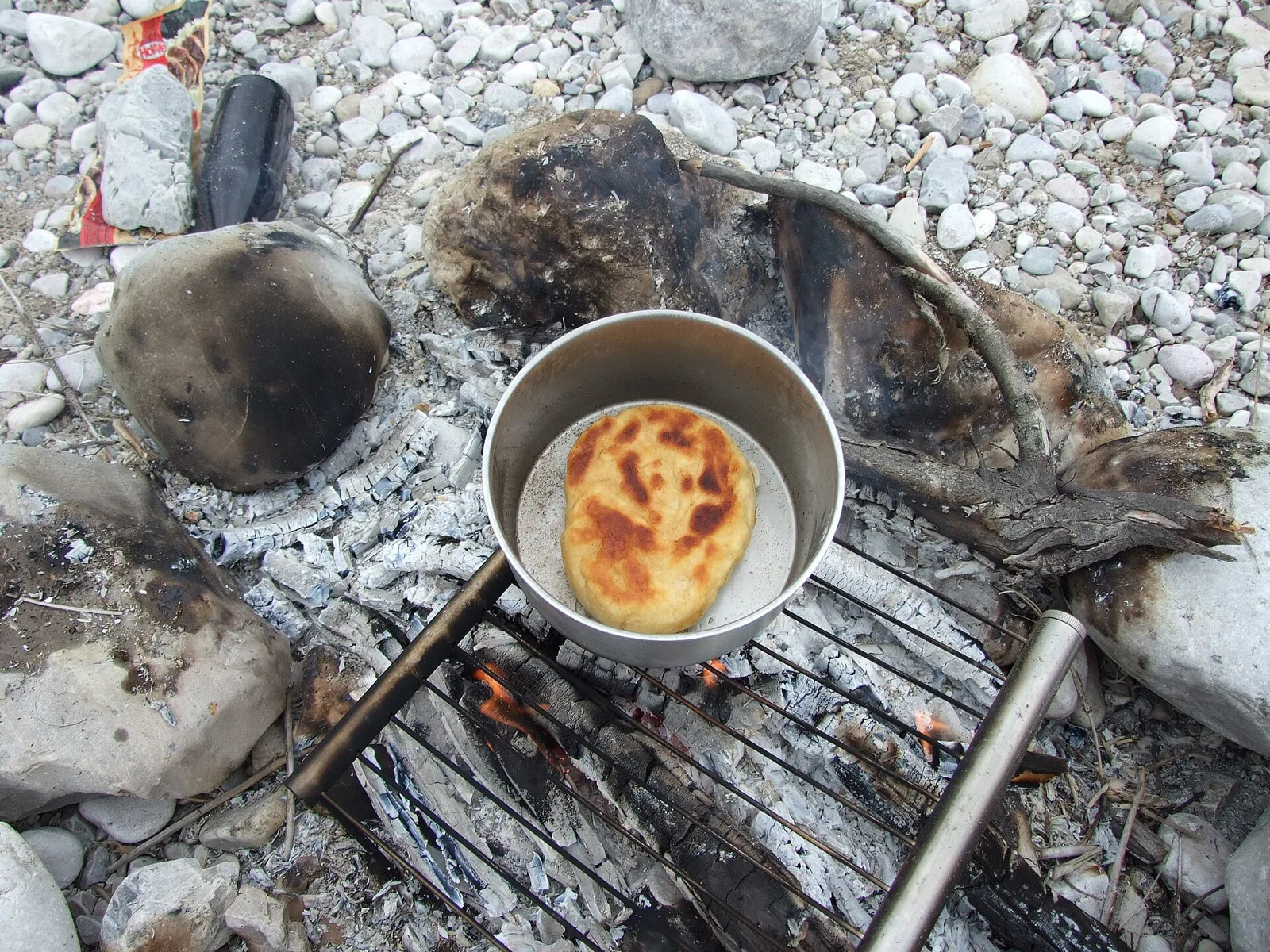
Cook the kalops all the way at home the night before, cool it quickly and keep it in the fridge. It thickens and the flavours settle overnight. Outdoors the pot only needs reheating, which takes about half an hour, longer if the kalops is frozen. Pour a splash of water into the bottom before the set kalops goes in, put the lid on and start on low heat so it doesn't burn onto the pot before it has thawed. Stir gently once the edges come loose and let it come to a proper boil before you eat. Then boil the potatoes outdoors, or bring some frying-pan bread to bake while the stew heats up.
The old way of saving fuel: the pot is brought to the boil and then insulated, so it keeps cooking in its own heat. It suits a day when you're staying put at the lean-to shelter or the tent anyway.
Let the kalops simmer for 45 minutes over the fire. Then push the pot into the middle of the embers and let it boil hard with the lid on for a couple of minutes, so that it is piping hot all the way through when you wrap it up. Stand it on a dry log or a thick piece of cardboard, not directly on the sleeping mat, which can melt from the hot base. Wipe off the soot, put a towel or some newspaper around the pot and pack it tightly in a spare sleeping bag, a blanket or down clothing, preferably inside a cardboard box or a large stuff sack. Don't use the sleeping bag you're going to sleep in: the steam makes it damp and the soot sticks, and a damp sleeping bag keeps you less warm at night. Don't lift the lid while the pot is resting.
Allow three to four hours before the meat is tender, but don't leave it for longer than four hours. The pot is cooling all the time, faster in the cold, and below 50 degrees bacteria that survive boiling can start to grow in a stew. So three things always apply:
On a winter camping trip, there's time. Light the fire early, brown the meat while there's still daylight and let the stew simmer while the tent goes up and snow is melted into water. It is also the only option where the kalops is truly cooked over the fire from start to finish. How to get the two litres of water for the stew and the potatoes is explained in melting snow for water.
A full cast-iron pot is heavy and holds its heat for a long time. Lift it with a pot lifter or two pot holders and never put it down where people walk. Hot sauce and fat soaking into thick winter clothes hold the heat against the skin, so pull off wet clothing immediately if someone spills on themselves.
For a burn: cool it with cool water, never with snow or ice. Don't cool it for longer than 15 minutes, because the risk of hypothermia increases in the cold. Seek medical care if blisters form and the burn is larger than the person's own hand, if it is on the face, hands, feet or over a large joint, or if the child is one year old or younger. Check the rules and any fire bans in lighting fires outdoors.
Kalops is mild and sweet from the onions and carrots, and most children like it. What can come as a surprise are the allspice berries, which are hard and taste strong if you bite into them. Hence the spice ball. Let the children count the berries as they go in and count them again when the ball comes out.
Children can peel carrots at home, carry firewood, test with a stick whether the potatoes are soft and put beetroot on their own plates. Beetroot juice stains mittens and snowsuits, so have a paper bag ready for the purple napkins. An adult handles the pot and the potato water. More ideas for what children can do at the fire in cooking with children over a fire.
Round off with apples baked in the embers while the pot cools.
The flour contains gluten. Swap it for cornflour mixed into a little cold water and stirred in during the last few minutes, and the kalops is gluten-free. Butter and sour cream contain milk protein. Many stock cubes and stock concentrates contain celery or lactose, so read the ingredients list.
About two hours over low heat, until the pieces of meat can be cut with a spoon. Chuck and shoulder may need a little longer, especially if the pot has simmered very gently.
Kalops is mild and rich, and the pickled beetroot adds sweetness and acidity that cut through it. That is how kalops has been served for generations, together with boiled potatoes.
Yes, and it tastes better for it. Let it cool quickly, keep it in the fridge and heat it until it boils before you eat. It's perfect to take frozen on a winter camping trip.
Between 10 and 20 for a stew for four. Allspice gives kalops its typical flavour. Put the berries in a spice ball so nobody bites into them.
Yes. Let the pot simmer for 45 minutes, bring it to a proper boil and wrap it tightly in a spare sleeping bag or blanket for no more than four hours. Always bring it back to the boil before you eat, eat straight away and don't save any leftovers.
Kalops is seasoned with allspice and bay leaves and cooked for a long time with onions and carrots. A beef stew can be almost anything, often with potatoes in the pot and quicker-cooking meat.
More winter food by the fire
Kalops in the food flask
Preheat, fill it right to the top and eat while it's piping hot – that's how you carry dinner out into the cold.
To the winter kitchenTwo hours on the embers
Grate, tripod and lid – how to keep the cast-iron pot at a gentle simmer without it burning.
To the pot guideIn a hurry? Quick beef stew
Strips of beef, potatoes and leek in the same pot – ready in an hour when kalops takes too long.
For the beef stew