
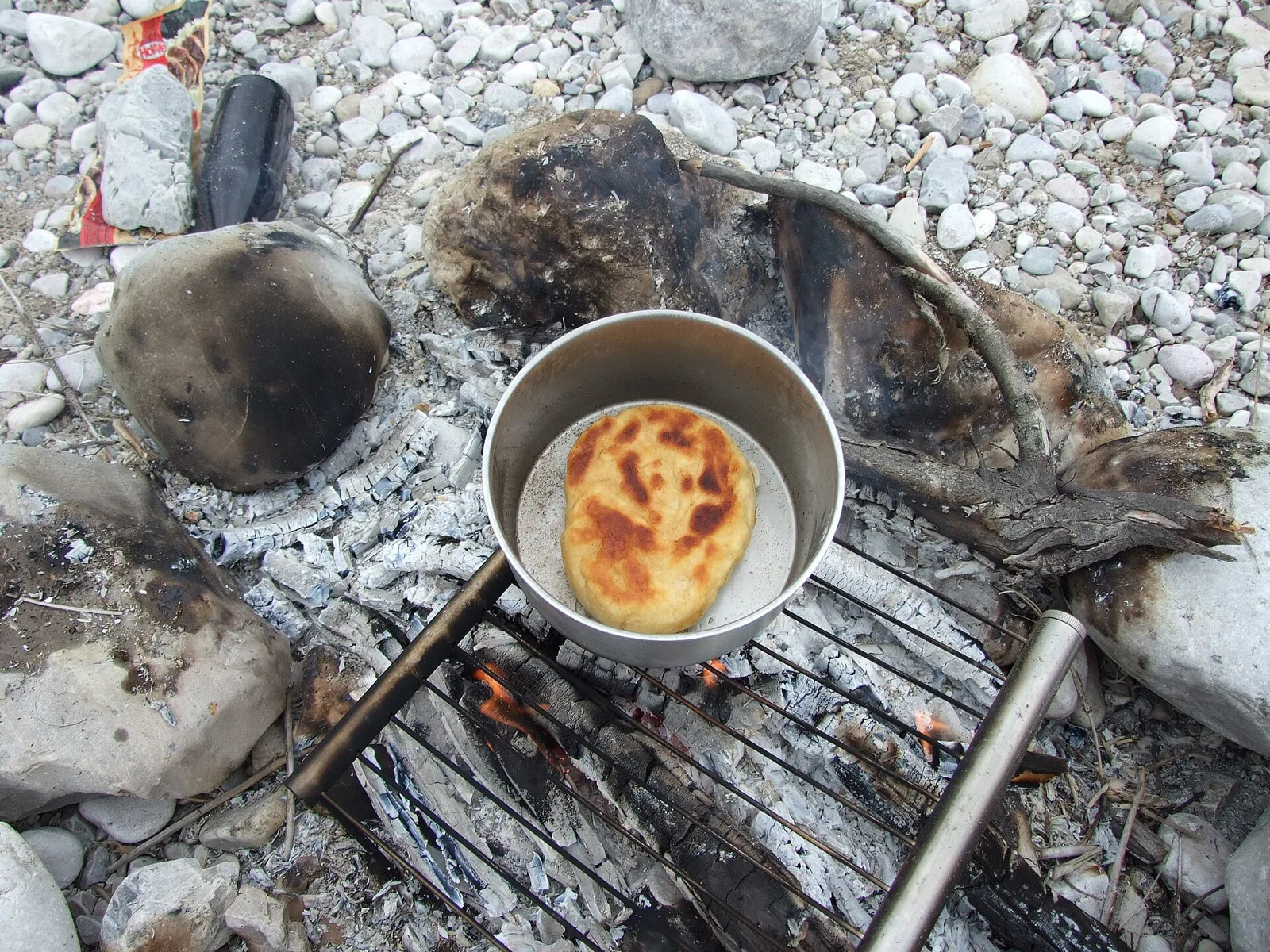


Four stompa at a time on the griddle
A large griddle cooks several breads at once. Here's how to read the heat in the three rings and move the breads between them.
To the griddle guideRye, buttermilk and fennel – one soft bread at a time from the pan
The pan has been sitting on the stones for a while and is so hot that a dusting of flour darkens in a few seconds. The first round goes in dry, and after half a minute the surface starts to bubble and the smell of rye and fennel drifts out across the fire pit. A flick of the spatula, a flip, another minute – and then into the stack under the tea towel, where the next bread will soon land on top.
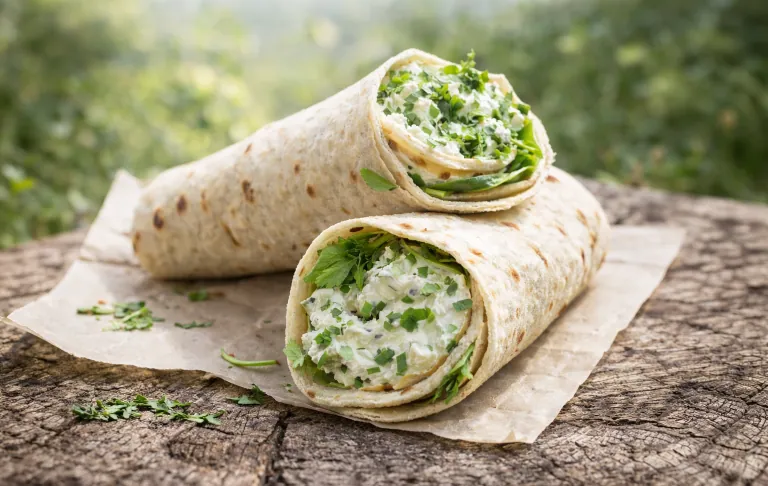
Stompa is a small, soft Swedish flatbread made with rye and wheat, raised with bicarbonate of soda and filmjölk (Swedish soured milk; buttermilk works too) instead of yeast. It's often flavoured with fennel or anise and a little syrup, rather like a limpa (Swedish sweet rye loaf), and cooked in a dry frying pan. The bread is also called frying-pan bread, but it's a different bread from bannock, which is a single round about one and a half centimetres thick, fried in fat under a lid for five to seven minutes per side. A stompa is only a few millimetres thin, cooks without fat in a couple of minutes and is perfect for rolling around a sausage, cheese or suovas.
Today the word is used for a simple home-made bread that many people were given by a grandmother, and that some outdoor schools make over the fire. The recipes differ in the details, but the basis is the same: rye flour and wheat flour, bicarbonate of soda, something sour like filmjölk, a little sweetness and spices, rolled out thin and cooked in a hot pan without fat. There are also home bakers who make stompa with yeast, but it's the soda and the soured milk that give the bread its slightly tangy taste.
In older dialects, in Värmland and Västergötland among other places, stompa meant something completely different, namely mash – bönstompa was boiled beans and rovstompa boiled turnips, mashed into a thick porridge. So the bread has nothing to do with the mash apart from the name.
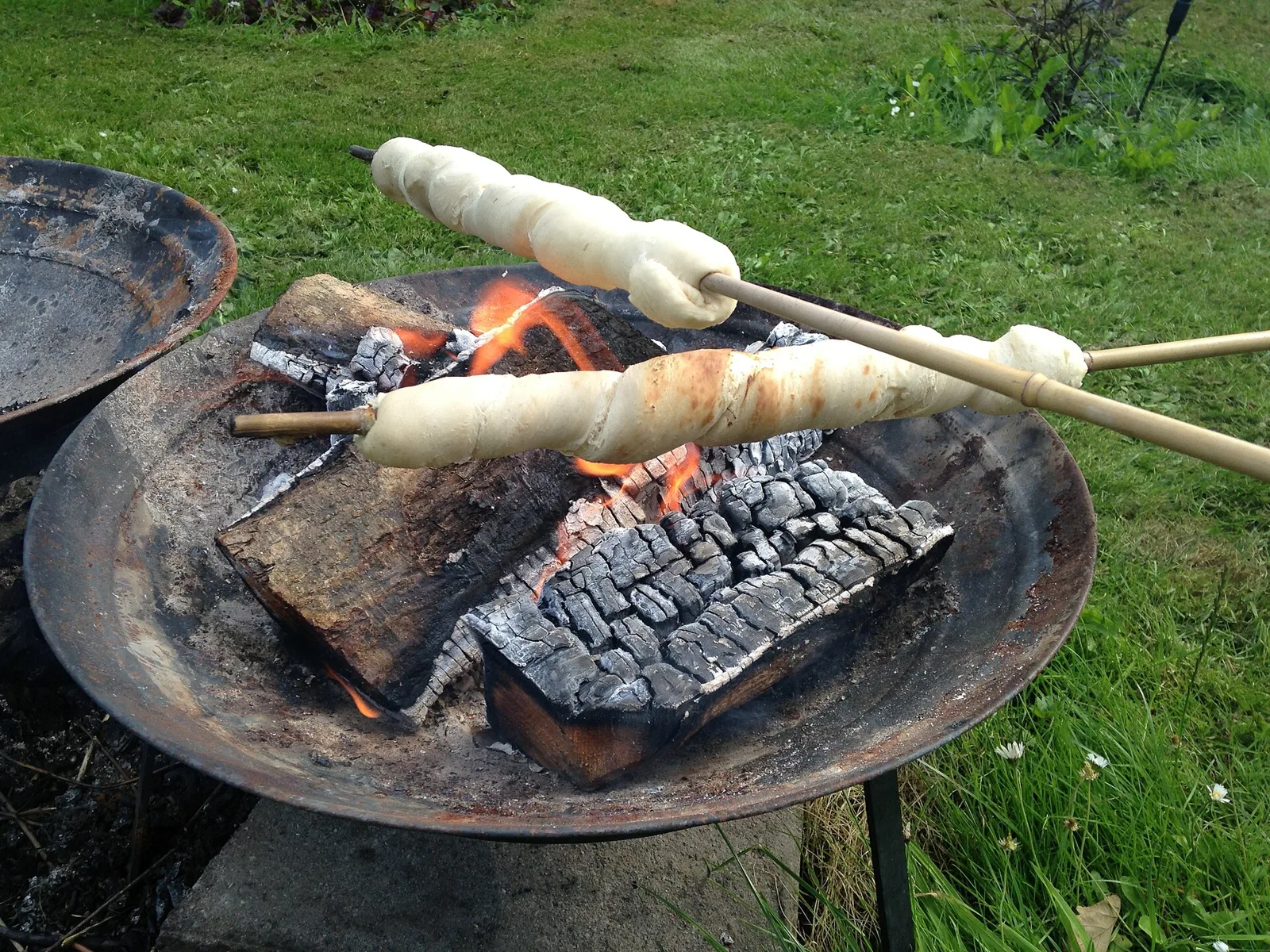
How it differs from other breads by the fire:
Everything that decides whether the stompa turns out soft and cooked through fits into three words.
How to read the heat in the pan and where the hottest part of the cooking surface is can be found in the guide to griddle and frying pan. A larger griddle pan takes three or four breads at once and makes the cooking much quicker.
Have you made this recipe? Rate it
0.0 out of 5 · 0 votes
out of 5
vote
votes
Be the first to rate this recipe.
Thanks for your vote!
Your vote could not be saved right now. Please try again later.
 🔥 Over fire
 🔥 Over fire
 🔥 Over fire
 🔥 Over fire
At home. Crush the fennel coarsely and mix it with all the dry ingredients in a sealed bag. Tie the bag and write on it how much filmjölk and syrup need to go in. Pour the syrup into a small jar with a lid.
On the way. The filmjölk is a chilled food. Pack it in the cool box with ice packs and put the cool box in the shade when you arrive. In summer heat it shouldn't be left out for more than two hours, and never in the sun.
By the fire. Don't mix the dough until the pan is almost hot. The bicarbonate starts working as soon as it meets the soured milk, and a dough that sits waiting for a long time loses some of its rise. If you're making lots of breads, you can cook half at home on the hob and only cook the rest over the fire.
Doing it all at home. Stompa is great for cooking at home and bringing along. Let the stack cool under the tea towel, put the breads in a bag and warm them for half a minute per side in the pan by the fire. Leftover breads can be frozen.
A cast-iron pan stays hot long after it has been lifted off the fire, and the handle gets as hot as the cooking surface. Always use a barbecue mitt, and put the pan on a stone or a grill, never on the ground where someone could step on it. Have the children stay on the rolling-out side of the fire while an adult handles the pan.
If someone burns themselves: cool with cool water for about a quarter of an hour, no longer, and never with ice or snow. Seek medical care if there are blisters over an area larger than the injured person's hand, if the burn is on the face, the hands or over a joint, and always if the child is one year old or younger. More about safe fires can be found in fire safety in nature. Always check whether there's a fire ban – the county administrative board's or the municipality's decision is what counts, and the rules are in lighting fires outdoors.
The filmjölk: no more than two hours out in summer heat, and never in the sun. Only take it out of the cool box when it's time to mix the dough.
Raw dough: flour isn't heat-treated and can in rare cases contain EHEC bacteria, which can cause serious stomach illness. The risk is very small and the bacteria die when the bread is cooked, but don't taste the raw dough, and wash your hands before and after rolling out. How to do it without running water is explained in hygiene and washing up outdoors.
Allergens: stompa contains gluten from rye and wheat and milk from the filmjölk. See the gluten-free and dairy-free options under the variations.
Stompa is one of the best breads to bake with children, because each bread only takes a couple of minutes and everyone can make their own. At home the children can measure out the flour, crush the fennel in the mortar and tie up the bag.
By the fire they can roll balls, turn them in flour and roll out their own rounds on a chopping board. Let them make patterns with the fork – a heart, an initial or a face shows up clearly once the bread is cooked. One child can be the timekeeper and say when it's time to flip, and another can look after the stack and the tea towel. The pan, the flipping and the fire are handled by an adult, or by an older child with a barbecue mitt and an adult alongside.
Let the children eat their own bread first. More jobs to suit different ages can be found in cooking with children over a fire.
Stompa is a small, soft flatbread made with rye flour and wheat flour, raised with bicarbonate of soda and filmjölk (Swedish soured milk). It's often flavoured with fennel or anise and a little syrup and cooked in a dry frying pan for about a minute per side. It's also called frying-pan bread.
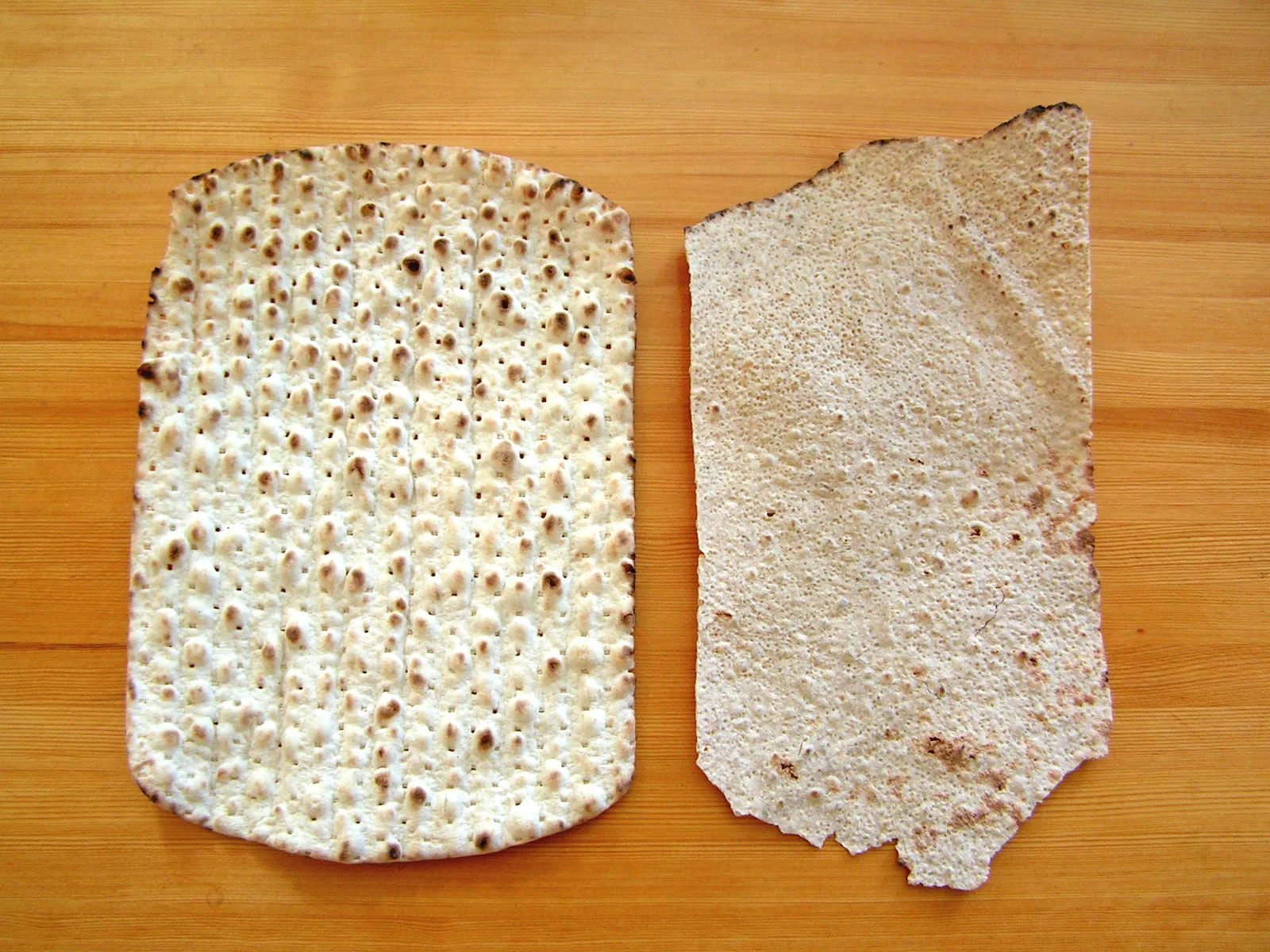
Stompa is a kind of soft tunnbröd (Swedish flatbread). What sets it apart from most other flatbreads is that it's raised with bicarbonate of soda and filmjölk instead of yeast or no raising agent at all, that it contains rye and spices, and that it's cooked in a frying pan rather than in an oven or on a stone.
About a minute per side in a pan over medium-high heat, but the heat over a fire varies, so let the bread decide, not the clock. Flip it when bubbles appear on top and the edge comes loose. The bread is done when both sides have brown spots and the round is firm but pliable.
Yes. Swap the filmjölk for yoghurt, kefir or a cultured oat product of the soured-milk or yoghurt type, which are also sour. With ordinary milk or water you need an extra teaspoon of baking powder, as bicarbonate only rises together with something sour.
Roll it thin, cook it briefly and put each bread straight onto a stack wrapped in a tea towel. The steam from the warm breads makes the whole stack soft.
Yes. Let the breads cool under the tea towel, put them in a bag and freeze. Warm them for half a minute per side in a dry pan by the fire, and they'll be soft again.
More for the pan and the bread basket
Four stompa at a time on the griddle
A large griddle cooks several breads at once. Here's how to read the heat in the three rings and move the breads between them.
To the griddle guideSoup to dip your stompa in
Pea soup in a pot over the fire with a stack of warm stompa alongside – with butter and a little mustard it makes a whole meal.
To the pea soupMore jobs for the children by the fire
What children of different ages can do themselves, where to draw the line and how to divide up the work around the fire.
To the children's guide