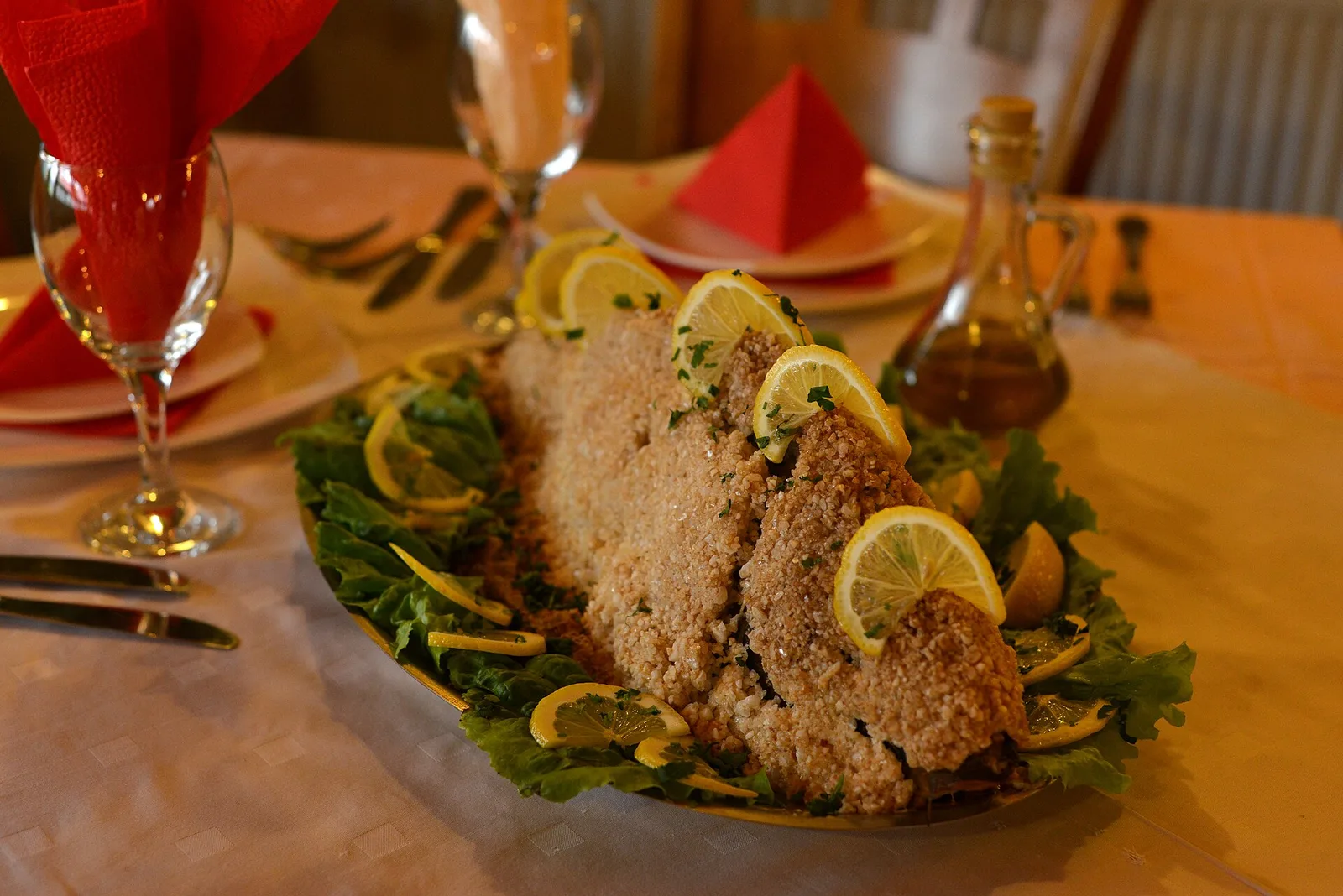
Photo: Igor todorovski, Wikimedia Commons (CC BY-SA 4.0)
Someone lifts the lid off the pot, and there lies a pale, hard loaf that doesn't look like food at all. Then a spoon taps on the crust, it cracks with a dry crunch, and the steam that billows up smells of rosemary and roast meat. Meat in a salt crust is campfire cooking with a little piece of theatre built in, and at the same time one of the most reliable ways to get a whole joint evenly juicy over an open fire.
The dough is just flour, salt and water – in other words the same as homemade play dough. It forms a tight shell round the meat that holds in the juices and protects against hot spots in the embers, so the meat bakes in its own steam instead of drying out at the edges. The crust isn't eaten, it's thrown away. It all comes down to four words: sear, seal, probe, rest. Sear the surface, seal the meat tightly in the dough, probe the temperature with the thermometer and let the meat rest in the crust while you wait.
Method
1
Make the dough at home. Mix the flour and salt in a mixing bowl, stir in the egg white and add the water a little at a time while you knead. The dough is right when it's firm and pliable like modelling clay and doesn't stick to your fingers. If it's sticky, knead in more flour. If it cracks, add a tablespoon of water.
2
Light the fire. Make a fire beside the pot that will keep producing embers the whole time. How to get it going quickly is explained in lighting a fire step by step.
3
Sear the meat. Turn the pot lid upside down over the embers, or use a griddle pan, and let it get really hot. Sear the meat in the oil for one to two minutes per side, the ends too, until it's browned all over. Don't salt it. Put the meat on a clean tray and let it cool for five minutes.
4
Roll out the dough. Lay a sheet of baking paper on a flat stone or a plate, sprinkle on a little flour and roll the dough out with the bottle to about one centimetre thick. It should be big enough to fold round the whole joint.
5
Seal it in. Pat the meat dry, put the herbs and garlic on top and lay it in the middle of the dough. Fold the dough up round the meat, pinch all the seams together properly and patch any holes with a piece of dough. Turn the parcel so the seam faces down.
6
Into the pot. Put the rack or the stones in the bottom of the pot and lower the parcel in on the baking paper. Put the lid on.
7
Oven mode. Put about half the embers under the pot and half on the lid, and turn the pot and the lid a quarter turn in opposite directions every fifteen minutes. How to measure out the embers and replace them in time is explained in cast-iron pot over a fire.
8
Probe through the crust. Start measuring a quarter of an hour before the shortest time in the list below. Brush off the ash, lift the lid away from your face, push the thermometer straight through the crust into the middle of the thickest part and wait until the reading stops moving. The little hole doesn't matter.
9
Take it out in time. When the thermometer shows the take-out temperature, lift the parcel out on the paper and set it on a stone or a log.
10
Rest. Let the meat rest in the crust for 15–20 minutes. The crust keeps on heating, and the temperature in the middle rises a few more degrees.
11
Crack it open. Tap all round the crust with the back of a spoon until it cracks, or saw the top off with a knife like a lid. Lift out the meat, brush off loose grains of salt and slice it across the grain. Throw the crust away.
Have you made this recipe? Rate it
0.0 out of 5 · 0 votes
out of 5
vote
votes
Be the first to rate this recipe.
Thanks for your vote!
Your vote could not be saved right now. Please try again later.
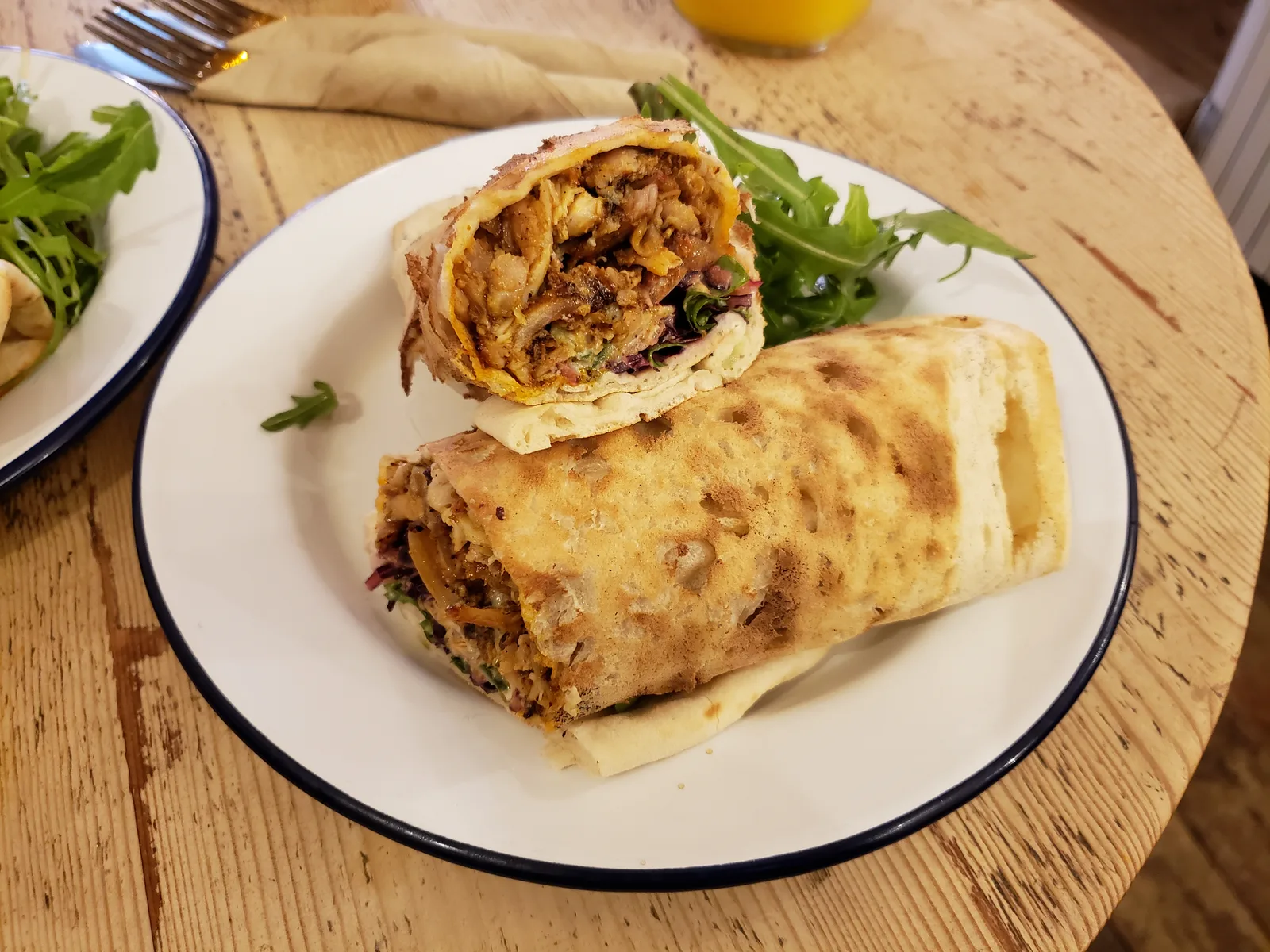
Kebab in tunnbröd over an open fire – marinated at home, fried in strips by the embers
🍽️ 4 servings🥕 28 ingredients👣 10 steps
🔥 Over fire
Sjömansbiff over an open fire – Swedish "sailor's beef" with meat, onion and potatoes layered in the pot
🍽️ 4 servings🥕 15 ingredients👣 11 steps
🔥 Over fire
Wilderness burgers with lean meat – the perfect lunch at the fire pit over an open fire!
🍽️ 4 servings🥕 10 ingredients👣 6 steps
🔥 Over fire
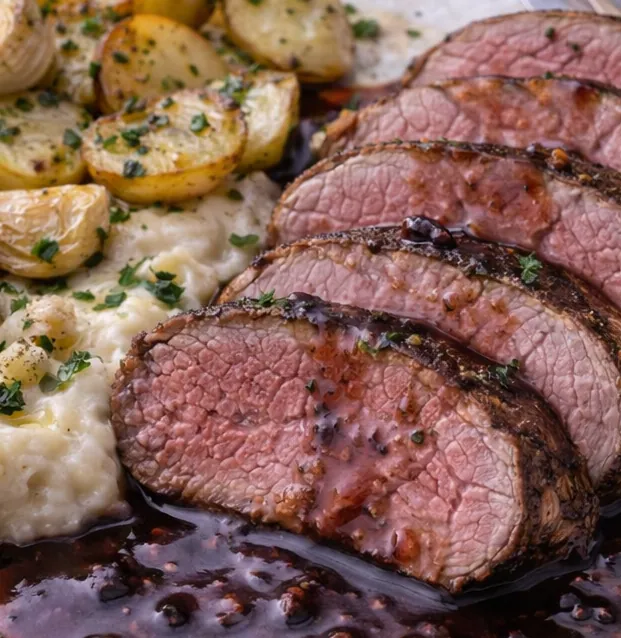
Steak straight on the embers – no grill, no pan, just hardwood embers
🍽️ 4 servings🥕 15 ingredients👣 11 steps
At home and by the fire
The salt dough is made for preparing at home. It's sticky and dusty, and it's easier to knead at the kitchen worktop than on a tree stump.
At home: knead the dough, put it in a sealed plastic bag and keep it cold. One batch is enough for a compact joint of about one kilo with one centimetre of dough, and if the parcel is going straight into the embers you'll need a double batch. It keeps until the next day. Pat the meat dry with kitchen paper, season it with pepper and put it in a separate sealed bag.
The journey: the meat travels in the cool box with ice packs. Chilled food shouldn't be left out for more than two hours in summer heat and never in the sun. How to keep the cold chain going and keep raw and cooked apart without running water is explained in hygiene and washing up outdoors.
At the fire: light the fire for the embers before anything else. It takes a good half hour before there are enough embers for both underneath and on the lid, and that's plenty of time to roll out the dough.
Times and core temperature
The time depends more on the thickness of the meat than on its weight. A long, slim joint of one and a half kilos is done almost as quickly as a compact one of one kilo, while a thick two-kilo joint takes considerably longer than a one-kilo one. The times are approximate and apply to a joint of about one kilo and 8–10 centimetres thick, in a pot with even embers. Wind and cold slow everything down, so always let the thermometer decide.
Beef sirloin or fillet, pink: about 35–50 minutes. Take out at 52–54 degrees, about 56–58 degrees after resting.
Boneless leg of lamb, pink: about 45–65 minutes. Take out at 56–58 degrees, about 60–63 degrees after resting.
Pork loin, juicy with a pale blush: about 60–80 minutes. Take out at 63–64 degrees, about 66–68 degrees after resting.
A whole joint can be pink because the bacteria sit on the surface, and that has been properly seared. According to Livsmedelsverket (the Swedish Food Agency), pregnant women and people with a severely weakened immune system should heat whole cuts of lamb, pork, beef and game to at least 60–65 degrees, until they are pink with no trace of blood, because of the parasite toxoplasma. In that case take the beef and lamb out at 58–60 degrees, and they'll end up right after resting. Anyone who wants their meat rarer can instead freeze it for at least three days beforehand.
How can you tell it's done without opening it? You can't, and that's the whole point of the thermometer. The crust looks the same after half an hour as after an hour and a half. The only outward sign is that it starts to smell of roast meat as the middle gets close to the target, and that often comes early.
The bed of embers without a pot
Without a pot the parcel goes straight into the embers, and then the salt dough completely replaces foil.
Thicker dough. Make a double batch and roll the dough out to 1.5–2 centimetres, so the meat doesn't burn where the embers are hottest.
A hollow in the embers. Scrape a shallow hollow in a bed of embers that has burnt down, put in the parcel, cover it with a layer of ash and then a thin layer of embers on top.
Turn once. Turn the parcel with the tongs and spade halfway through, so the same side isn't against the hottest part the whole time.
Allow longer and measure more often. The heat is more uneven than in the pot, and the outside of the crust turns black. That doesn't matter, since the crust is thrown away anyway.
If you'd rather wrap the meat in foil, thickness, folding and times are covered in foil parcels in the embers. If you have a whole day, the encrusted meat can also go into a cooking pit with hot stones.
💡
Tips for meat in a salt crust
Dry meat, firm dough. A wet meat surface or a sticky dough makes the meat steam and the crust soggy on the inside. Pat the meat dry and knead the dough firm.
Always sear first. Searing gives colour and flavour the dough can't, and it takes care of the surface of the meat. Livsmedelsverket advises always searing the surface of whole cuts of meat, because that's where the bacteria are.
Don't salt the meat. The salt dough seasons the surface a little, and nothing more is needed. Put flaky salt on the table instead.
Take it out early. The salt crust holds the heat for a long time, so the meat keeps getting warmer while it rests. If you wait until the thermometer shows the final target, the meat will be overdone.
A compact joint. A joint of even thickness turns evenly pink. Tuck the thin end of a beef fillet under itself before sealing it in.
Sauce from home. The meat gives almost no pan juices inside the dough, and most of the juice stays in the meat. A cold sauce made at home and kept cold is easiest.
🛡️
Safety at the fire and with the salt dough
The steam when the crust is opened. The crust is full of hot steam. Crack it open with your arm stretched out and your face turned away, and never let a child lean over the parcel when it cracks.
The heavy pot. A cast-iron pot with embers on the lid is lifted with a lid lifter and gloves and never carried over anyone. How to lift it and where to put the lid is in the guide to the cast-iron pot, and how to create a safe zone around the fire in fire safety in nature.
The dough isn't food. The salt dough is pretty much play dough, and just as salty. Giftinformationscentralen (the Swedish Poisons Information Centre) warns that children who eat large amounts of such dough can get thirsty and have vomiting and diarrhoea. Give a little to drink and call Giftinformationscentralen on 010-456 67 00 if the child gets symptoms or has eaten more than a tablespoon. For acute symptoms, call 112.
The crust goes in the bin. Never leave the salt crust at the fire site. Dogs and wild animals happily eat dough that smells of meat, and that much salt can be dangerous for them too.
Burns. Cool with cool water for about fifteen minutes, no longer, and never with ice or snow. Seek medical care for blisters larger than the injured person's own hand, for injuries to the face, hands, feet or over large joints, and always if the child is one year old or younger.
Fire bans. The county administrative board's or the municipality's decision determines whether you can light a fire. What applies and where is explained in lighting fires outdoors.
🧒
Salt crust with children
Children who have made play dough already know how salt dough feels, which makes this one of the most fun recipes to make together.
Knead at home. The children can measure the flour and salt, knead the dough and feel when it stops being sticky. Say clearly from the start that this dough mustn't be tasted, not even a tiny bit.
Decorate the crust. Let the children press in patterns with a fork, write their initials with a stick or tuck a sprig of rosemary into a seam. It still shows when the crust comes out of the pot.
Timekeeper. Someone gets to say when it's time to turn the pot every fifteen minutes, and read the thermometer once an adult has pushed it in.
The cracking. Once the meat has rested, an older child wearing gloves can crack open the crust with a spoon, while an adult holds the parcel and the child keeps their face turned away from the steam.
An adult handles the searing, the pot and the lifting. More roles by the fire for different ages can be found in cooking with children over a fire.
⚠️
Common mistakes
The meat turned grey and overdone. It was only taken out at the final temperature and then kept rising while it rested. Next time: take it out 3–5 degrees earlier. The slices will be juicier if you cut them thinly and pour the cold sauce over them.
The middle is too rare after resting. Put the meat back in the pot without the crust and with the lid on for a while, or slice it and fry the slices quickly on the upturned lid.
The bottom of the crust is burnt and the meat dry underneath. The pot had no rack or stones, or had too many embers underneath. Lift the parcel up and move embers to the lid.
The crust cracked and the juices ran out. The dough was too dry or the seams weren't pinched together properly. Patch the crack with a piece of dough or a little wet flour as soon as you see it.
The meat tastes too salty. The meat was salted before it was sealed in, or grains of salt from the crust came along on the slices. Brush carefully and never salt in advance.
No thermometer. You can't see, feel or hear the temperature through a salt crust. Bring one, always.
Vary the meat in a salt crust
Fish in a salt crust. A whole gutted fish of one to one and a half kilos, ideally rainbow trout, Arctic char or salmon, with the scales left on and herbs and lemon slices in the belly. Mix coarse salt with egg white and a little water into a damp mass like wet snow, about two kilos of salt per kilo of fish, or use the same salt dough as above. The fish bakes in the pot for 30–40 minutes and should reach at least 60 degrees in the thickest part by the backbone. The skin comes away with the crust when it's lifted off. Lemon and acidic marinades sit well against the salt but never against foil. Fish in foil is in rainbow trout in foil, and fried fish over a fire in fried perch over an open fire.
Elk or deer. Sirloin or topside of deer and elk is baked like beef and is best pink.
Celeriac or beetroot. A whole unpeeled celeriac or a few large beetroots in salt dough make a vegetarian version that takes about an hour and a half. They're done when a thin skewer goes straight through without resistance.
With potatoes in the embers. Put large potatoes in the bed of embers next to the pot when the meat goes in. Times and how to tell when they're done are covered in baked potatoes in the embers.
Allergens
The salt dough contains wheat flour and therefore gluten, and since the meat lies against the dough, some of it transfers. For coeliac disease, bake the meat in a crust of just coarse salt and egg white instead. The egg white in the dough and the fish crust contain egg. Butter contains milk protein, and so does crème fraîche.
Frequently asked questions
Do you eat the salt crust?
No. The dough is about as salty as play dough and is just a shell that holds in the heat and the juices. It's cracked open, lifted off and thrown in the bin.
Does the salt crust make the meat salty?
Only a little on the surface, about as if you had salted it lightly. So don't salt the meat in advance, and brush off loose grains of salt before you slice it.
How thick should the salt crust be?
About one centimetre in a pot. Straight in the embers, 1.5–2 centimetres is better, because the heat there is more uneven and the outside of the crust burns.
What core temperature should meat in a salt crust reach?
Beef sirloin is pink at 56–58 degrees, leg of lamb at 60–63 and pork loin juicy at 66–68 after resting. Take the meat out a few degrees earlier, because the crust keeps on heating. Pregnant women should eat whole cuts of meat that have reached at least 60–65 degrees, or meat that has been frozen for at least three days.
How long should meat in a salt crust rest?
15–20 minutes in the crust. Meanwhile the temperature in the middle rises a few degrees and the juices settle, so the meat doesn't bleed out when you slice it.
Can you make the salt dough the day before?
Yes. Knead it at home, put it in a sealed plastic bag and keep it cold. It can get a little stickier from standing, so bring a bag of flour to knead in by the fire.
Can you cook meat in a salt crust without a pot?
Yes, straight in a hollow in the bed of embers, with thicker dough, ash and a thin layer of embers on top. The heat is more uneven, so turn the parcel once and measure more often.
We would like to use Google Analytics to see which pages are read, so that we can make the site better. It sets cookies from Google. We do not use any advertising cookies.
Accept and Decline only apply to statistics – the site works just as well whatever you choose. More in our cookie policy.



 🔥 Over fire
 🔥 Over fire
 🔥 Over fire
 🔥 Over fire