Photo: Alice Wiegand, Wikimedia Commons (CC BY-SA 3.0)
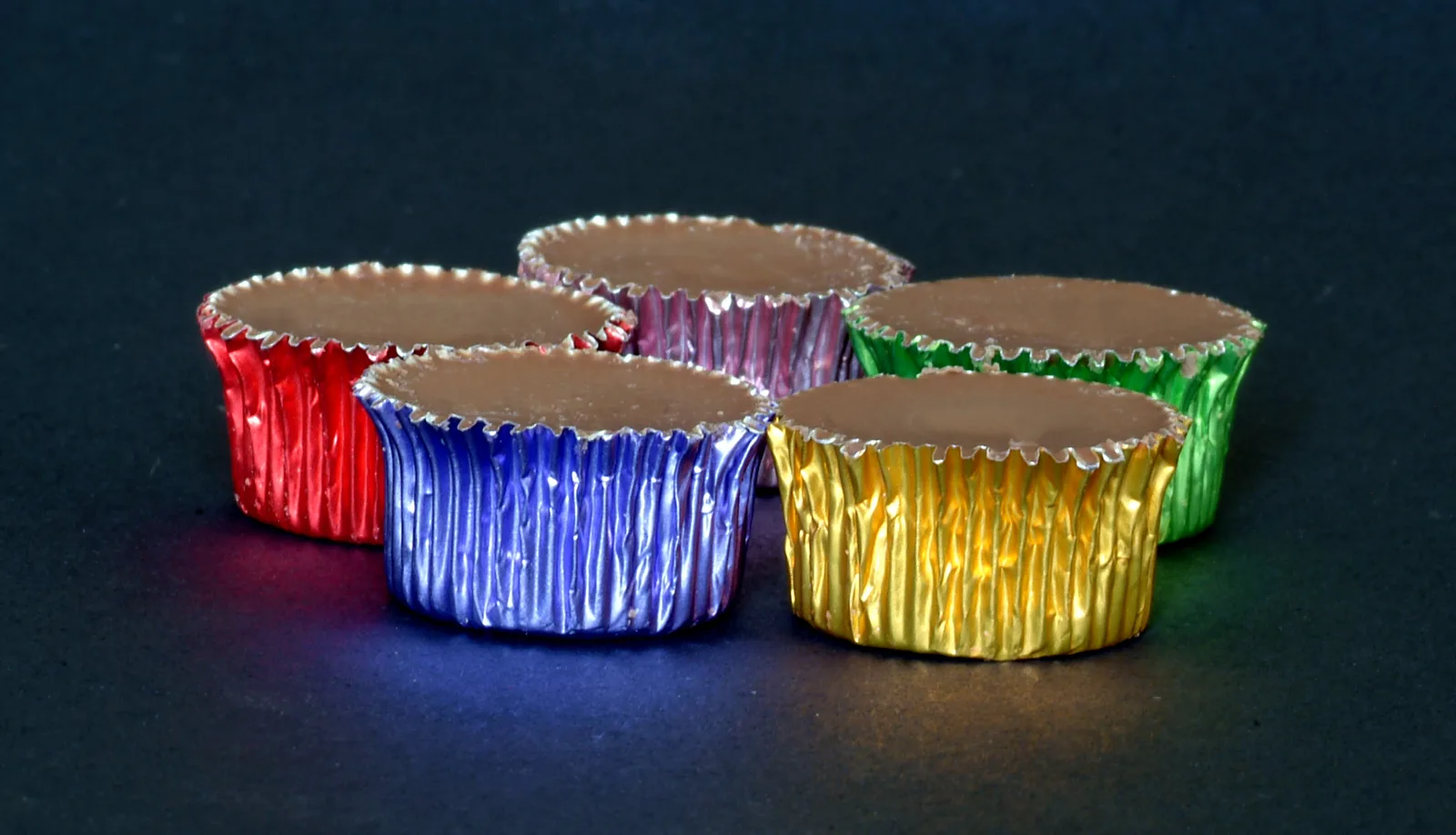
Ischoklad – ice chocolate – is the simplest Christmas sweet there is: chocolate and coconut oil are melted together, poured into small cases and left to set in the fridge. There's no need for a sugar thermometer and no oven. What makes it special is the feel – the piece melts almost instantly on the tongue and feels cool, as if it had been in the freezer.
That coolness comes from the coconut oil. It melts at just over 20 degrees, and as it melts in your mouth it draws heat from your tongue. More coconut oil gives a colder, softer piece; less gives a firmer one. An adult handles the hot part, the bain-marie. Once the mixture has cooled to lukewarm, the children can fill the cases themselves.
Method
1
Set the cases out close together on a tray that fits in the fridge. If you're using paper cases, put two inside each other.
2
Chop the chocolate into small pieces.
3
Adult: heat a few centimetres of water in the saucepan until it's barely simmering, then turn down the heat. Set the bowl on top. It shouldn't touch the water.
4
Adult: put the coconut oil in the bowl and let it melt. It's quick.
5
Adult: take the bowl off the pan and wipe the underside so that no water drips into the mixture. Stir in the chocolate and salt until everything has melted and the mixture is glossy. Don't let the mixture get hotter than 40–45 degrees. White chocolate and milk chocolate are the most sensitive, so take the bowl off the heat as soon as the pieces have almost melted and stir until the rest has melted.
6
Stir in the flavouring.
7
Let the mixture cool, stirring, until it's lukewarm, about 30 degrees. By then it no longer feels warm against the inside of your wrist.
8
Pour the mixture into the cases with the jug or a teaspoon, filling them about three-quarters full.
9
Scatter on sprinkles, almonds or gingerbread crumbs straight away, before the surface sets.
10
Put the tray in the fridge for at least an hour, until the pieces are completely firm.
11
Put the ice chocolate in an airtight tin and keep it in the fridge.
Have you made this recipe? Rate it
0.0 out of 5 · 0 votes
out of 5
vote
votes
Be the first to rate this recipe.
Thanks for your vote!
Your vote could not be saved right now. Please try again later.
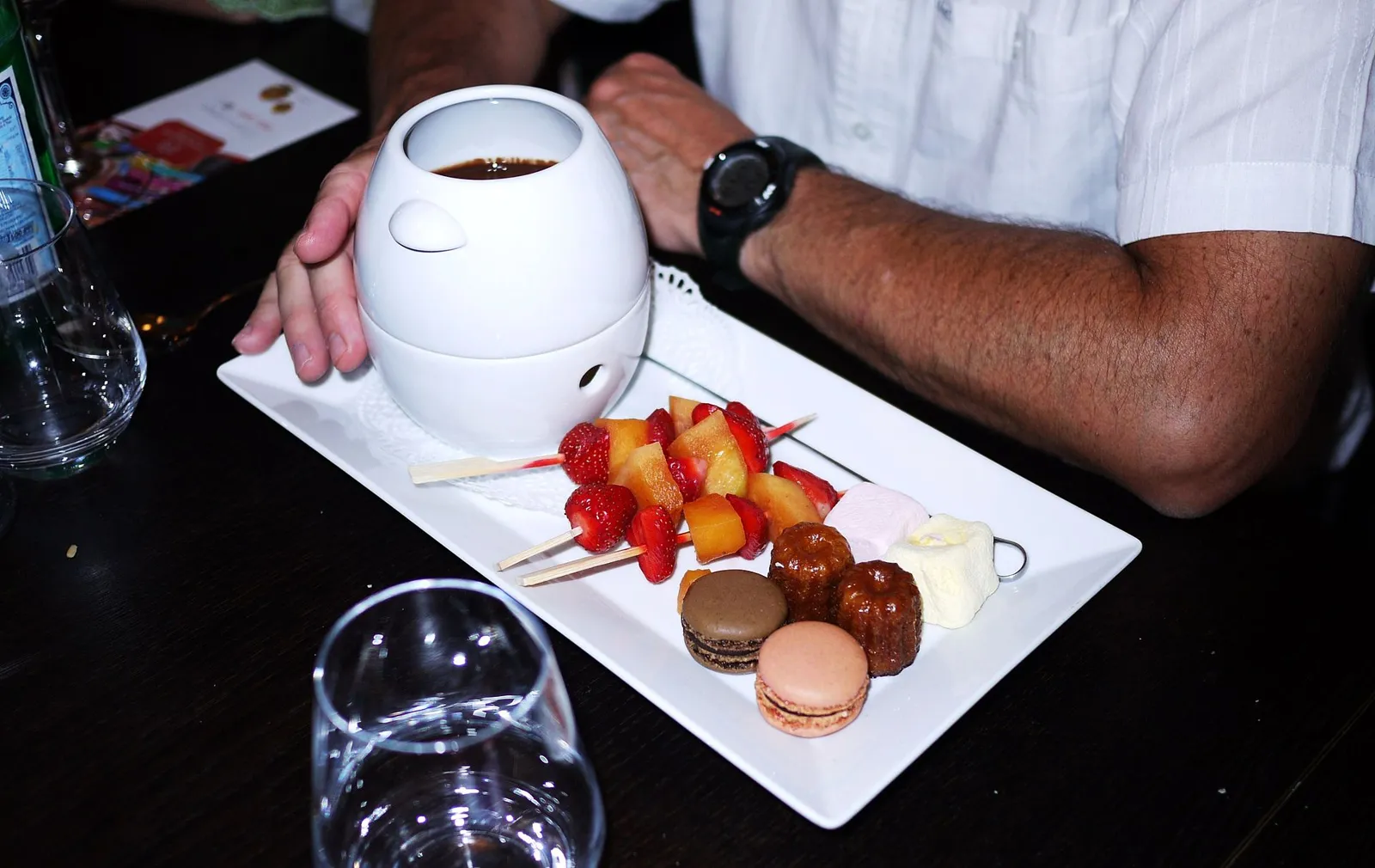
Chocolate fondue over an open fire – fruit, marshmallows and warm chocolate
🍽️ 4 servings🥕 8 ingredients👣 8 steps
🔥 Over fire
Recipe – Banana in foil with chocolate & cinnamon
🍽️ 2 servings🥕 6 ingredients👣 5 steps
Saffron kladdkaka – yellow, gooey and ready in half an hour
🍽️ 10–12 slices🥕 12 ingredients👣 8 steps
Crème Brûlée – French classic with crispy caramel
🍽️ 4 servings🥕 5 ingredients👣 10 steps
Why ice chocolate feels cold
Coconut oil melts at 23–26 degrees. The cocoa butter in ordinary chocolate doesn't melt until 33–35 degrees, close to the mouth's own temperature. When a fat melts it needs heat, and coconut oil takes that heat from your tongue. Because it melts so easily, it happens quickly and all at once, and it's felt as cold.
That's why the proportion of coconut oil decides how the ice chocolate turns out:
More coconut oil, up to the same amount as the chocolate, gives a colder piece that melts faster but is also softer and more sensitive to heat.
Less coconut oil, one part to three parts chocolate, gives a firmer piece that can sit out for a while but doesn't feel as cold.
The basic recipe, 75 grams of coconut oil to 200 grams of chocolate, has slightly less coconut oil than the classic ratio of two parts chocolate to one part coconut oil. That gives a piece that is distinctly cool yet still easy to take out of the case when it's cold. Even so, it softens if it's left out in a warm room.
Choose ordinary coconut oil, not hydrogenated. Hydrogenated coconut fat doesn't melt until 36–40 degrees and gives no cooling effect. It says so on the packet. Cold-pressed coconut oil works too, but it tastes of coconut.
Serve the ice chocolate straight from the fridge. The colder the piece is when it goes on your tongue, the stronger the sensation.
🛡️
Safety at the bain-marie
Ice chocolate is a good Christmas sweet to make with children precisely because the mixture never needs to get hot. What can burn is the bain-marie and the steam from the pan.
The saucepan is an adult's job. Turn the handle inwards so it doesn't stick out from the hob, and let the children stand at the table, not at the hob.
Steam burns. Lift the bowl with oven gloves and hold it away from your face.
The mixture should be lukewarm when the children take over, about 30 degrees. If you don't have a thermometer, stir until the mixture no longer feels warm against the inside of your wrist.
Never melt the chocolate directly in the saucepan. It easily burns on the bottom and turns grainy, and it also gets too hot.
If someone gets burnt, cool the burn with cool water for up to a quarter of an hour – not with ice or snow. A child under one year old, or a burn that is bigger than the child's own palm and has blisters, needs medical attention the same day.
Cases
Small foil cases: the classic pleated cases in shiny colours. They don't leak, hold their shape and can be peeled off when the piece is cold.
Paper cases: use them double. Otherwise the liquid fat can seep through the paper and leave marks.
Silicone moulds: ice cube trays or small silicone chocolate moulds work well, and the pieces pop out easily when cold. Then put them in paper cases in the tin.
Baking sheet with baking paper: pour the mixture in a thin layer, let it set and break it into pieces. That gives you ice chocolate shards, which are good on ice cream or in a christmas present bag.
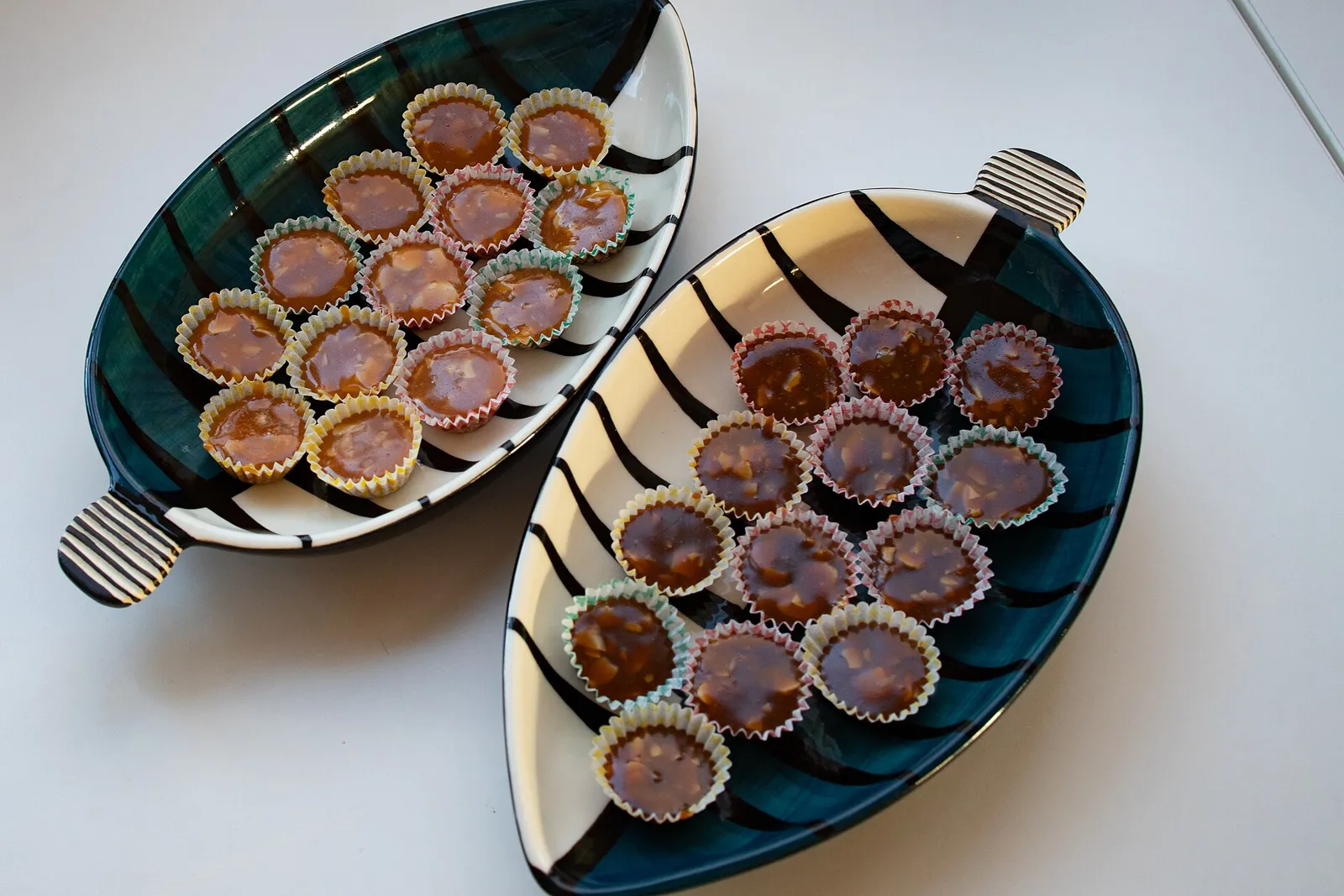
The same small cases are used for knäck toffee, so buy a big pack and share it between the Christmas sweets.
Varying the ice chocolate
The basic recipe is alcohol-free and uses a mild chocolate, so everyone at the table can eat them. Stir in the flavouring once the mixture is off the heat.
Mint: a few drops of peppermint oil for baking or a teaspoon of flavouring. The menthol in the peppermint boosts the cooling effect, so this is the coolest version. Taste as you go, one drop at a time – the oil is strong.
Orange: grate the zest of half a washed orange straight into the mixture. Milk chocolate and orange is a classic Christmas flavour, and the zest gives more aroma than flavouring does. The fresh zest brings a little moisture with it, so eat the orange pieces within about a week.
Nougat: swap 50 grams of the chocolate for nougat and melt it with the chocolate. The pieces turn creamier and softer. Nougat contains hazelnuts – see the allergy section below.
White ice chocolate: 200 grams of white chocolate and 60 grams of coconut oil. Scatter on crushed gingerbread biscuits or a pinch of desiccated coconut, like little snowballs.
Striped: first pour a layer of dark mixture, let it set in the fridge for a quarter of an hour and then top up with white.
Dairy-free: dark chocolate with no milk in the ingredients, and coconut oil. Read more about milk below before offering it to anyone with a severe milk allergy.
If there's mixture left over, you can stir it into warm milk for a quick hot chocolate.
Allergens – milk, coconut and nuts
Milk: milk chocolate and white chocolate contain milk. Dark chocolate often doesn't, according to the ingredients list, but Livsmedelsverket, the Swedish Food Agency, has found high levels of milk in chocolate, and anyone with a severe milk allergy may need to avoid even dark chocolate with no 'may contain' warning. Always ask first.
Coconut: coconut is not among the nuts in Swedish and European allergen labelling, so it doesn't have to be in bold on the packet. Coconut allergy is uncommon but it does exist. Ask the person with the allergy, or the child's parents.
Nuts and peanuts: the basic recipe contains no nuts. But nougat is made from hazelnuts, and chocolate, sprinkles and gingerbread biscuits are often made where nuts and peanuts are also handled. Livsmedelsverket has found high levels of hazelnut and peanut in chocolate.
Read the packets of the chocolate, coconut oil, nougat, sprinkles and gingerbread biscuits. The 'may contain traces of' label is voluntary and says nothing about how much – it can vary from nothing to a lot between different batches.
Make the nut-free batch first, with a clean bowl, spatula and jug, and put it in a tin of its own.
Write on the tin what the ice chocolate contains: milk, coconut, nuts or almonds.
If someone has difficulty breathing, gets a swollen face or feels faint after eating, call 112. If the person has an adrenaline auto-injector, it should be used first.
🧒
Ice chocolate with children
The children can do almost everything except the bain-marie. Wash your hands before you start, especially if the ice chocolate is going to be given away.
Ages 2–4: set out the cases on the tray, double up the paper cases and scatter sprinkles on the filled pieces. Let them count the cases – there are often more than thirty.
Ages 5–8: fill the cases with a teaspoon when the mixture is lukewarm, choose the flavour and crush gingerbread biscuits in a plastic bag with a rolling pin. Draw labels for the tins.
Ages 9 and up: weigh the chocolate and coconut oil, chop the chocolate with an adult alongside, grate orange zest, stir the mixture while it cools and pour with the jug.
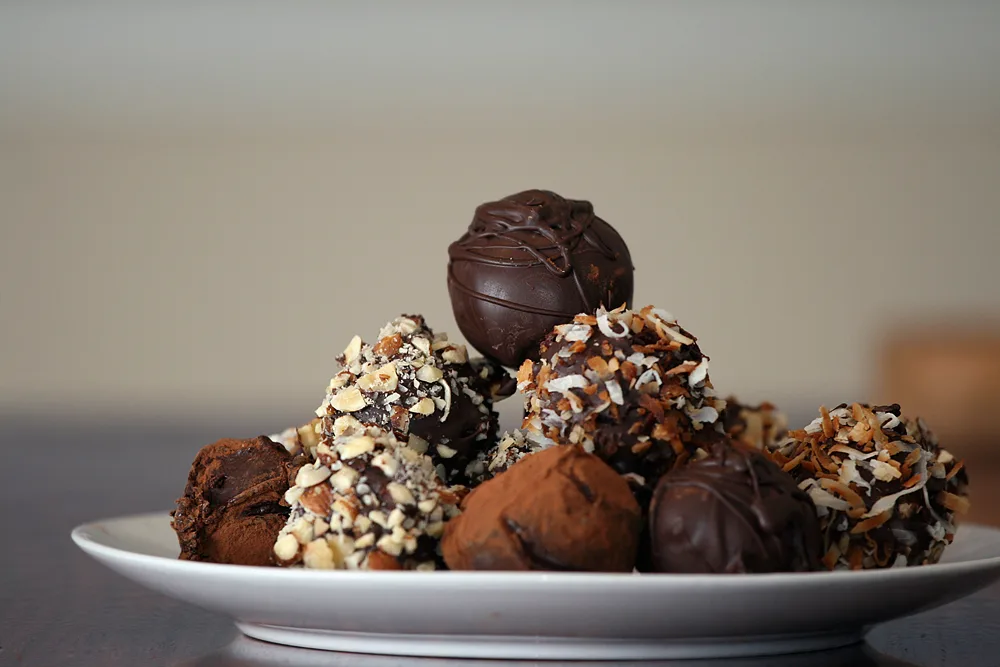
Make it a competition to see who spots first that the mixture is starting to turn matt and thicken at the edge of the bowl – that's when it's best for pouring. Give the youngest pieces without whole nuts or coarse almonds, as small children can choke on them. If you want to make more Christmas sweets the same day, roll some chocolate truffles. The truffle mixture needs a few hours in the fridge, so make it first and the ice chocolate while you wait.
Timeline for Christmas week
Ice chocolate can happily be made early, since it contains almost no water and is kept cold. That makes it a Christmas sweet that can be ready long before the Christmas rush starts.
Two to three weeks before Christmas: make the basic batch, ideally on an Advent weekend, the same day you bake gingerbread biscuits. Draw labels and put the ice chocolate in tins in the fridge. The activity can become a door of its own in the Advent calendar you make yourselves.
The week before Christmas: make flavoured batches, mint and orange, and fill tins to give to the teacher, the neighbour or Grandma.
The days before Christmas Eve: make a final batch if the tins have started to empty. The same day, an adult can boil knäck toffee and make the red cabbage, which also improves for standing a few days.
The day before Christmas Eve: arrange the ice chocolate in paper cases on a plate, cover it and put the plate in the fridge. Then it's ready to bring out while the Christmas ham is being glazed and the oven is full.
Christmas Eve: only bring out the plate when the coffee is served. Put whatever is left back in the fridge after you've eaten, so the pieces keep their shape.
Ice chocolate should be kept in the fridge. That's not mainly because it goes off, but because the coconut oil starts to melt at ordinary room temperature.
In the fridge: in an airtight tin with a lid, in a fridge that holds 4 degrees, as Livsmedelsverket recommends. Put baking paper between the layers. The basic batch contains almost no water and keeps a long time in the fridge, but it's best eaten within three to four weeks while the flavour is at its best. Batches with fresh orange zest keep for a shorter time.
An airtight tin: chocolate and fat easily pick up smells from other food in the fridge. A proper lid stops the ice chocolate tasting of onion or cheese.
In the freezer: ice chocolate can be frozen in an airtight tin, and it's best eaten within a couple of months. Let the tin thaw in the fridge with the lid on, so that no moisture forms on the pieces.
Left out: in a warm room the pieces soon turn soft and sticky. Only take out what's going to be eaten and put the rest back.
Grey bloom: pieces that have melted and set again can get a pale, matt surface. It's fat that has settled on the surface. It's harmless, but it doesn't look as nice.
Ice chocolate outdoors in winter
Ice chocolate is the Christmas sweet that thrives in the cold. For a christmas dinner outdoors or an afternoon at a christmas market, the tin can go in a cool bag, and on a cold day it even holds its shape in a rucksack. If it's below freezing outside, the tray of freshly filled cases can even set on the balcony or the steps, with a lid over it. While you wait, the children can freeze ice ornaments for the tree.
⚠️
Common mistakes
Hydrogenated coconut fat – the ice chocolate sets firm but doesn't feel cold. Choose ordinary coconut oil.
Mixture too hot – the chocolate can turn grainy, and it's too hot for small fingers. Keep it below 40–45 degrees when melting and let it cool to lukewarm before the children pour.
Water in the chocolate – a single drop from the bain-marie is enough to make the chocolate thick and lumpy. Wipe the underside of the bowl.
Single paper cases – the fat seeps through. Use double cases or foil ones.
Ice chocolate left out – it melts at room temperature. Keep it in the fridge and take out a little at a time.
Frequently asked questions
Why is it called ice chocolate?
Because it feels cold in your mouth, not because it's frozen. The coconut oil melts at just 23–26 degrees and draws heat from your tongue as it melts, which feels like cold.
How much coconut oil should ice chocolate have?
About one part coconut oil to two or three parts chocolate by weight. 75 grams of coconut oil to 200 grams of chocolate gives a piece that feels distinctly cool but still holds its shape. More coconut oil makes it colder and softer.
Can you use virgin coconut oil instead of refined coconut oil?
Yes. Cold-pressed coconut oil melts at the same temperature but tastes of coconut. Avoid hydrogenated coconut fat, which doesn't melt until 36–40 degrees and gives no cooling effect.
How long does ice chocolate keep?
The basic batch keeps a long time in an airtight tin in the fridge, but it's best in the first three to four weeks. With fresh orange zest, eat it within about a week. In the freezer it's best within a couple of months.
Why did my ice chocolate turn grainy?
Usually because the chocolate got too hot or a drop of water got into it. Melt the coconut oil first, stir in the chocolate once the bowl is off the bain-marie, and wipe the underside of the bowl.
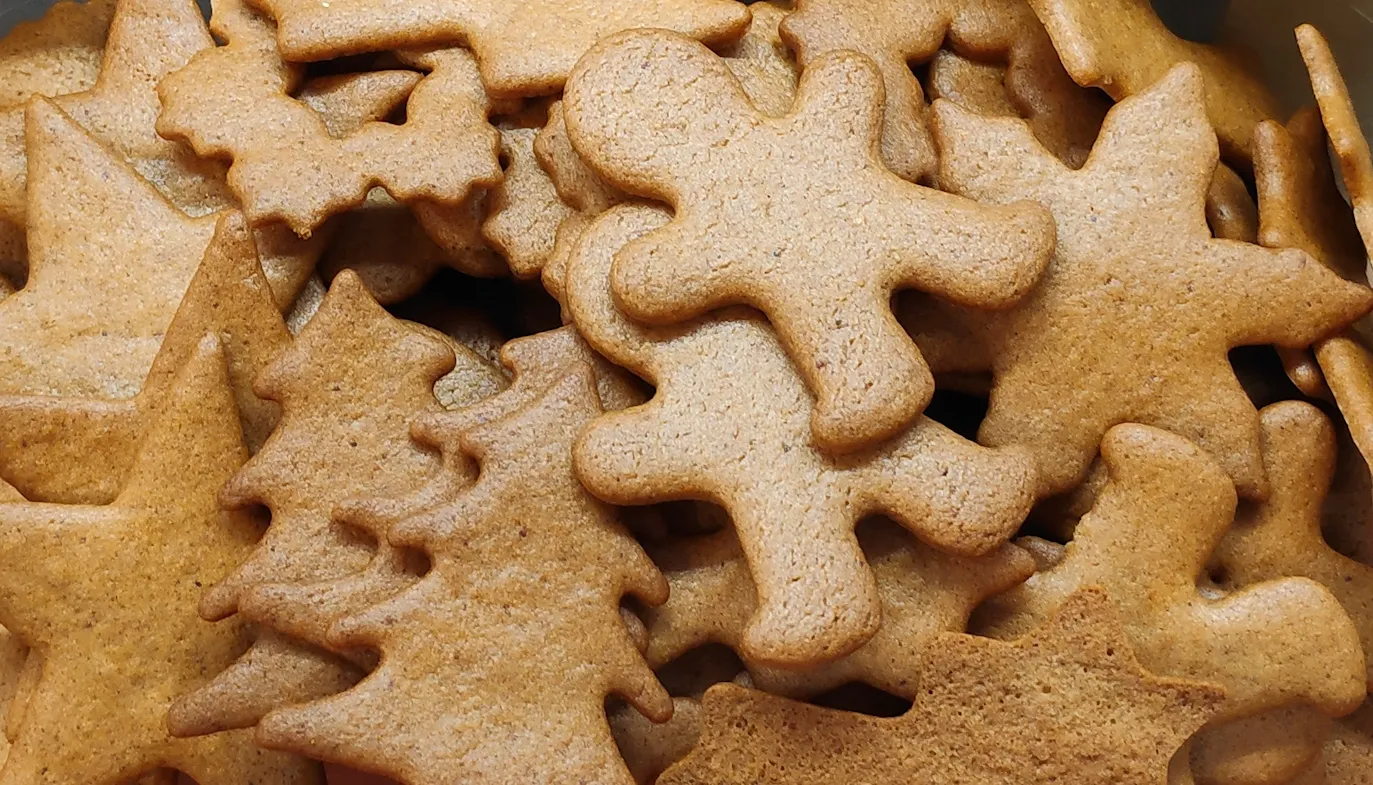
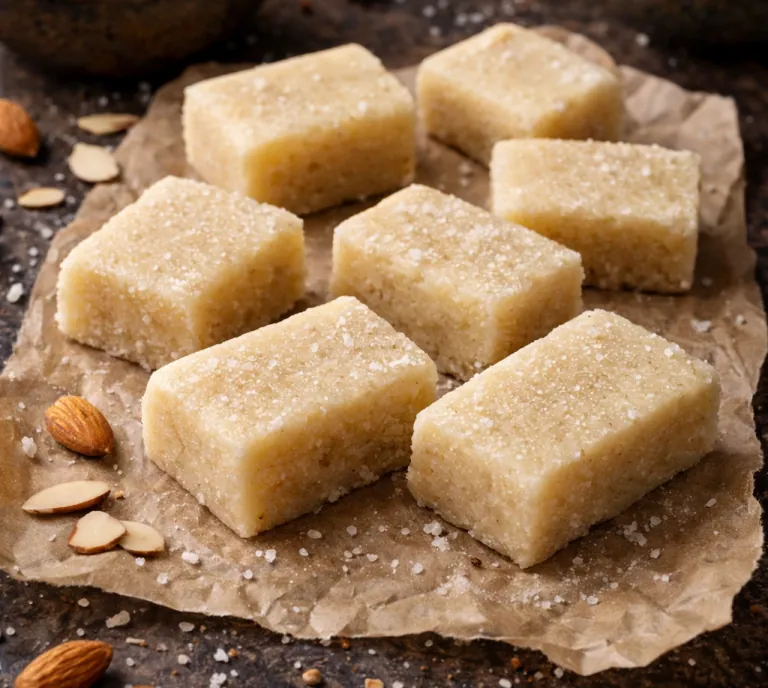
Ice chocolate sits nicely next to almond paste and knäck toffee in a tin of mixed homemade Christmas sweets.
Chocolate and cream in the right proportions, balls the children roll in cocoa, coconut or gingerbread crumbs – the sweets to go alongside the ice chocolate.
To the truffles →
Knäck toffee with the cold-water test
Cream, sugar and syrup boiled to 124 degrees. The adult handles the saucepan, the children set out the cases – the same cases as for the ice chocolate.
To the knäck →
Christmas dinner outdoors
A winter menu over the fire, and a tin of ice chocolate in the cool bag for coffee afterwards. Out in the cold it stays firm.
We would like to use Google Analytics to see which pages are read, so that we can make the site better. It sets cookies from Google. We do not use any advertising cookies.
Accept and Decline only apply to statistics – the site works just as well whatever you choose. More in our cookie policy.