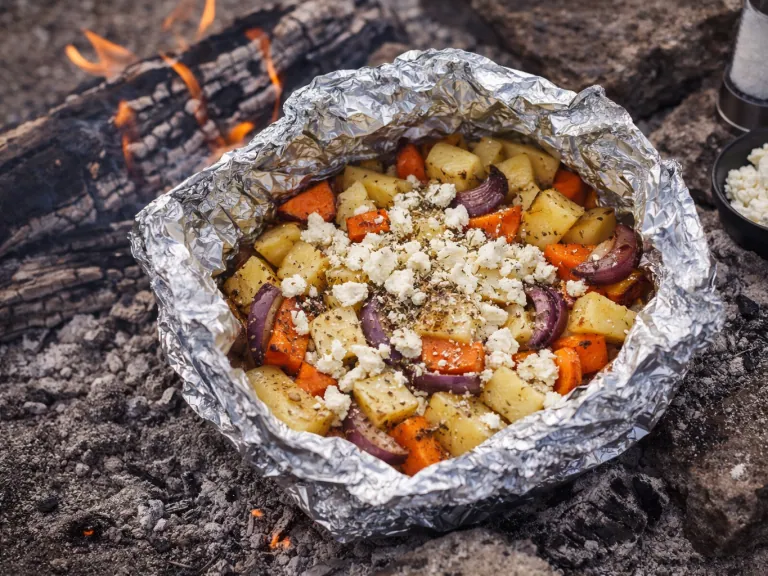
The embers have settled into a low, orange bed, and four silver parcels lie in an arc along the edge. They came out of the cool box half an hour ago, ready since the morning, with a name written in marker on each one. Someone turns them with the tongs. When the first one is folded open on a stone, the steam billows out, and underneath lies chicken in glossy juices, soft pepper and potato slices that have soaked up the flavour of everything above them.
Chicken in foil is a whole dinner with no pan and no washing-up. What usually goes wrong isn't the folding but the timing: the chicken is done before the potatoes, or the other way round. How to fold a tight parcel and where it should go is already covered in the guide to foil parcels in the embers. This is about getting chicken and vegetables done at exactly the same time.
The three Ts
Thin potatoes. It's the potatoes that set the time, not the chicken. Slice the raw potatoes thinly, about three millimetres, or parboil them at home. That way they have time to soften in the same time it takes the chicken to cook through.
Top spot for the chicken. The potatoes lie as a bed on the bottom, the chicken on top and the soft vegetables all around. The bed protects the chicken from the fiercest heat, and the chicken juices run down into the potatoes.
Thermometer decides. Chicken must always be cooked through, and 70 degrees in the thickest piece is a good measure. The clock tells you when to open the first parcel, the thermometer tells you when to eat.
Method
1
At home, grease the middle of the foil with a little oil where the food will go.
2
Put the potatoes on the bottom as a tight layer, the slices overlapping slightly, about the same thickness all over. Put the carrot slices on top.
3
Put the chicken pieces on top of the potatoes, in a single layer, not stacked. A piece lying on top of another one will be the last to be done.
4
Put the pepper, onion and garlic around and between the chicken pieces, with a knob of butter on top.
5
Fold a tight parcel with air above the food, using a double fold as in the foil parcel guide, and wrap it in a second layer of foil with the seam facing the other way. Write a name on the parcel and put it in the box in the cool box.
6
At the fire, rake out a layer of embers at the edge of the fireplace, a few centimetres thick and even. The fire can keep burning alongside, so there are fresh embers to fetch.
7
Put the parcels potato side down at the edge of the embers, not in the flames. They should lie flat, not on their sides.
8
Listen. A steady, low sizzle after a few minutes means it's boiling inside. If you can't hear anything, push the parcel a little closer in. If it crackles sharply and smells burnt, move it out.
9
Turn after about 15 minutes. Lift with the tongs, not your fingers, and turn each parcel so the chicken side gets some time facing the embers.
10
Open a test parcel after about 25 minutes. Lift it onto a stone or a plate, wait half a minute and fold open the corner on the side facing away from you. Keep your face out of the way, because the steam that billows out burns.
11
Measure. Push the thermometer into the thickest piece of chicken. 70 degrees, clear juices and a knife that slides easily through the potatoes mean the parcel is done. If it isn't done, fold it closed again and put it back for 5–10 minutes.
12
Take out all the parcels when the test parcel is done, and ideally check one more parcel that has been lying in a cooler spot. Let them sit on the stone for a minute before you open them.
13
Serve in the foil, with parsley, a dollop of soured cream, and lemon squeezed over only once it's on the plate.
Have you made this recipe? Rate it
0.0 out of 5 · 0 votes
out of 5
vote
votes
Be the first to rate this recipe.
Thanks for your vote!
Your vote could not be saved right now. Please try again later.
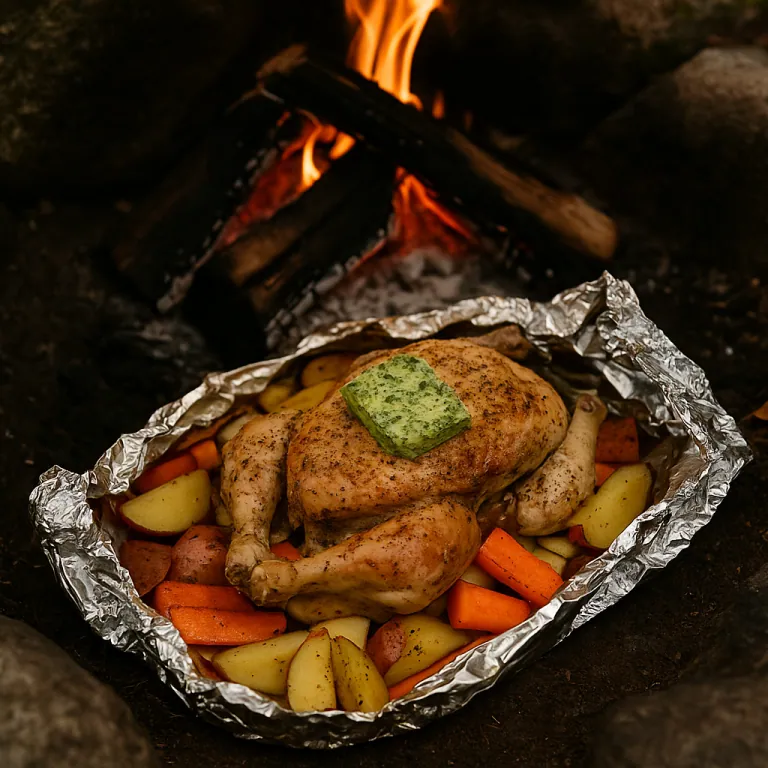
Whole chicken in a cooking pit with root vegetables & herb butter
🍽️ 4 servings🥕 17 ingredients👣 4 steps
🔥 Over fire
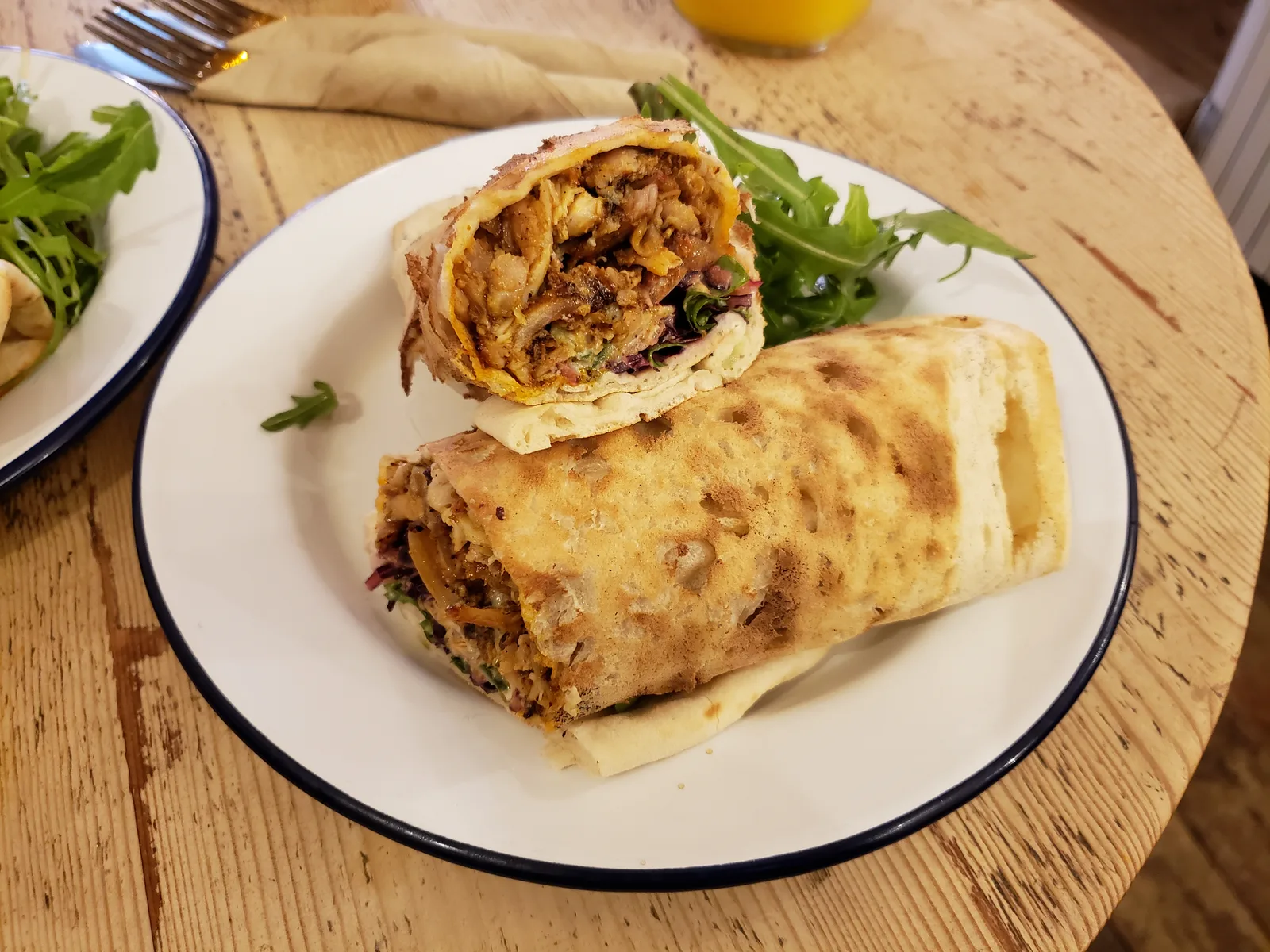
Kebab in tunnbröd over an open fire – marinated at home, fried in strips by the embers
🍽️ 4 servings🥕 28 ingredients👣 10 steps
Recipe: Crispy Chicken with Roasted Vegetables in an Air Fryer
🍽️ 4 servings🥕 9 ingredients👣 6 steps
🔥 Over fire
Potato and carrot patties over an open fire – shaped at home, fried by the embers
🍽️ 4 servings🥕 17 ingredients👣 9 steps
Why thigh fillets
Thigh fillets cope with the embers better than breast fillets. They have more fat and connective tissue, so they stay juicy even if they get a few minutes too long, and they're roughly the same thickness all over. Breast fillets work too, but they dry out quickly and are thick at one end and thin at the other. If you want to use breast fillets, cut them lengthways so they're no more than two centimetres thick, and start measuring a few minutes earlier.
At home and by the fire
At home
Prepare the vegetables first, before the chicken comes out, so they don't end up on the same board as the raw meat. Peel the potatoes if the skin is thick and slice them thinly, about three millimetres. Slice the carrot just as thinly. Cut the pepper into wide strips, the onion into wedges and the garlic into slices.
Parboiled potatoes instead? Boil them in pieces of about one and a half centimetres for 6–8 minutes, so they're half soft. Drain and cool them quickly in cold water and then in the fridge. Parboiled potatoes that are left to cool slowly and sit lukewarm can form a toxin that doesn't go away when they're reheated, so they must be transported cold.
Mix the spices with the oil in a bowl. Toss the potatoes, carrot and other vegetables in half of the oil.
The chicken last. Cut each thigh fillet into two or three pieces and toss them in the rest of the spiced oil. Don't rinse the chicken, because the splashes spread campylobacter. Wash your hands with soap and water straight afterwards.
Pack the parcels as described under Method below and write a name on each one.
Put the parcels in a sealed box with a lid, and the box at the very bottom of the cool box with the ice packs around it. Parcels can leak, and then the chicken juices should stay in the box and not end up on the bread or the fruit.
Wash the board, knife and bowl before anything else is done in the kitchen.
By the fire
Light the fire as soon as you arrive. It takes about 45 minutes before the bed of embers is even, and then another half hour before you eat. How to get an even bed of embers is explained in lighting a fire. The cool box stays in the shade, and the box of chicken parcels stays in it until the parcels go into the embers. Chilled food should be out for no more than two hours in summer heat, and never in the sun. How long the cool box keeps things cold and how to wash your hands without a tap is explained in hygiene and washing up outdoors.
The beauty of this setup is that nobody has to handle raw chicken at the fire. Everything raw is already wrapped.
In a tray on a grill instead
If you'd rather cook everything in one go, put the potatoes in the bottom of a disposable tray, the chicken on top and the vegetables all around, just as in the parcels. Cover the tray with a lid of double foil and fold the edges down firmly around the rim. Set it on a grill about a hand's width above an even bed of embers. The tray can't be turned over, so rotate it half a turn after 20 minutes, so that no side stands over the hottest embers the whole time. Allow 40–55 minutes and measure in the same way. Lift the lid away from you, because the steam gathers underneath it. How to get a hot side and a cool side on the grill is explained in grills and fish baskets.
Timings and when it's done
The timings apply to parcels at the edge of an even bed of embers, turned once. Cold chicken straight from the cool box, wind and cool embers all slow things down.
Individual parcels with thinly sliced raw potatoes: 25–35 minutes.
Individual parcels with parboiled potatoes: 25–30 minutes. Here it's the chicken that decides, and the potatoes should be piping hot all the way through.
Tray with a foil lid on a grill: 40–55 minutes.
Breast fillet instead of thigh fillet: start measuring after 20 minutes.
This means the parcel is done:
70 degrees in the thickest piece of chicken.
Clear juices when you cut into the piece, and the meat is white all the way through with no glossy, pink patches.
The potatoes give no resistance when you push a knife through them.
The pepper and onion have collapsed and are soft.
Acidic food and foil
Livsmedelsverket (the Swedish Food Agency) advises avoiding cooking and storing acidic food in contact with aluminium foil, because the foil can break down and aluminium can leach into the food. Children can be sensitive to large intakes, so there's no reason to put lemon or tomato directly against the foil in their parcels.
Squeeze the lemon over on the plate instead of in the parcel.
Tomato, tomato sauce, ajvar and marinades with citrus or vinegar need a protective layer. Put the food on a sheet of baking paper, fold the edges up around it and wrap the whole thing in foil.
The chicken, potatoes, carrot, pepper and onion in the basic recipe aren't acidic and are fine directly against the foil.
Leftovers with tomato or lemon go in a jar with a lid, not in foil. Why, and what happens when foil meets another metal, is explained in the foil parcel guide.
🛡️
Safety at the fire
The steam. The most dangerous thing about a foil parcel is the moment it's opened. Let it rest for a moment, open it away from you and keep your face out of the way.
The foil is as hot as the embers. Always lift with tongs and fire gloves.
Raw chicken. The tongs that turned the parcels before they were done don't touch the finished food. The parcels are sealed, but chicken juices may have leaked out onto the foil. Use a clean fork for the food.
Burns. Cool with cool water for about fifteen minutes, no longer, and never with ice or snow. Seek medical care if there are blisters over an area larger than the injured person's own hand, if the burn is on the face, hands or feet or over a large joint, if someone has breathed in hot steam, or if a child aged one year or younger has been burnt.
Only light fires where it's allowed. The decision of the county administrative board (länsstyrelsen) or the municipality on fire bans is what counts. What applies is explained in fire in nature, rules and responsibility, and how to keep a safe zone around the fireplace in fire safety in nature.
The children's role
Chicken in foil suits children well, because most of the work is done with cold food at home and everyone gets their own parcel. The ages are a rough guide. Go by what your child is used to.
The youngest choose vegetables, put pepper and onion around the chicken and draw on their parcel with the pen. Let an adult put in the chicken pieces, or let the child do it and wash their hands with soap straight afterwards.
Slightly bigger children, often from six or seven, can cut pepper and onion on a chopping board and fold their own parcel. An adult presses the folds down one extra time.
The thermometer reader. An adult pushes in the thermometer, the child reads it and calls out when it says 70.
The clock. One child keeps track of when the parcels should be turned and when the test parcel should be opened.
The embers and the opening are jobs for the adults. An older child with experience can turn the parcels with long tongs, wearing gloves and with an adult alongside.
One layer of chicken, never two. Stacked pieces cook at different rates.
Season the chicken the night before. Salt and spiced oil left to work overnight make the meat juicier and more flavourful.
Butter on top. It melts down through the vegetables and makes the potatoes glossy and tasty.
Open it for the last few minutes if there's a lot of liquid. Fold back the top and leave the parcel in the embers for a while, so the liquid boils off and the bottom gets a little browning.
An extra parcel with just vegetables is good for anyone who doesn't eat chicken, and it can go in a cooler part of the embers.
⚠️
Common mistakes
The chicken is done but the potatoes are hard. The slices were too thick. Move the chicken to a clean plate and cover it, fold the potato parcel closed again and give it 10 more minutes closer to the embers.
The potatoes are done but the chicken is below 70 degrees. Fold the parcel closed, put it chicken side down and measure again after five minutes. Don't eat the chicken until it's done, however hungry you are.
Burnt bottom. The parcel was lying in the middle of the hottest embers. The black potatoes at the bottom have done their job and protected the chicken. Scrape off the burnt bits and move the next parcel out towards the edge.
Pale, watery chicken. Too much liquid or embers that are too cool. Open the top for the last few minutes and push the parcel closer to the embers.
Leaks in the cool box. Anything the chicken juices have reached that won't be cooked, like bread and fruit, is thrown away or washed. Pack the parcels in a sealed box next time.
Partly frozen chicken. It's done on the outside but can be raw in the middle. The chicken must be fully thawed before it's packed, and that takes about a day in the fridge.
Vary the chicken parcel
Lemon and oregano: swap the thyme for oregano and put a few thin lemon slices on a sheet of baking paper under the chicken.
Tomato and olives: cherry tomatoes, olives and a little feta, with baking paper innermost because tomato is acidic.
Curry and coconut: curry powder in the spiced oil and two tablespoons of coconut milk per parcel. Works best in the tray, because it makes a lot of sauce.
Other vegetables: courgette, broccoli and sweetcorn are soft and can go next to the chicken. Slice sweet potato as thinly as ordinary potato.
Eat the parcels while they're hot. Anything left over goes into a clean tub and back in the cool box as soon as it has cooled a little, within two hours at the latest. The next day, the chicken and potatoes are good in a tunnbröd or warmed up in a frying pan.
Allergens
The chicken, potatoes and vegetables contain none of the common allergens. The butter, soured cream and yoghurt contain milk protein, and the bread contains gluten. Read the ingredients list on ready-made spice mixes, which can contain celery or mustard.
Frequently asked questions
How long should chicken in foil cook on the fire?
Individual parcels with chicken thigh fillets and thinly sliced potatoes take about 25–35 minutes at the edge of an even bed of embers, turned once. With parboiled potatoes, 25–30 minutes is often enough. A larger tray with a foil lid on a grill takes 40–55 minutes. Always measure in the thickest piece of chicken.
What temperature should the chicken reach?
Chicken must always be cooked through, and 70 degrees in the centre is a good measure. The juices should be clear and the meat white all the way through. Measure in the thickest piece with a probe thermometer, because it's hard to see through the steam in the parcel.
Can you pack the chicken parcels at home?
Yes, and that's the easiest way. Pack them ready on the same day, put them in a sealed box with a lid and the box at the very bottom of the cool box with ice packs. Then nobody has to handle raw chicken at the fire. Chilled food should be out for no more than two hours in summer heat, and never in the sun.
Why don't the potatoes cook through in the parcel?
The pieces are too thick. The potatoes need longer than the chicken, so slice them about three millimetres thin, or parboil them at home and cool them quickly. Put them at the bottom of the parcel, closest to the embers.
Can you put lemon in a foil parcel?
Not directly against the foil. Livsmedelsverket advises against cooking acidic food in contact with aluminium. Put the lemon slices on a sheet of baking paper inside the parcel, or squeeze the lemon over the food on the plate.
Can you use breast fillets instead of thigh fillets?
Yes, but cut them lengthways so they're no more than two centimetres thick, and start measuring after about 20 minutes. Breast fillets dry out faster than thigh fillets if they get too long.
We would like to use Google Analytics to see which pages are read, so that we can make the site better. It sets cookies from Google. We do not use any advertising cookies.
Accept and Decline only apply to statistics – the site works just as well whatever you choose. More in our cookie policy.




 🔥 Over fire
 🔥 Over fire
 🔥 Over fire