



The pan that can handle the sugar
Heavy iron keeps the heat even when the sugar melts. How to look after the cast iron and get the last of the sugar out without damaging the surface.
To the cast-iron guideSyrup, sand and gloss – and the spoon never stops
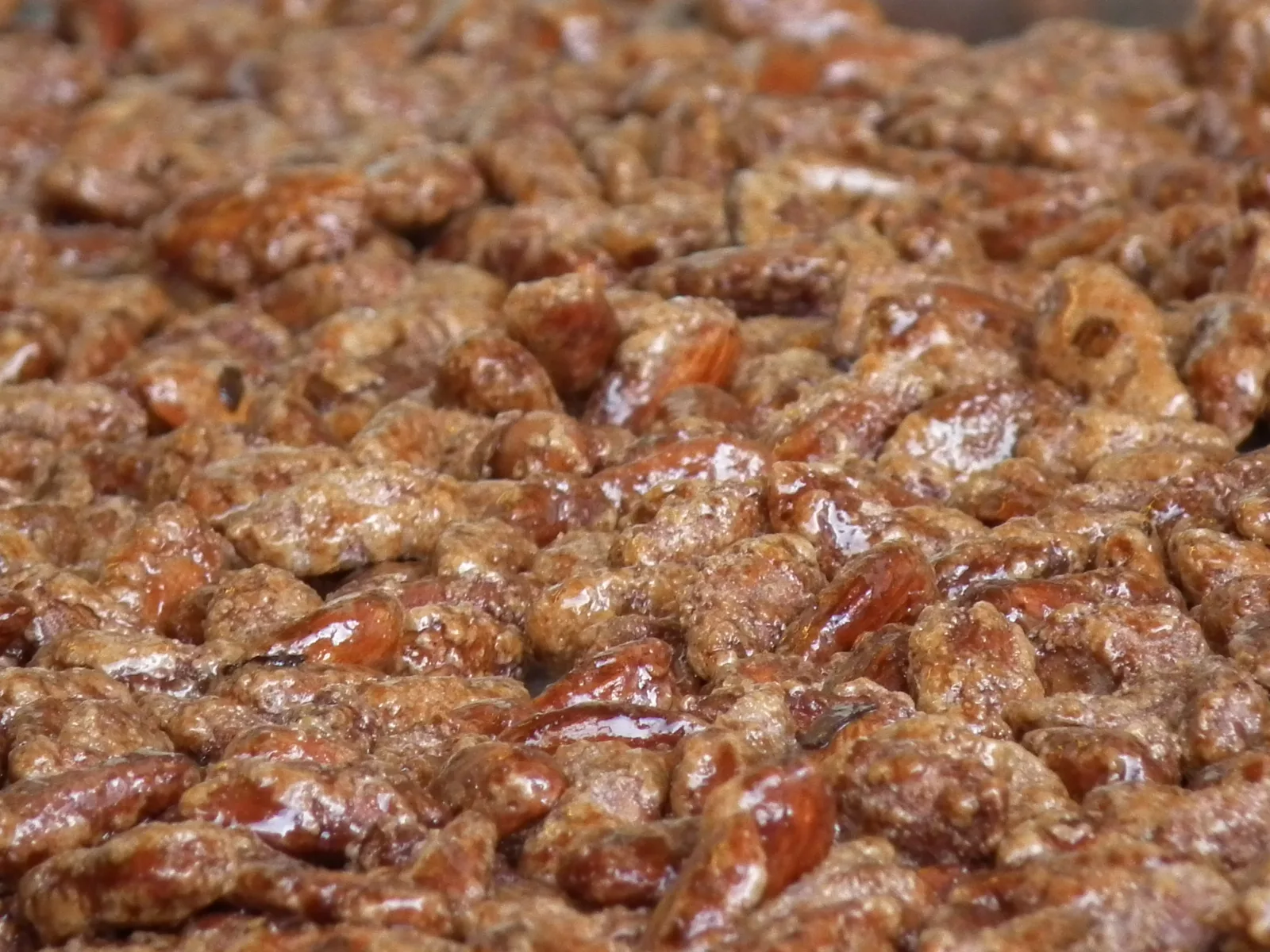
It starts out like an ordinary pan of sugar syrup. The almonds swim in a brown, bubbling syrup and the smell of cinnamon reaches all the way to the woodpile. Then, in the middle of stirring, something happens that looks like a failure: the syrup disappears, and the almonds are covered in a dry, pale shell that looks like wet sand. That's exactly right. A few more minutes on lower heat, and the sand melts into a glossy, crunchy shell.
Candied almonds don't need a thermometer – you just need to recognise three phases and never stop stirring. Think syrup, sand and gloss. During the syrup phase, the water boils off. In the sand phase, the sugar crystallises around the almonds. In the gloss phase, it melts again into caramel, and then it's time to tip them out and separate them.
Have you made this recipe? Rate it
0.0 out of 5 · 0 votes
out of 5
vote
votes
Be the first to rate this recipe.
Thanks for your vote!
Your vote could not be saved right now. Please try again later.
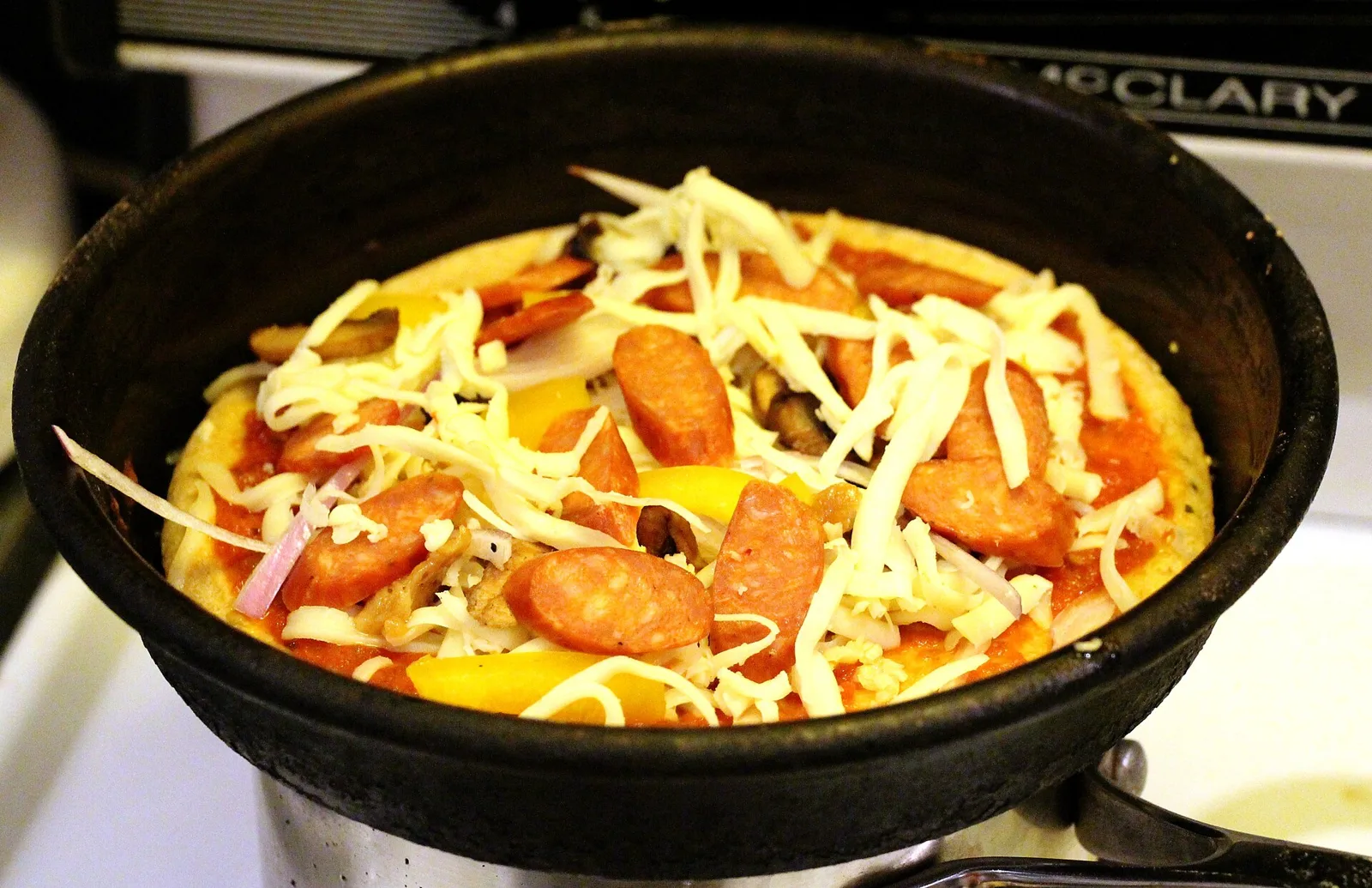 🔥 Over fire
 🔥 Over fire
 🔥 Over fire
 🔥 Over fire
Almonds with their skins on give a rougher coating that sticks better. Blanched almonds work too, but the coating is thinner and smoother.
At home. Weigh the almonds into a bag. Mix the sugar, cinnamon, salt and any vanilla sugar in a sealed jar, so all you have to do by the fire is add the water. Pour the water into a small bottle. Tear off a sheet of baking paper and roll it up.
By the fire. The sugar wants even heat under the whole base, not flames licking up the sides and burning the sugar there. Let the fire burn down to an even bed of embers, as described in lighting a fire. The pan needs to sit steadily, because you'll be stirring hard for fifteen minutes. How to set up the grill and choose the height is explained in grills and fish baskets.
Over embers there's no knob to turn. You lower the heat by lifting the pan a bit higher, moving it towards the edge of the bed of embers or taking it off entirely for ten to twenty seconds. Decide before you start where the cooler spot is.
Lay out the baking paper on the chopping board near the fire, with the forks beside it, before the sugar has even started to boil. When the almonds are done, there's no time to look for things.
These are the three phases, with approximate times. How long it takes depends on the embers, the pan and the weather, so let what you see decide more than the clock.
Melted sugar is extremely hot. Sugar only starts to caramelise at about 170 degrees, so it's far hotter than boiling water. It's also thick and sticks to the skin instead of running off. According to 1177 (the Swedish healthcare advice service), hot and viscous substances, such as hot toffee, can cause deep burns. Stir with a long spoon, keep your face away from the pan, never taste the sugar straight from the pan and don't touch the almonds until they've cooled.
If someone gets burnt. Cool it straight away with cool running water for about fifteen minutes, no longer, and never with ice or snow. Don't remove clothing that has stuck to the skin. Seek medical care straight away if blisters have formed and the injury is larger than the injured person's own hand, if the skin is white, greyish-brown or black, if the burn is on the face, hands, feet or over a large joint, and always if the child is 12 months old or younger.
Whole almonds and the youngest children. 1177 (the Swedish healthcare advice service) and Livsmedelsverket (the Swedish Food Agency) advise holding off on whole nuts, almonds, peanuts and grapes for the youngest children, because they can go down the windpipe. Mashed or in very small pieces, on the other hand, is fine. Swedish authorities don't give an age, but in the US the American Academy of Pediatrics recommends waiting with nuts and hard sweets until the child is four years or older, depending on how the child chews and eats. Candied almonds are both. For the little ones, you can crush a few almonds very finely and sprinkle them over porridge or ice cream. Let the child sit still while eating, not run round the fire with a fistful of almonds.
Nut allergy. Almonds count as a nut under the allergen labelling rules, as do hazelnuts, cashews and pecans, so candied almonds can't be made nut-free, and neither can the variations with other nuts. Always ask before offering them, and wash the pan and spoon thoroughly before they're used for anything else. Swelling of the lips, tongue or throat can be signs of an allergic reaction. If someone has difficulty breathing or feels faint after eating: use the adrenaline pen first if the person has one, and call 112 immediately. If you want something crunchy and spiced that everyone can eat, make roasted chickpeas in the same pan or popcorn with cinnamon and sugar.
The fire. More about lighting fires safely can be found in fire safety in nature. If there's a fire ban, it's the county administrative board's or the municipality's decision that counts, and the rules are in lighting fires outdoors.
The children never stir the sugar. It's too hot and happens too fast, and the only thing needed at the pan is an adult with a spoon. Even so, there's plenty to do before and after.
At home, the children can weigh the almonds, mix the cinnamon and sugar in the jar and smell the cardamom. By the fire, they can follow the phases from a couple of metres away and shout when it turns to "sand" – that's usually the most fun surprise. Say it out loud before the pan is lifted off, so everyone knows to step back.
Once the almonds have cooled completely, the children's big job comes: sorting. They break up the clumps, put the glossiest almonds in one pile and the sandiest in another, and fill jars or small bags to give away. Feel the almonds yourself before the children touch them. More ways to give the children roles by the fire can be found in cooking with children over a fire.
When the water has boiled off, the sugar crystallises again and settles as a dry, grainy coating around the almonds. It's a normal stage. Lower the heat and keep stirring, and the sugar will melt into glossy caramel after a few minutes.
Allow about 15–20 minutes in the pan: 3–6 minutes for the syrup, 3–5 minutes for the sandy stage and 3–6 minutes for the glossy one. The times are approximate and depend on the embers. On top of that comes half an hour or more for the fire to burn down to embers.
Yes, in a cast-iron or carbon steel frying pan. Over an open fire it easily gets too hot for a non-stick pan, so choose a pan without a coating.
Tip them out onto baking paper as soon as the pan has been lifted off and pull them apart with two forks while the sugar is still soft. After one or two minutes it has set. Any clumps left can be broken up once the almonds have cooled.
1177 and Livsmedelsverket advise holding off on whole nuts and almonds for the youngest children, because they can go down the windpipe, but they don't give an age. In the US, the American Academy of Pediatrics recommends waiting until the child is four years or older. For younger children, the almonds can be crushed very finely.
In a jar with a tight-fitting lid they stay crunchy for several days, often longer. Left out in the open, they absorb moisture and turn sticky.
More for the evening by the fire
The pan that can handle the sugar
Heavy iron keeps the heat even when the sugar melts. How to look after the cast iron and get the last of the sugar out without damaging the surface.
To the cast-iron guideNut-free in the same pan
Is someone allergic to nuts? Roasted chickpeas turn just as crunchy and can get the same cinnamon and sugar.
To the chickpeasSomething warm to drink with them
While the almonds cool on the paper, a pan of apple juice has time to warm up at the edge of the embers.
To the apple juice