
Hot middle, cool edge
The cabbage browns in the middle and waits at the edge while the pork finishes – here's how to use the heat zones on the griddle.
To the griddle guideShredded at home, fried hard until the edges turn sweet and roasted
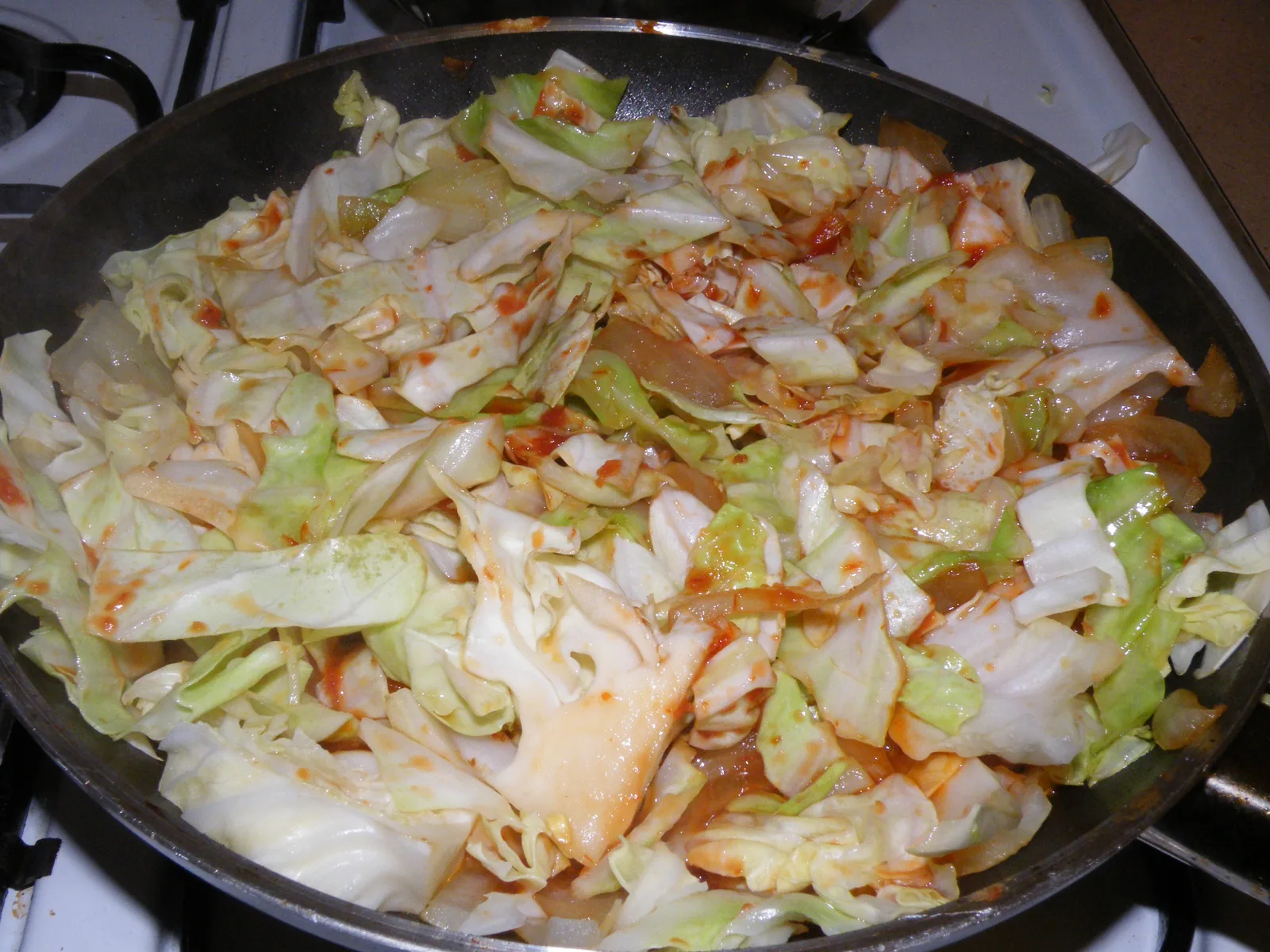
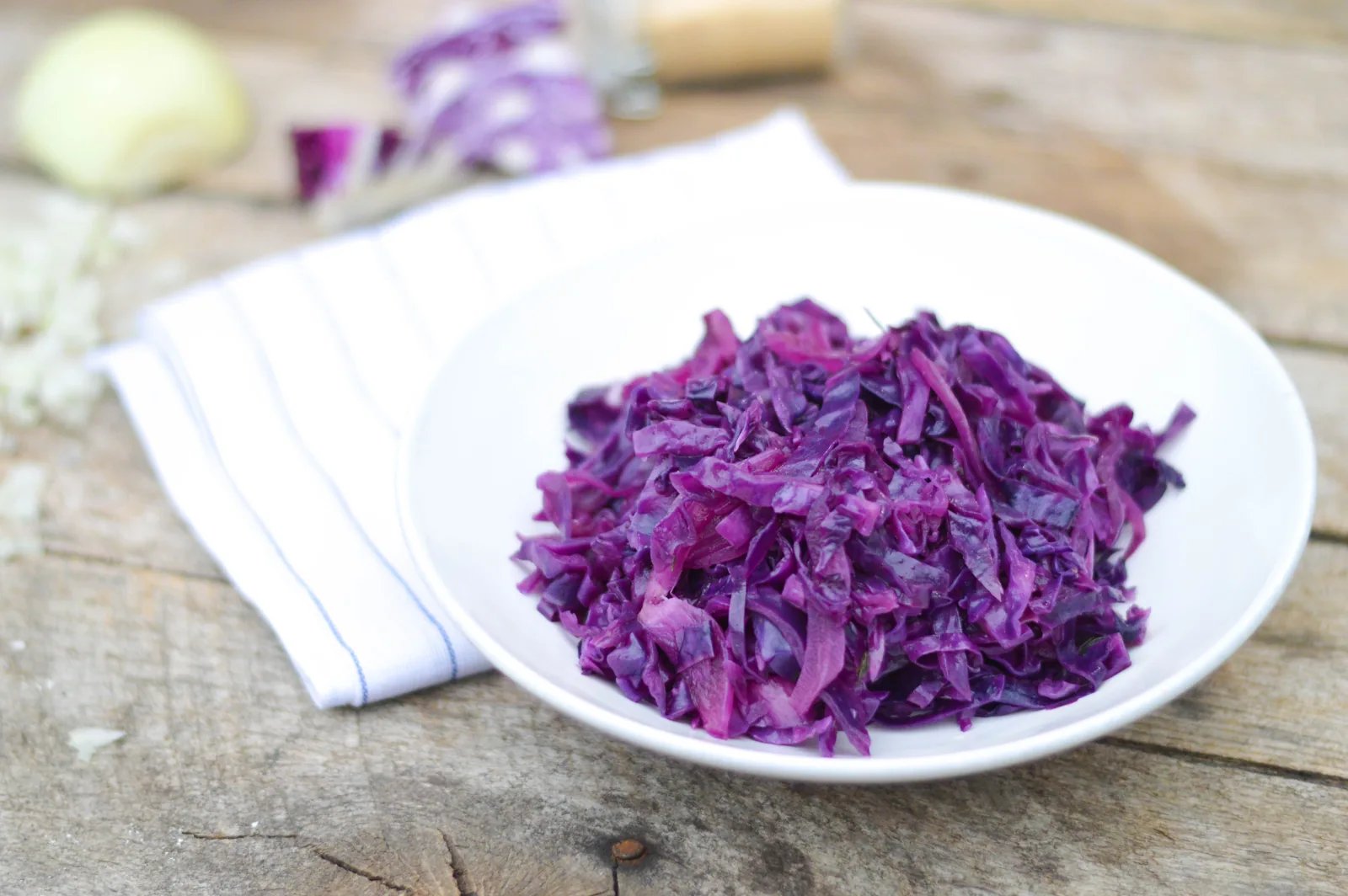
Half a cabbage looks as if it will never fit in the pan. It fills it to the brim, sits like a pale mountain over the embers and looks impossible. Ten minutes later the mountain has shrunk to a third, the shreds have turned glossy and the ones closest to the iron have deep golden-brown edges. It smells sweet, a bit like fried onion, and it's hard not to pick at it with your fingers straight from the pan.
Fried cabbage is one of the cheapest and hardiest things you can take to the fire. A whole cabbage can handle a day in the rucksack and a night in the car, and it copes with cold better than most fresh vegetables. At home you can shred it in five minutes. By the fire it becomes a side for pork and sausages, or a dish in its own right with apple and caraway. All the cabbage asks for is heat, and for you to leave it alone.
Everything that happens in the pan can be summed up in three words:
Stir all the time and you get soft, pale cabbage. Never stir and you get a black bottom and a raw top. The minute in between is the whole trick.
Have you made this recipe? Rate it
0.0 out of 5 · 0 votes
out of 5
vote
votes
Be the first to rate this recipe.
Thanks for your vote!
Your vote could not be saved right now. Please try again later.
 🔥 Over fire
 🔥 Over fire
 🔥 Over fire
 🔥 Over fire
Caraway is the Swedish spice with the small, curved seeds found in caraway cheese and sauerkraut. Cumin is a different spice with a completely different flavour and doesn't belong here.
Both can be fried the same way, but they behave differently over the fire.
Remove the outermost leaves if they look tatty. Cut the cabbage into wedges and cut out the hard core in the middle. Shred the white cabbage into strips about half a centimetre wide and the pointed cabbage into one-centimetre strips. Thinner strips brown more evenly but easily go soft, and wider strips keep a little bite.
Peel and slice the onion. Put the cabbage and onion in a sealed bag, squeeze out the air and keep it cold. Shredded cabbage keeps for a few days in the fridge. It may darken a little at the cut edges, but that disappears in the pan.
Cut the pork into one-centimetre pieces and put it in its own airtight container. It's a chilled food and should stay in the cool box until it goes in the pan – no more than two hours out in summer heat, and never in the sun. More about the cool box and keeping raw and cooked food apart can be found in hygiene and washing up outdoors.
On a day trip you can just as easily bring the cabbage whole and shred it on a chopping board at the fire pit. A whole cabbage is hardy, doesn't weigh as much as it looks and won't be ruined by sitting at the bottom of the rucksack.
| What happens | Why | How to fix it | |---|---|---| | The cabbage stews in its own liquid and turns pale | Too much cabbage in a pan that's too cool, or salt added too early | Take out half, let the rest sizzle dry and fry it in two batches. Push more embers under the pan | | Black bottom, raw cabbage on top | Pan too hot and too little turning at the start | Lift the pan higher, turn it thoroughly and put a lid on for two minutes so the top softens in the steam | | The cabbage is tough and woody | The strips are too thick, or not enough time | Sprinkle in two tablespoons of water, cover for 2–3 minutes and then let the water sizzle off without the lid | | It tastes flat | No acidity, too little salt or too little colour | A few drops of vinegar, a knob of butter and another minute without stirring | | Bitter taste | The caraway or the butter has burnt | Remove the most burnt bits, add a fresh knob of butter and a little honey or apple | | Sulphur smell | Too long, often with a lid | Take off the lid and fry the last few minutes uncovered over high heat. Next time: less time |
Cabbage copes with cold better than most fresh vegetables. A whole cabbage keeps longest when it's cold and damp, around zero, which is one of the reasons cabbage has long been winter food in the Nordic countries. A few cold days in the tent porch or the pulk are usually fine, as long as the cabbage doesn't freeze.
If it gets well below zero, the cabbage will eventually freeze. Frozen cabbage is fine to eat, but the leaves turn soft and wet as they thaw and release more water in the pan. Fry it in smaller batches, then, and allow a few extra minutes before it starts to colour. If the cabbage is going to be out in hard frost, pack it inside the rucksack or in the middle of the pulk with clothes around it.
The fat behaves differently too. Butter and pork fat set quickly in a cold pan, so let the pan get really hot before you add anything. More about cooking in the cold can be found in cooking outdoors in winter.
Cabbage is perfect for letting the children help with, because it's almost impossible to get wrong. At home an older child can shred it with a sharp knife under supervision, while a younger child can tear the outer leaves into pieces by hand. Torn pieces end up a little uneven and get even more browned edges.
By the fire the children can sprinkle in the caraway, count the minute between turns out loud and be the one who listens for whether it's sizzling or simmering. Let them compete to find the most toasted shred. The pan, the fat and the spatula are handled by an adult, and the children stand on the other side of the fire while the pork is frying. More ways to let children join in can be found in cooking with children over a fire.
Lots of children who say no to boiled cabbage like fried cabbage, because it turns sweet instead of watery. A little honey or an apple in the pan usually settles it.
The butter and soured cream contain milk protein. Ordinary Japanese soy sauce contains wheat and soya. Use gluten-free tamari if anyone can't tolerate gluten, or leave out the soy sauce and add salt instead. Sausages can contain milk, wheat and celery, so read the ingredients list. Cabbage, apple and caraway are free from the most common allergens.
Allow 12–18 minutes for white cabbage shredded into half-centimetre strips, of which the first few minutes go on getting it to collapse. Pointed cabbage is done in 6–10 minutes. The cabbage is done when it has shrunk to a third, is soft with a little bite and has golden-brown edges.
Usually because there's too much cabbage in a pan that's too cool. The water that comes out doesn't have time to evaporate, and the cabbage boils instead of frying. Fry it in two batches, let the pan get really hot and don't add salt until the end.
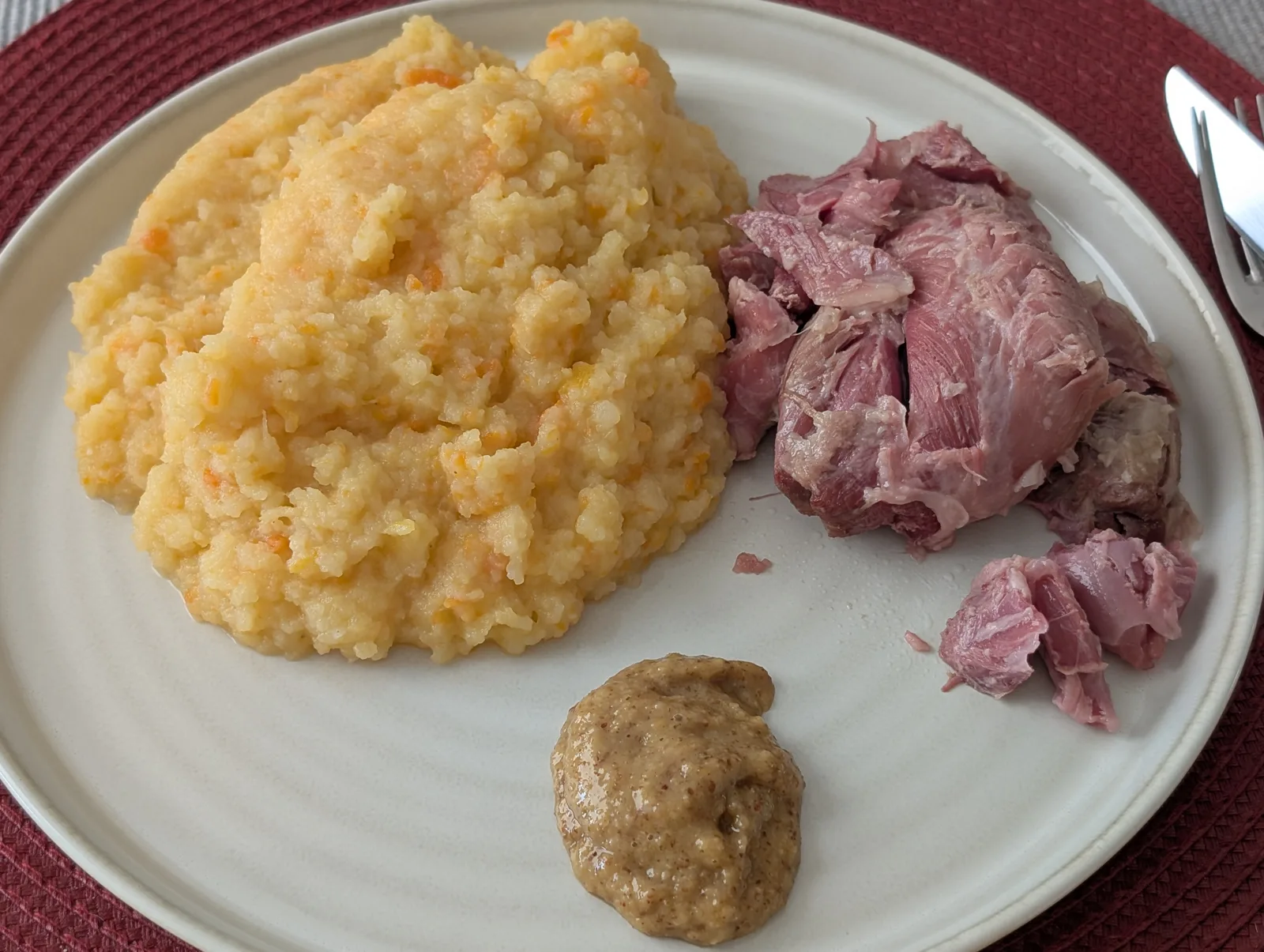
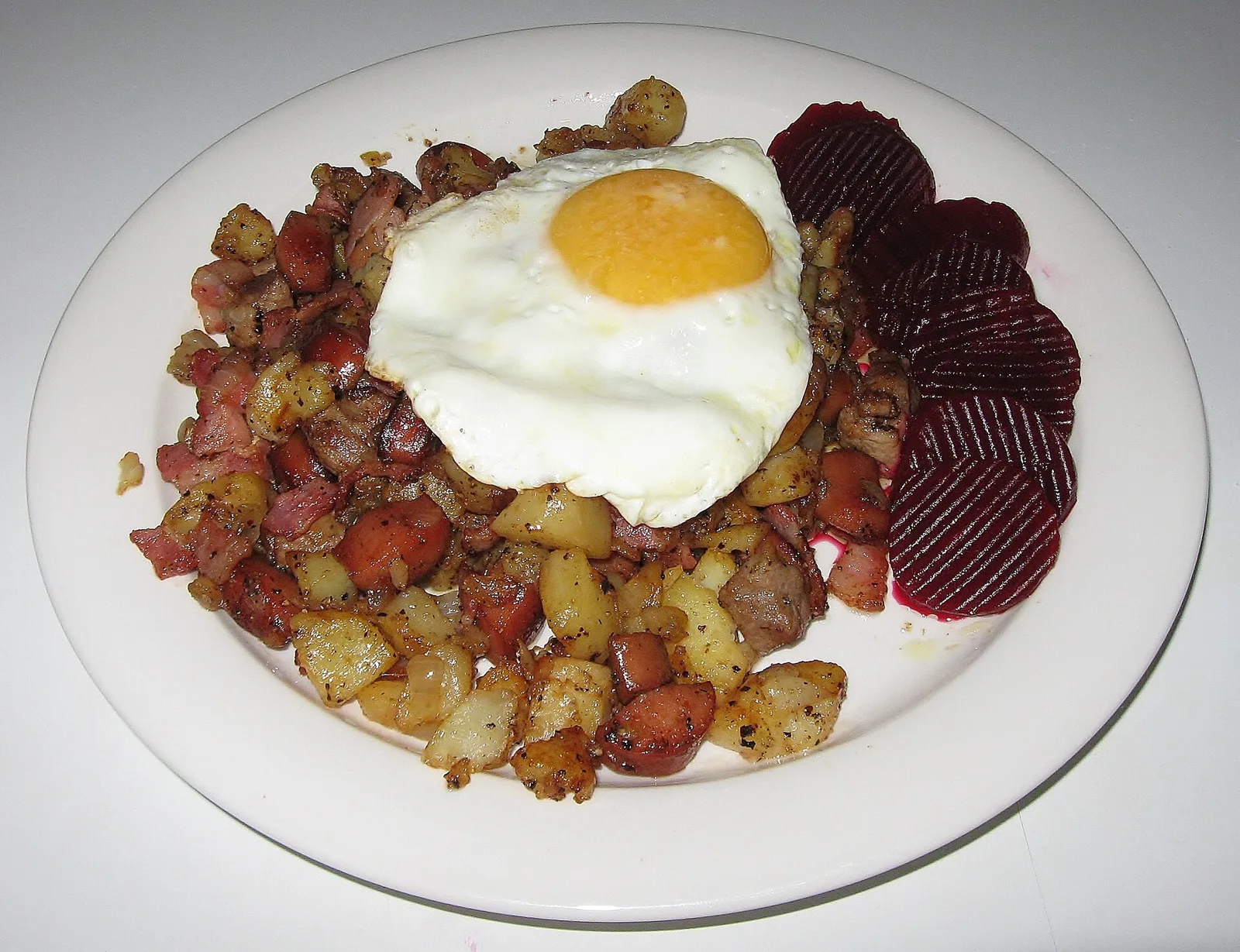
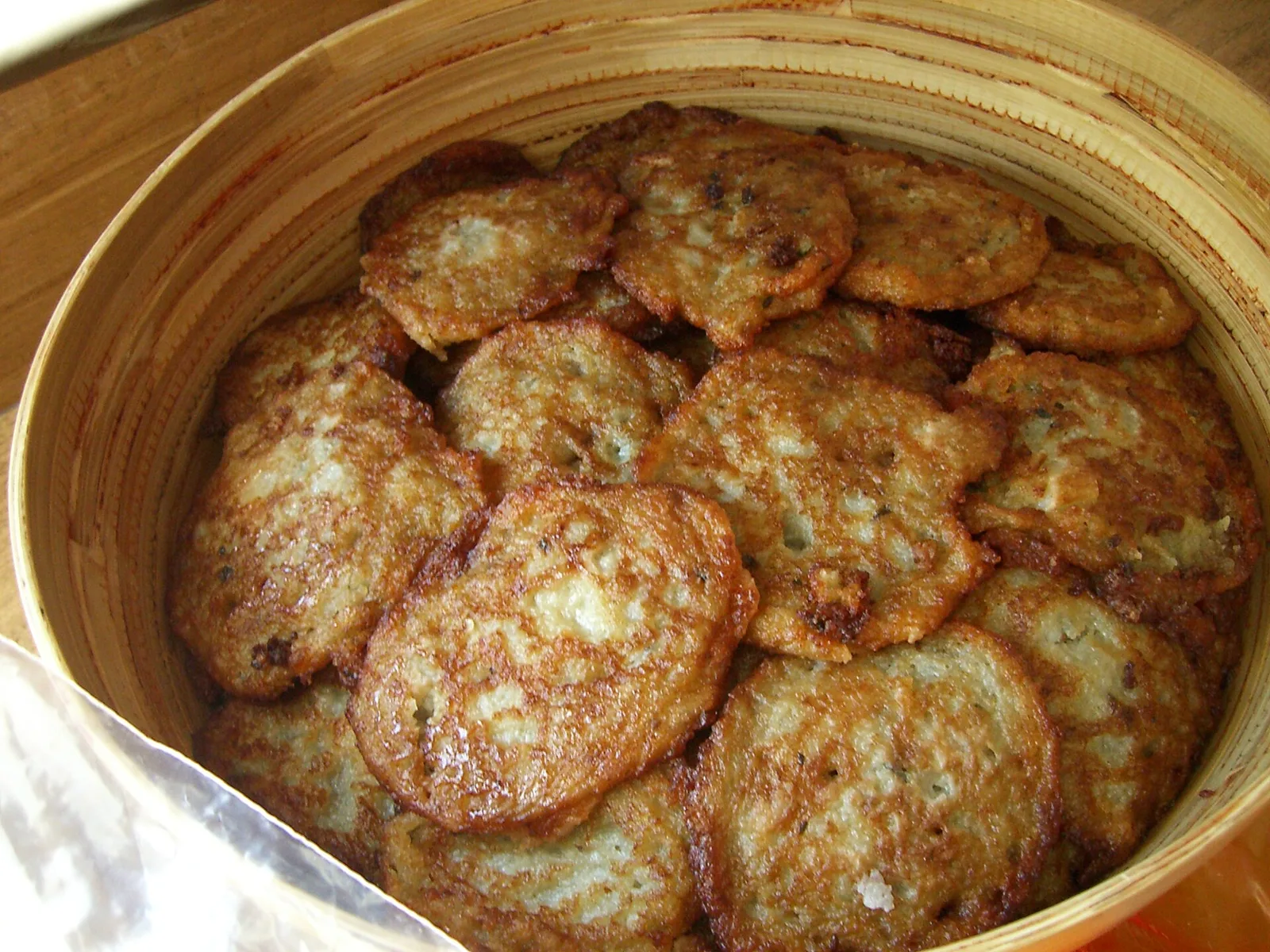
Fried pork, sausages, mashed swede and boiled potatoes are the classics. The vegetarian version with apple and caraway goes well with potato cakes, eggs or just bread. Lingonberries, mustard or a little soured cream round it off.
Yes, but it's best to mix the butter with oil or add it towards the end. Butter burns at a lower heat than oil, and over embers the middle of the pan easily gets too hot.
Yes. Shred it at home, put the cabbage in a sealed bag and keep it cool. It keeps for a few days. On a shorter trip it's just as easy to bring the cabbage whole and shred it by the fire.
It's the browning that gives fried cabbage its sweetness, but the aim is golden brown, not black. Remove any pieces that have burnt completely and lift the pan if it starts to smoke.
More for the pan by the fire
Hot middle, cool edge
The cabbage browns in the middle and waits at the edge while the pork finishes – here's how to use the heat zones on the griddle.
To the griddle guideThe pork that gives the cabbage its fat
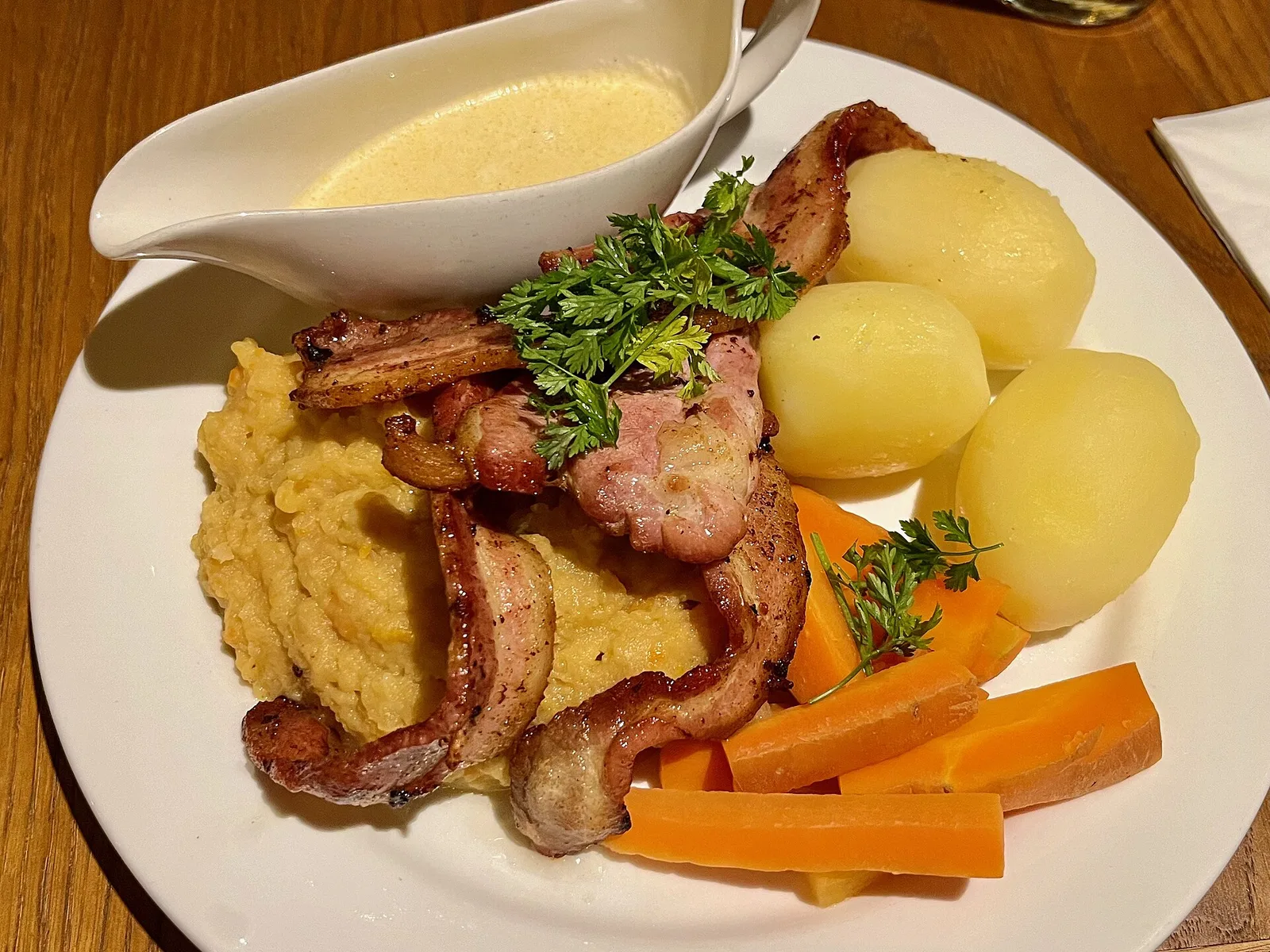
Crispy fried pork belly with onion sauce in the cast-iron pan – and the fat left behind is exactly what the cabbage wants to fry in.
To the porkThe pan that can take the embers
Season, wash and dry the cast-iron pan so the cabbage gets browned edges instead of sticking.
To the cast-iron guide