
Short answer
Eat the week at three different paces. On days 1–2 you empty the fridge and then the freezer, because chilled food is the most sensitive and a closed, full freezer stays cold for up to two days. On days 3–5 you cook simple stews and soups from the pantry. On days 6–7, boiling water or no heat at all is enough. Allow three to five litres of water per person per day for drinking, cooking and basic hygiene.
A crisis menu for one week – a family of two adults and two children
| Day | Breakfast | Lunch | Dinner | Snacks |
|---|---|---|---|---|
| Day 1 – the fridge | Fil (Swedish soured milk) or yoghurt with cereal, sandwiches with the opened toppings | Kolbullar (thin Swedish flour-and-water pancakes fried in pork fat) with bacon from the fridge and lingonberry jam | Pancakes made with the milk and eggs from the fridge, with jam | The ice cream from the freezer, and fruit |
| Day 2 – the freezer | Cinnamon oats with frozen lingonberries and grated apple | Sausages or fish fingers from the freezer, crispbread | Chilli made with the thawed mince, with tortilla wraps | Thawed buns and hot chocolate |
| Day 3 – the pantry | Porridge with milk made from milk powder, and jam | Tinned tomato soup with quick-cook macaroni boiled in the soup | Red lentil stew and frying pan bread | Tinned fruit and rusks |
| Day 4 – the pantry | Cereal with milk made from powder, crispbread with soft cheese | Tuna mix with boiled egg and sweetcorn on crispbread | Tacos with beans, sweetcorn and tortilla wraps | Rosehip soup and biscuits |
| Day 5 – the pantry | Porridge with raisins and cinnamon | Tinned meatballs with instant mash and lingonberry jam | Pumpkin soup or tinned soup, stick bread over the barbecue outside | Dried fruit and a piece of chocolate |
| Day 6 – boiled water | Thermos porridge left to stand overnight | Couscous with tuna and sweetcorn | Instant mash with tinned sausages and green peas | Crispbread with soft cheese |
| Day 7 – boiled water | Crispbread with soft cheese and hot chocolate | Bean salad with white beans, sweetcorn, oil and vinegar | Tinned ravioli, heated in the pan | Tinned peaches and chocolate biscuits from the comfort box |
Days 1–2 follow the order recommended by Livsmedelsverket (the Swedish Food Agency): the fridge first, then the freezer. Days 6–7 need only boiling water or brief heating.
The snowstorm has knocked out the power across the whole village, and the electricity company is counting in days, not hours. The fridge has been silent since breakfast. At the kitchen counter stands a family of four with the same question as all the neighbours: what do we eat, and in what order? The answer decides whether the week becomes an adventure or a battle against sour milk and thawed fish.
This menu is built for a family of two adults and two children who need to manage seven days without shopping, with a storm cooker (a spirit stove), a gas ring or a barbecue in the garden. How to build up your store is covered in rotating food supply, and how long the food keeps in how long food lasts in the store cupboard. This one is about what you actually eat, day by day.
The week at three paces
Think of the week as three different kitchens taking over from one another:
- The freezer days, days 1–2. You eat whatever would otherwise go off: first the fridge, then the freezer. This is when you cook proper meals, with meat and milk.
- The pantry days, days 3–5. Stews, soups and porridge from tins, lentils and dry goods. One pan and 15–20 minutes' cooking time is enough.
- The crispbread days, days 6–7. Now you are saving fuel and water. Everything needs only boiling water, brief heating or no heat at all.
The pattern follows how food goes off: the most sensitive first, the hardiest last. It also follows how the fuel runs out. If it runs out on day 5, you will still manage.
The freezer days: the fridge first, then the freezer
Livsmedelsverket's advice is clear: use the food in the fridge first. A fridge that was at 4 degrees when the power went gives you about seven hours in which you can trust your eyes, nose and taste. If it was at 8 degrees, you have about four hours. The freezer lasts considerably longer. A closed, full freezer can stay cold for up to two days.
That is why day 1 starts with the opened sandwich toppings, the fil and the last of the eggs. Kolbullar for lunch are a good way to use up the bacon: the kolbullar are just flour, water and salt, fried in the pork fat, and the lingonberry jam goes on the table alongside. Cooked jam in clean jars keeps in the pantry, whereas uncooked stirred lingonberries need the fridge. The evening pancakes use up the milk.
You open the freezer once on day 1, and when you do, you have a plan. Take out the ice cream, because it will not keep and the children will remember that evening. Also take out tomorrow's dinner, the mince or the chicken, and put it in the fridge. It works as an ice pack while it thaws, just as Livsmedelsverket suggests.
Tip: Write a note of what is in the freezer and tape it to the lid now, on an ordinary day. Then you know what to take out before you open it, and the lid is open for five seconds instead of a minute.
On day 2 you turn the thawed mince into chilli con carne. Food that has thawed but is still fridge-cold is fine to cook straight away. The recipe is for a big pot, so halve it. Without a fridge you cannot keep leftovers, except when it is cold outside. Then the balcony works as a fridge, as long as the food is protected from birds and animals. Add the beans, and a smaller amount of mince will feed the whole family.
Raw meat, chicken and fish that have had time to get warmer than fridge-cold, on the other hand, must be cooked straight away or thrown out, and never refrozen raw.
The pantry days: one pan and 20 minutes
Now comes the kitchen you can plan in advance. The basic rule is short cooking times, because every minute on the stove costs fuel. Red lentils are soft in 15 minutes, quick-cook macaroni in three, and couscous needs only boiling water and a lid. Dried beans and brown rice do not belong in this week.
The lentil stew is written for the campfire but works just as well on a storm cooker. Red lentils, chopped tomatoes and paprika are in the store. Carrots and onions keep for a while at room temperature, and if they have run out, a tin of carrots will do. You can leave out the parsnip. It goes well with frying pan bread, which needs only flour, baking powder, salt and about 1.5 decilitres of water. The milk powder in the recipe is optional but makes the bread softer.
Tacos on day 4 are the favourite of the week for many children. Beans, sweetcorn and chopped tomatoes are heated in a pan and served in tortilla wraps. For lunch that day there is a simplified tuna mix. The avocado and yoghurt in the recipe are not in the store, so mix tuna, chopped boiled egg, sweetcorn, a dash of oil and a little vinegar instead. Eggs are fine at room temperature, but they keep longer in the cold.
The pumpkin soup on day 5 relies on there being a Hokkaido pumpkin in the hall. A whole, undamaged pumpkin keeps for a long time if it is stored somewhere cool. Swap the vegetable stock for water and stock cubes and the fresh ginger for dried. The coconut milk comes in a tin. Otherwise it is soup straight from the tin. Stick bread over the barbecue in the garden turns the same evening into an outing, and the dough works just as well with water as with milk.
Tip: Cook the quick-cook macaroni straight in the tomato soup instead of in a separate pan. That way you need no extra water and no extra burner, and the starch makes the soup creamier.
The crispbread days: just boiling water
Towards the end of the week it is not the food that runs out, but the fuel, the water and the energy. So every meal is based on boiling water or no heat at all.
Bring a full pan to the boil once in the morning and pour the water into Thermos flasks. That covers hot chocolate, tea, couscous for lunch and instant noodles for a hungry child in the afternoon. The evening before, put oats, raisins and boiling water in a wide food flask and screw on the lid. In the morning the porridge is ready without the stove being lit.
Tuna, mackerel in tomato sauce, tinned beans and crispbread need no heat at all. The bean salad on day 7 is white beans, sweetcorn, oil and a dash of vinegar. Tinned ravioli heats up in a few minutes in the pan and becomes the celebration dinner of the week.
The water budget
MCF (the Swedish Agency for Civil Defence) counts on three to five litres of water per adult per day for drinking, cooking and basic hygiene, and Livsmedelsverket gives the same range per person. For a family of four that makes 84–140 litres in a week. Most of it goes on drinking. The cooking in this menu uses about two to three litres a day for the whole family, including tea and hot chocolate. How to make the water go further:
- Let the cooking water become food. The water from the macaroni becomes the base of the soup, and the water you boiled eggs in can wash the pan.
- Keep the liquid from the tins. The liquid from sweetcorn, beans and carrots becomes part of the liquid in the stew.
- Measure the water. Porridge for four is about 4 decilitres of oats and 8 decilitres of water. The cinnamon oats take 5 decilitres of water for two portions. Couscous needs roughly the same volume of water as grains.
- Wipe before you wash up. Wipe out the pan with a piece of crispbread or kitchen paper, and a splash of water will be enough for the washing-up.
- Plan for thirst. Salty food such as stock, mackerel and noodles makes everyone thirstier, so put them on days when there is water left.
The rice pudding is a comfort dish but needs a litre of milk and almost an hour of simmering. Only make it if you have a wood burner or wood-fired cooker that is lit anyway, and ideally on day 1 when the milk needs using up.
Where and how to cook without any risk of carbon monoxide is covered in cooking without electricity. How to fetch and purify water is covered in the guide to water preparedness.
Comfort food and routines for the children
Children aged two to ten cope surprisingly well with an unusual week if three things stay the same: meals come at the same times, the food looks familiar and a grown-up seems calm. A six-year-old does not care that the meatballs come from a tin, as long as they sit next to the mash with lingonberry jam as usual.
- Keep to mealtimes. Breakfast, lunch, a snack and dinner at the same times as in an ordinary week keep the day in order, even when the school is closed.
- Give the children jobs. A six-year-old can measure out oats, and a nine-year-old can be the water monitor with a note on the fridge where every litre used gets a tick.
- Let each child choose a dinner. It gives them something to look forward to.
- Have a comfort box. Chocolate, favourite biscuits and something that is usually only for Saturdays, and open it when the day needs it, not just on day 7.
- Make it a picnic. Dinner on a blanket on the living room floor by the light of a head torch is something completely different from dinner in a dark kitchen.
If you have a child under two, you will need their own välling (a Swedish milk-and-cereal drink for small children), baby porridge or jars of baby food in the store. More about how children experience a crisis can be found in preparedness with kids and family.
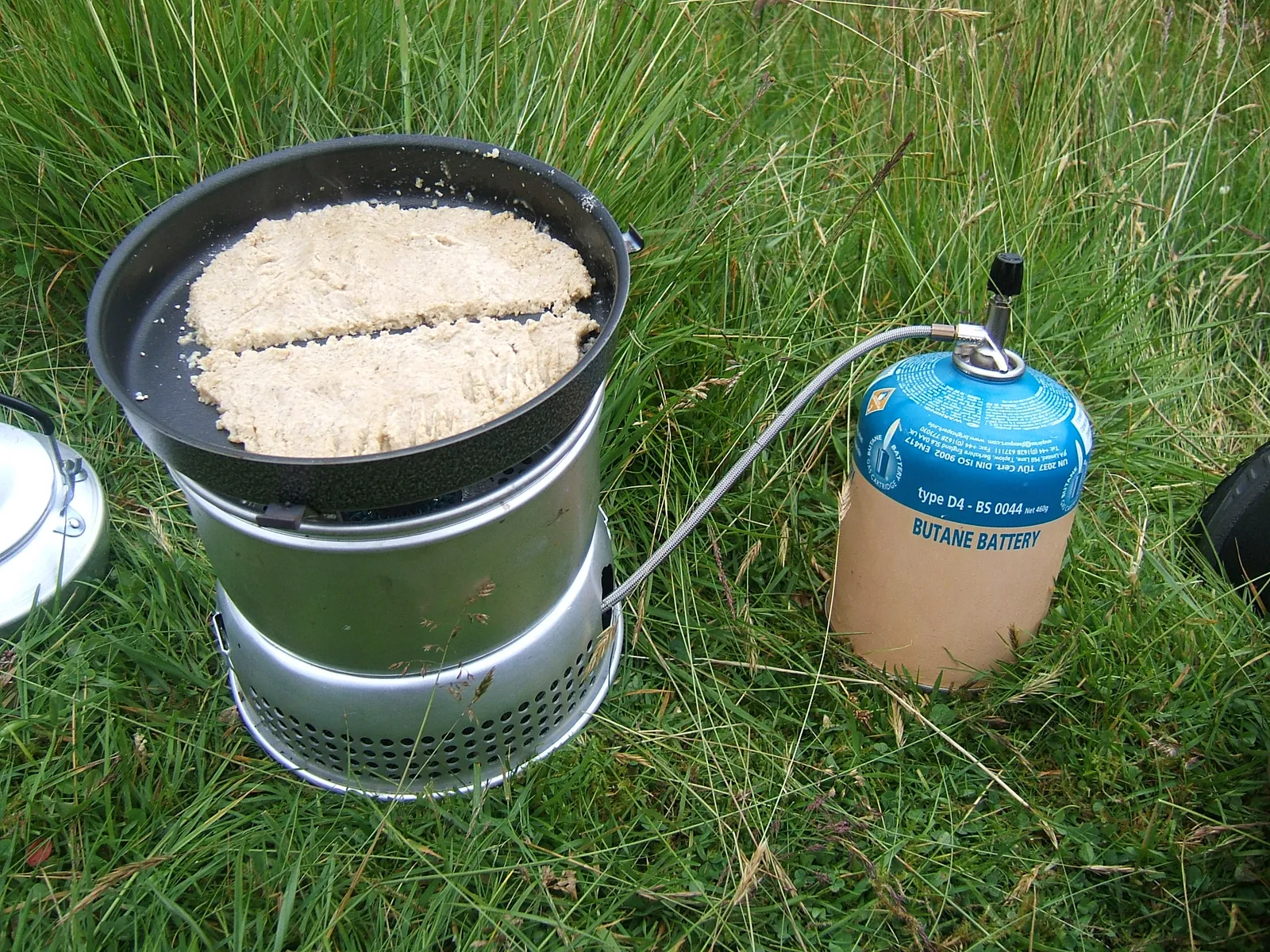
The storm cooker from the canoe trip is the same stove that saves dinner at home. Anyone who has cooked porridge in a camping mug by a lake already knows the most important part: lid on, short cooking time and no unnecessary water. The older overview food preparedness – what to keep at home gives you a quick first list if you are starting from scratch.
Shopping list for the crisis menu – four people for one week
On top of what is already in the fridge and freezer. Everything below keeps at room temperature.
Frequently asked questions
Should you eat from the freezer or the fridge first in a power cut?
The fridge first. Chilled food is the most sensitive and only lasts a few hours without power, whereas a closed, full freezer can stay cold for up to two days. Move tomorrow's frozen food to the fridge, and it will help keep the fridge cold while it thaws.
Can you eat food that has thawed in the freezer?
Yes, if it is still fridge-cold it can be cooked straight away. Food that is soft but still has ice crystals can be refrozen when the power comes back. The quality may get worse, but safety is not affected. Raw meat, chicken and fish that have got warmer than fridge-cold should be cooked straight away or thrown out.
How much water do you need for cooking over a week?
The cooking itself in this menu uses about two to three litres a day for a family of four, including tea and hot chocolate. Most of the water goes on drinking and washing up. Plan for three to five litres per person per day in total, which is 84–140 litres a week for four people.
What crisis food do children like?
The same things as in an ordinary week: pancakes, meatballs with mash and lingonberry jam, tacos, ravioli, stick bread and porridge with jam. Tinned meatballs, instant mash and tortilla wraps keep at room temperature. Save a box of chocolate and favourite biscuits for the days when spirits are flagging.
Which food saves the most fuel?
Food that only needs boiling water, such as couscous, instant noodles and oats, and food that can be eaten cold, such as crispbread, tuna and tinned beans. Avoid dried beans and brown rice, which need a long cooking time.


