





More spruce tips? Pickle some herring
Shoots left over after the tea? The same pale green shoots flavour a summer herring with juniper berries and rosemary.
To the wilderness herringBright green shoots, a saucepan and ten minutes' wait by the fire
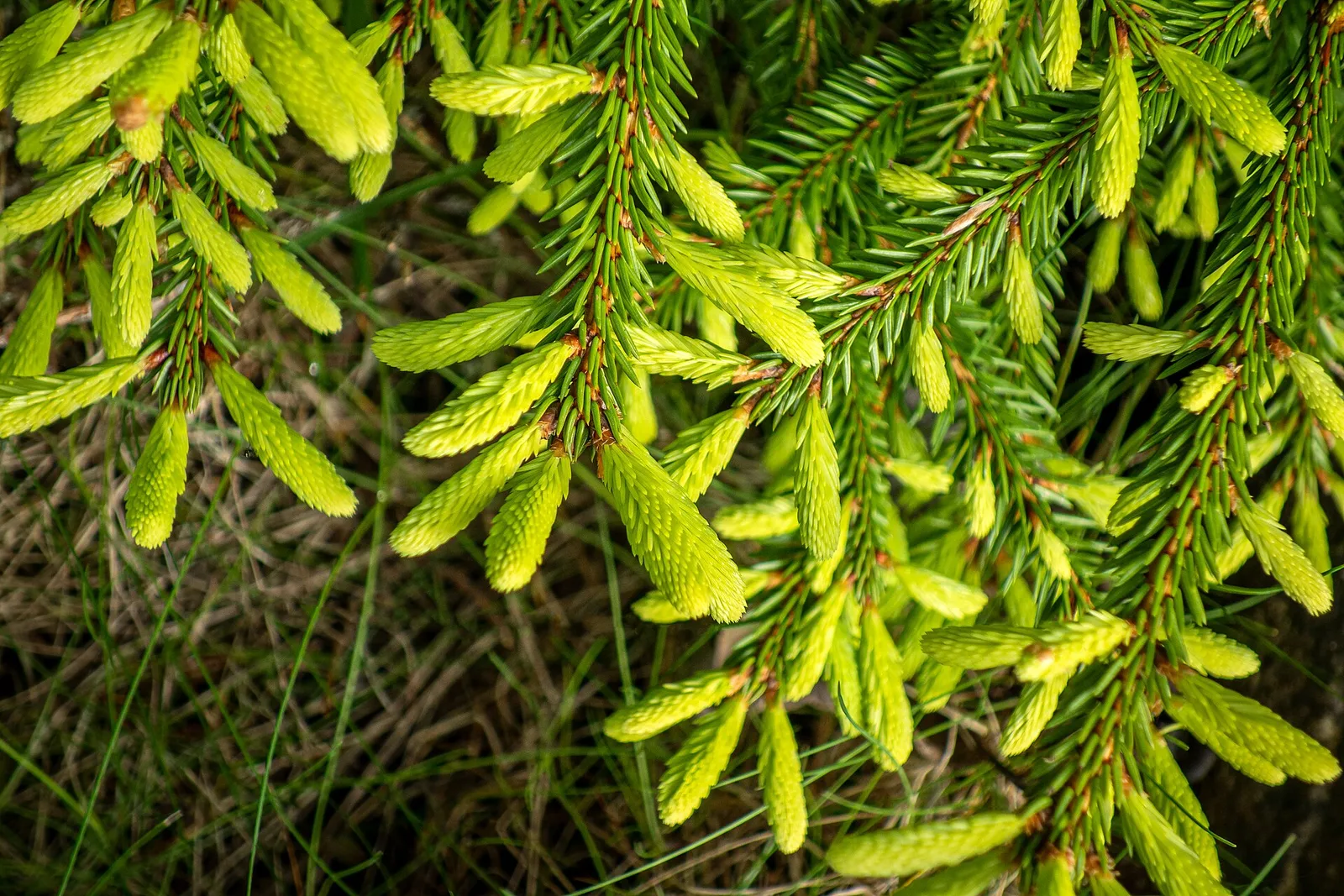
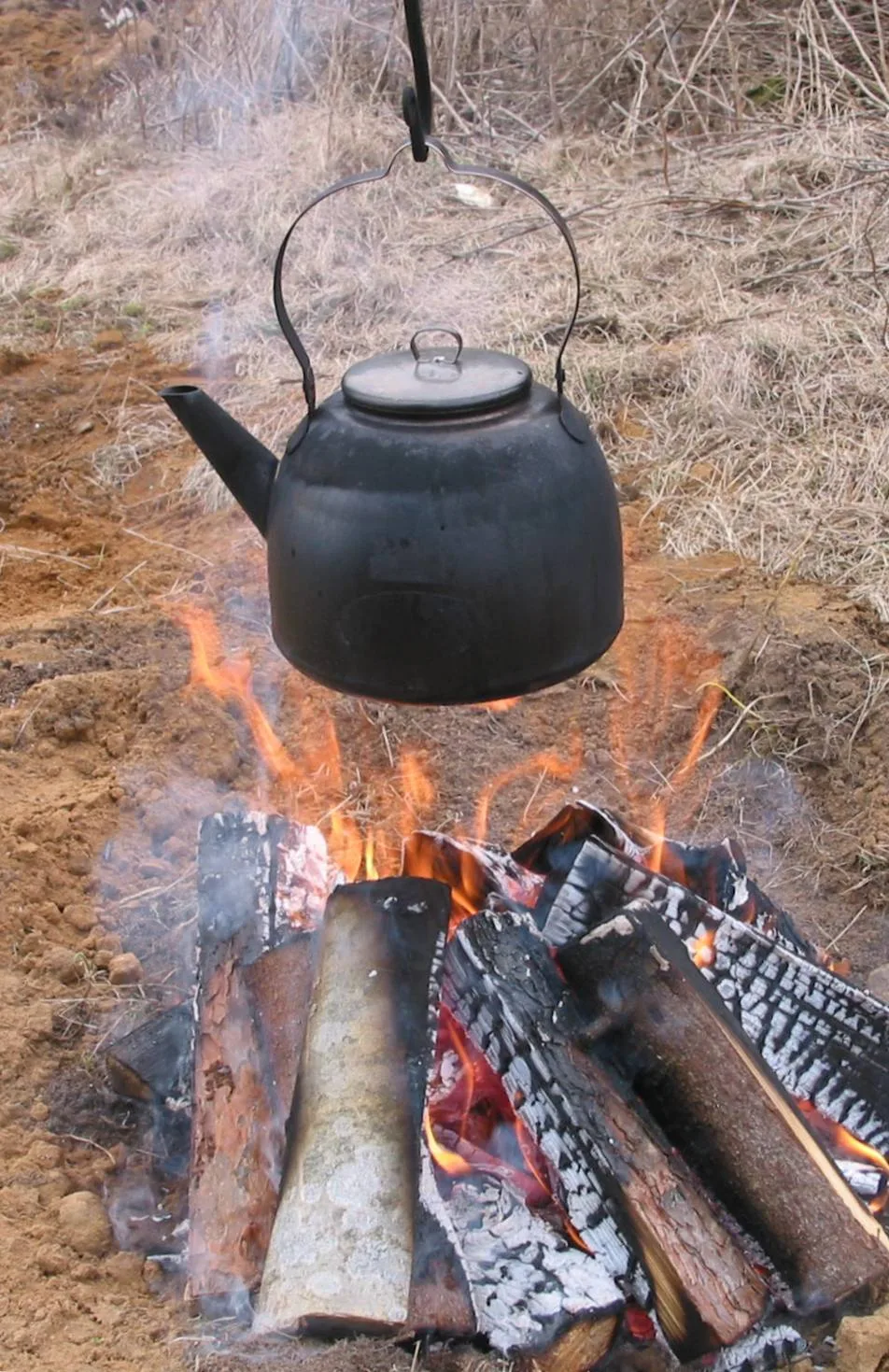
It's a light evening in early June. The spruces at the edge of the forest have bright green tufts at the tip of every twig, so soft you can bend them with one finger. The brown casing that protected the bud is still stuck on some of them and falls off when they're picked. A small bag is enough. At the fire the pan is already boiling, and when it's lifted off and the shoots go in, a scent rises that's reminiscent of lemon and resin.
Spruce tip tea is one of the simplest ways to taste the forest. It's mild, slightly tart and a little resinous, and children often think picking is more fun than drinking. This page is mostly about what decides whether the tea turns out well and is done right: who owns the shoots, how to tell spruce from poisonous yew, and why the water shouldn't boil with the shoots in it. Remember three words: permission, pale green and calm.
Have you made this recipe? Rate it
0.0 out of 5 · 0 votes
out of 5
vote
votes
Be the first to rate this recipe.
Thanks for your vote!
Your vote could not be saved right now. Please try again later.
Permission. Naturvårdsverket (the Swedish Environmental Protection Agency) gives a straight no: picking spruce tips is not part of allemansrätten, the Swedish right of public access, and you need to ask the landowner for permission before you pick. What's more, the shoots are the tree's new growth for the whole year. Many people think a few shoots are fair game, but there's no such exception in Naturvårdsverket's answer. So pick on your own land, at the home of someone you know, or after asking. Even once you have permission, only take the odd shoot from each tree and spread your picking over several spruces. Never take the leading shoot at the top of a small spruce, as it may then grow crooked.
Pale green. Only the new, soft, pale green shoots go in the pan, and only from a spruce you're sure you recognise. If you're the least bit unsure, leave it. How to tell spruce, pine, juniper and yew apart is explained further down.
Calm. The water comes to the boil without the shoots. Then the pan is lifted off, the shoots go in and the tea steeps under a lid. If the shoots boil with the water, the tea turns bitter and resinous, and the fresh scent disappears with the steam.
Spruce tips appear in May and June in southern and central Sweden, and a few weeks later in the north and in the mountains. They're at their best when they're one to four centimetres long, pale green and soft all the way through. Once they've turned darker, longer and prickly, it's too late – by then they taste mostly of resin.
Choose spruces some distance from roads, car parks and fields that are sprayed. Low branches by a path where dogs are walked aren't the best either. Pinch off the shoot with your fingers where it starts, and pick off the brown casing if it's still on.
Spruce tips for the winter. The tea doesn't have to be made only in June. Put cleaned shoots in a bag in the freezer, or dry them spread out on paper indoors for a few days until they're completely dry, and store them in a jar. Frozen shoots are used like fresh ones. Dried shoots make a weaker tea, so use about twice as many.
At home. If you pick on the way to the fire, nothing needs preparing. If you have frozen or dried shoots, bring them in a jar. If there are lots of you, fill a flask with boiling water at home so it goes faster by the fire. Also bring a bottle of cold water for cooling a burn.
By the fire. Pick first, and clean the shoots while the fire gets going. The tea only needs a quick boil, so a small fire is enough. How to build a fire like that is explained in lighting a fire.
This is the most important part of the page. Spruce, pine and juniper are conifers that many people use in food and drink. Yew, on the other hand, is poisonous, and it can grow in the same park, garden or copse.
Yew. According to Giftinformationscentralen (the Swedish Poisons Information Centre), yew contains poisonous substances, and the highest levels are in the green needles. Needles and chewed seeds can cause poisoning with stomach upset, and in rare cases the poison affects the heart and consciousness. The red flesh around the seed is harmless, but the seed inside is not. Symptoms normally appear within one to three hours. It's precisely the needles that end up in the pan, which is why mixing them up is so serious here.
Call Giftinformationscentralen on 010-456 67 00 if someone has drunk tea made from, or chewed, needles that may be yew, or if a child has eaten needles or more than five of the red berries. Follow their advice – they may ask you to give activated charcoal. If there are breathing difficulties, unconsciousness, seizures or effects on the heart, call 112.
The rule is simple: only pick spruce you're sure you recognise. Soft, flat needles in two rows mean leave it alone. More poisonous plants that don't belong in food are covered in whittling a roasting stick and a tripod.
Pine shoots can be used in the same way as spruce tips and are picked at about the same time. They taste more of resin and can give a more bitter tea, so start with fewer shoots. Ask the landowner for permission here too. Naturvårdsverket's answer mentions spruce tips, but allemansrätten doesn't give any right to break twigs off living trees either.
Juniper shoots are less suitable. The European Medicines Agency does not recommend juniper berries as a herbal medicine during pregnancy and breastfeeding, because their safety hasn't been shown, and even less is known about tea made from juniper shoots. Juniper berries in small amounts as a spice in food are another matter, but we'll leave tea made from juniper shoots well alone.
Pregnant? Livsmedelsverket (the Swedish Food Agency) advises pregnant women to be careful with herbal teas and infusions in general, because too little is known about them. A cup now and then is probably fine, but don't make spruce tip tea a daily drink during pregnancy, and avoid juniper altogether. Spruce tips have also been promoted as a health food for many years, but this page is about flavour and experience, not health claims.
Boiling water is the most common cause of burns by the fire. Lift the pan with a pot holder or a glove, pour away from your body and never put the pan where someone could walk into it. Let the children's cup cool for a while or mix in cold cordial before they get it.
If someone burns themselves: cool the burned skin with cool water for about a quarter of an hour, no longer, and never with ice or snow. More about the fire site and burns is in fire safety in nature.
Early summer is often dry. The decision of the county administrative board (länsstyrelsen) or the municipality on fire bans decides whether you can light a fire, and what applies is explained in rules for lighting fires outdoors. If there's a fire ban, the tea works just as well on a storm cooker (spirit stove) where that's allowed.
The picking is the children's part, with an adult beside them. Start at a spruce the adult has pointed out: feel the prickly needles, roll a needle between your fingers, look for the hanging cones and smell a shoot. Then let the children find the next spruce themselves and show it to the adult before they pick. Teach them the most important rule too: soft flat needles and red berries mean you never pick.
The children can clean the shoots, count the minutes while the tea steeps and taste it. The adult pours the boiling water and strains the tea. Spruce tip tea contains no caffeine, so children can drink it, preferably a little cooler and sweetened. Remember that honey is not given to children under one year old. More jobs by the fire for different ages are in cooking with children over a fire.
No. Naturvårdsverket says that spruce tips are not part of allemansrätten, the Swedish right of public access, and that you need to ask the landowner for permission. Pick on your own land or after asking, and even then only take the odd shoot from each tree.
In May and June in southern and central Sweden, and a few weeks later in the north. The shoots should be pale green, soft and one to four centimetres long. Dark, prickly shoots are too old.
About 8–10 minutes under a lid in water that has just stopped boiling, and up to a quarter of an hour for a stronger tea. Don't let the shoots boil, or the tea will turn bitter.
Spruce needles are prickly, sit all the way around the twig and roll between your fingers. Spruce has hanging cones. Yew has soft, flat needles in two rows, no cones and red, berry-like seed coverings on the female trees. Only pick spruce you're sure you recognise.
Call Giftinformationscentralen on 010-456 67 00 for advice. If there are breathing difficulties, unconsciousness, seizures or effects on the heart, call 112.
Yes, the tea contains no caffeine. Let it cool or mix in cold cordial, and don't give honey to children under one year old.
Yes, if the shoots were frozen or dried in early summer. Frozen shoots are used like fresh ones. Dried shoots make a weaker tea, so use about twice as many.
When you want to cook more than tea on the same fire, the whole campfire cooking hub has stews, breads and food on a stick.
More around the pan
More spruce tips? Pickle some herring
Shoots left over after the tea? The same pale green shoots flavour a summer herring with juniper berries and rosemary.
To the wilderness herringRecognise poisonous shrubs
Yew, mezereon and guelder rose – what the shrubs that must never become a roasting stick look like, and how to hang the pan from a tripod.
To the whittling guideCoffee for the grown-ups
Tea for the children and coffee for the grown-ups in the same pan – amounts per litre and how the grounds settle.
To the kokkaffe