Short answer
Allow four to six pieces of finger food per person for drinks before dinner, ten to twelve pieces for a two-to-three-hour drinks party and fifteen to twenty pieces when the finger food is the whole dinner. At the stroke of midnight, three to five pieces is enough. Mix cold and hot, salty and fresh, and make most of it the day before so that only assembling and the oven are left.
How much finger food per person?
| Occasion | Pieces per person | Number of kinds | Keep in mind |
|---|---|---|---|
| Drinks before dinner (30–60 min) | 4–6 | 3–4 | Light and salty, nothing filling |
| Drinks party 2–3 hours | 10–12 | 5–7 | At least one hot kind and something substantial |
| Finger food as a whole dinner | 15–20 | 7–10 | Two to three substantial kinds, bread and a board |
| At the stroke of midnight | 3–5 | 2–3 | Salty and crunchy, ideally something hot |
| Children's party | 6–8 | 4–5 | Mild, simple and cut into small pieces |
Guide amounts for adults. A piece is a bite or two: a canapé, a skewer, an egg half or a mini pie. If there's also a charcuterie board out, every 50 grams of cheese and charcuterie counts as about three pieces.
Finger food is the most sociable way to feed people. Nobody is stuck in an assigned seat, nobody waits for everyone to get their plate, and the host can move among the guests instead of standing at the stove. But finger food is also what most often goes wrong on quantity: either it runs out after half an hour, or half the platters are still there when the party's over. And whoever hasn't planned ends up in the kitchen assembling canapés while everyone else raises a glass.
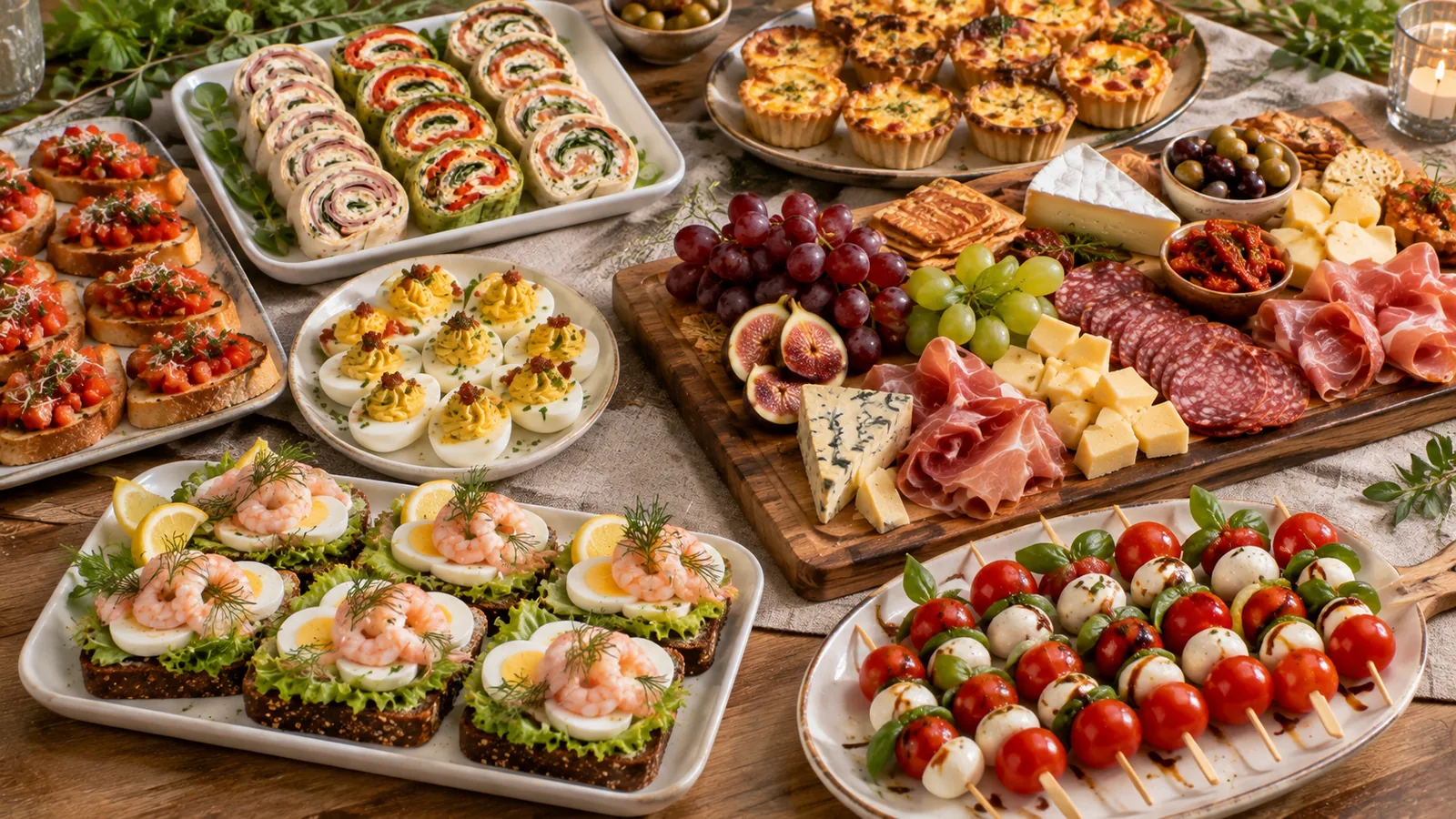
This guide covers everything that makes finger food easy: how many pieces you need per person in different situations, how to mix cold and hot, what can be done the day before, four ready-made menus for different parties and how to serve the food and keep it safe through the evening. Further down there are ten finger food recipes, from classic Swedish canapés to mini quiches, and all the charcuterie boards from charcuterie board guide.
What counts as finger food?
Finger food is food eaten with your fingers or from a skewer, in one or two bites, without a knife and fork and ideally without a plate. At Swedish parties it's often called mingelmat or tilltugg, and the classic forms are snittar – small open sandwiches with slightly fancier toppings – and canapés, a French equivalent on bread, crackers or puff pastry. On top of that come Italian crostini and bruschetta, skewers, devilled eggs, rolls, small pies and boards of cheese and charcuterie.
What they have in common is that you should be able to eat them standing up with a glass in your other hand. That's a good test when you're choosing dishes: can the guest eat this without dropping crumbs, spilling sauce or having to put their glass down? If the answer is no, the dish suits a buffet with plates better.
How much finger food per person?
The most important question is what role the finger food plays. Is it an appetiser before dinner, part of a longer drinks party or the whole dinner? That determines the quantity more than the number of guests.
- Drinks before dinner, 30–60 minutes: four to six pieces per person. The finger food should whet the appetite, not fill people up. Choose three to four kinds, ideally salty and light, such as crostini, devilled eggs and pickle tacos.
- A drinks party of two to three hours: ten to twelve pieces per person. Here you need at least one hot kind and something filling, for example mini quiches or meatball skewers. Five to seven kinds is about right.
- Finger food as a whole dinner: fifteen to twenty pieces per person, spread over seven to ten kinds, plus bread and ideally a charcuterie board. At least two to three kinds should be really substantial.
- At the stroke of midnight: three to five pieces per person. The guests have had dinner and want something salty with the bubbly. Two to three kinds is enough.
A simple rule for working out how much of each kind: multiply the guests by the number of pieces per person, and divide the total between the kinds. Twenty guests at a three-hour drinks party makes 20 × 11 = 220 pieces. With six kinds, that's roughly 35–40 pieces of each. Go a little heavier on the substantial kinds and a little lighter on the most expensive ones.
Guests eat more at the beginning than at the end, more in the evening than in the afternoon, and more if beer and wine are served rather than just bubbly. Teenagers and people coming straight from work eat more. If there's also charcuterie and cheese out, you can count 50 grams of each as roughly three pieces of finger food.
Cold and hot, salty and fresh
A good finger food buffet is balanced in the same way as a menu. Think in four pairs:
- Cold and hot. Most of the finger food can be cold, but one or two hot kinds make an enormous difference, especially in winter. Mini pies, meatball skewers, bacon-wrapped dates and Västerbotten cheese tartlets are hot kinds that can stand for a while and still taste good lukewarm.
- Salty and fresh. Charcuterie, cheese, roe and bacon need something tangy or fresh alongside. Caprese skewers with tomato and basil, pickles and a salad in small glasses lighten things up.
- Creamy and crunchy. Toasted bread, crispbread and crackers against cream cheese, spreads and egg. Roasted chickpeas are a cheap crunchy addition.
- Meat, fish and vegetarian. Make sure there are at least two vegetarian kinds, even if nobody has said they're vegetarian. Bruschetta, caprese skewers, egg halves and mini pies with cheese and vegetables cover most bases.
Colour matters too. A table where everything is beige looks tired. Red from tomatoes, radishes and peppers, green from herbs, cucumber and salad leaves, yellow from eggs and orange from salmon make a table that draws people in.
What can be prepared the day before?
The beauty of finger food is that almost everything can be broken down into steps. If you plan right, all you need to do when the guests arrive is assemble, heat and top up.
The day before:
- Boil the eggs and make the filling for the egg halves, but only fill them on the day of the party.
- Bake the mini pies and the meatballs. Leave to cool, cover and put in the fridge.
- Roll the tortilla pinwheels and salmon rolls tightly in clingfilm. They improve with a night's rest and are easier to slice cold.
- Mix the cream cheese, spreads, dips and horseradish cream cheese.
- Toast the bread for the crostini and keep it in a lidded jar once it has cooled.
- Wrap bacon round the dates and put them on a baking tray in the fridge.
The morning of the party:
- Fill the egg halves and cover them.
- Thread the caprese skewers and meatball skewers, without dressing.
- Slice the tortilla pinwheels and salmon rolls and lay them on platters covered with clingfilm.
- Make the tomato mixture for the bruschetta, but only salt it just before.
The last half hour:
- Heat the mini pies and meatballs and bake the dates in the oven.
- Toast the bruschetta bread and top it just before serving.
- Assemble the canapés and crostini. Bread and topping should meet as late as possible, or the bread goes soft.
- Drizzle dressing over the skewers and scatter over herbs.
Four ready-made menus
Here are four combinations that work. The quantities are for ten people and can be scaled up.
Children's party
Roughly 70 pieces. Tortilla pinwheels with ham and cheese, meatball skewers with a mild dip, mini pies with cheese and ham, caprese skewers with small mozzarella balls and a snack board for kids with fruit and vegetable sticks. Halve the tomatoes and mozzarella balls lengthways for the youngest and remove the skewers before small children get the food.
Drinks after work or before dinner
Roughly 50 pieces. Crostini three ways, devilled egg halves, salmon rolls with horseradish cream cheese and a small classic cheese and charcuterie board. Everything can be ready before the guests arrive, and nothing needs the oven once they're there.
New Year and the stroke of midnight
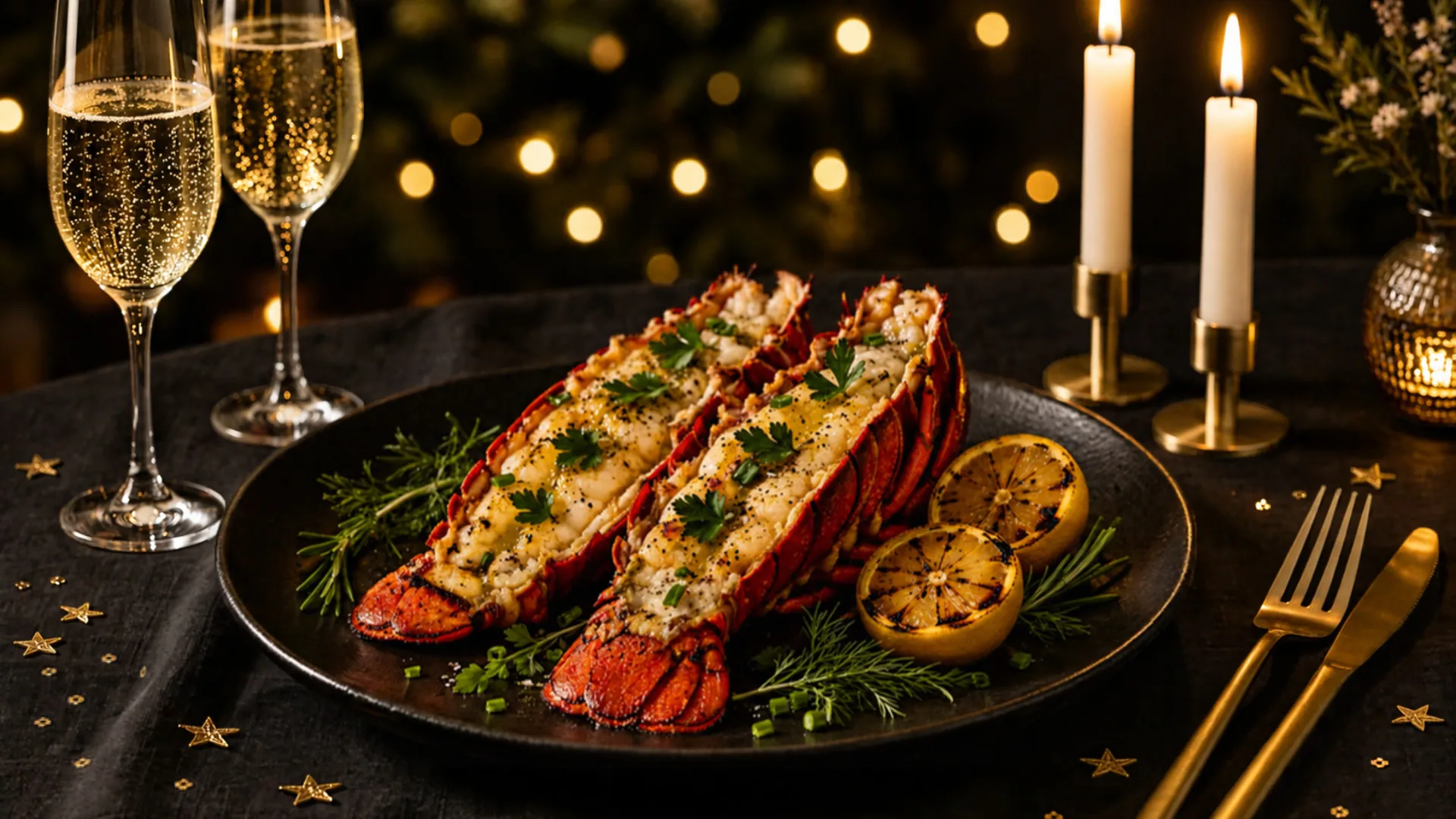
As a starter or for drinks before dinner, classic Swedish canapés with prawns and roe, bleak roe on rösti and toast Skagen work well. At the stroke of midnight, three to five pieces per person is enough: bacon-wrapped dates, pickle tacos and a luxury charcuterie board for New Year. The whole menu for the evening is in the New Year's Eve menu, and viral small bites in TikTok as a New Year menu.
Graduation and summer party
Roughly 150 pieces if the finger food is the whole meal at an afternoon drinks party. Bruschetta, caprese skewers, salmon rolls, tortilla pinwheels, mini pies with Västerbotten cheese and vegetables, meatball skewers and a italian antipasti board. If lots of guests are coming, a grazing table is the easiest way to lay a whole table that lasts. Remember that heat shortens the time food can sit out.
Serving and topping up
- Put it out in rounds. Put out about half of each kind when the guests arrive and keep the rest ready in the fridge. The platter looks fresh all evening and the chilled foods don't sit out too long.
- Several stations. For more than twenty guests it's better to have two or three spots with finger food than one long table. There are shorter queues and people mingle more.
- Napkins and small plates. Even when everything can be eaten with fingers, many people want a napkin. Small side plates mean guests take several kinds at once and don't linger at the table.
- Bowls for skewers and stones. Put out an empty bowl for used skewers, cocktail sticks and olive stones, or they'll end up on the platters.
- Labels. A little card with the name of the dish and whether it contains meat, fish, nuts or gluten saves a lot of questions.
How long can finger food sit out?
Finger food is largely chilled food: cheese, charcuterie, eggs, fish, mayonnaise and cream cheese. Livsmedelsverket (the Swedish Food Agency) advises that chilled foods sit out for no more than four hours at room temperature up to 20°C. When it's warmer the time is shorter, and a summer party in the sun is exactly where finger food most often goes wrong. Put the platters in the shade and top up more often with smaller amounts.
Hot food such as meatballs and pies should either be kept properly hot or cooled and put in the fridge. Mince should be cooked through, at least 70°C in the centre. Anything that has sat out all evening shouldn't go back in the fridge to be served again the next day. Leftovers that have only been out for a short while are fine to keep in a lidded container.
Pregnancy and small children
Pregnant women can eat most things at a finger food buffet, with a few exceptions. Livsmedelsverket advises pregnant women to avoid mould-ripened and washed-rind cheeses, unpasteurised soft cheeses, cold-smoked and cured fish and air-dried charcuterie that hasn't been frozen or heated. Sliced cold cuts should have been packed no more than a week earlier. Eggs should be hard-boiled. A label or a separate plate with pregnancy-friendly kinds makes it easy.
Small children can choke on food. 1177 advises that the youngest should wait before having whole nuts, grapes and similar round foods. Halve cherry tomatoes, mozzarella balls and grapes lengthways, remove skewers and cocktail sticks and let the children sit down when they eat. Honey should not be given to children under one.
Ten finger food recipes
- Classic Swedish canapés – toast and crispbread with prawns, egg and caviar, smoked salmon, roast beef and Västerbotten cheese cream.
- Crostini three ways – thin toasted baguette slices with mushrooms and thyme, goat's cheese with honey and walnut, and ricotta with peas and lemon.
- Bruschetta – grilled country bread with garlic, olive oil and fresh tomato with basil.
- Devilled eggs – classic and in two variations.
- Bacon-wrapped dates – sweet and salty hot finger food from the oven.
- Caprese skewers – tomato, mozzarella and basil on skewers.
- Salmon rolls with horseradish cream cheese – rolled, chilled and cut into pieces.
- Meatball skewers – meatballs on skewers with a dip.
- Tortilla pinwheels – wraps rolled up and sliced into pinwheels.
- Mini pies – small pies in a muffin tin with several fillings.
Charcuterie boards
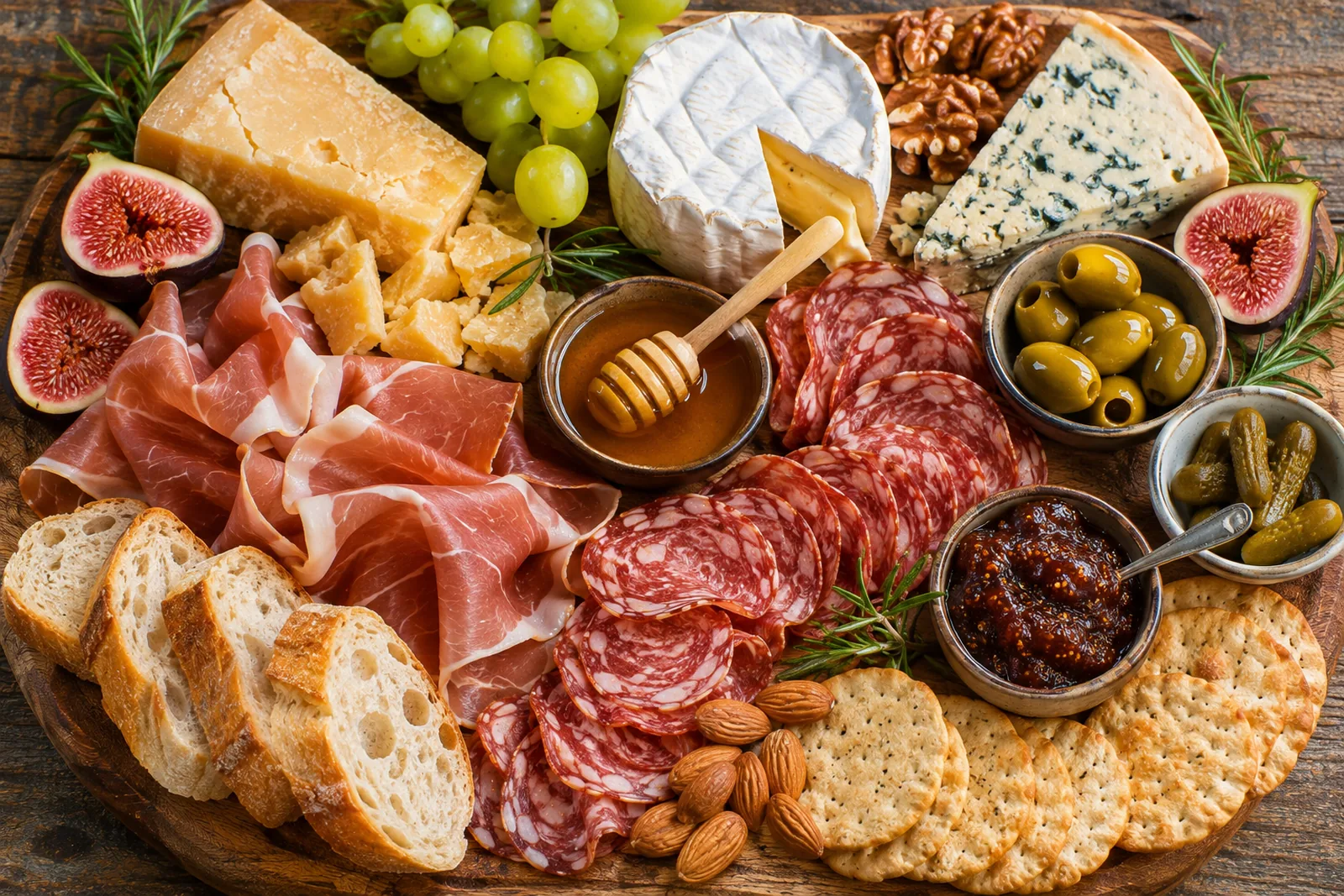
The board is the big platter of finger food. The basics, the cheeses and the amounts are in the guide to charcuterie board, and here are all the boards:
- Classic cheese and charcuterie board
- Italian antipasti board
- Spanish tapas board
- Alpine board – Swiss and Austrian cheeses, Bündnerfleisch and Tiroler Speck.
- German Brotzeit board – obatzda, liver sausage, ham and pretzels.
- Polish charcuterie board – oscypek, kabanosy, kiełbasa and smalec on rye bread.
- Christmas board with charcuterie and cheese
- Luxury charcuterie board for New Year's Eve
- Snack board for kids
- Charcuterie board on a budget
- Grazing table – a whole table for 15–30 guests.
More small dishes for the buffet table
- Pickle tacos and italian sushi – charcuterie rolled and folded round cream cheese, no cooking at all.
- Arayes, beyti kebab rolls and tortilla kebab with minced chicken – substantial, hot and easy to cut into pieces.
- Gubbröra with Browned Butter – on crispbread or rye bread.
- Gravlax with hovmästarsås – on small pieces of rye bread.
- Baked tomato and burrata dip – a hot dip in the middle of the table.
- Tapas salad with fuet and olives – in small glasses or bowls.
- Meatballs – the basic recipe for the meatball skewers.
For Christmas, there's more in the guide to Christmas food.
Common mistakes
- Too many kinds. Twelve kinds in small amounts is more work and looks messier than six kinds in generous amounts.
- Everything assembled too early. Bread that has sat under a topping for several hours goes soft. Prepare the parts, assemble last.
- Nothing hot. A long drinks party with only cold food feels stingy, especially in winter.
- Everything out all evening. Lay out in batches and top up from the fridge.
- Hard to eat. Runny sauce, big pieces and loose toppings that fall off don't belong at a drinks party.
Checklist for the day before the party
Tick these off the evening before. Then all that's left is assembling, the oven and topping up when the guests arrive.
Frequently asked questions
How much finger food do you need per person?
Four to six pieces per person for drinks before dinner, ten to twelve pieces for a two-to-three-hour drinks party and fifteen to twenty pieces when the finger food is the whole dinner. At the stroke of midnight, three to five pieces is enough.
How many kinds of finger food should you have?
Three to four kinds is enough for a short drinks party for ten people. For a longer drinks party, five to seven kinds work, and seven to ten as a whole dinner. More kinds doesn't mean more food, just more work, so count the number of pieces first and divide them between the kinds.
Which finger food can you make the day before?
Mini pies, meatballs, eggs and egg filling, spreads, dips, tortilla pinwheels and salmon rolls can be made the day before. Bread for crostini can be toasted and kept in a jar. Bruschetta, canapés and caprese skewers are assembled on the day so that the bread doesn't go soft.
How long can finger food sit out?
Livsmedelsverket advises that chilled foods sit out for no more than four hours at room temperature up to 20°C, and for a shorter time when it's warmer. Put out one round at a time, top up from the fridge and throw away anything that has been out for a long time.
Which finger food works as a whole dinner?
Mix substantial kinds such as mini pies, meatball skewers and tortilla pinwheels with fresher ones such as caprese skewers and bruschetta, and put out a charcuterie board with bread. Allow fifteen to twenty pieces per person and at least two hot dishes.
Can finger food be made without an oven?
Yes. Canapés on crispbread, tortilla pinwheels, salmon rolls, caprese skewers, devilled egg halves, pickle tacos and a charcuterie board are made entirely without an oven. If you have a toaster or a frying pan, you can also toast the bread for crostini and bruschetta.
What's the difference between crostini and bruschetta?
Bruschetta is larger slices of grilled or toasted country bread rubbed with garlic and drizzled with olive oil, usually with tomato on top. Crostini are smaller, thinner toasted slices, often of baguette, with lots of different toppings.