


Pasta all'amatriciana after the antipasti
Tomato, guanciale and pecorino – a classic pasta that works as the next course once the board is empty.
For the pastaAffettati, formaggi and verdure – three parts on one board
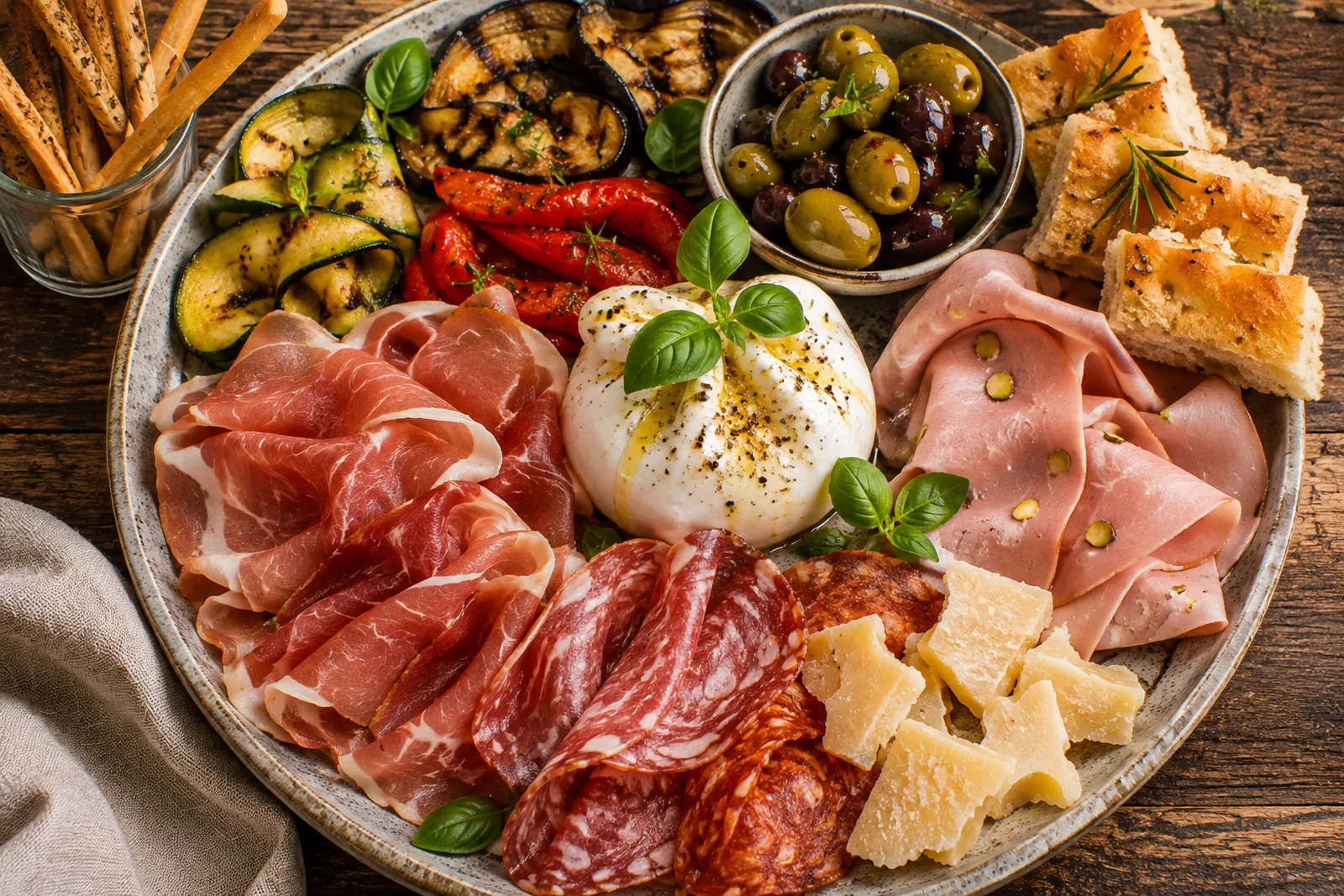
In Italy, antipasto is what comes before the pasta, perhaps a pasta all'amatriciana, and it's rarely a cheese board in the sense we imagine. It's three things laid side by side: thinly sliced charcuterie, a few cheeses and vegetables that have been grilled or preserved in oil. Together with bread, it becomes a starter that can last all evening if nobody holds back.
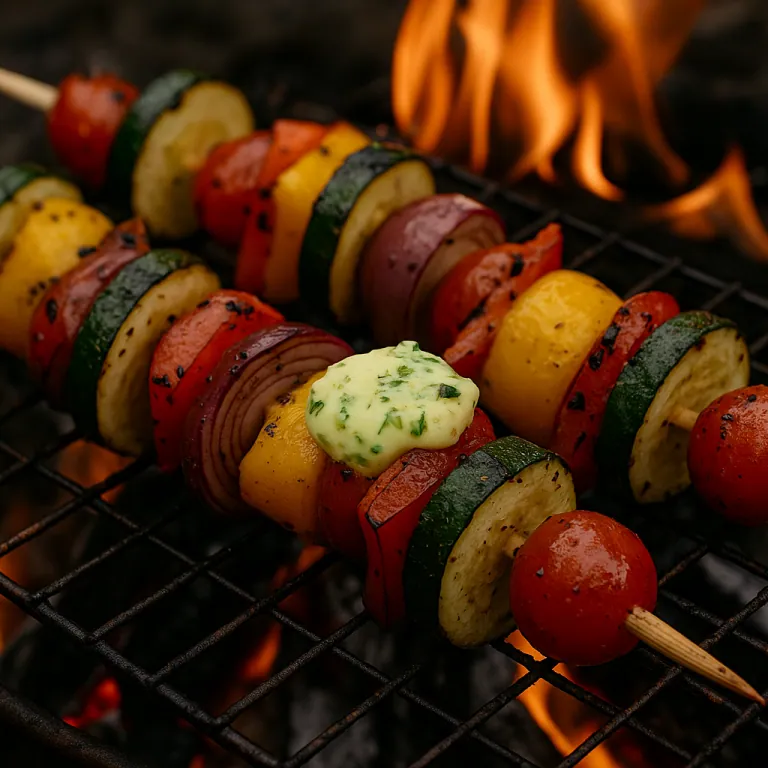
What makes the board Italian is the vegetables and the olive oil. An ordinary cheese and charcuterie board is built on cheese, fruit and crackers. The antipasti board instead has grilled peppers, courgette and olives, focaccia for dipping in the oil and a burrata that bursts when you cut into it. This version is part of the guide to charcuterie boards.
A whole burrata or a 125-gram ball of mozzarella is enough for four people as a starter.
Affettati – the charcuterie:
Formaggi – the cheese:
Verdure – the vegetables:
Have you made this recipe? Rate it
0.0 out of 5 · 0 votes
out of 5
vote
votes
Be the first to rate this recipe.
Thanks for your vote!
Your vote could not be saved right now. Please try again later.
 🔥 Over fire
 🔥 Over fire
 🔥 Over fire
 🔥 Over fire
Burrata and mozzarella are fresh cheeses that must be kept cold. Take them out last and don't leave the board out for more than four hours in a room no warmer than 20°C, according to the advice from Livsmedelsverket (the Swedish Food Agency). Whatever is left in the olive oil after a long evening should be thrown away.
According to Livsmedelsverket, pregnant women should freeze dried charcuterie such as prosciutto, salami and bresaola for at least three days before eating it. Mortadella counts as sliced cooked meat and should have been packaged for no more than a week, or be cut from a whole piece just before serving. Gorgonzola and other mould-ripened cheeses should be avoided, while hard cheese such as parmesan is fine. The grilled vegetables suit everyone.
Charcuterie such as prosciutto, salami and mortadella, a couple of cheeses such as parmesan and burrata, grilled or preserved vegetables, olives and bread such as focaccia and grissini.
As a starter, 40–50 grams of charcuterie, 40 grams of cheese and a handful of vegetables per person is enough. As aperitivo you need 60–75 grams of charcuterie and 60 grams of cheese, and as a full dinner 100–125 grams of charcuterie and 100 grams of cheese.
A charcuterie board is often built on cheese, charcuterie, fruit and crackers. Antipasti is divided into charcuterie, cheese and vegetables in olive oil and served with bread. The vegetables and the oil make it Italian.
Yes. Grilled vegetables marinated in olive oil overnight get better. Take them out half an hour before serving, so the oil has time to turn liquid again.
Break it rather than cut it. Push a short, pointed knife into the piece and twist, so the cheese cracks into irregular shards.
Partly. Parmesan and grilled vegetables are fine. Dried charcuterie should be frozen for at least three days first, mortadella should be freshly packaged or freshly cut, and mould-ripened cheeses such as gorgonzola should be avoided.
Continue the Italian evening
Pasta all'amatriciana after the antipasti
Tomato, guanciale and pecorino – a classic pasta that works as the next course once the board is empty.
For the pastaTiramisu in glasses with the coffee
Mascarpone, coffee and cocoa in small glasses made the day before – an Italian finish without the stress.
For the tiramisuLuxury charcuterie board for New Year's Eve
Bresaola, truffle salami and bleak roe (löjrom) on blinis – for when the board should be a little smarter than usual.
To the New Year's Eve board