Popular searches

    Alpine board – mountain cheese, Bündnerfleisch, Tiroler Speck and pears

    Mountain cheese, air-dried meat and sweet pears – like in an alpine hut
    • 6 servings as après-ski or a starter
    • Time: 30 min + 45 min for the cheeses to come to room temperature
    • Difficulty: Easy
    • 17 ingredients
    • 10 steps
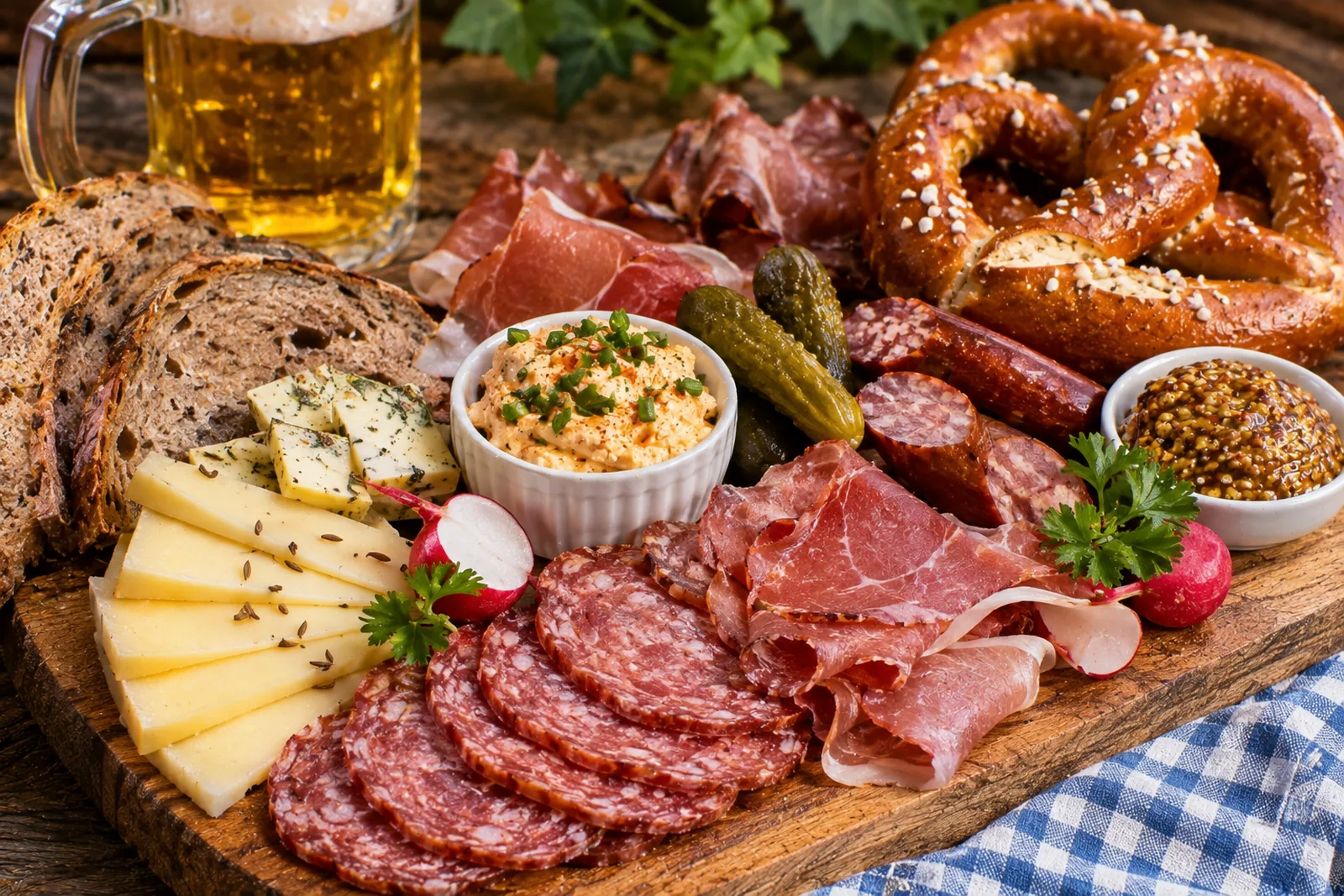
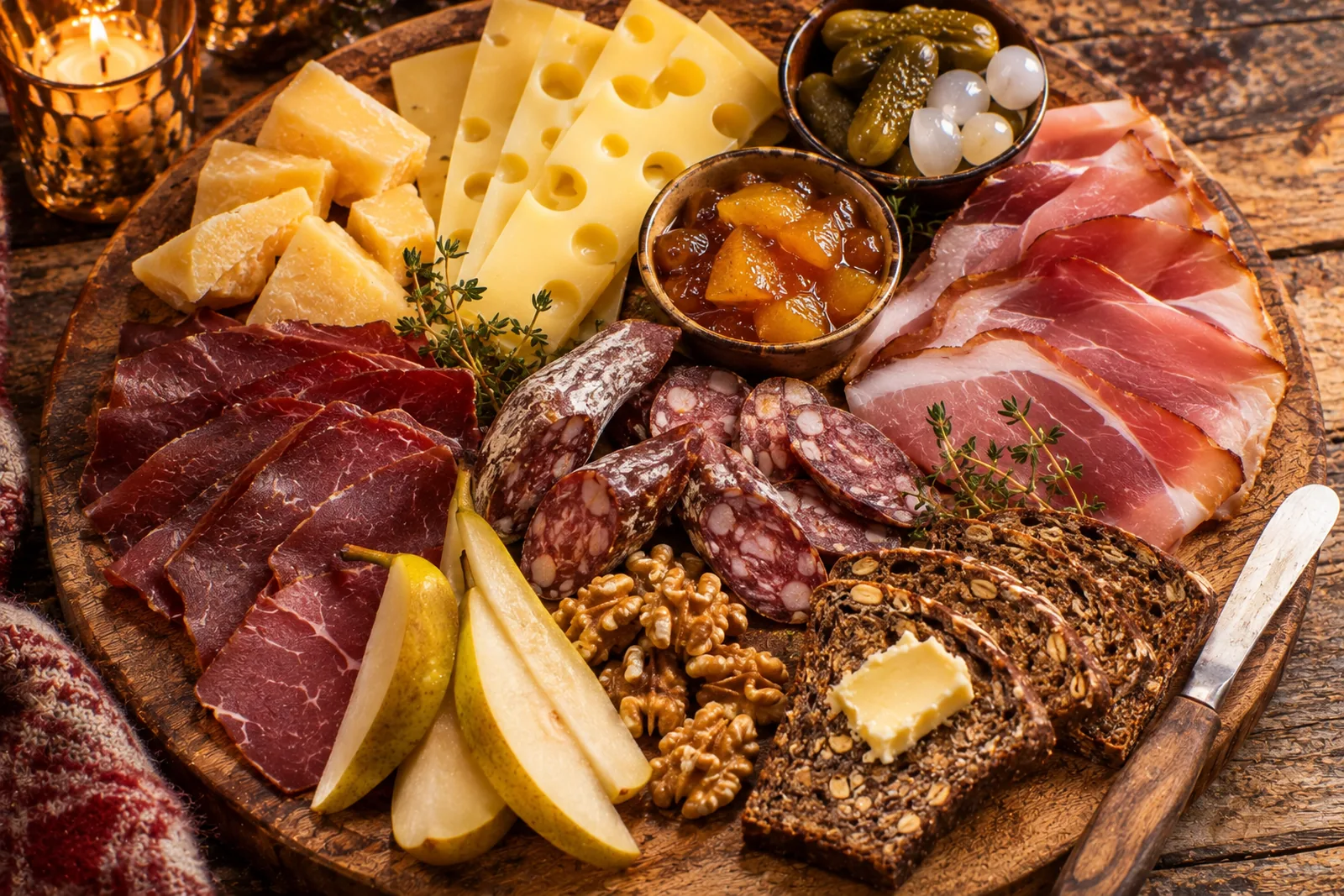
    Rustic wooden board with large chunks of Gruyère and Emmental, thin slices of dark red air-dried beef, smoked ham, pairs of dried sausages, pear wedges, walnuts and a bowl of mustard fruits beside dark bread.

    In the Swiss and Austrian Alps, people often eat a cold meal after a day outdoors: a board with mountain cheese, air-dried meat, a piece of sausage, bread and something sweet on the side. In Austria it is called Jause, in Switzerland often Plättli, or Zvieri if it is eaten in the afternoon. It is simple food, but the cheeses and charcuterie are so full of flavour that the board does not need much more.

    Amount per person

    • As après-ski or a starter: 40 grams of cheese and 30–40 grams of charcuterie per person, a couple of slices of bread and a few pear wedges.
    • As a full dinner: 100–125 grams of cheese and 80–100 grams of charcuterie per person, plus plenty of bread, pickles and fruit. With hot raclette on the side, 75 grams of cold cheese per person is enough.

    Bündnerfleisch and Speck are sliced so thinly that 100 grams gives lots of slices. Landjäger is dense and more filling per gram.

    The cheeses, the charcuterie and where to find them

    The cheeses are chosen so they do not taste alike:

    • Gruyère – firm, nutty and slightly sweet; the older it is, the more crystals. Found at the cheese counter in most larger supermarkets.
    • Emmental – mild, sweet and with large holes. Easy to find and popular with those who do not want strong cheeses.
    • Appenzeller or Bergkäse – spicy and more aromatic. Appenzeller has a spiced rind, and Bergkäse or Tiroler Bergkäse is an aged mountain cheese from Austria. Usually found at well-stocked cheese counters and delis. If you cannot get hold of them, an aged comté or a Tilsiter works.

    The charcuterie gives three different textures:

    • Tiroler Speck – smoked and air-dried ham with a distinct edge of fat and a flavour of smoke and juniper. Found pre-packed in well-stocked shops. Otherwise, another smoked air-dried ham works, such as Black Forest ham.
    • Landjäger – a flat, smoked and dried sausage sold in pairs. It is cut into thick slices or sticks. Found in delis and sometimes at German sausage shops. A kabanos or another dried sausage can take its place.

    Method

    1. Take out the cheeses. Put the cheeses on the board 45 minutes before the guests arrive. Mountain cheeses are firm and need time for the flavour to come through. Leave the charcuterie in the fridge.
    2. Set out the bowls. Place the bowls of mustard fruits, cornichons and pickled onions in a triangle across the board. They are the anchors everything else is built around.
    3. Cut the cheeses differently. Cut the Gruyère into rough chunks or triangles, the Emmental into thin slices and the Appenzeller or Bergkäse into sticks. Different shapes make it easy to see which cheese is which. Leave a piece of each cheese whole with the knife beside it.
    4. Fan out the Bündnerfleisch. The slices are so thin that they easily stick together. Pull them apart one by one and overlap them in a fan, or fold them loosely in half.
    5. Lay the Speck in folds. If the Speck comes in a piece, slice it as thinly as you can across the grain and remove the rind. Let the slices fall in soft folds in two piles.
    6. Cut the Landjäger. Slice the sausage diagonally into centimetre-thick slices or lengthways into sticks. Put it in its own group near the spiciest cheese.
    7. Lay out the fruit. Cut the pears and apple into wedges just before serving and place them in groups. Squeeze a few drops of lemon over them so they brown more slowly.
    8. Bread and butter. Slice the bread thinly and lay it along one edge, or put it on its own board with the butter beside it. In the Alps, Speck is often eaten on buttered dark bread.
    9. Fill the gaps. Scatter the walnuts into the small gaps and tuck in sprigs of herbs. The board should look hearty and full.

    Have you made this recipe? Rate it

    Be the first to rate this recipe.

    More recipes to try

    All recipes →
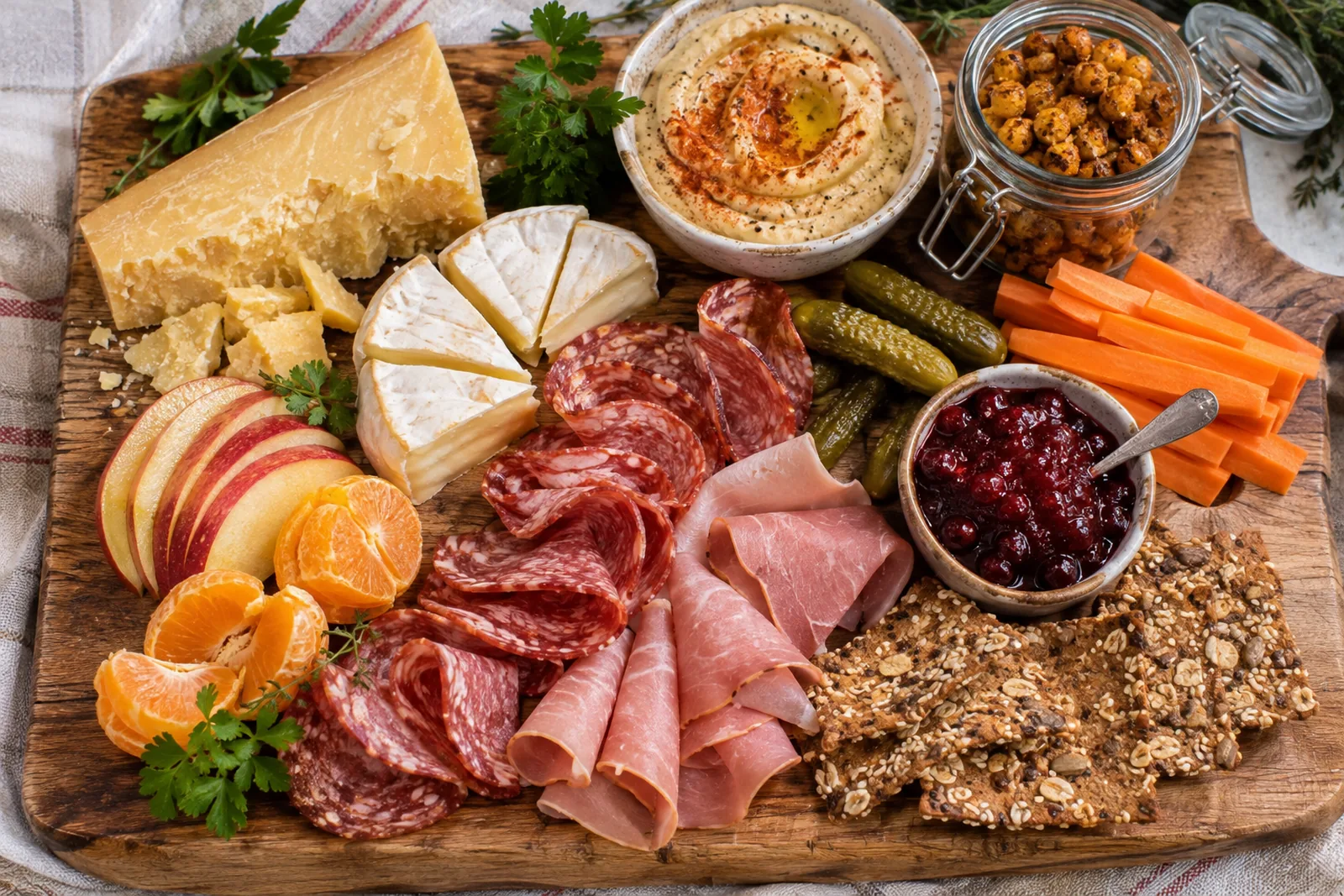
    • A wooden chopping board with a large piece of yellow hard cheese, folded salami, rolled ham, a bowl of white bean dip, roasted chickpeas, apple wedges, carrot sticks and homemade crispbread crackers.

      Charcuterie board on a budget – smart choices from an ordinary supermarket, homemade dip and roasted chickpeas

      🍽️ 6 people as dinner 🥕 26 ingredients 👣 8 steps

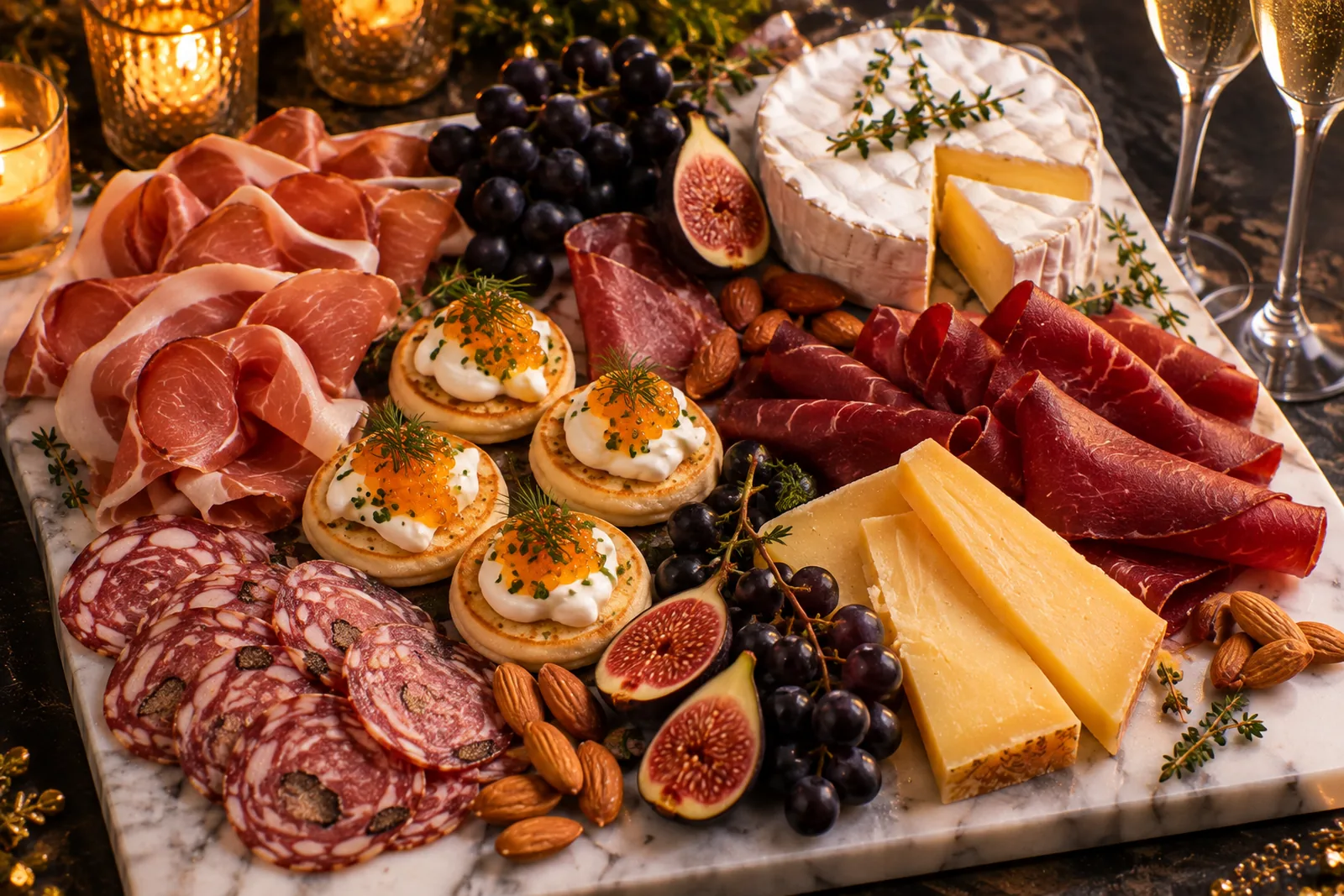
    • A large marble board with folded cured ham, bresaola, truffle salami, a whole brie, chunks of aged cheese, blinis with bleak roe, small dark grapes and champagne glasses beside it.

      Luxury charcuterie board for New Year's Eve – cured ham, truffle salami, comté and bleak roe on blinis

      🍽️ 8 people as a starter 🥕 18 ingredients 👣 8 steps

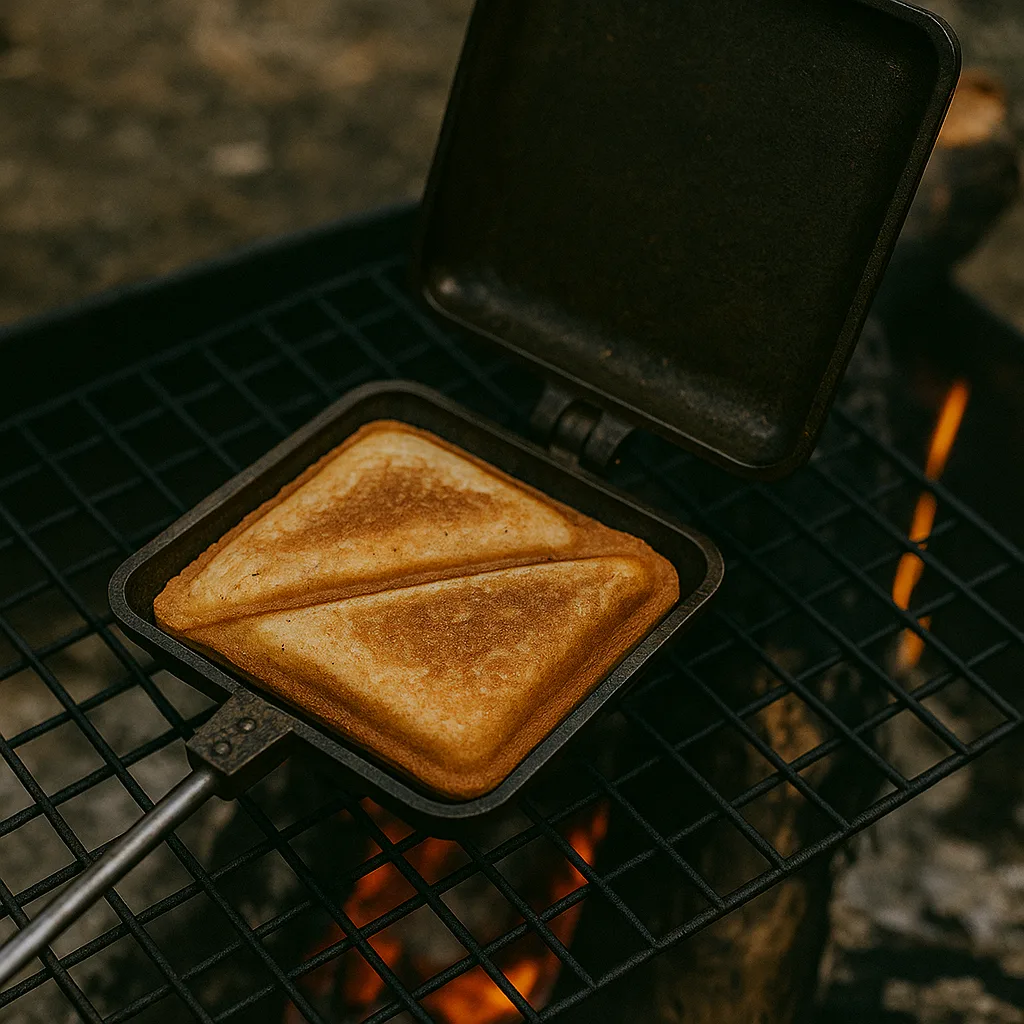
    • An open black iron pie iron on a grill over the fire, with a golden, toasted sandwich in the lower half. 🔥 Over fire

      Pie iron toasties over embers – cheese and pear, mackerel and banana

      🍽️ 4 servings, three toasties each 🥕 14 ingredients 👣 10 steps

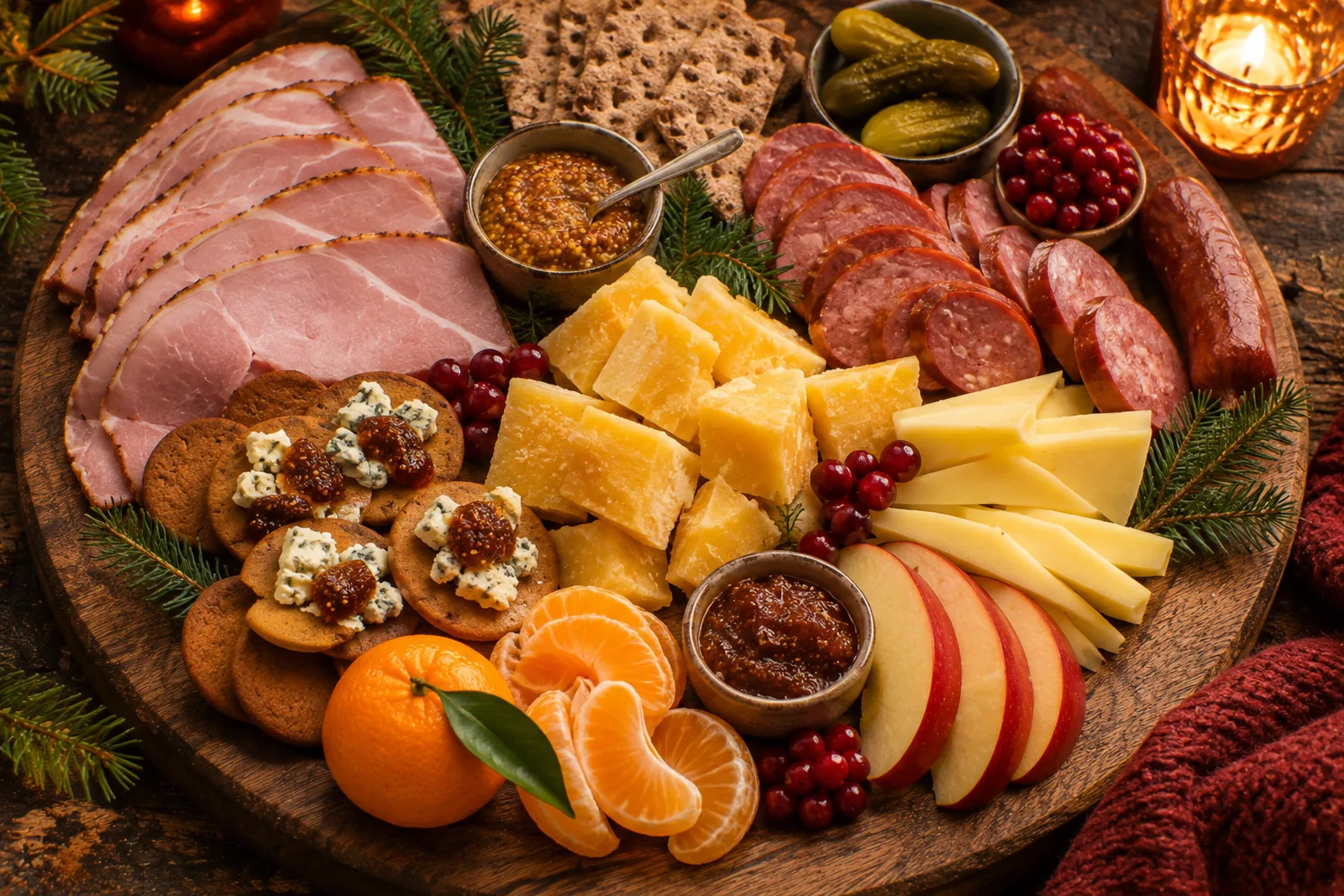
    • Round wooden board with sliced Christmas ham, smoked sausage, chunks of Prästost and Västerbotten cheese, gingerbread with blue cheese and fig jam, clementines, wholegrain mustard and sprigs of spruce.

      Christmas board with charcuterie and cheese – Christmas ham, Västerbotten cheese and gingerbread with blue cheese

      🍽️ 6 servings as a starter 🥕 17 ingredients 👣 9 steps

    What you can prepare

    • The day before: cut the Gruyère and Bergkäse into chunks and keep them in a lidded container in the fridge. Boil the potatoes if you are having raclette. Lightly toast the walnuts in a dry frying pan.
    • On the day: pour the pickles and mustard fruits into the bowls. Cut the Landjäger – it does not dry out.
    • Just before: pull apart the Bündnerfleisch and lay out the Speck, cut the fruit and bread. Thin slices dry out quickly in the air.

    Tips for an Alpine board

    • Dark bread. A dense rye bread or a seeded loaf suits the smoky, spicy flavours better than a pale baguette.
    • Sweet contrast. Pears and mustard fruits lift the salty cheeses. Mustard fruits are candied fruit in a syrup with mustard oil and are found in delis. Pear jam or a spoonful of fig jam also works.
    • Peppercorns on the Emmental. A little freshly ground black pepper over the thin Emmental slices makes a big difference to a mild cheese.
    • Drinks. A dry white wine, a pale lager, apple juice or a hot herbal tea go well with the board. If you are heading back out into the cold, make a jug of hot chocolate.

    Safety: pregnancy and how long the board can stand

    Cheese and charcuterie are chilled foods. Livsmedelsverket (the Swedish Food Agency) advises that they are not left out for more than four hours if the room is no warmer than 20 degrees, and for less time if it is warmer. In a warm cabin with a fire in the stove, it happens faster than you think.

    Pregnant women can eat hard cheeses that can be shaved, such as Gruyère, Emmental and Bergkäse. Bündnerfleisch, Tiroler Speck and Landjäger are air-dried or cold-smoked and may contain the toxoplasma parasite. Livsmedelsverket advises pregnant women to freeze such charcuterie for at least three days before eating it, or to heat it until it is steaming hot. The Speck is lovely fried until crisp and laid on the raclette.

    Small children can choke on whole walnuts. Chop the nuts or put them in a bowl out of reach of the little ones.

    Vary the board

    Common mistakes

    • Cold cheeses – mountain cheeses taste of much less straight from the fridge.
    • Thick slices of Bündnerfleisch – it turns chewy. Buy it sliced or ask the charcuterie counter to slice it.
    • Slices stuck together – Bündnerfleisch and Speck look dull in a clump. Pull them apart one by one.
    • Fruit cut too early – pears and apples turn brown.
    • Only salty things – without pears, mustard fruits or pickles, the Alpine board gets heavy after a few bites.

    Frequently asked questions

    What is an Alpine board?

    A cold board of cheese and charcuterie from Switzerland and Austria: mountain cheeses such as Gruyère, Emmental and Appenzeller, air-dried beef, smoked ham and dried sausage, with pears, nuts, pickles and dark bread. In Austria such a meal is called Jause, and in Switzerland often Plättli.

    What is Bündnerfleisch?

    Air-dried beef from Graubünden in Switzerland. It is lean, dark red and sliced paper-thin. It is sold pre-packed in delis. Italian bresaola is the closest thing to it.

    Where can you buy Tiroler Speck and Landjäger?

    Pre-packed Speck can often be found at the charcuterie counter of well-stocked shops. Landjäger is harder to find and is usually sold in delis or at German sausage shops. Kabanos or another dried sausage works as a substitute.

    How much cheese and charcuterie per person?

    As après-ski or a starter, about 40 grams of cheese and 30–40 grams of charcuterie per person is enough. As finger food, 60–75 grams of cheese and 50–60 grams of charcuterie, and as a full dinner 100–125 grams of cheese and 80–100 grams of charcuterie, plus bread and pickles.

    Can you serve raclette with an Alpine board?

    Yes, it turns the board into a full dinner. Allow about 150 grams of raclette cheese per person if the raclette is the main course, and a little less cheese on the board. Serve with hot potatoes, cornichons and pickled onions.

    Can pregnant women eat an Alpine board?

    The hard cheeses are fine. Bündnerfleisch, Speck and Landjäger are air-dried or cold-smoked and should be frozen for at least three days or heated until steaming hot before they are eaten.

    More guides and recipes to read

    More from the mountains

    Raclette as the hot part of the evening

    Melt the cheese over embers or in a raclette grill and scrape it over potatoes, cornichons and pickled onions – the hot companion to the board.

    To the raclette

    Ski holiday in the Alps with children

    The resorts in Switzerland and Austria where the board's cheeses and charcuterie belong, with slopes, ski schools and family accommodation.

    To the Alps guide

    Cheese fondue with Gruyère and Emmental

    The same cheeses as on the board, melted with white wine in a pot. A good next step when the board is empty and the evening carries on.

    To the cheese fondue