Popular searches

    Grazing table – how to build a big sharing table for 15–30 guests

    A whole table to graze from – and a plan for the entire evening
    • 20 people as a full dinner
    • Time: 2 hours for 20 guests + preparation the day before
    • Difficulty: Medium
    • 36 ingredients
    • 11 steps
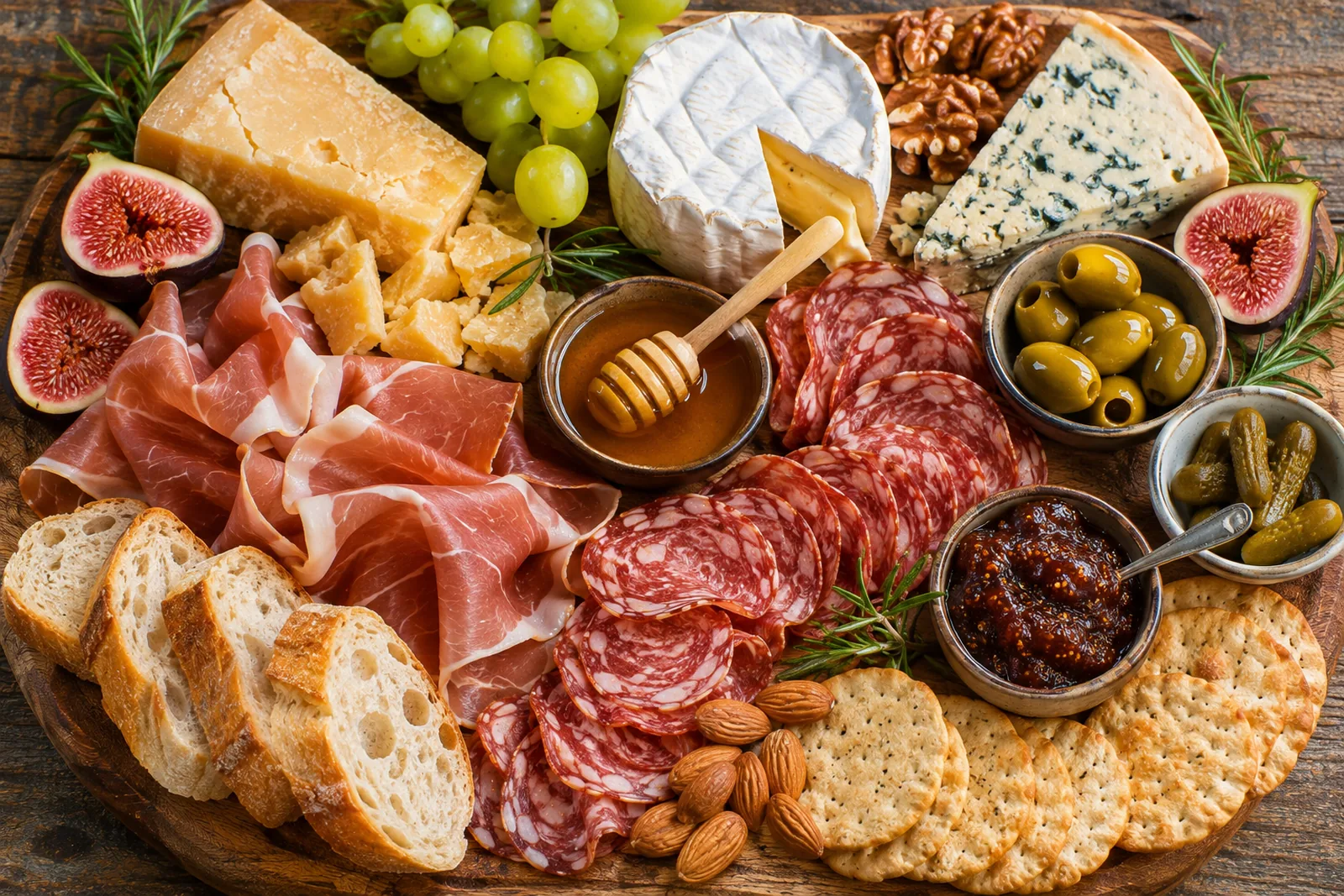
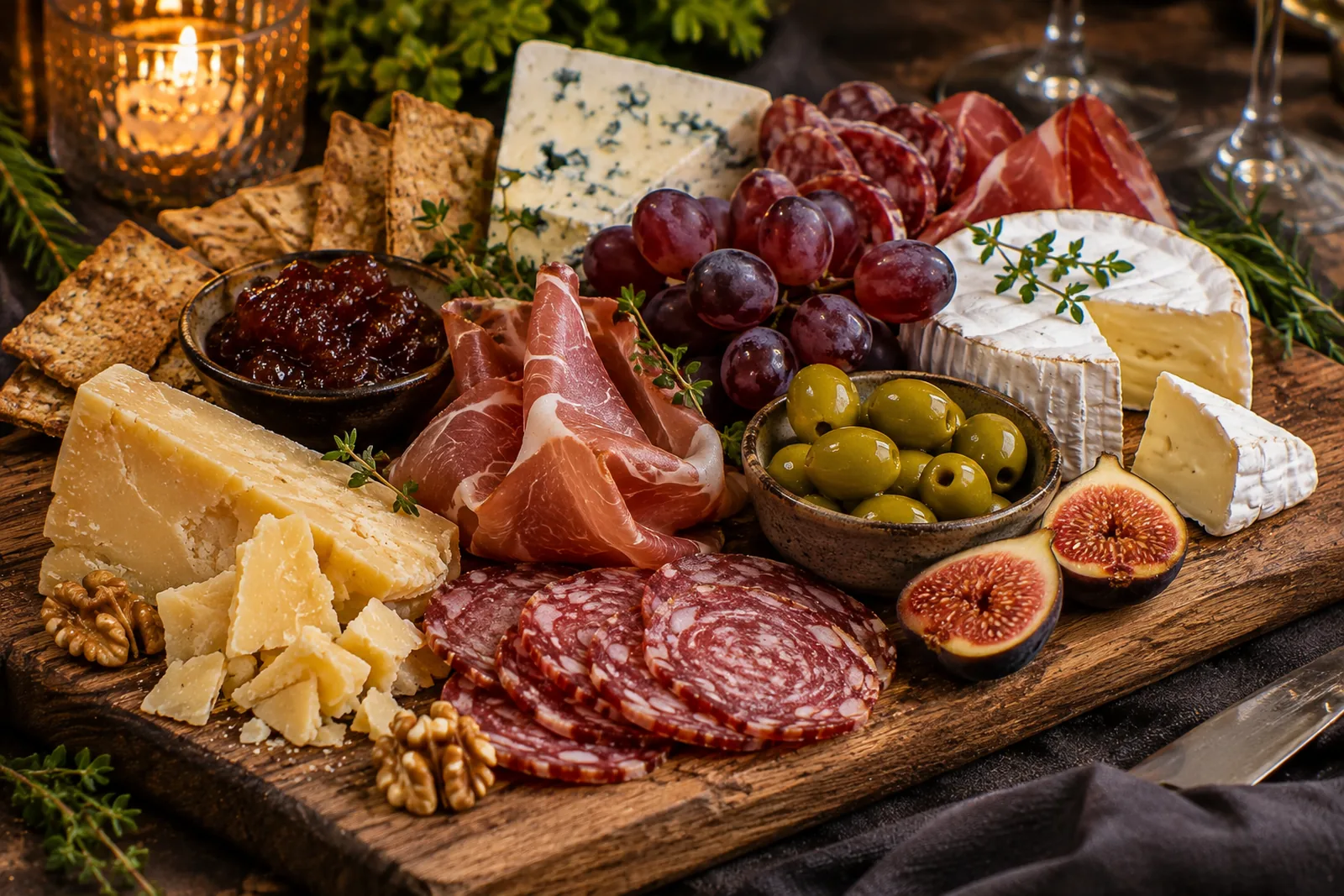
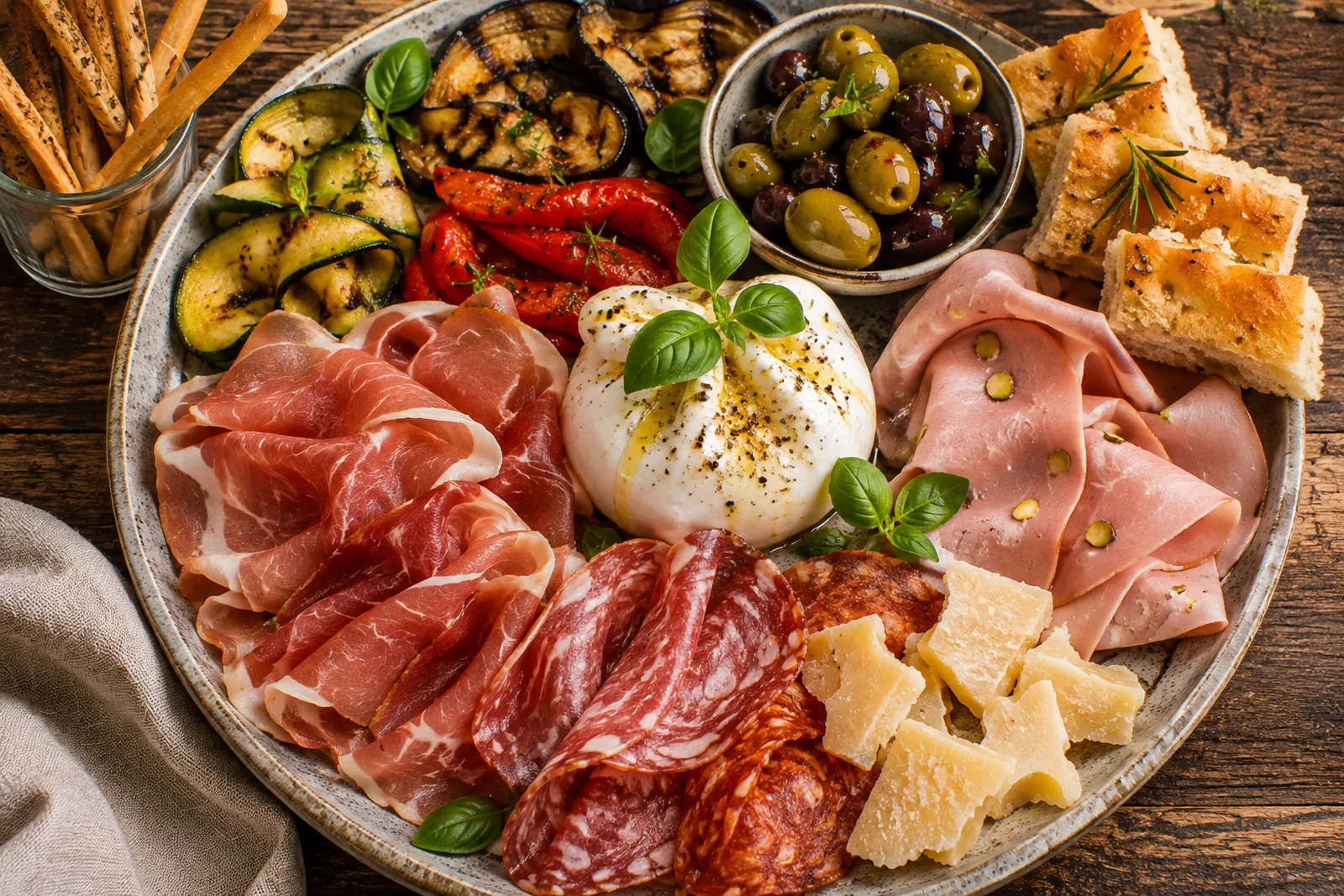
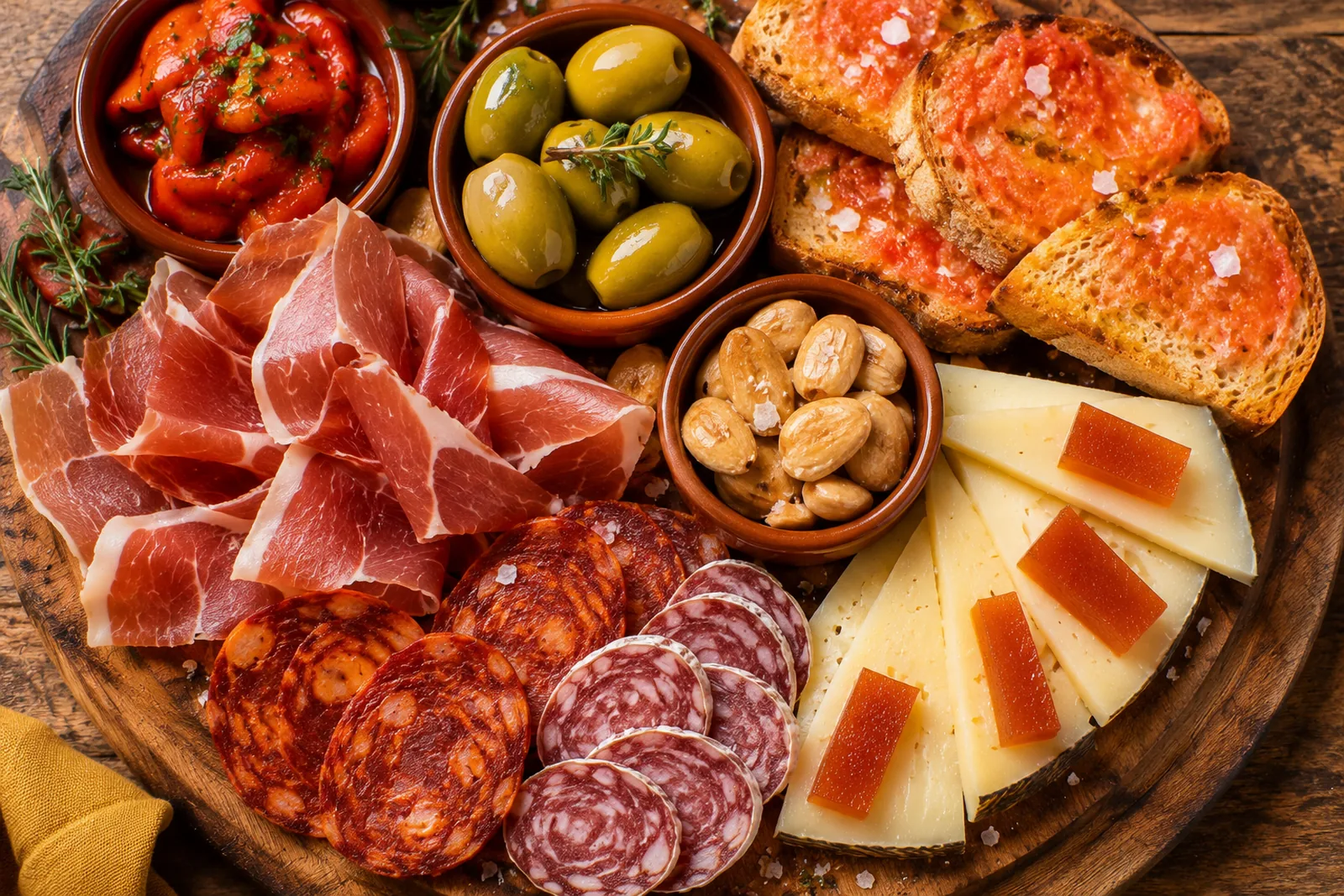
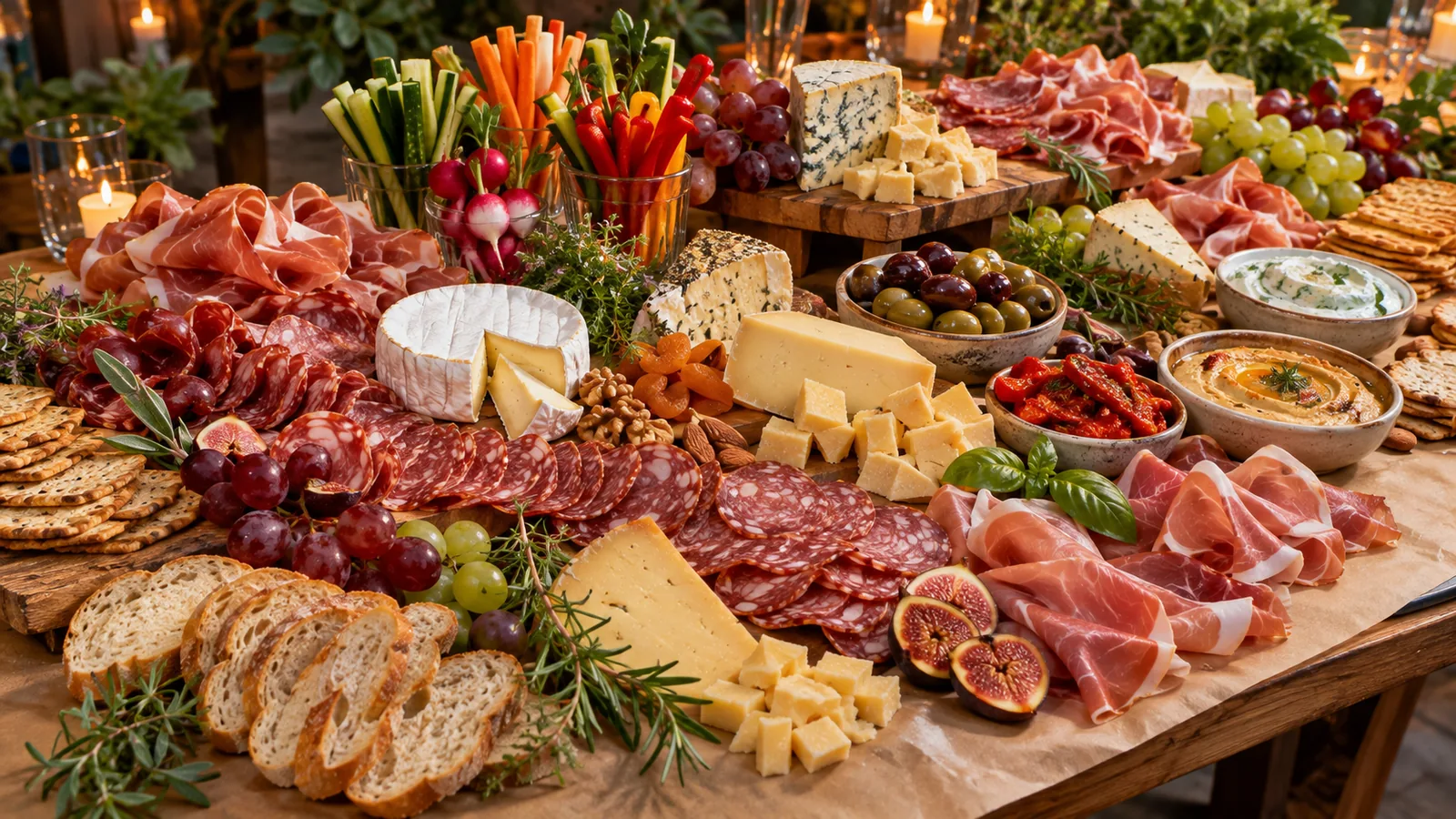
    Long table covered with baking paper holding several cheeses, winding rows of salami, cured ham, bunches of grapes, figs, vegetable sticks, bowls of dips and olives, bread and crackers along the edges and little labels with the names of the cheeses.

    A grazing table is a charcuterie board on the scale of a table. Instead of a board, a whole table is covered with cheese, charcuterie, bread, fruit, vegetables and dips, and the guests wander round and help themselves all evening. It suits parties of 15–30 people, where an ordinary board isn't enough and a sit-down dinner is too much: birthdays, graduation parties, New Year, weddings and work drinks.

    Amount per person

    First work out which situation you're in. The figures are for adults:

    • Drinks before dinner, 1–2 hours: 40–50 grams of cheese, 40–50 grams of charcuterie, 40 grams of bread and crackers, 75 grams of fruit and veg and 2 tablespoons of dip per person.
    • The grazing table is the whole dinner, 3–4 hours: 100 grams of cheese, 100 grams of charcuterie, 75–100 grams of bread and crackers, 150–200 grams of fruit and veg, 50 grams of dip and a handful of nuts and olives per person. It's a good idea to add a couple of warm bites per person.
    • Late in the evening, at midnight or after dinner: about half the drinks-party quantity. People have already eaten.

    Children eat about half as much as adults. The more guests, the more it evens out: for 30 people you can allow 10 per cent less per person than for 15.

    Method

    1. Cover the table. Lay paper over the whole table and tape it to the underside. It protects the table and means the food can sit directly on the surface.
    2. Build height. Put two or three upturned boxes or cake stands under a cloth or paper in different places. Height makes the table look abundant and lets guests reach everything.
    3. Decide the zones. Put the side plates and napkins at one end, so guests move in one direction. Put a vegetarian section at one end and gluten-free crackers on a separate board, a little away from the bread so crumbs don't end up there.
    4. Set out the bowls and boards. Place bowls of dips, olives and honey evenly across the table, and the boards with the whole cheeses spread out. These are the anchors everything else is built around.
    5. Lay out the cheeses. Put the same type of cheese in two places if the table is long, so everyone can reach. Cut up part of each cheese and leave the rest whole. Put a label by each cheese.
    6. Make salami rivers. Fold the salami into quarters and lay two or three long rivers winding between the cheeses along the table.
    7. Add the rest of the charcuterie. Lay the ham in soft folds in piles, the sausage in slices and the kabanos standing in glasses. Put the smoked turkey in its own group with a label.
    8. Fill with fruit and veg. Lay the grapes in bunches, the fruit in groups and the vegetable sticks in rows or standing in glasses near the dips.
    9. Bread and crackers along the edges. Fan out the crackers and put the bread in baskets or along the edge, so they don't get soggy from the fruit.
    10. Fill the gaps. Scatter nuts, dried fruit and chocolate pieces in any gaps that are left, and tuck in herb sprigs. The table should look full without any paper showing.
    11. Bring out the warm food. Put meatball skewers, mini quiches or other warm food on a platter that is swapped when it runs out, rather than leaving it on the table.

    Have you made this recipe? Rate it

    Be the first to rate this recipe.

    More recipes to try

    All recipes →
    • A freshly glazed Christmas ham with a golden mustard crust and cloves on a chopping board, on a red Christmas tablecloth with hearts.

      Glazed Christmas ham in the oven – juicy ham with a mustard crust

      🍽️ 10–12 servings 🥕 9 ingredients 👣 9 steps

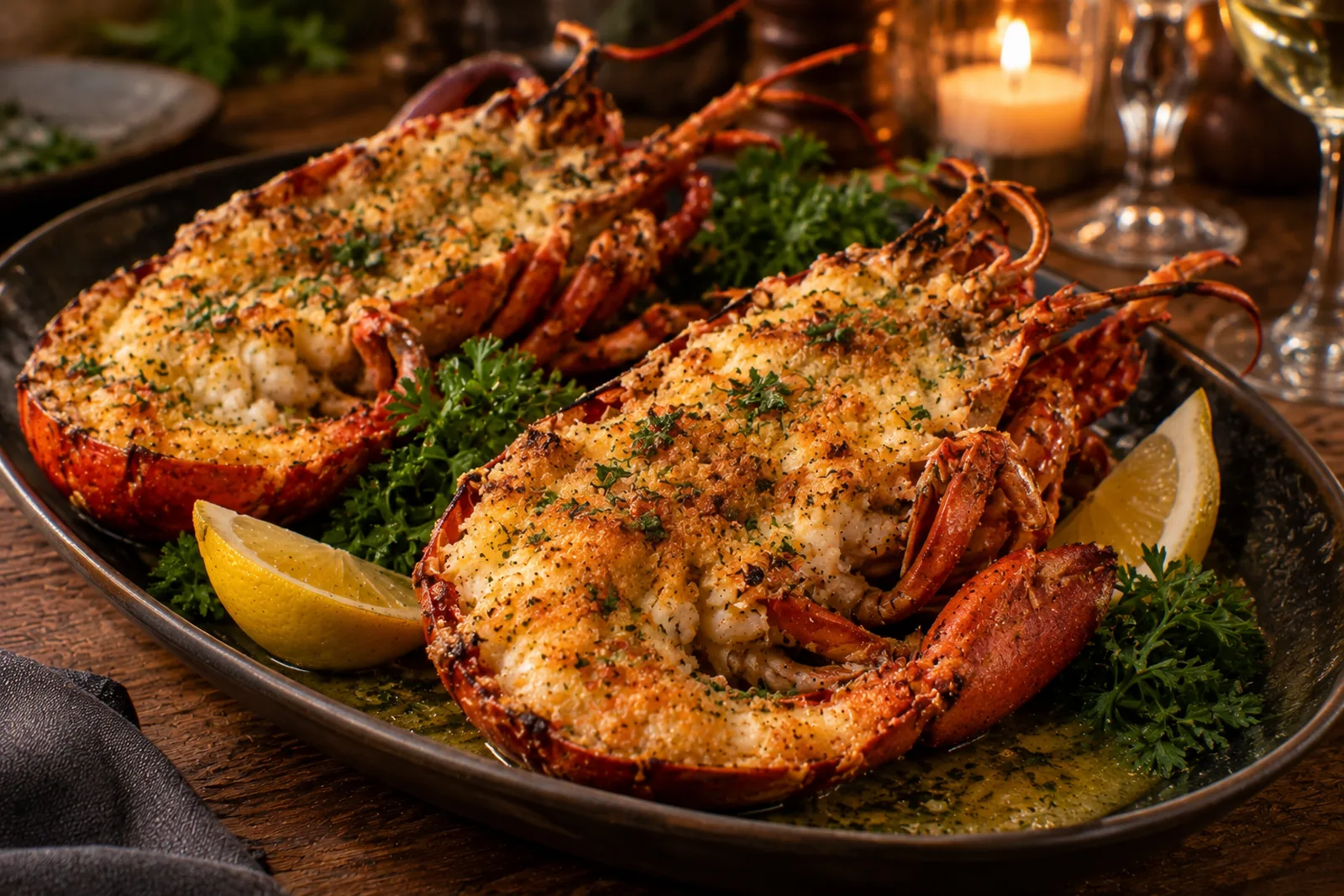
    • Two lobster halves with golden gratinated garlic butter and chopped parsley on a plate, served with lemon wedges and the cracked claws beside them.

      Lobster gratin with garlic and parsley butter – half a lobster per guest

      🍽️ 4 servings 🥕 14 ingredients 👣 9 steps

    • Wilderness-style Herring with Spruce Shoots, Juniper Berries & Rosemary

      🥕 11 ingredients 👣 5 steps

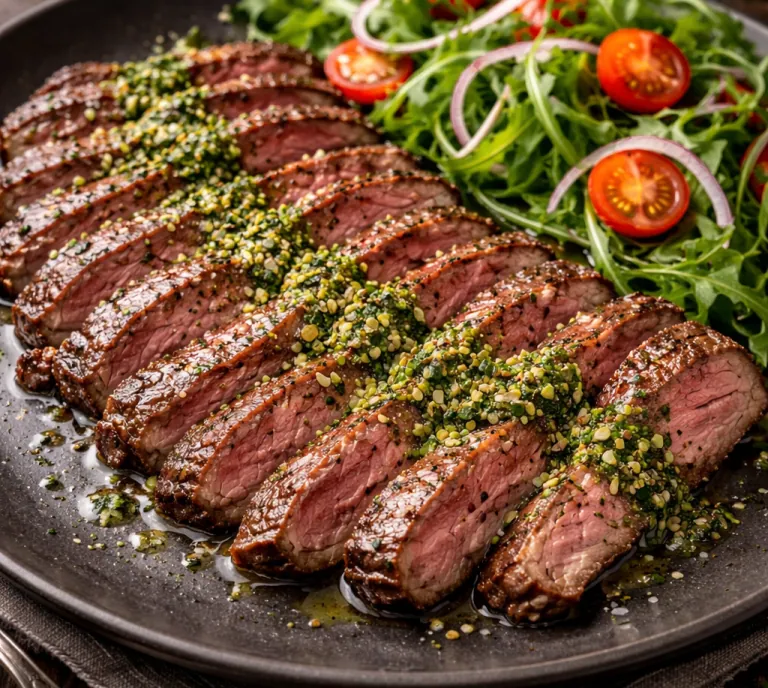
    • Sliced steak with green salad and cherry tomatoes, garnished with herbs.

      Flank Steak – a juicy cut with maximum flavor

      🍽️ 4 servings 🥕 5 ingredients 👣 9 steps

    Topping up during the evening

    Never put everything out at once. Put out about two thirds and keep a third in the fridge, divided onto trays ready to carry out.

    • Every 45 to 60 minutes: walk round the table, remove empty bowls and fill the gaps from the trays in the fridge.
    • Replace rather than top up. Remove cheese and charcuterie that has been out for a long time and put fresh in the same place, rather than putting fresh on top.
    • Appoint one person. At a big party, it's easier if one person is responsible for topping up.

    What you can prepare

    • Two days before: buy everything that keeps: hard cheese, packaged charcuterie, crackers, nuts, olives and dried fruit.
    • The day before: cut the hard cheeses into pieces, fold the salami and put it in containers with baking paper between the layers. Make dips and spreads. Cut carrots and peppers and put them in containers with a little water in the fridge. Set up the top-up trays and cover them with cling film.
    • On the day: rinse and dry the fruit thoroughly. Pour into bowls. Cover the table and build the height.
    • The last hour: take out the cheeses, lay out the charcuterie and fruit, slice the Brie and pears, and add the crackers and bread last of all.

    Tips for a grazing table

    Safety: four hours, pregnancy and young children

    Cheese, charcuterie and dips need refrigeration. Livsmedelsverket (the Swedish Food Agency) advises that chilled foods should not be left out for more than four hours if the room is no warmer than 20°C, three hours if it is up to 25°C and two hours at 26–30°C. A room with 25 guests gets warmer faster than you think. Note when the table is set out, and throw away whatever has been out after four hours – it shouldn't go back in the fridge. What you've kept in the fridge is unaffected.

    According to Livsmedelsverket, pregnant women should avoid mould-ripened and washed-rind cheeses such as Brie and blue cheese, and freeze dried or cold-smoked charcuterie for at least three days before eating it. Hard cheeses are fine. Mark out part of the table with hard cheese and cooked charcuterie.

    Grazing table variations

    • For Christmas: swap the charcuterie for Christmas ham, prästost, pickled herring and gingerbread biscuits with blue cheese.
    • Vegetarian: double the quantity of cheese and dips, and add grilled vegetables, marinated beans and roasted chickpeas.
    • Summer and graduation: more fruit, strawberries, melon, mozzarella and caprese, and less heavy cheese.

    Common mistakes

    • Everything out at once – what's still there after a few hours dries out and has to be thrown away.
    • Too little bread – people eat more bread and crackers at a grazing table than you'd think.
    • A single spot for everything – put the same thing in several places along a long table.
    • No room for plates – guests need something to put food on and somewhere to put things down.
    • Wet vegetables and grapes next to the crackers – the crackers go soft.
    • No labels – guests with allergies don't dare take anything.

    Frequently asked questions

    What is a grazing table?

    A nibbles spread where a whole table is covered with cheese, charcuterie, bread, fruit, vegetables and dips that guests help themselves to through the evening. It's a charcuterie board on the scale of a table and suits parties of 15–30 guests.

    How much food is needed per person on a grazing table?

    For drinks before dinner, 40–50 grams of cheese and the same amount of charcuterie per person is enough, plus bread, fruit and veg. If the grazing table is the whole dinner, you need about 100 grams of cheese, 100 grams of charcuterie, 75–100 grams of bread and 150–200 grams of fruit and veg per person.

    How much cheese and charcuterie for 20 people?

    As a full dinner, about 2 kilos of cheese and 2 kilos of charcuterie, plus just under 2 kilos of bread and crackers and 4 kilos of fruit and veg. For drinks before dinner, about half is enough.

    How long can a grazing table stay out?

    No more than four hours if the room is no warmer than 20°C, less if it's warmer. Put out two thirds and top up from the fridge during the evening. Anything that has been out for four hours should be thrown away.

    How big a table do you need for a grazing table?

    For 20 guests, a table of 2–2.5 metres is enough, ideally free-standing so guests can walk along both sides. For 30 guests, a longer table or two tables at an angle makes it easier.

    How far in advance can you prepare a grazing table?

    Hard cheese, salami, dips and vegetables can be prepared the day before. The actual arranging is done in the last hour, and Brie, fruit, crackers and bread go on last.

    More guides and recipes to read

    More ideas for the party table

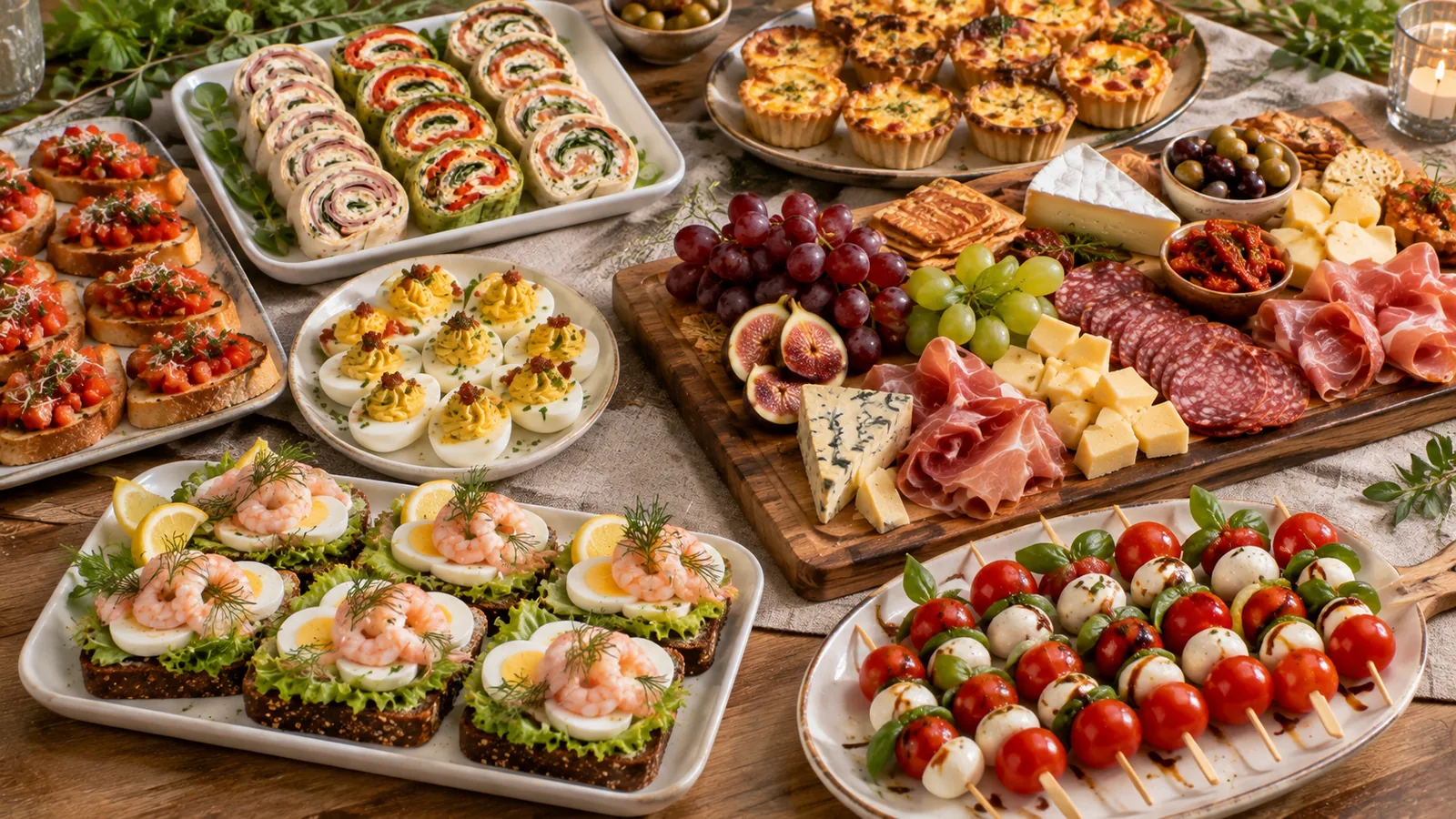
    Party finger food – quantities and ready-made spreads

    Swedish canapés, skewers, mini quiches and tortilla pinwheels that fill out the grazing table, with quantities per person and what can be made the day before.

    To the finger food guide

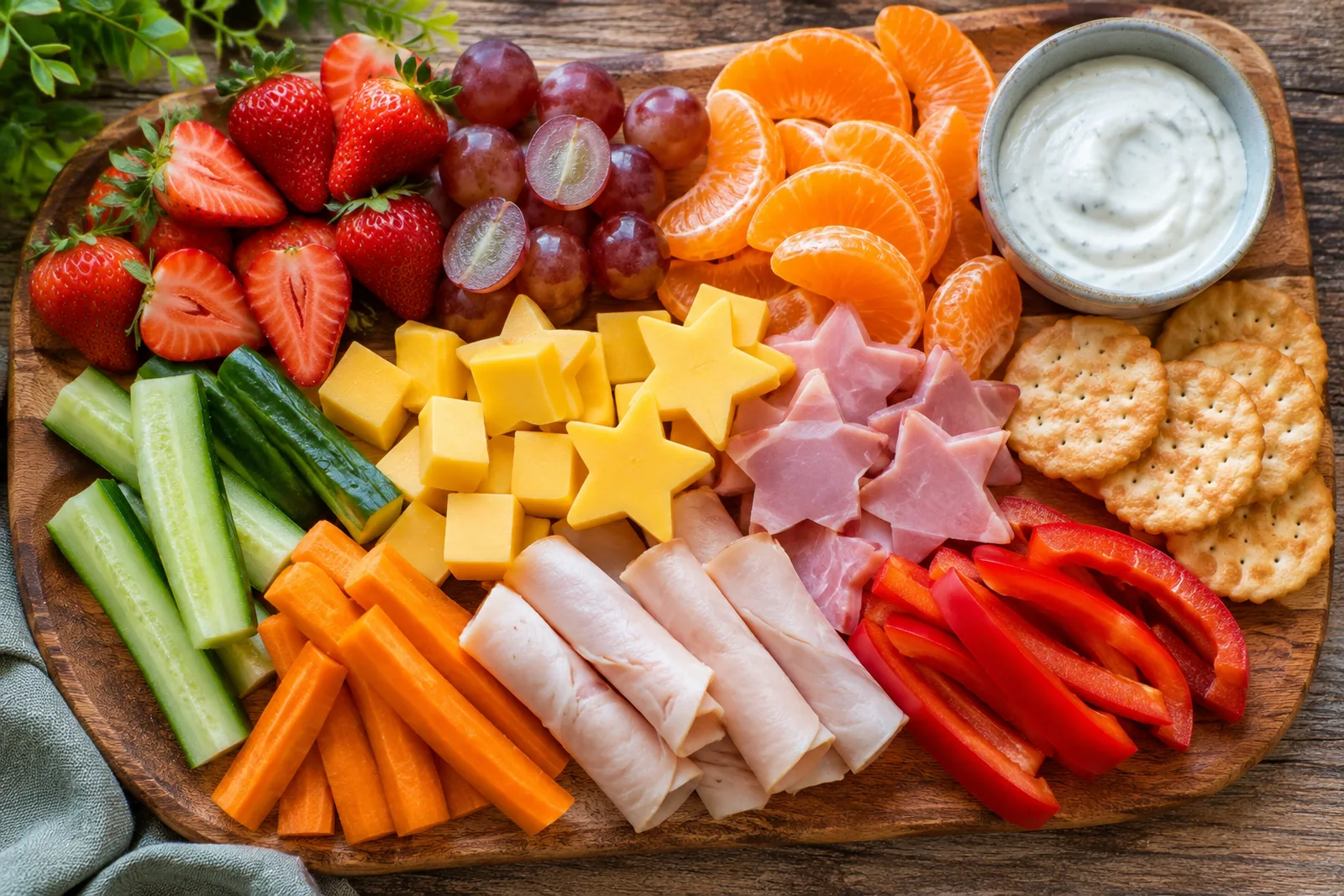
    Snack board for the kids

    A separate board with mild cheeses, fruit in small pieces and vegetable sticks, at children's height and without nuts.

    To the kids' board

    New Year's menu 2026

    Build New Year's Eve around a grazing table and let the menu guide provide the rest – from starter to something to eat at midnight.

    To the New Year's Eve menu