


A fourth filling with Västerbotten cheese
Smoked ham, mature cheese, mustard and a drizzle of honey – the classic that made many people buy their first pie iron.
To the Västerbotten toastieOne savoury, one sweet and one in between – same iron, same embers
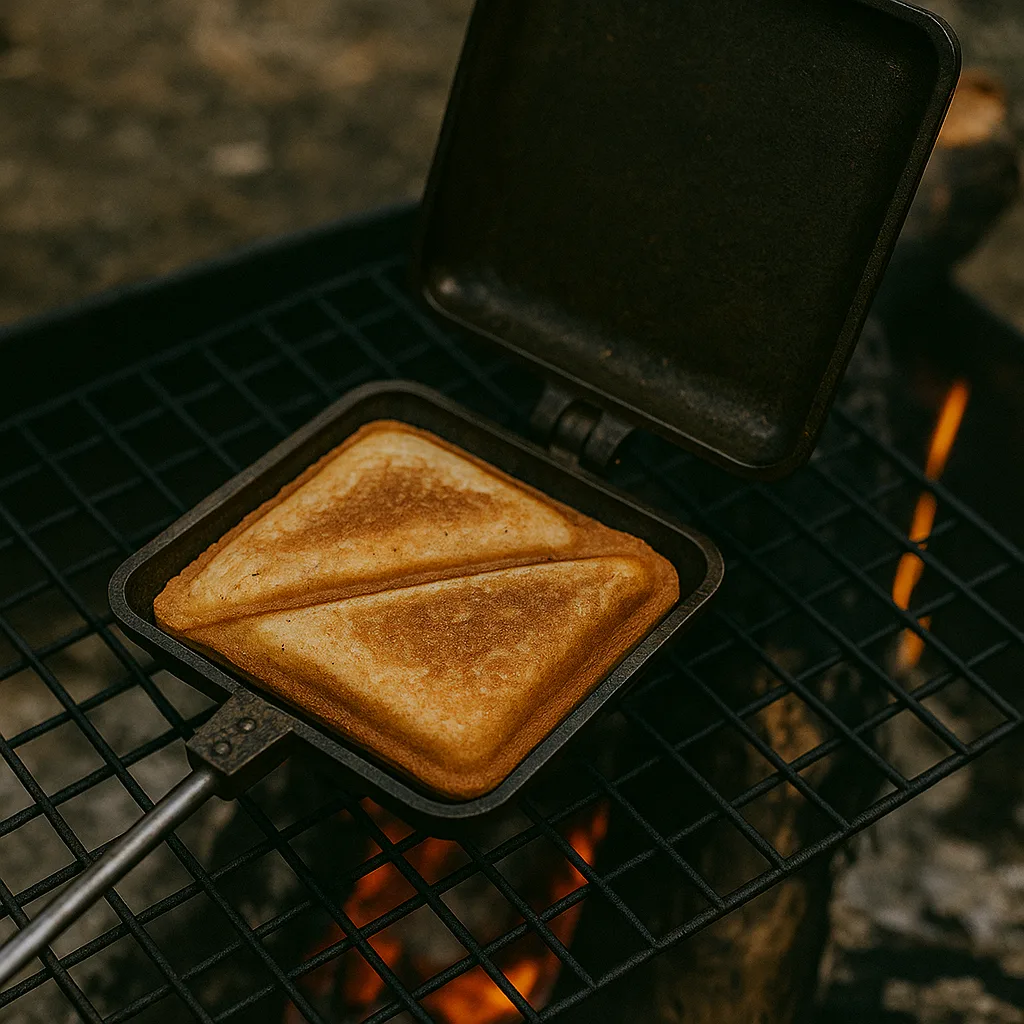
It starts with a hiss as the butter meets the warm iron. The clasp clicks shut, the handles go over the embers, and after a few minutes the smell of toast starts drifting out of the seam. When the iron is opened, there's the toastie, golden and sealed round the edges, with the cheese just starting to ooze out at one corner.
The basics of the pie iron, meaning what it looks like and the old favourites, are already on the page about pie iron over an open fire and in the recipe for Västerbotten cheese toastie with smoked ham. Here are three new fillings that cover the whole day: cheese and pear for lunch, mackerel in tomato sauce when you want something filling, and banana with chocolate for pudding. The three behave differently in the heat, and those differences are what this page is about.
Almost all failed pie iron toasties come down to the filling, not the fire. Remember three things:
Have you made this recipe? Rate it
0.0 out of 5 · 0 votes
out of 5
vote
votes
Be the first to rate this recipe.
Thanks for your vote!
Your vote could not be saved right now. Please try again later.
 🔥 Over fire
 🔥 Over fire
 🔥 Over fire
 🔥 Over fire
For a nut-free option: choose a chocolate or chocolate spread that neither contains nuts nor is labelled "may contain traces of nuts". Read the ingredients list on the packaging every time.
At home. Get the fillings ready in the kitchen, where there's a fridge and a clean worktop. Grate the cheese for the cheese and pear and put it in a jar. Pour off most of the tomato sauce from the mackerel, lightly mash the fish with a fork and mix it with the cheese, onion and dill in the next jar. The pear and banana are only cut at the fire, otherwise they turn brown. It's a good idea to butter the bread at home, with the butter on the side that will face the iron, and put the slices in pairs with the buttered sides facing out in a bag.
On the way. The mackerel mix and the cheese are chilled foods. Put them in the cool box with an ice pack. On a warm day they can be out for no more than two hours, and never in the sun.
By the fire. Light the fire as soon as you arrive and let it burn down to a bed of embers. How to build a fire that gives even embers is explained in lighting a fire. The pie iron wants embers, not flames, because in the flames the bread gets sooty and burns before the filling has had time to warm up.
The filling is hotter than the bread. Melted cheese, hot tomato sauce and especially banana with chocolate hold their heat for a long time, and sugar gets hotter than water. The outside of the toastie can feel just warm enough while the middle can still burn your mouth. Always cut the toastie and let it rest before the children eat, and feel the filling yourself first.
The risk of pinching at the hinge. The hinge and the clasp close hard, and the iron is fairly heavy. Keep fingers away from the seam when someone is closing it, and let only one person at a time handle the iron. The handles near the plates get hot, so wear a glove.
Never cool a hot iron in water. A cast-iron pie iron can crack if it's dipped in the lake, a bucket or the snow while it's hot, and a crack can't be repaired. Let it cool on a stone and wipe it out with paper. How to wash, dry and oil the iron is explained in cast iron, and how to handle the washing-up at the fire site in hygiene and washing up outdoors. Never put the hot iron down in dry grass or moss.
Tomato sauce in aluminium irons. Many lightweight pie irons are made of aluminium. Livsmedelsverket (the Swedish Food Agency) advises avoiding cooking and storing acidic food, such as tomato and fruit, in uncoated aluminium. So keep the tomato sauce inside the bread rather than letting it run out against the metal, and rinse out the iron afterwards. A coated or cast-iron pie iron doesn't have the same problem.
Nuts and allergies. Chocolate hazelnut spread contains nuts, and ordinary chocolate can contain traces of nuts. With a nut allergy, you often need to avoid products labelled "may contain traces of" too. Use a separate iron or wipe the iron out thoroughly, and make the nut-free toastie first. Swelling of the lips, tongue or throat can be signs of an allergic reaction. If someone has difficulty breathing or feels faint: use their adrenaline pen first if they have one, and call 112 immediately.
Honey and the youngest. The honey in the cheese and pear toastie must not be given to children under one year old. Make theirs without it.
If someone gets burnt. Cool with cool water for about a quarter of an hour, no longer, and never with ice or snow. More about fire and burns can be found in fire safety in nature. If there's a fire ban, it's the decision of the county administrative board (länsstyrelsen) or the municipality that applies, and what applies is explained in lighting fires outdoors.
The pie iron suits children because most of the work happens on the board, not at the fire. Children can butter the bread at home, slice the banana with a butter knife and build their own toastie in the open, cold iron. Let them lay out the filling and measure the thumb's width around the edge with their own thumb.
An adult closes the iron and holds it in the embers. Older children can turn the iron wearing a glove with an adult alongside, keep an eye on the clock and say when it's time to take a peek. Let each child choose their filling, and serve the banana toastie last so it has time to cool while the others are eaten. More ways to let the children join in by the fire can be found in cooking with children over a fire.
Allow about 6 minutes in total for cheese and pear, 6–8 minutes for mackerel and 4–6 minutes for banana and chocolate, over even embers. Turn the iron about every minute and take a peek halfway through. The heat of the embers varies, so the times are only approximate. The toastie is done when the bread is golden brown on both sides and the filling is hot in the middle.
Butter the bread on the side that will face the iron. It gives a golden, crisp surface and helps the toastie release. A well-seasoned iron needs less butter.
Usually because there's too much filling or it's too wet. Leave a thumb's width of edge all the way round, drain off sauce and pat fruit dry with paper. The edge is pressed together into a seal when the iron is closed.
Yes. Choose a chocolate or chocolate spread that neither contains nuts nor is labelled "may contain traces of nuts", and read the ingredients list every time. Make the nut-free toastie first, in a clean iron.
No, not if it's cast iron. The sudden change in temperature can make the iron crack. Let it cool for a while and wipe it out with paper.
Yes, but keep the sauce inside the bread rather than letting it run out against the metal. Livsmedelsverket advises avoiding cooking acidic food such as tomato in uncoated aluminium. Rinse out the iron afterwards.
More for the pie iron
A fourth filling with Västerbotten cheese
Smoked ham, mature cheese, mustard and a drizzle of honey – the classic that made many people buy their first pie iron.
To the Västerbotten toastieKeep the iron black and smooth
How to wash, dry and oil a cast-iron pie iron so the toasties release and the iron doesn't rust in storage.
To the cast-iron guideSomething warm in your cup with the toastie
Warm apple juice with cinnamon is heated in a saucepan at the side of the embers while the pie iron does the rounds of the family.
To the apple juice