Preparedness Week isn't for the most extreme or the already well-informed. It's for ordinary people, living ordinary lives. For families with children, single households, the elderly, the young – and everyone in between. The week exists to remind us of something that's easily forgotten in a functioning society: that much of our everyday life relies on systems we don't control ourselves.
Electricity, water, communication, transport and food usually work without us having to think about them. That's exactly why the consequences are so great when something stops working. Preparedness Week isn't about painting threatening pictures, but about creating understanding, calm and room to act before something happens.
It's a week that puts the focus on responsibility – not fear.
What is Preparedness Week?
Preparedness Week (Beredskapsveckan) is a recurring national information campaign coordinated by the Swedish Civil Defence Agency (Myndigheten för civilt försvar, MCF – formerly MSB). The aim is to strengthen society's resilience by increasing knowledge among private individuals, households, organizations and businesses.
During the week, attention is drawn to issues such as:
- personal preparedness
- everyday crisis preparedness
- how individuals and society work together during disruptions
Preparedness Week is held every year and acts as a shared reminder rather than a campaign with an end date. It isn't meant to lead to panic buying or hasty decisions, but to reflection and long-term planning.

Why does Preparedness Week exist?
Modern society is efficient – but also vulnerable. Many systems are tightly interconnected, which means a disruption can quickly affect several parts of everyday life at once. A power outage affects not only lighting and heating, but also water supply, payment systems, communication and transport.
Preparedness Week exists to:
- clarify the individual's role in a crisis
- reduce the burden on functions critical to society
- increase a sense of security through knowledge
It's based on the insight that society functions best when more people can take responsibility for themselves for a limited time. It isn't a failure on the state's part – it's a basic assumption in all crisis preparedness.
What's expected of you as a private individual?
A central starting point in Swedish crisis preparedness is that households should be able to manage on their own for at least a week during a disruption to society. This doesn't mean all responsibility shifts to the individual, but that society's resources can be prioritized for those who need help most.
In practice, personal preparedness is about:
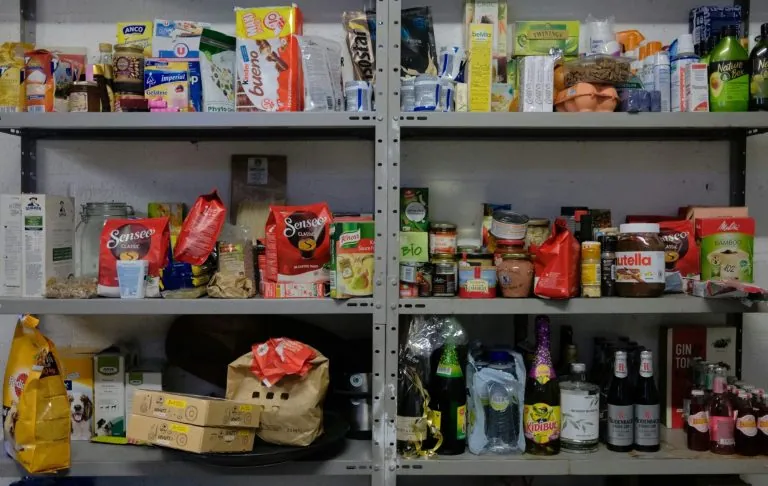
- having some food and water at home
- being able to keep warm and cook simple meals
- being able to access information even during disruptions
A deeper look at this is available in the guide on crisis preparedness at home – what should you keep at home? as well as in the more specific walkthrough of food preparedness – what should you keep at home?.

Preparedness Week and everyday crises
Most crises that affect people in Sweden aren't extreme. They involve power outages, water leaks, storms or technical disruptions. Events that are often temporary, but that can cause a lot of stress if you're unprepared.
Preparedness Week helps shift focus from unlikely scenarios to realistic situations. By understanding how everyday life is affected by, for example, a power outage, it becomes easier to prioritize the right measures. More on this can be found in the guide on power outages – how to manage daily life without electricity.
Preparedness Week from a family perspective
For families with children, security is often the most important factor in a crisis. Children are strongly affected by adults' reactions, routines and ability to create calm. Preparedness Week therefore highlights the importance of conversation, preparation and clear roles within the family too.
It's not about scaring children, but about:
- explaining things in an age-appropriate way
- creating recognition and routines
- involving children in simple preparations
A deeper look at this is available in the guide on preparedness with kids & family.

Common misconceptions about Preparedness Week
There are several recurring misconceptions about Preparedness Week. One is that it's meant to create fear. Another is that it's aimed at "preppers" or extreme groups. In practice, it's the opposite.
Preparedness Week:
- isn't about predicting disasters
- doesn't require major investments
- is built on reasonable, everyday measures
Anyone who already has some order in their everyday life has often come a long way without calling it preparedness.
How can you make smart use of Preparedness Week?
The most sustainable way to use Preparedness Week is as a recurring checkpoint. An opportunity to review what's already working – and what can be improved at a steady pace.
Small steps make a big difference:
- top up your water
- review your access to information
- talk through possible scenarios
Preparedness isn't a project that gets "finished". It's a process that follows life.
Summary
Preparedness Week is a reminder that security doesn't appear on its own. It's built through knowledge, preparation and responsibility – at the individual level and in society at large. Understanding your own role makes it easier to act calmly and rationally when something unexpected happens.
Keep reading the series
Previous article:
First aid in a crisis – when help is delayed
Next article:
Crisis preparedness at home – what should you keep at home?
100 Swedish Hiking Trails!
Looking for the perfect hiking trail? We've gathered 100 of Sweden's most interesting, challenging, and scenic hiking trails in one list!
From mountains to coast and the deep forests of the interior, we have the best trails for you and family-friendly trails.