A special experience with shifting landscapes
Mountain hiking is one of the most special nature experiences you can have in Sweden. In just a few hours, the landscape can shift from mountain birch forest and babbling streams to open barren mountains with views for miles. At the same time, the mountains demand more planning than many other types of hiking: the weather can turn quickly, distances can be greater than they look on the map, and small mistakes easily become bigger when you're far from roads and services. The Swedish Mountain Safety Council emphasizes preparation, weather knowledge and choosing a trip to match your experience.
This guide helps you choose the right type of mountain trip, plan wisely and find inspiration among Sweden's most beautiful mountain areas. If you want to start with a broader overview of hiking as a theme (and how to build a whole year of outdoor life without getting stuck on the same trails), feel free to start from our overview page about hiking in Sweden.

What counts as mountain hiking in Sweden
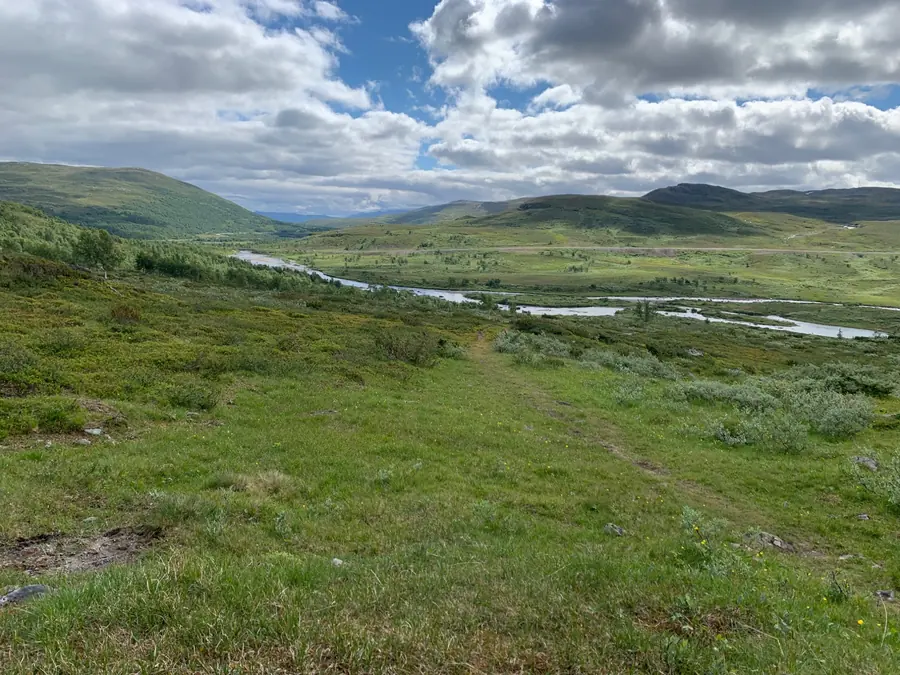
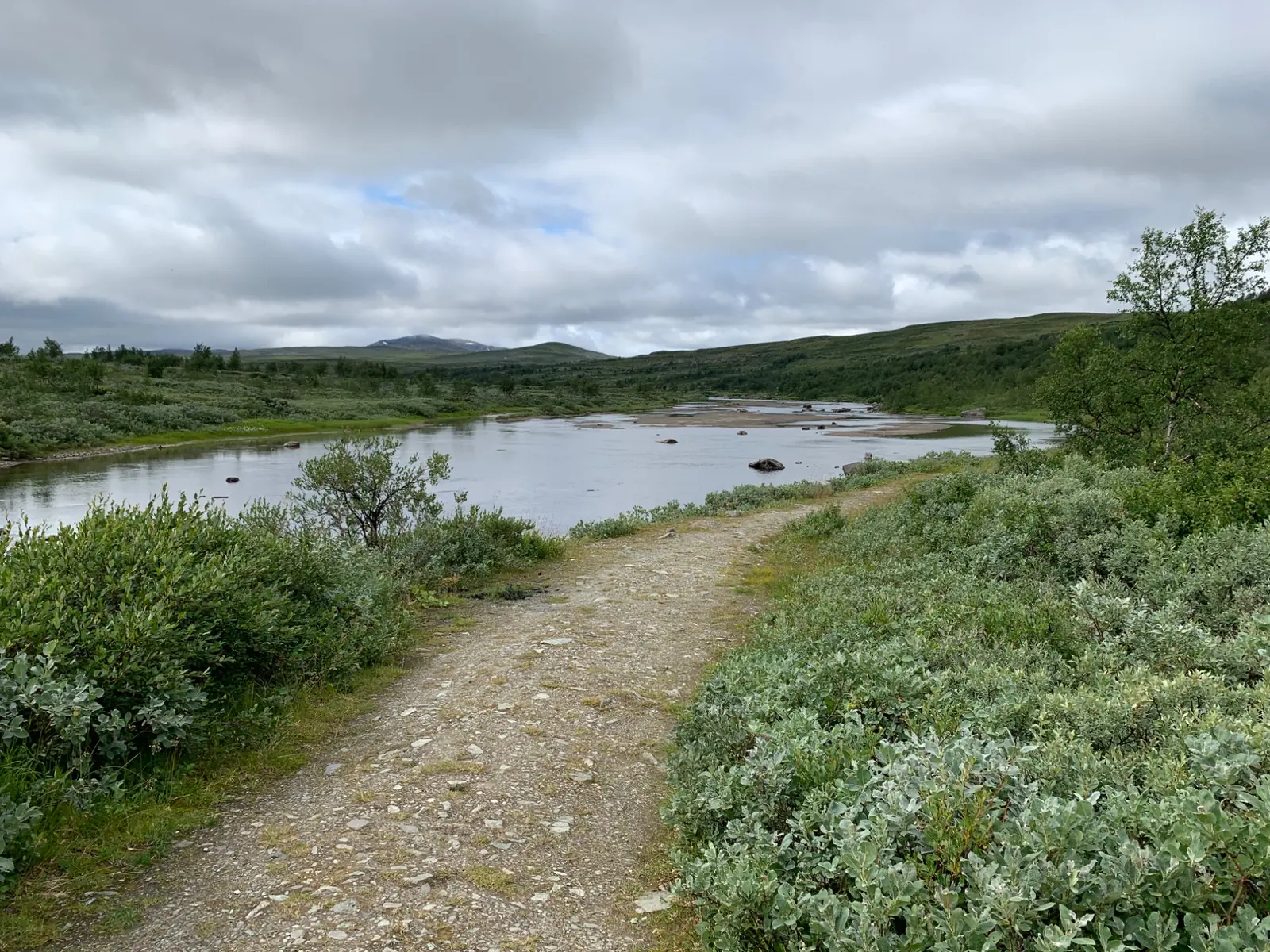
Mountain hiking isn't just about altitude, but about environment. In practice, it often refers to hiking in or near the mountain range where you move above the tree line, in barren mountain terrain, along mountain valleys or between mountain massifs. The Swedish mountain range stretches from Treriksröset in the north down to Dalarna in the south, encompassing everything from dramatic alpine peaks to gentler mountain plateaus and large bog areas.
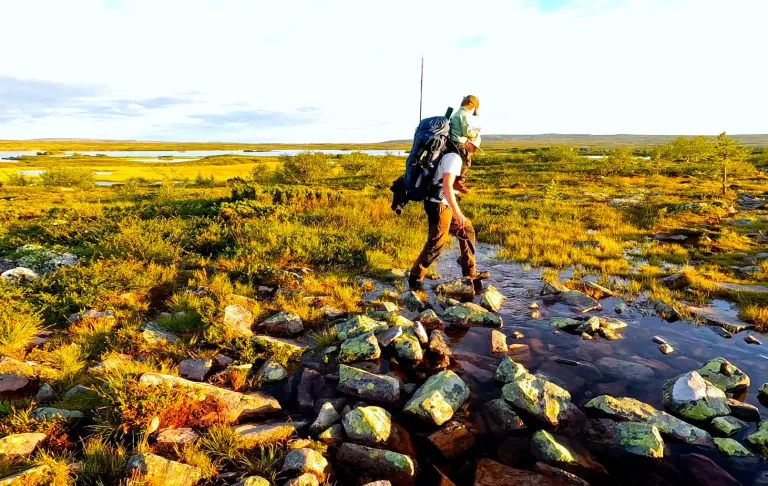
An important difference from "ordinary" forest hiking is exposure: wind, rain and temperature feel more direct when you're walking on open mountain terrain. That's why planning, margins and route choice become a bigger part of the experience. You should also expect that some stretches can be wet or rocky, that wading might be necessary, and that protected areas may have special rules for lighting fires and camping. The Swedish Environmental Protection Agency points out that mountain nature is sensitive and that rules can differ in national parks and reserves.
The most beautiful mountain areas to hike in
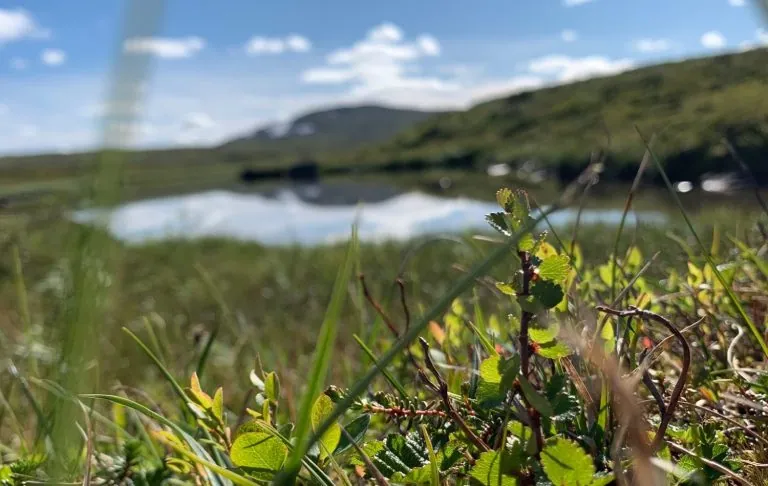
Sweden doesn't have one "best" mountain area – there are best areas depending on what you want to feel and experience. Here's a clear map in words, where each region has its own character.
Lapland – grandeur, vast expanses and long trails
Lapland is the archetype of mountain hiking: great distances, a clear sense of wilderness and nature that can feel almost surreal when the light lies low over the valleys. Areas such as the Abisko–Kebnekaise region, Padjelanta and parts of the Sarek fringe attract both day trips and multi-day hikes. Here the logistics are also often straightforward via mountain stations and cabins, while you can still choose trips that feel truly "real."
Jämtland – the classics with the best infrastructure
For many, the Jämtland mountains are the perfect start. You get a mountain feel, clear trails and many natural routes between mountain stations and mountain cabins. The Swedish Tourist Association describes how you can put together trips between mountain cabins or use a mountain station as a base for day trips.
That makes the area especially good for those who want to maximize the experience and minimize uncertainty.
Härjedalen – quieter mountains, big views
The Härjedalen mountains, especially around Funäsfjällen, often offer a more low-key mountain feel than the most famous "iconic spots." You get big views, lovely valleys and a pace that suits those who want to hike to slow down. For inspiration from our own mountain experiences, you can also read about night hiking in Funäsdalen.
Dalarna – mountains combining nature and logistics
In northern Dalarna you'll find mountains that are often more accessible, with many day-trip options and lovely natural surroundings for both beginners and families. It's an area that can be a perfect "bridge" between forest hiking and high-mountain feel.
Mountain trips worth seeing and worth planning
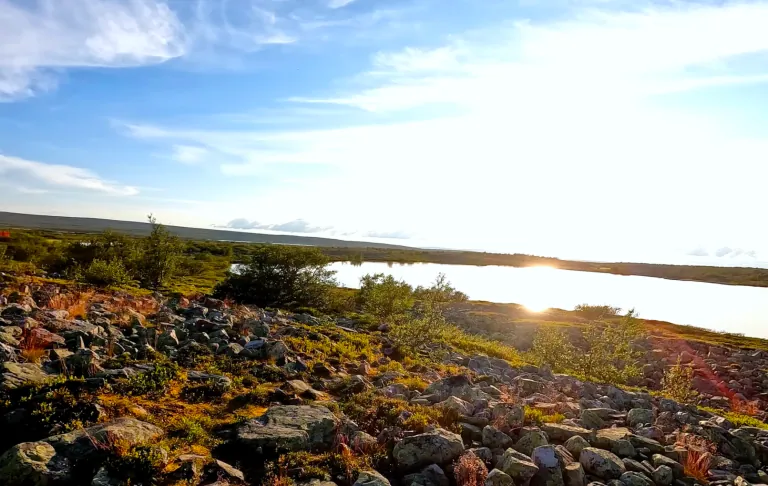
Instead of locking yourself into a single "correct" route, it's smarter to think in terms of trip types. Below is a list of mountain trips and setups that are especially worth seeing – not as a complete catalog, but as a planning compass. Each point is phrased so you quickly understand why it's worth hiking.
- Kungsleden – any stage: Sweden's most classic mountain trail, where you can pick a stretch that matches your time and level. The views, mountain lakes and infrastructure make it ideal for both your first mountain trip and longer hikes.
- Abisko National Park – day trip into the mountain world: Perfect for feeling the drama of the mountains without committing to several days. Often strong views early in the trip.
- The Kebnekaise area – valleys and peak landscapes: Here you meet more alpine shapes and a sense of high mountains. Requires respect for weather and pace, but offers a great payoff in experience.
- The Jämtland Triangle: A classic setup between mountain stations often mentioned as one of Sweden's best "first multi-day adventures." Easy to plan, easy to adjust.
- The Helags area – mountains with a clear reward: The area around Helags gives a very clear mountain feel and is popular because you get big views without the trip needing to become extreme.
- Sylarna – dramatic formations and strong views: A trip type for those who want "wow" in the landscape. Choose a setup to match your experience and the weather.
- Storulvån with day trips: A setup where you can stay comfortably and do day trips with light packing – good for families and beginners.
- Funäsfjällen – quieter trips with a strong mountain feel: Many trails give maximum nature experience per hour invested. Also good when you want to avoid the busiest routes.
- The Rogen area – boulder terrain and wilderness feel: An area that feels raw and unique, but demands a bit more route-finding and footwork.
- The Padjelanta trail (any section): Vast expanses, lakes and a particular stillness. Here mountain hiking is more about rhythm than peaks.
- The Sarek fringe – nature's grandeur from a distance: For experienced hikers who want a taste of Sarek without entering the most demanding parts.
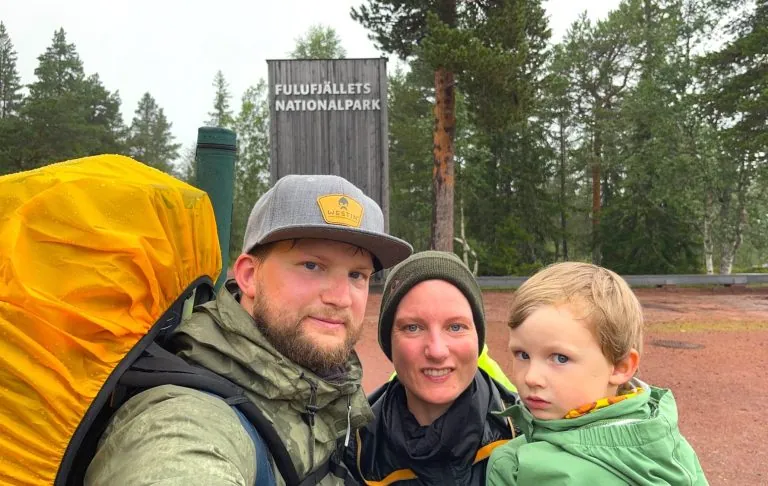
- Fulufjället – mountains in the south with a strong identity: A more "accessible mountain" in a Swedish context, where you can combine a nature experience with clear logistics. For inspiration from a family angle, you can read our page about Fulufjället National Park with Children.
- The Hemavan–Tärnaby area – mountains with many options: The area has great variety, which lets you adapt the setup to weather and company.
- Riksgränsen in summer – mountain feel near dramatic landscapes: The nature here often feels bigger than the map suggests.
- Short mountain trip with a fishing element: Many mountain areas become even stronger if you combine the hike with a planned break by the water. For inspiration on mountain-adjacent fishing, you can read about mountain fishing in Övre and Nedre Ransarn.
The point of the list is simple: choose a trip by purpose (view, calm, family, peak, long trail) rather than by status. That's how you get a mountain hike that feels right.
When is the best time for mountain hiking
The mountain season isn't a single season. It consists of several distinct phases:
- June: Beautiful light and fewer people, but often more snow left at higher elevations and higher water in the streams. That can make some stretches slower going.
- July: More stable for many, but also more people. This is often when beginners feel most comfortable – provided you plan smartly.
- August: For many, the best compromise. Still good days, often fewer mosquitoes than earlier, and nature starts to shift tone.
- September: Autumn colors and a clearer "wilderness feel," but colder nights and greater demands on clothing and margins.
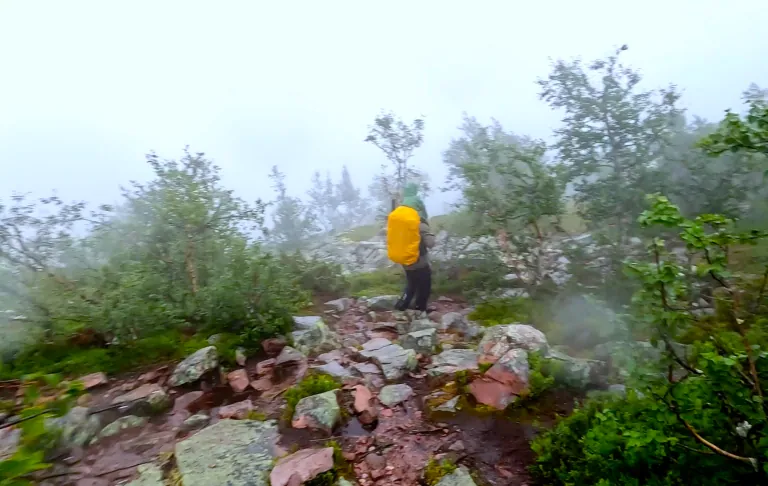
Regardless of the month, you need to expect rapid weather changes. The Swedish Mountain Safety Council points out that terrain and elevation can make the weather fickle and hard to predict.
Planning and safety in the mountains
Mountain safety is less about gear and more about decisions. With the right decisions, mountain hiking becomes both safer and more fun – a message that also recurs in STF's mountain safety guides. (The Swedish Tourist Association)
Weather: plan for worse than the forecast
Think in scenarios: "If it starts blowing, what do we do then?" and "If someone gets tired, where do we turn back?" Mountain hiking becomes safer when you have alternative routes and time margins.
Navigation: don't rely on a single solution
A phone and GPS are great – but always keep a map/compass as backup. The Swedish Mountain Safety Council stresses the importance of being able to read a map and compass before the trip. (fjallsakerhetsradet.se)
Tell someone
Leave a simple plan: start, destination, approximate time and alternatives. It's a small routine that makes a big difference if something happens.
The Right of Public Access and rules
In the mountains you can move freely, but you also need to understand that this often involves sensitive environments and sometimes protected areas. For the basics on rights, consideration and what typically applies around camping, our guide about the Right of Public Access in Sweden is a good starting point.
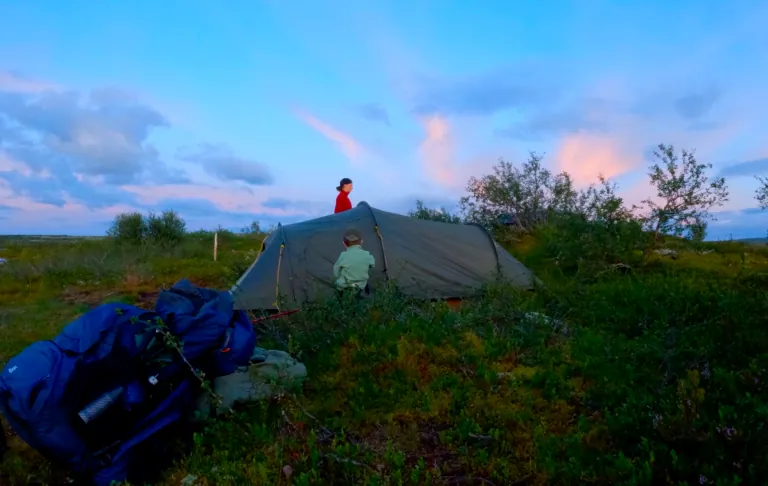
Packing for mountain hiking
Mountain packing is a balancing act between weight and safety. You want to be light – but never so light that you lack margins.
Clothing: build a system, not an outfit
- A base layer that manages moisture
- A mid layer for warmth
- A shell that stops wind and rain
- An extra insulating layer (especially if you'll be standing still for longer stretches)
Feet: blisters are the mountains' most common "injury"
Good socks and well-broken-in shoes beat everything. Always carry blister plasters and change socks in time.
Equipment: the things you don't want to need, but want to have if it happens
First aid, a headlamp, extra energy, and a simple solution for handling a change in weather.
If you want a solid foundation that also works when you combine mountains with overnight stays, start from our complete packing list for tent camping.
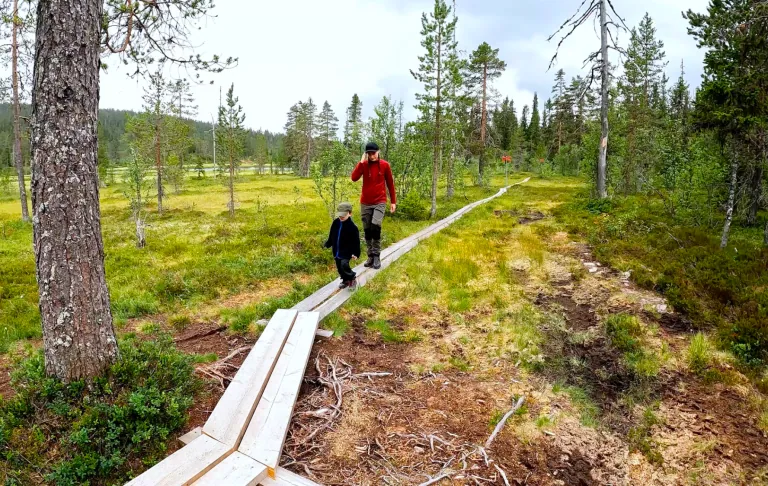
Mountain hiking with kids
Mountain hiking with kids isn't "the same hike but shorter" – it's a different kind of experience. It can be fantastic, but it requires clearer structure.
Think in milestones and rhythm
Kids are driven more by "the next thing" than by "we're heading to point B." Lakes, rest spots, boardwalks, rocks to climb and small quests make the trip more fun.
Distance: better short and successful than long and grueling
The Swedish Mountain Safety Council gives a clear rule of thumb for the inexperienced: roughly 10–15 km per day for adults who aren't seasoned mountain hikers, and shorter distances with children. (fjallsakerhetsradet.se)
See it as a planning aid, not as a performance target.
Choose a setup that minimizes "stress points"
A day trip with light packing, or a short multi-day trip where you can turn back early if the weather changes. For more family angles on making the logistics work in practice, you can read about family outings.
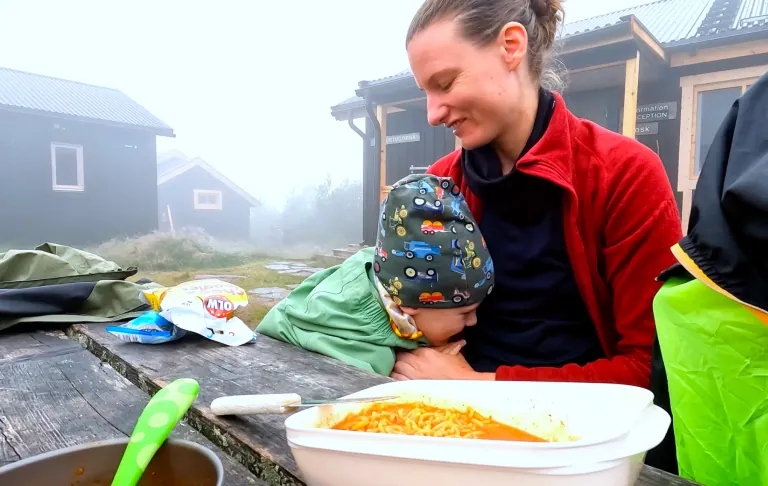
Food on the mountain trip
Food in the mountains is more than energy – it's mood, recovery and motivation. You want food that:
- is easy to cook
- gives a lot of energy per gram
- can be eaten even when the weather is dreary
A workable structure
- Breakfast: steady and warm if possible
- Lunch: quick, without a long break in cold/wind
- Dinner: warm, salty and filling
If you want recipes that suit outings, kids and simple logistics, you can start in our collection the best recipes for the family outing. If you also want to build more "fire-cooking thinking" for trips where lighting fires is allowed or where you cook at a campsite, there's plenty of inspiration in our guide about cooking over open fire.
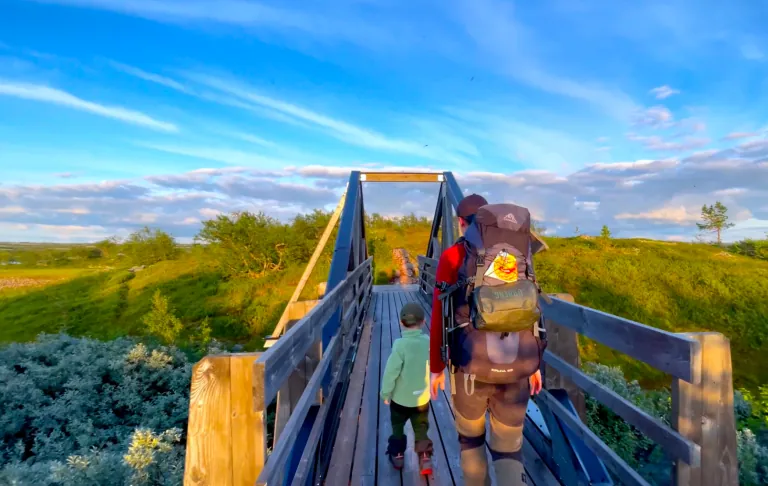
Common mistakes when mountain hiking
Knowing the common mistakes in advance means you avoid them without having to "learn the hard way."
- Too fast a pace on the first day – mountain hiking is built on a steady rhythm.
- Too thin margins – weather and stamina can change everything.
- Too heavy packing – you get more tired, walk worse and get more chafing.
- Too little energy – many eat too little when hiking long distances.
- Focusing on the destination instead of the experience – the best mountain trip is the one that feels good in body and mind.
Summary
Mountain hiking in Sweden is one of the clearest ways to experience real nature: big views, clean air, silence and a sense of freedom that's hard to find anywhere else. The key is to choose a trip by level and purpose, plan with margins and create a setup that suits both the weather and your company. When you do that, the mountains don't become "difficult" – they become safe, inspiring and addictive in the right way.
If you want to build your own "mountain strategy" over time, you can also explore more collected guides under Nature experiences in Sweden and use mountain hiking as a natural part of a bigger outdoor life.
Also read
Previous article: 100 interesting and worthwhile hiking trails in Sweden
Next article: Coastal and archipelago hiking in Sweden – trails near the sea
Before you head out, it can be smart to go through first aid for hiking in Sweden and make sure you're properly prepared.
Related guides & hiking experiences




100 Swedish Hiking Trails!
Looking for the perfect hiking trail? We've gathered 100 of Sweden's most interesting, challenging, and scenic hiking trails in one list!