


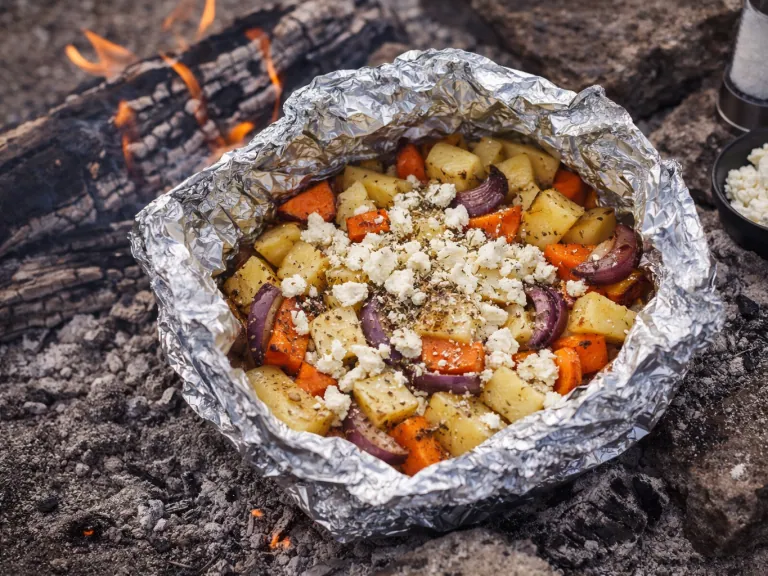

Fold a parcel that doesn't leak
Double folds, air above the food and the right spot in the bed of embers – the whole technique behind the hajkbomb, with timings for more ingredients.
To the foil parcel guideSausage, potato and onion in a silver ball that everyone builds themselves
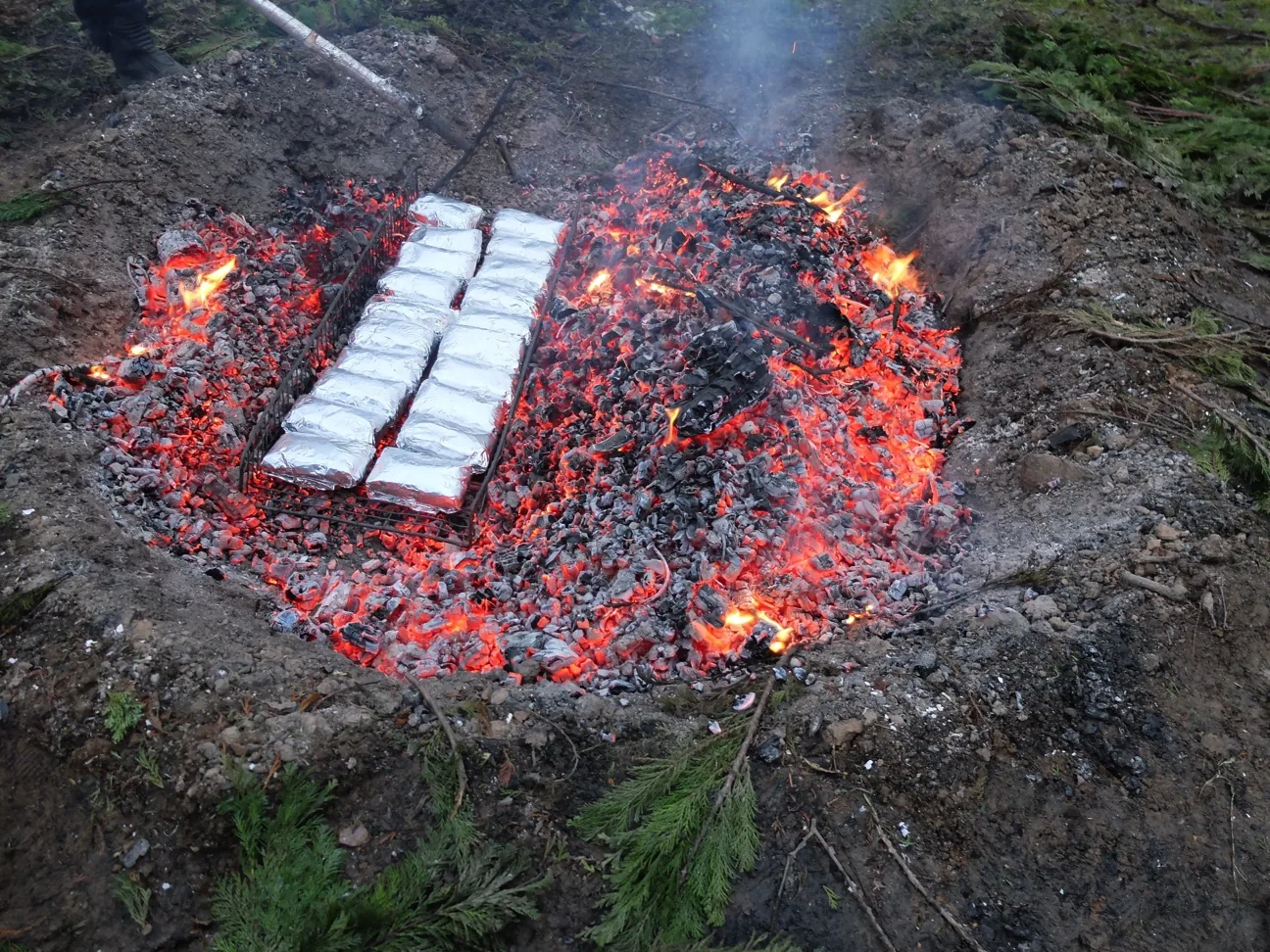
The ring of tubs stands on a log by the fire: diced potato, chunks of sausage, onion, apple wedges, grated cheese. Everyone has a double sheet of foil in their hand, bent into a bowl with a knob of butter in the bottom. Someone takes only sausage and potato, someone else puts in everything there is. Then the bowls are twisted shut into silver balls, names are written on with a marker pen and the balls are rolled out to the edge of the embers.
That's a hajkbomb. The name – literally "hike bomb" – comes from the scouts' hikes, and in scout groups' recipe collections it almost always means the same thing: a foil parcel for each person with sausage, potato and onion, placed straight in the embers. The falukorv (a mild Swedish sausage) is already cooked, so what decides whether the bomb is a success is the potato. It needs to be small enough to soften before the bottom burns.
Have you made this recipe? Rate it
0.0 out of 5 · 0 votes
out of 5
vote
votes
Be the first to rate this recipe.
Thanks for your vote!
Your vote could not be saved right now. Please try again later.
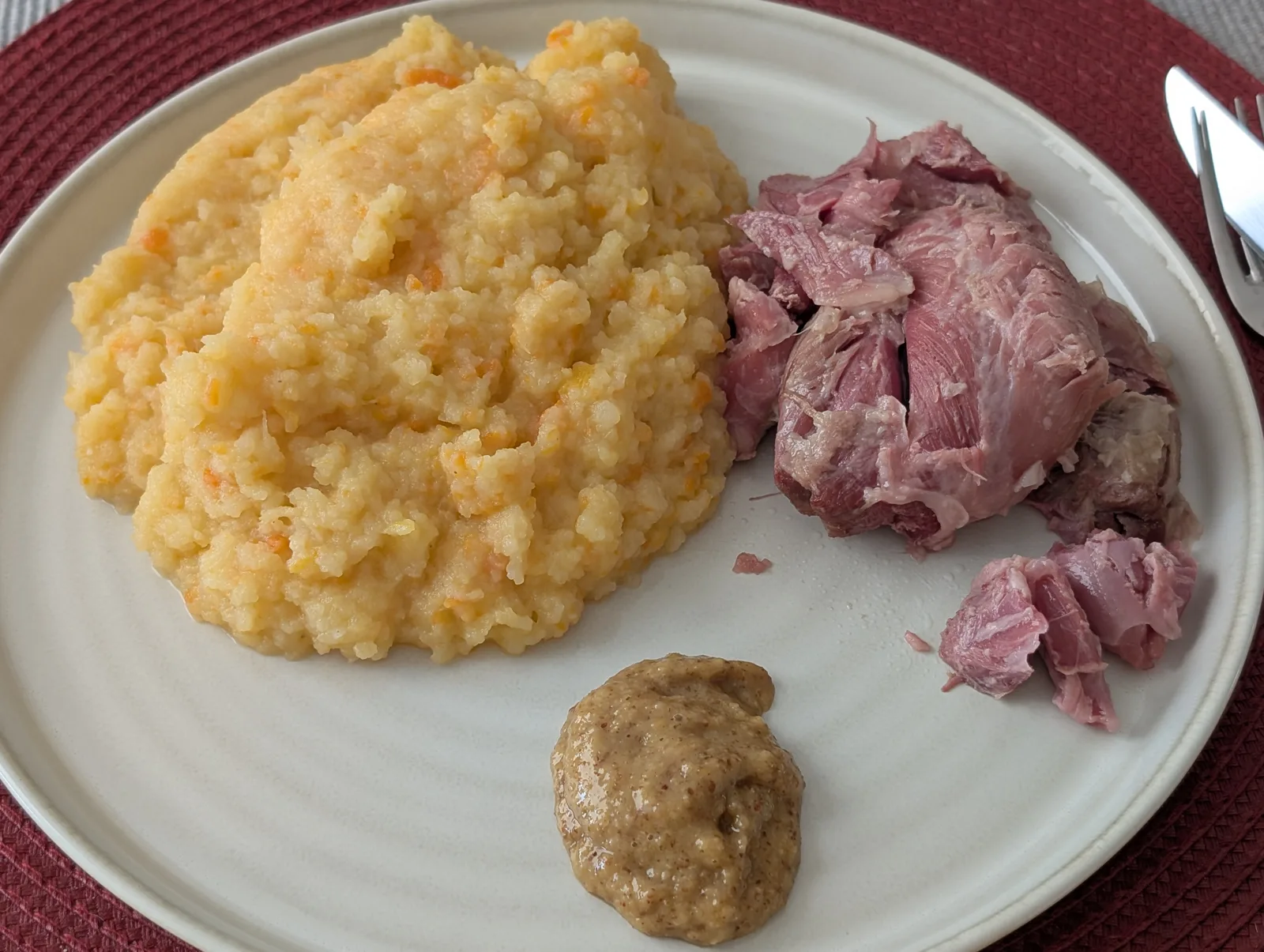 🔥 Over fire
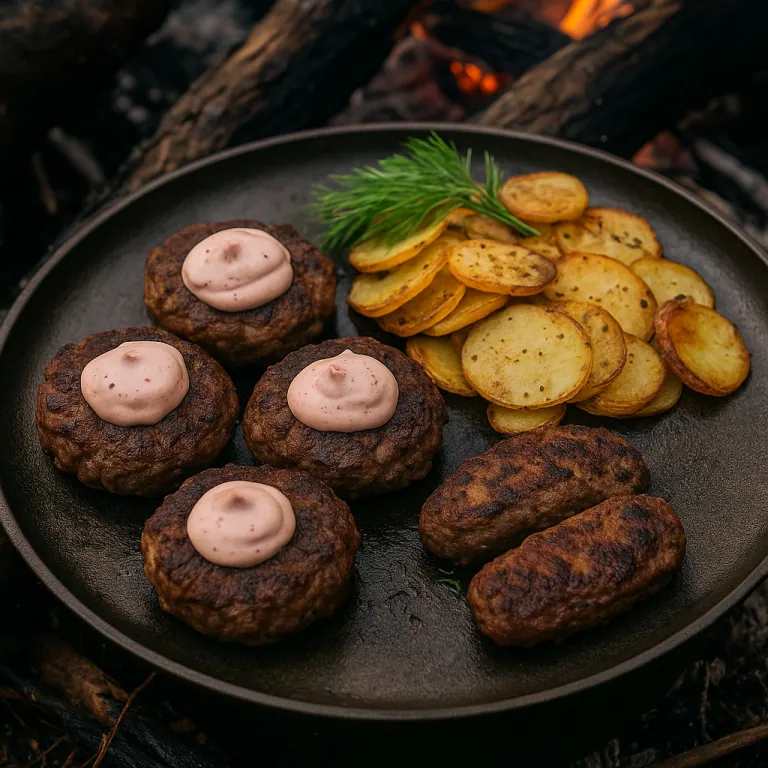 🔥 Over fire
 🔥 Over fire
 🔥 Over fire
At home. Peel or scrub the potatoes and cut them into cubes no bigger than a thumbnail. Cut the carrot into thin slices, a few millimetres thick, as it's harder than the potato. Slice the sausage into half-moons or cubes, and cut the onion into thin wedges. The apple can be cut at home and put in a tub with a little water so it doesn't go brown, or cut by the fire. Put everything in separate tubs. That makes it easy for everyone to choose for themselves.
Parboil the potatoes if time is short. Boil the cubes for about five minutes, until they're half-soft. Drain them and cool them quickly in cold water, then put the tub in the fridge. In starchy food such as potatoes, bacteria that survived the boiling can produce a toxin if the food cools slowly, and that toxin doesn't disappear when the food is reheated. So bring the parboiled potatoes cold in the cool box, never lukewarm. There's more about this under baked potatoes in the embers.
On the way. Sausage and parboiled potatoes are chilled foods. Put them in the cool box with ice packs and keep it in the shade. In summer heat, chilled foods shouldn't sit out for more than two hours, and never in the sun. Only take out the tubs when it's time to build the bombs.
By the fire. Light the fire as soon as you arrive. A bed of embers you can cook on takes at least half an hour, often longer, and how to build it is explained in lighting a fire. Build the bombs while the fire burns down.
You can follow a hajkbomb without opening it. An even, low sizzle means the butter and the liquid from the vegetables are steaming and all is going as it should. If the bomb is completely silent, it's too far out or on embers that are too cool. If it crackles sharply and smells burnt, the bottom is too hot. Move it out towards the edge and turn it straight away.
Apple, tomato and foil. Livsmedelsverket (the Swedish Food Agency) advises avoiding cooking acidic food in contact with aluminium foil, because aluminium can then leach into the food. Fruit counts as acidic, which is why the apple in the classic bomb lies on baking paper. The same applies to taco sauce, tomatoes and chopped tomatoes in the variations below. Potato, sausage, onion and carrot aren't acidic and are fine directly against the foil. Don't wrap leftovers with apple or tomato sauce in foil either – put them in a tub.
Mince must be cooked through. Always cook mince through, and 70 degrees in the centre is a good guide. The colour isn't enough to tell. The simplest way in a hajkbomb is to fry the mince at home, cool it quickly and bring it cold, then heat it until it's piping hot. Wash your hands after handling raw meat, even outdoors. How to do it without running water is explained in hygiene and washing up outdoors.
The steam and the embers. The foil gets as hot as the embers. Lift the bombs with tongs and a fire glove, open them on a stone and fold them open away from you. Keep the children outside the fire area while the adults rake embers and turn the bombs. Nobody should carry a hot bomb in their hands, not even with a glove, because hot liquid can run out of a fold that splits.
If someone burns themselves: cool with cool water for about a quarter of an hour, no longer, and never with ice or snow. Seek medical care if there are blisters over an area larger than the injured person's own hand, if the injury is on the face, the hands or over a large joint, if someone has breathed in hot steam, and always if the child is one year old or younger.
The fire. Check whether there's a fire ban where you are. The decision of the county administrative board (länsstyrelsen) or the municipality applies, and what the rules are is explained in fire in nature, rules and responsibility. Put the fire out properly with water when you're done. More about lighting fires safely is in fire safety in nature.
Allergens: butter and cheese contain milk. Falukorv can contain milk and sometimes other allergens, so read the packet if anyone in the group has an allergy.
The hajkbomb is made for children to build their own. That's exactly why it has become a classic at scout camps: each child decides what goes in, and the waiting is more fun when it's your own ball lying in the embers.
An adult lifts the hot bomb out of the embers and opens it, or an older child who has learned to keep their face away from the steam. The child only gets their bomb once it has rested on the stone and been folded open. More jobs by the fire that suit different ages are in cooking with children over a fire.
The filling varies between scout groups and families, and that's part of the point. These are the most common variations:
More ways to cook straight in the coals are gathered under embers and foil and in the list of all red-hot recipes. More about the sausage itself is in the best falukorv sausage. And when the bombs have been eaten, the embers are still good for banana in foil with chocolate.
A hajkbomb is a foil parcel of food placed straight in the embers of an open fire. The name comes from the scouts' hikes (hajk in Swedish). The classic filling is falukorv, potato and onion, often with apple, carrot or cheese, and everyone usually builds their own bomb.
About 20–30 minutes if the potato is raw and cut into one-centimetre cubes, and about 10–15 minutes if the potato is parboiled. In cold and wind it takes longer. Turn the bomb every five minutes and open one first to test the potato. It's done when the potato is soft and it's sizzling inside.
No, but it's quicker and more even. Parboiled potatoes should be cooled quickly at home and brought cold in the cool box. Raw potato works fine if the pieces are no bigger than a thumbnail.
Yes, but put the apple on a sheet of baking paper inside the foil. Livsmedelsverket advises avoiding cooking acidic food such as fruit and tomato in contact with aluminium foil.
Yes. Put it on the grill just above the embers. It takes a few minutes longer than directly in the embers, but it's easier to see and turn the bombs.
Scrape off the black and eat the rest. Next time, put more butter in the bottom, move the bomb further out towards the edge of the embers and turn it more often.
More to put in the embers
Fold a parcel that doesn't leak
Double folds, air above the food and the right spot in the bed of embers – the whole technique behind the hajkbomb, with timings for more ingredients.
To the foil parcel guideWhole potatoes in the same embers
Would you rather have a whole floury potato than cubes? How long it should stay in, and how to tell when it's done.
To baked potatoesA sweet bomb afterwards
The embers are enough for pudding too – banana with chocolate in foil takes ten minutes and children can do almost everything themselves.
To the chocolate banana