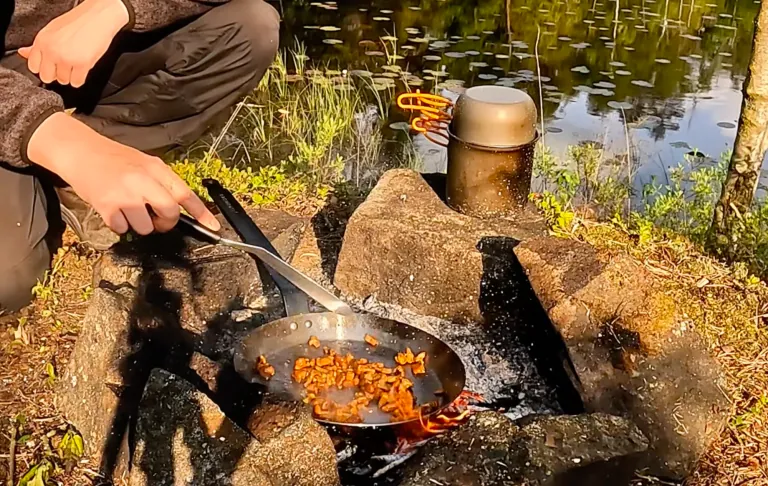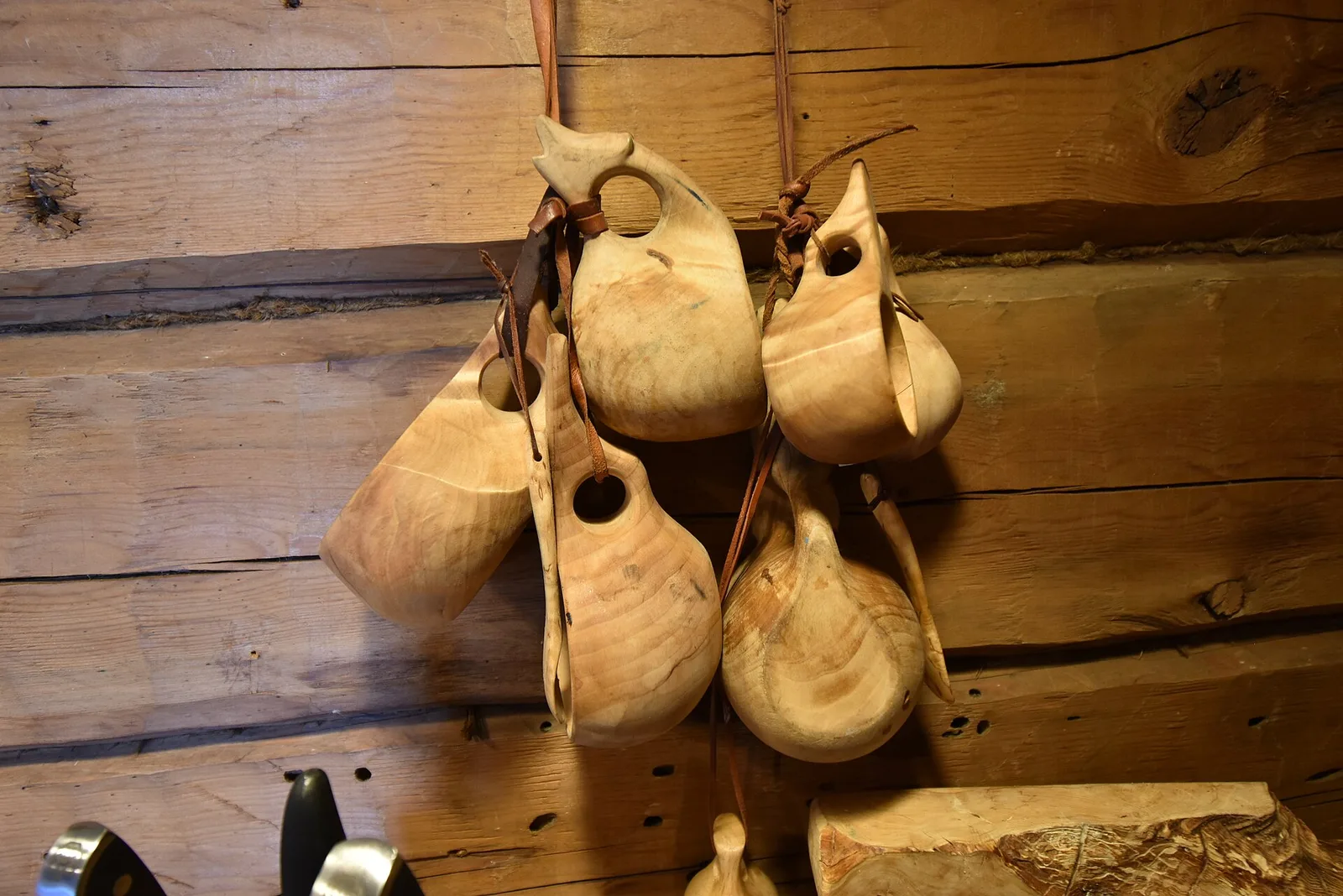
Short answer
Choose by age and by what the child already does outdoors. For ages 2–4: a head torch without button batteries, a sit mat and a small rucksack of their own. For ages 5–8: a carving knife with a rounded tip and a finger guard, a compass and a magnifying glass. For ages 9–12: a ferro rod, binoculars and a nest box to build themselves. A gift card for a night in a tent or a morning by the fire is often what they remember longest.
Christmas presents by age and place
| Age | In the forest | By the fire | In the snow | Experience |
|---|---|---|---|---|
| Ages 2–4 | Small rucksack under 8 litres, bug viewer, sit mat | Their own wooden cup or mug, food flask | Helmet for sledging, snow shovel, bum sledge | An evening in the forest with a head torch |
| Ages 5–8 | Compass, magnifying glass, 8–15 litre rucksack | Carving knife with a rounded tip and a finger guard | Snow block mould for a snow lantern, skates | Stick bread breakfast by the fire |
| Ages 9–12 | Binoculars, nest box to build, map of the nearest forest | Ferro rod, their own fire pouch with birch bark and tinder | Second-hand cross-country skis, a snow shovel for building in the snow | A night in a tent or a lean-to shelter |
The ages are approximate. Start from what the child already enjoys doing outdoors, not from what it says on the packaging.
The best Christmas present for a child who loves being outdoors is something that goes outside with them on Christmas Day – and is still being used in May. That sounds simple, but a lot of outdoor gear for kids is made to look fun in the shop, not to last a winter in the forest.
This guide sorts the ideas by age and by where they're used: in the forest, by the fire and in the snow. For each item we say what to look out for, so the present gets used and doesn't end up at the back of the wardrobe. At the end you'll find experiences and gift cards the family makes itself, and how to borrow, inherit and buy second-hand instead of new.
Start with what the child already does outdoors
Binoculars for a child who never looks at birds become binoculars in a drawer. Look instead at what the child already does: does she collect sticks and always want to whittle? Does he ask about every bird at the bird table? Would the kids rather build a snow fort? Then you know which part of the guide to read.
It also helps to think about who will be coming along. Almost everything in this guide needs a grown-up who goes outside too, at least at first. A knife or a ferro rod is really a Christmas present for the whole family – a promise that someone will go to the forest and show how it's done.
Ages 2–4 – their own gear that makes them feel big
The youngest children want their own things, just like the grown-ups. What matters is that the things are light, sturdy and impossible to get hurt on.
Head torch – and the battery that is dangerous
A head torch is one of the best Christmas presents for small children in December, when it's dark by the afternoon. Look out for three things:
- Brightness. Children's head torches are often a few tens of lumens, and that's enough to see the path and look for things in the dark. A brighter torch mostly dazzles their friends.
- Fit. The headband should be soft and adjustable, so the torch stays put over a hat and doesn't slide down over the eyes.
- The battery. Avoid torches with button batteries for children under five. A button battery swallowed by a small child can get stuck in the oesophagus and cause very serious injuries. Choose a torch with a built-in rechargeable battery, or ordinary batteries behind a screw-down cover.
If a child has swallowed a button battery: Go straight to A&E, even if the child seems fine. Call 112 if the child has difficulty breathing or seems affected. Do not try to make the child vomit. Giftinformationscentralen (the Swedish Poisons Information Centre) answers questions around the clock on 010-456 67 00.
Tip: The same risk is found in flashing reflectors, musical Christmas cards and small LED candles. How to keep batteries away from the little ones is explained in light when the power goes.
Sit mat, small rucksack and a cup of their own
- Sit mat. A foam mat that can't be punctured and can handle being sat on in the snow. Choose a bright colour so it's easy to spot when it's left behind by the fire, and a strap so it can hang from the rucksack.
- Rucksack under 8 litres. That's enough for a jacket, a piece of fruit and a mitten – and a three-year-old can't carry more than that anyway. A chest strap keeps the rucksack in place when the child runs.
- Wooden cup or plastic mug. A cup of their own for hot chocolate by the fire. Let the drink cool before you pour it – small children burn themselves easily on things that feel warm to a grown-up.
- Bug viewer. A jar with a magnifying lid that fits a beetle or a leaf. It can survive being dropped, unlike a glass magnifying glass.
In the snow
For the littlest ones, a helmet is a better Christmas present than the fanciest sledge. A helmet is recommended on the sledging hill, and one of their own that fits well means it goes on without nagging. A bum sledge or a small plastic snow shovel goes a long way for a two-year-old.
Ages 5–8 – the first knife, compass and magnifying glass
Now the kids start wanting to do things for real: whittle, light a fire, find the way. This is the age for the first tools.
Carving knife – rounded tip and finger guard
Their first knife of their own is a big deal for a child. Look out for:
- Rounded tip. It makes it much harder to stab yourself, and it's plenty for whittling sticks and stripping bark off branches.
- Finger guard. A clear ridge between handle and blade, so the hand can't slip forward onto the edge.
- A handle that fits the hand. Short and thick enough to hold with a mitten on.
- A sheath that holds the knife securely. The knife should click into place and not fall out when the child runs.
A sharp knife is safer than a blunt one, because you don't have to press as hard. Teach the child to sit down when whittling, always to carve away from the body and to keep an arm's length plus the knife clear all around them – the circle often called the blood circle. The knife is folded or put back in its sheath before the child stands up.
The Swedish knife law and school: The Swedish knife law (knivlagen) has no age limit for an ordinary carving knife. However, knives may not be carried in public places or on school premises unless there is a legitimate reason. Outdoor activities usually count as a legitimate reason, so the knife can go in the rucksack to the forest. Don't wear it on the belt in town or on the bus. The knife does not go to school. If the class is going to whittle on an outing, the school decides how the knives are brought along.
The first whittling project can be a stick for stick bread over an open fire, and there are more ideas for what kids can do with a knife by the fire in cooking with children over a fire.
Compass and magnifying glass
A baseplate compass with a transparent base and rotating bezel is the kind used with a map, and it will do from the first year of school all the way up. A child this age first learns to find north and to walk towards a rock or a tree, and then to lay the compass on the map.
A magnifying glass with a handle turns a walk in the forest into a hunt for moss, lichen and frost crystals. Choose a lens of polished plastic for the youngest. Don't leave it on a sunny windowsill – a lens can focus sunlight so strongly that things start to smoke.
More ideas for what the kids can do in the forest with a compass and magnifying glass are in child-friendly adventures in Swedish nature.
Rucksack 8–15 litres
A child who walks their own day hikes needs room for a packed lunch, a rain jacket and an extra jumper. 8–15 litres is about right. Look for a chest strap, reflectors and a pocket on the side or on the hip belt that the child can reach – that's where the compass and the sweets live.
In the snow
A snow block mould lets the kids build an igloo wall, a fort or a snow lantern by themselves, without a grown-up having to shape every snowball. With Ice skating, it helps to have an ice rink near home – that's when they get used the most. For anyone who has never stood on skates, there are beginner models with double blades that are easier to balance on.
Ages 9–12 – ferro rod, binoculars and a nest box to build
Older kids can do more on their own and like to have the things grown-ups use – in the right size.
Ferro rod and fire steel
A ferro rod is a rod of metal alloy that throws hot sparks when you draw a striker or the back of a knife along it. It works even when it's wet, unlike matches. The traditional fire steel is struck against a flint and takes more technique – it suits kids who can already get a fire going with a ferro rod.
Look for a ferro rod with a handle you can hold in a mitten and a striker attached by a cord, so it doesn't vanish in the snow. It's a good idea to add a personal fire pouch with tinder from home, such as sticks of fatwood and cotton pads. The child can pick up dry twigs and a little loose birch bark from the ground on the spot.
A few rules that come with the present:
- The sparks are very hot. Practise with a grown-up beside you, on snow, gravel or a rock, with a cotton pad or a little birch bark as tinder.
- Only use the ferro rod where fires are allowed, and never when there is a fire ban. What applies is explained in fire safety in nature.
- Only pick dry twigs and loose birch bark lying on the ground. Under allemansrätten (the right to roam), you may not take bark or birch bark from living trees, nor saw or chop up dead trees.
Once the kids can light a fire themselves, the whole of EldMat opens up – from sausages on a stick to a stew left to simmer.
Binoculars
Binoculars get used if they're light enough to carry round the neck all day. Look out for:
- Low magnification, around six to eight times. The image is steadier and it's easier to find the bird.
- Eye spacing that can be set narrow enough to fit a child's face. Many adult binoculars can't be set that close together.
- Rubber-armoured body and a strap, so they can survive being dropped.
A simple field guide to Swedish birds makes a good addition.
Nest box to build yourselves
A nest box kit or a pack of pre-cut boards, screws and a drawing is a Christmas present that becomes a project over the Christmas holidays. Keep in mind:
- The entrance hole should be at least 25 millimetres, ideally 30–32 millimetres, so that several species of tit can use it.
- The boards should be sturdy, around 22 millimetres thick, and untreated on the inside.
- The front panel should be screwed on so it can be opened and the box emptied of old nesting material once the breeding season is over.
- The distance from the hole down to the floor should be at least 20 centimetres.
Put the box up during the winter, so it has had time to weather by the time the birds look for nest sites in spring. Two to five metres up is about right, and the direction it faces doesn't matter, but avoid spots where the sun shines on it all day. If you want birds at the window straight away, the kids can make bird seed cakes for winter at the same time.
In the snow
This is the age when cross-country skis become real fun. Second-hand skis usually work just as well as new ones, because children grow out of them before they're worn out. Where you can ski over Christmas is in ski trips in Sweden.
Clothes that keep them warm – wool or synthetic
The least exciting parcel under the tree is often the most used. Good base layers mean the child can stay outside longer, and that's the difference between an hour on the sledging hill and a whole afternoon.
- Never cotton next to the skin. Cotton gets heavy and cold when it's damp.
- Merino wool with fine fibres doesn't itch and stays warm even when damp. It suits children who sit still a lot – by the fire, on the ice when fishing or in the sledge.
- Synthetic wick sweat away faster and suit children who run, ski and sweat a lot.
- Wool lasts a long time and can be handed down to siblings and cousins, so it's worth buying in the right size and looking after.
With base layers go wool socks, a thin hat and two-layer mittens. A small flask that holds a mug or two and that the child can open by themselves goes well in a parcel with the clothes.
Experiences and gift cards you make yourselves
The present kids remember longest is often not a thing, but a day. Make your own gift card and write a date on it – then it actually happens. A few ideas:
- A night in a tent in the garden, in a lean-to shelter or at a campsite near home. With a head torch, a sleeping bag and hot chocolate in the flask.
- Breakfast by the fire on a weekend morning in January, with stick bread and sausages.
- A day on the sledging hill – with fika (a Swedish coffee-and-snack break) and the best slopes in Stockholm or Gothenburg.
- A bird day when you put up the nest box, count the birds at the bird table and write down the species.
- The child chooses the outing. A whole Saturday when the child decides where you go and what you eat.
A gift card can also go into a homemade Advent calendar, where one of the adventures behind the doors becomes a taste of the present to come.
Borrow, inherit and buy second-hand
Children grow out of skis, skates and snowsuits in a couple of seasons. That makes outdoor gear one of the best things to buy second-hand:
- Buy second-hand at flea markets, in charity shops and on buy-and-sell sites. Wool clothes and skis last a long time, and a knife or binoculars are no worse for having had an owner before.
- Hand down and swap with cousins, neighbours and friends. Ask around as early as November – lots of people have a box of ski boots and skates that nobody uses.
- Borrow. At a fritidsbank (a Swedish lending service for sports and outdoor equipment) you can borrow gear for free, usually for two weeks. It's a way to let the child try skating or cross-country skiing before you buy their own.
- Give an experience. A gift card for a night in a tent costs next to nothing and takes up no space.
We gather more ideas for a Christmas with more time outdoors and fewer obligations in christmas with kids.
Check before you buy
Frequently asked questions
At what age can a child have their first knife?
The Swedish knife law has no age limit for an ordinary carving knife. The age limit of 21 applies to flick knives. There's no set age to start whittling. What matters is whether the child can sit still, listen and follow the knife rules, and many start at preschool age or in the first years of school, with a rounded tip, a finger guard and a grown-up beside them. The knife lives at home and goes in the rucksack to the forest, but not to school. The knife law prohibits knives on school premises.
Are head torches with button batteries dangerous for small children?
Yes, the battery is what's dangerous. A button battery swallowed by a small child can get stuck and cause very serious injuries. For children under five, choose a torch with a built-in rechargeable battery or with ordinary batteries behind a screw-down cover. If you suspect a child has swallowed a button battery, go straight to A&E, even if the child seems fine. Call 112 if the child has difficulty breathing or seems affected. Do not try to make the child vomit. Giftinformationscentralen (the Swedish Poisons Information Centre) answers questions around the clock on 010-456 67 00.
Should a child's base layers be wool or synthetic?
Wool for cold days and for children who sit still a lot, synthetic for children who run and sweat. Choose fine merino wool that doesn't itch. The most important thing is that it isn't cotton next to the skin, because cotton gets heavy and cold when it's damp.
How big a rucksack does a child need?
Under 8 litres is enough for a preschooler carrying a snack and a jacket. For short day hikes 8–15 litres is right, and older children carrying extra clothes, waterproofs and a packed lunch need 16 litres or more. A chest strap keeps the rucksack in place when the child runs.
What can you give instead of a thing?
A gift card the family makes itself: a night in a tent in the garden, a stick bread breakfast by the fire, a day on the sledging hill with hot chocolate, or a nest box you build and put up together. Write the date on the card – then it actually happens.