Short answer
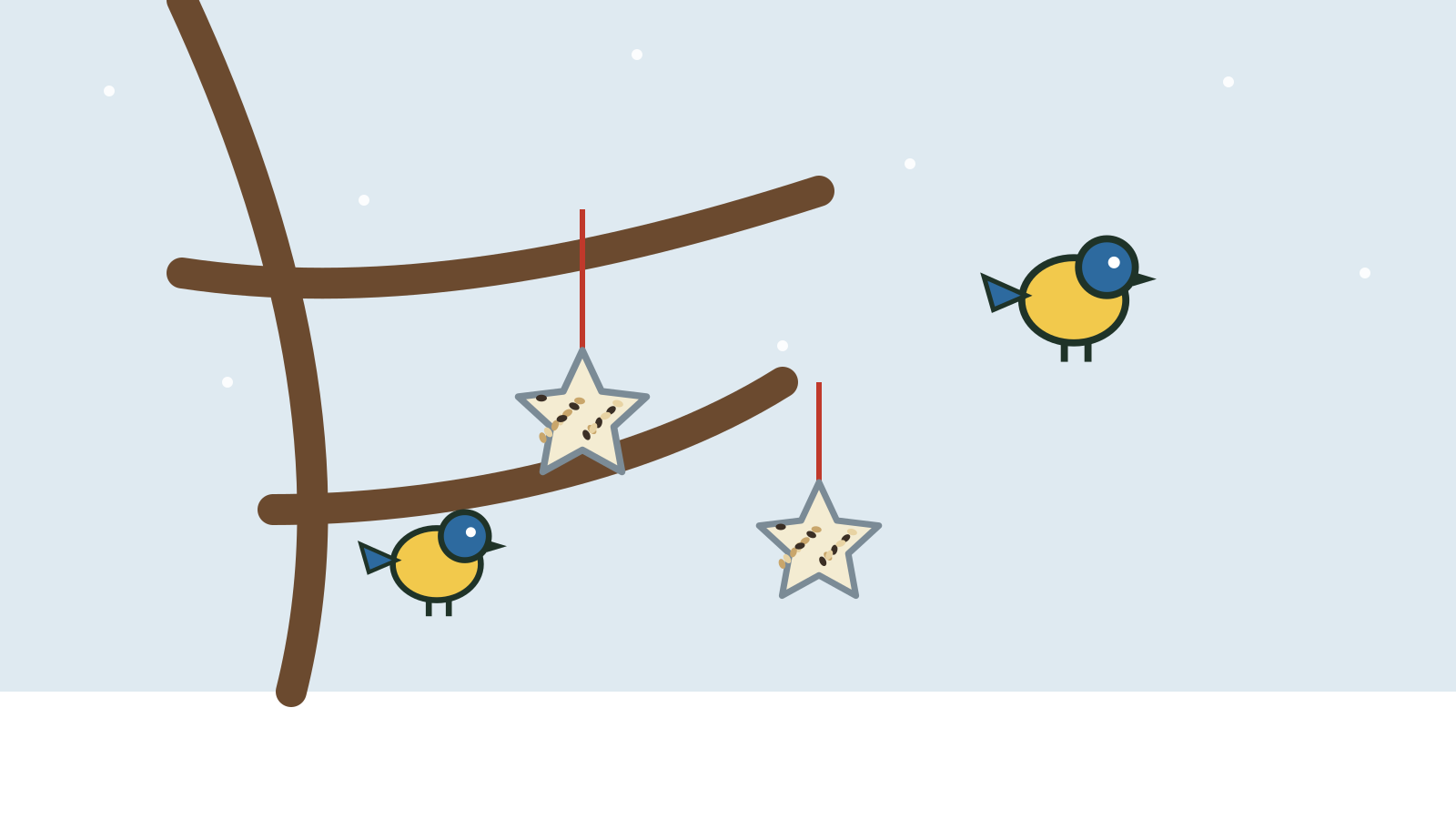
Melt suet or unsalted coconut fat, stir in seeds and spoon the mixture into gingerbread cutters on baking paper. Press in a loop of string before the fat sets and let the biscuits harden in the fridge. Hang them in a tree near a bush, where the birds can hide. Avoid salty food, bread and fat balls in nets, and start feeding when the ground freezes.
What you need
- 250 g suet or unsalted coconut fat
- 3–4 dl bird seed, sunflower seeds and rolled oats (unsalted)
- Metal gingerbread cutters
- Parchment paper
- String or yarn, about 30 cm per biscuit
- A pan and a spoon
Step by step
-
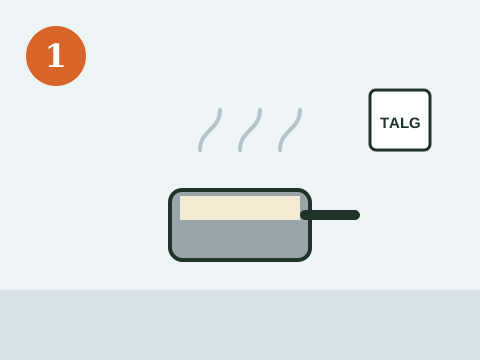
1. An adult melts the suet or coconut fat in a pan over low heat. Let it cool for a few minutes so that it is not too hot.
-
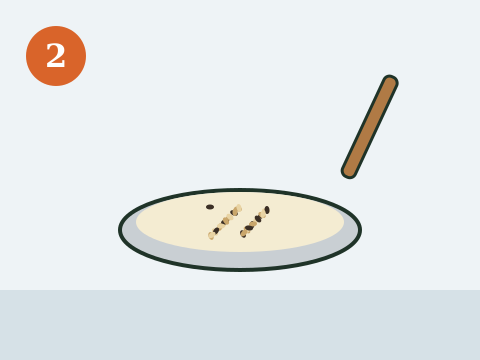
2. Stir in seeds, sunflower seeds and oats until the mixture is thick and sticky. Roughly equal parts fat and seeds.
-
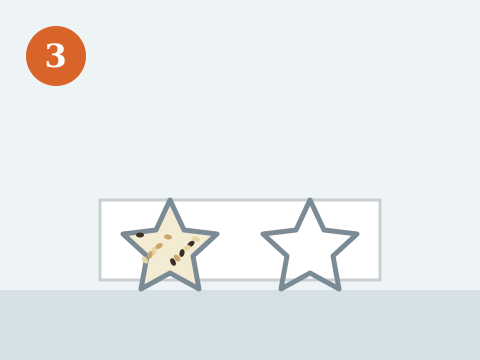
3. Put the gingerbread cutters on baking paper and fill them with the mixture. Press down with a spoon.
-
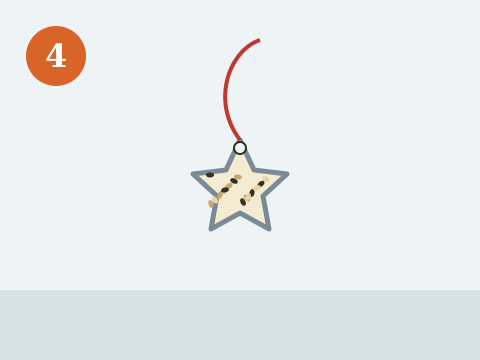
4. Press a loop of string into each biscuit before the fat sets, or make a hole with a straw.
-

5. Let the biscuits set in the fridge or outside in the cold for an hour. Then gently press them out of the cutters.
-
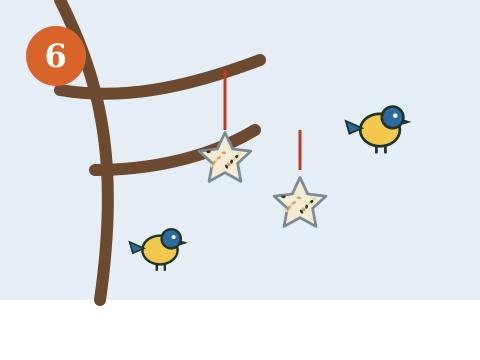
6. Hang the biscuits in a tree near a bush, ideally where you can see them from the window. The tits will soon arrive.
Bird biscuits in gingerbread cutters are a Christmas craft that does two things at once: the children get to craft, and the small birds get energy when it is at its coldest. Stars, hearts and trees of suet and seeds hanging in the tree outside the window become both a Christmas decoration and a bird table – and the children can follow which birds come.
It is also a good opportunity to learn to feed birds the right way. Fat balls in nets, bread and leftovers from the Christmas table do more harm than good. With suet or unsalted fat, seeds and a little hygiene, you really help the birds.
What birds need in winter
Small birds such as great tits, blue tits and tree sparrows need a lot of energy to get through cold nights. Fat and seeds provide that energy:
- Suet or unsalted coconut fat – the base of the bird biscuits. Avoid fat balls containing palm oil.
- Sunflower seeds – loved by tits and bullfinches.
- Rolled oats and bird seed – good for sparrows and finches.
- Chopped nuts (unsalted) – lots of energy, but only unsalted.
never give salty food, salted butter, bread, spicy food or leftovers from the Christmas table. Bread fills them up without giving energy, and salt is harmful to small birds.
Remove the net from fat balls
Shop-bought fat balls are often sold in green plastic nets. Birds can get their claws or tongue caught in the net and injure themselves. So remove the net and hang the ball in a metal holder – or make your own bird biscuits with a loop of string, as in this craft.
Where should the bird feeder hang?
- Near a bush or a tree. The birds want to be able to hide quickly from the sparrowhawk.
- Not where cats hide. Hang the biscuits a little way up and not right above dense vegetation near the ground.
- Where you can see it. A tree outside the kitchen window becomes the family's own bird-watching station.
- Several places. Spread the biscuits out so that the birds do not crowd together.
Hygiene at the bird feeder
When many birds gather in the same place, disease can spread. Put out a little food at a time, clean the bird feeder once a week or every other week, and put spruce twigs on the ground underneath so that spilt food does not collect. Move the biscuits now and then. Wash your hands afterwards.
When should you start and stop feeding?
Start feeding when the ground freezes and it becomes hard for the birds to find food themselves – usually in November or December. Stop when the ground thaws in spring. You do not need to feel guilty if you only feed for a few weeks – the birds will cope, and every cold week with food helps.
Who does what – children and adults
- Ages 3–5: stir in the seeds, fill the cutters and press down with the spoon.
- Ages 6–9: make the string loops, press out the biscuits and choose where they should hang.
- Age 10 and up: can keep a bird diary – which birds come, how many and on which days.
An adult melts the fat – it gets hot and can burn. Let it cool for a few minutes before the children stir it.
More bird feeders to make
- Pine cone bird feeder: spread the suet mixture into a large pine cone and roll it in seeds. More about cones and crafts in pine cone ghosts.
- Orange peel halves: fill hollowed-out orange halves with the suet mixture and hang them on three strings.
- Bird wreath: shape the mixture into a wreath in a cake tin with a hole in the middle.
- Apples on a stick: thread apple pieces onto a stick – blackbirds love them.
Hang the bird biscuits next to a star made of sticks, and the tree outside the window becomes both a Christmas decoration and a bird table. More ideas for Advent and Christmas with kids in Christmas with kids.
Frequently asked questions
When should you start feeding birds?
When the ground freezes and it becomes hard for the birds to find food themselves, usually in November or December. Stop when the ground thaws in spring. You do not need to feed all winter – it is fine to feed for a few cold weeks.
Why should you remove the net from fat balls?
Birds can get their claws or tongue caught in the net and injure themselves. Remove the net and hang the ball in a special holder, or make your own bird biscuits with a loop of string.
What should you not give birds?
Salty food, bread, leftovers, salted butter and spicy food. Bread fills them up without giving energy, and salt is harmful to small birds. Give suet, unsalted fat, sunflower seeds, rolled oats and bird seed.
Where should you hang the bird feeder?
Near a bush or a tree, so that the birds can quickly hide from the sparrowhawk – but not where cats can sneak up. Ideally where you can see it from a window.
How do you keep the bird feeding clean?
Put out a little food at a time, spread the feeding over several places and clean once a week or every other week. Put spruce twigs on the ground underneath, so that spilt food does not collect in a pile.