Popular searches

    Duck breast with cherry and red wine sauce – crispy skin and pink meat for New Year's Eve

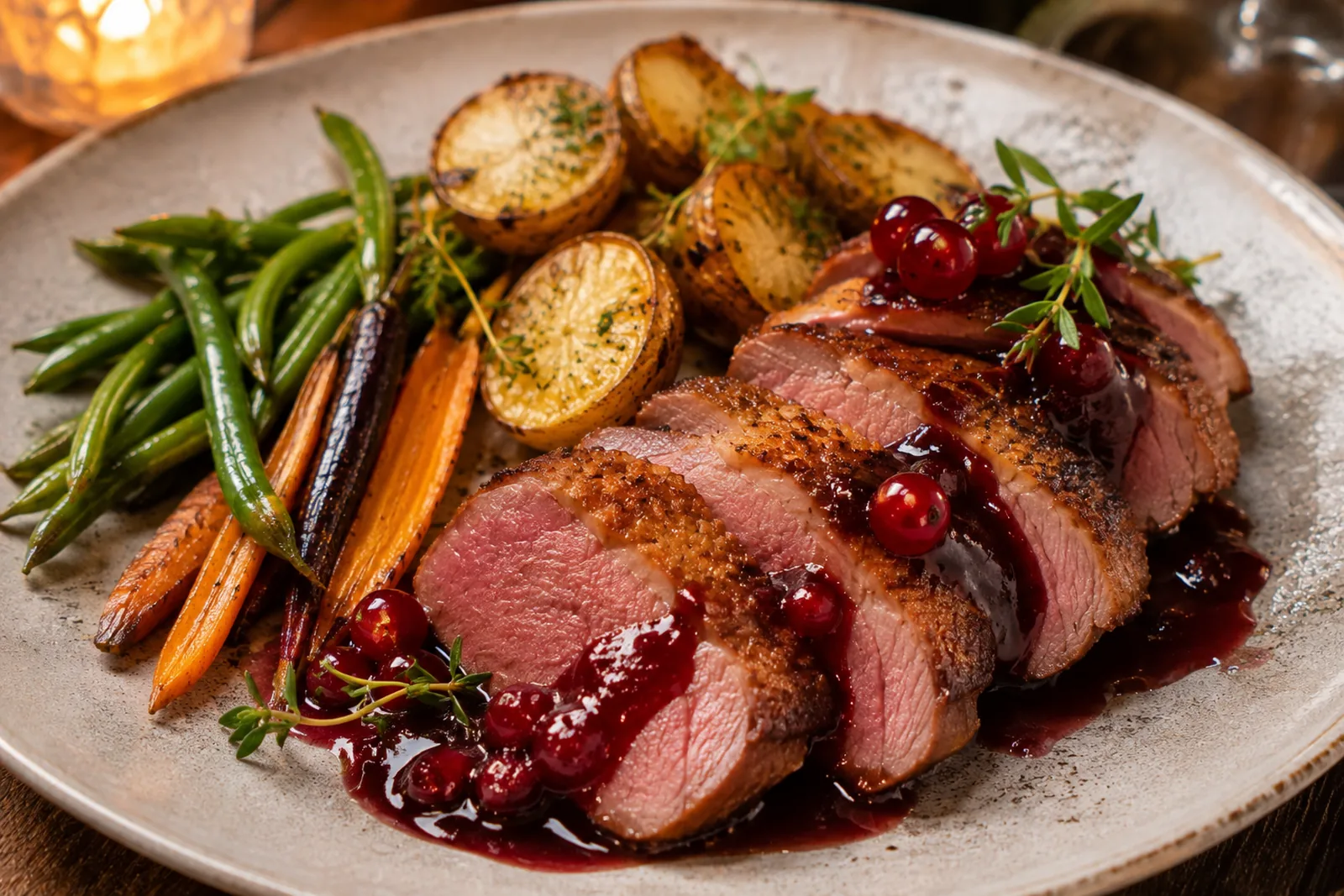
    Crispy skin, pink meat and a glossy sauce of cherries and red wine
    • 4 servings
    • Time: 30 min + 10 min resting (the sauce base can be made the day before)
    • Difficulty: Medium
    • 17 ingredients
    • 10 steps
    Sliced pink duck breast with golden, crispy skin on a dark plate, covered in glossy dark red cherry sauce and whole cherries.

    What makes duck breast tricky is that it seems easy. If you put it in a hot pan, the skin burns before the fat has had time to melt, and the meat underneath turns grey long before the skin is done. Three things save it: score the skin, start in a cold pan and cook with a thermometer. The cherry sauce is sweet and sour, dark and glossy, and most of it is made the day before. Cherries and duck belong together for the same reason as lingonberries and game: the acidity cuts through the fat.

    Method

    1. Dry and score. Pat the duck breasts dry with kitchen paper. Trim off any fat hanging over the edge of the meat. Score a criss-cross pattern in the skin, 5–8 millimetres apart. Cut through the skin and fat but not into the meat. It is the fat that should come out, not the meat juices.
    2. Salt. Salt the skin side generously and rub the salt into the cuts. Salt the meat side a little more lightly. If you have time, leave the breasts uncovered in the fridge, skin side up, for a few hours or overnight. The skin dries out and gets crispier.
    3. Take out the duck. Leave the breasts out for 20–30 minutes before cooking so they are not ice-cold in the middle. Preheat the oven to 175°C.
    4. Place in a cold pan. Lay the breasts skin side down in a cold, dry pan. No fat is needed. Turn the hob to medium heat.
    5. Fry the skin slowly. Let it sizzle for 8–12 minutes without moving the breasts. The fat renders out and the skin gets thinner and more golden. Pour the fat off into the jar a couple of times along the way so the skin fries rather than boils. Turn the heat down if it starts to smoke or brown too fast.
    6. Turn and sear the meat side. When the skin is deep golden and hard, turn the breasts and let the meat side colour for 1 minute.
    7. Into the oven. Turn the breasts back onto the skin side and put the pan in the oven. Insert the thermometer into the thickest part from the side. Take the breasts out when they read 54–56 degrees for pink. It takes 4–8 minutes depending on size. If you want the meat cooked through, see the safety section below.
    8. Leave to rest. Place the breasts skin side up on a rack or a warm plate, without foil so the skin does not soften. Let them rest for 8–10 minutes. The temperature rises a couple of degrees and the juices settle.
    9. Finish the sauce while the meat rests (see the next section).
    10. Slice and plate. Slice the breasts diagonally into 1-centimetre-thick slices, skin side up. Pour a little sauce onto the plate, lay the slices on top and a few cherries on the side. Do not pour sauce over the skin, or it loses its crunch.

    Have you made this recipe? Rate it

    Be the first to rate this recipe.

    More recipes to try

    All recipes →
    • Grilled piece of meat with mushrooms, onion and green sauce on a dark plate.

      Pork Fillet with Fried Oyster Mushroom, Celery Emulsion & Red Wine Sauce

      🍽️ 4 servings 🥕 7 ingredients 👣 6 steps

    • A large marble board with folded cured ham, bresaola, truffle salami, a whole brie, chunks of aged cheese, blinis with bleak roe, small dark grapes and champagne glasses beside it.

      Luxury charcuterie board for New Year's Eve – cured ham, truffle salami, comté and bleak roe on blinis

      🍽️ 8 people as a starter 🥕 18 ingredients 👣 8 steps

    • Crispy bacon rashers in long rows on baking paper in a roasting tin, with a pepper mill beside them.

      Bacon in the oven – crispy, flat and easy to cook for a crowd

      🍽️ 8 servings for brunch 🥕 5 ingredients 👣 8 steps

    • Juicy burger with cheese, vegetables and a sesame bun, surrounded by nature. 🔥 Over fire

      Wilderness burgers with lean meat – the perfect lunch at the fire pit over an open fire!

      🍽️ 4 servings 🥕 10 ingredients 👣 6 steps

    The cherry sauce in two stages

    The base, ideally the day before:

    • Finely chop the shallot and soften it in duck fat or butter in a small saucepan without letting it colour.
    • Add the red wine, thyme and cinnamon or star anise. Reduce until about half is left.
    • Add the stock, vinegar and honey. Reduce until about 2 dl is left. Strain the sauce if you want it completely smooth.
    • Let the base cool, then put it in the fridge with a lid on.

    Just before serving:

    • Heat the base. Add the cherries and simmer for 3–4 minutes, until they are warm and have released a little colour. Frozen cherries can go straight in.
    • If you want a thicker sauce, stir in the cornflour mixture and bring it to the boil.
    • Take the pan off the heat and whisk in the cold butter in pieces. The sauce turns glossy and a little rounder.
    • Pour in the juices from the duck's plate. Season with salt, pepper and more honey or vinegar. Sweet cherries need more vinegar, sour cherries more honey.

    Timeline for New Year's Eve

    New Year's Eve 2026 falls on a Thursday. Everything that takes time is done the day before, and in the evening only the cooking remains.

    • Wednesday 30 December: buy the duck breasts if they are not already in the freezer. Thaw frozen duck in the fridge, on a plate with a rim, for 24 hours. Make the sauce base and put it in the fridge.
    • Wednesday evening: score and salt the breasts and leave them uncovered in the fridge, on a rack over a plate, skin side up. Put them on the bottom shelf so nothing drips onto other food.
    • New Year's Eve afternoon: boil or peel the potatoes, chop the vegetables and get everything out for the sauce. Get out a jar for the fat.
    • 30 minutes before you eat: take out the breasts. Preheat the oven to 175°C.
    • 25 minutes before: put the breasts in a cold pan and start frying. Warm the sauce base over a low heat.
    • 10 minutes before: into the oven. Fry the potatoes in the fat you poured off.
    • While it rests: cherries and butter into the sauce.
    • At the table: slice and plate.

    Safety: pink duck and poultry

    Pink duck breast is served in restaurants all over Europe, but it is poultry, and poultry can carry campylobacter. That bacterium is one of the most common causes of food poisoning, and Livsmedelsverket (the Swedish Food Agency) advises that chicken should always be cooked through. There is no equivalent Swedish advice for duck.

    • Pink is not risk-free. At the 55–60 degrees a pink duck breast reaches, the number of bacteria falls, but not all of them die. Only at around 74 degrees in the centre is the risk gone.
    • Who should have it cooked through? Pregnant women, small children, older people and anyone with a weakened immune system should have poultry cooked through. Cook their pieces longer in the oven, until the thermometer reads about 74 degrees. The meat gets firmer and grey, but the skin is just as good. Small children also often prefer the duck cooked through and thinly sliced.
    • A separate breast for those who want it cooked through is easiest. Take out the pink ones first and leave the other in for a few more minutes.
    • Keep raw and cooked apart. Do not rinse the duck under the tap, as the splashes spread bacteria. Use a separate chopping board for raw poultry, and wash it, the knife and your hands before touching salad, bread or cooked food.
    • Wash the thermometer between readings if it has been in a raw breast.

    Leftovers should be cooled quickly and eaten within a couple of days. Cold, thinly sliced duck is very good in a sandwich with a little of the sauce on New Year's Day.

    Tips for crispy skin

    • Dry skin fries, wet skin boils. Dry thoroughly and ideally let the breasts dry in the fridge overnight.
    • Cold pan, medium heat. It feels wrong, but that is what gives the fat time to melt before the skin burns.
    • Pour off the fat. If the breasts sit in a pool of fat, they deep-fry instead of frying, and the heat reaches the meat too early.
    • Save the fat. Duck fat is one of the best things there is for frying potatoes. Pour it into a jar, keep it in the fridge and use it within a couple of weeks. It can also be frozen.
    • Rest without foil. Steam under the foil makes the skin chewy.

    What do you drink with them?

    Vary the duck

    • Orange instead of cherries: swap the cherries for the finely grated zest and juice of an orange, and let a segment or two simmer in at the end.
    • Port: swap half the red wine for port for a sweeter, darker sauce.

    Common mistakes

    • A hot pan from the start – the skin burns before the fat has melted, and it is chewy and thick underneath.
    • Scoring too deep – the juices run out and the meat dries.
    • Cooking without a thermometer – a few minutes too many turns a pink breast grey.
    • Leaving the fat in the pan – the skin deep-fries and the heat goes into the meat too fast.
    • Slicing straight away – the juices run onto the chopping board instead of staying in the meat.
    • Pouring the sauce over the skin – the crunchy part turns soft.

    Frequently asked questions

    What core temperature should duck breast have?

    Take the duck breasts out at 54–56 degrees for pink meat. The temperature rises a couple of degrees while it rests. Anyone who wants the poultry completely safe, such as pregnant women and small children, should have it cooked through to about 74 degrees.

    Why should duck breast go into a cold pan?

    So the fat under the skin has time to render out at a gentle pace. In a hot pan, the surface burns before the fat has melted, and the skin ends up chewy and thick instead of thin and crispy.

    Is it dangerous to eat pink duck?

    Poultry can carry campylobacter, and at a pink temperature not all bacteria die. The risk is small for healthy adults, but pregnant women, small children, older people and anyone with a weakened immune system should have the duck cooked through.

    Can you prepare duck breast the day before?

    Yes. Score and salt the breasts and leave them uncovered in the fridge overnight, and the skin will be drier and crispier. The sauce base can also be made the day before. The actual cooking is done just before you eat.

    Can you use frozen cherries in the sauce?

    Yes, frozen pitted cherries work well and can go straight into the hot sauce. Tinned cherries also work, but drain off the syrup and taste for sweetness, as they are often sweeter.

    How much duck breast do you need per person?

    Allow 175–200 grams of skin-on duck breast per person. One large breast of 350–400 grams serves two.

    More guides and recipes to read

    More for the New Year's Eve dinner

    The whole New Year's Eve menu

    Starters, mains and desserts you can prepare ahead – and a timeline for the whole of New Year's Eve.

    To the New Year's Eve menu

    Scallops in brown butter before the duck

    A small starter seared in two minutes in the same kitchen – light enough to leave room for the duck.

    To the starter

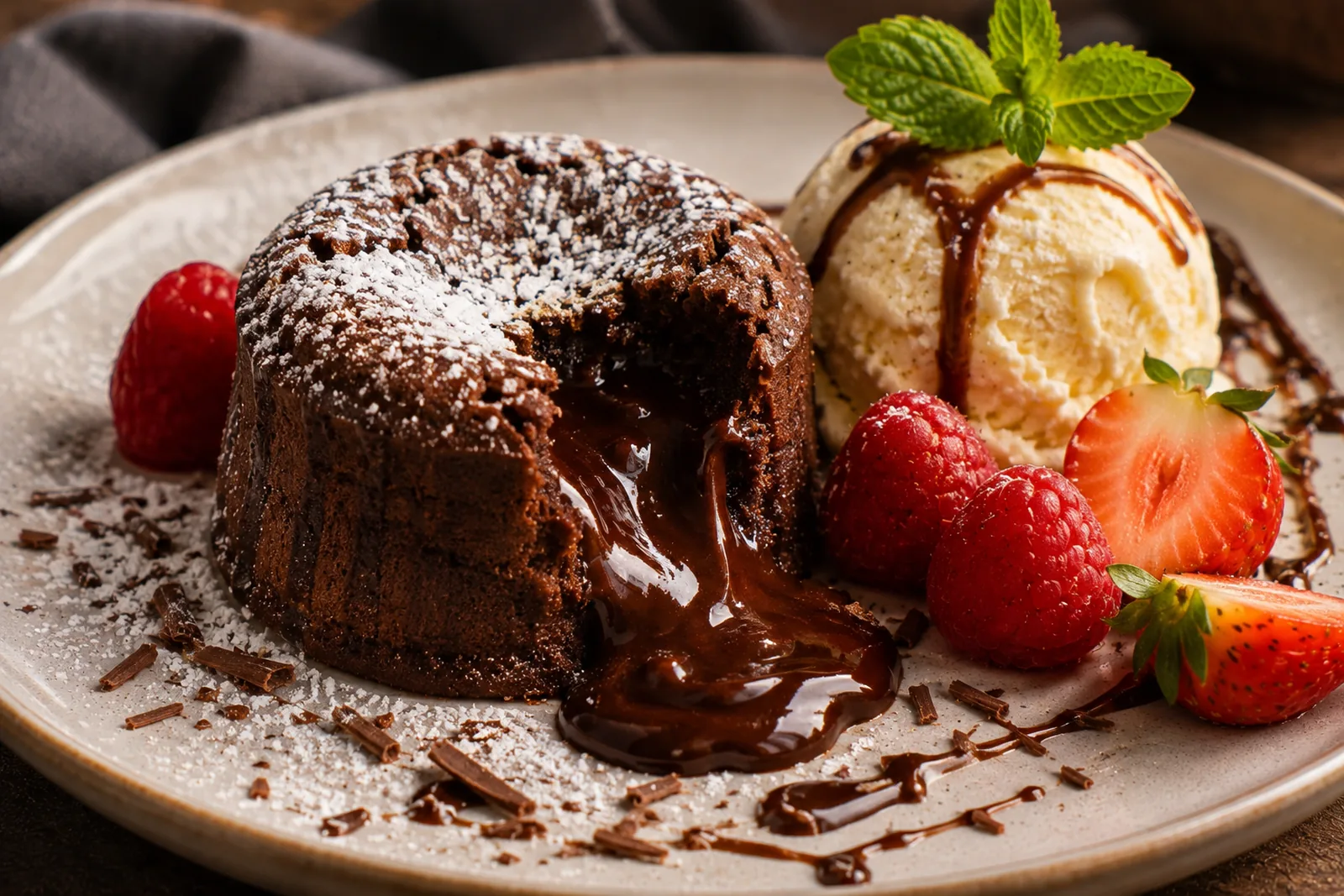
    Chocolate fondant for dessert

    The moulds are filled the day before and go into the oven once the main course has been eaten. Twelve minutes later the centre is molten.

    To the chocolate fondant