Popular searches

    Beef Wellington – pink fillet in puff pastry for New Year's Eve

    Pink fillet, dark mushrooms and flaky puff pastry – sliced at the table
    • 6 servings
    • Time: 2 hours 30 min + 1 hour in the fridge
    • Difficulty: Hard
    • 22 ingredients
    • 11 steps
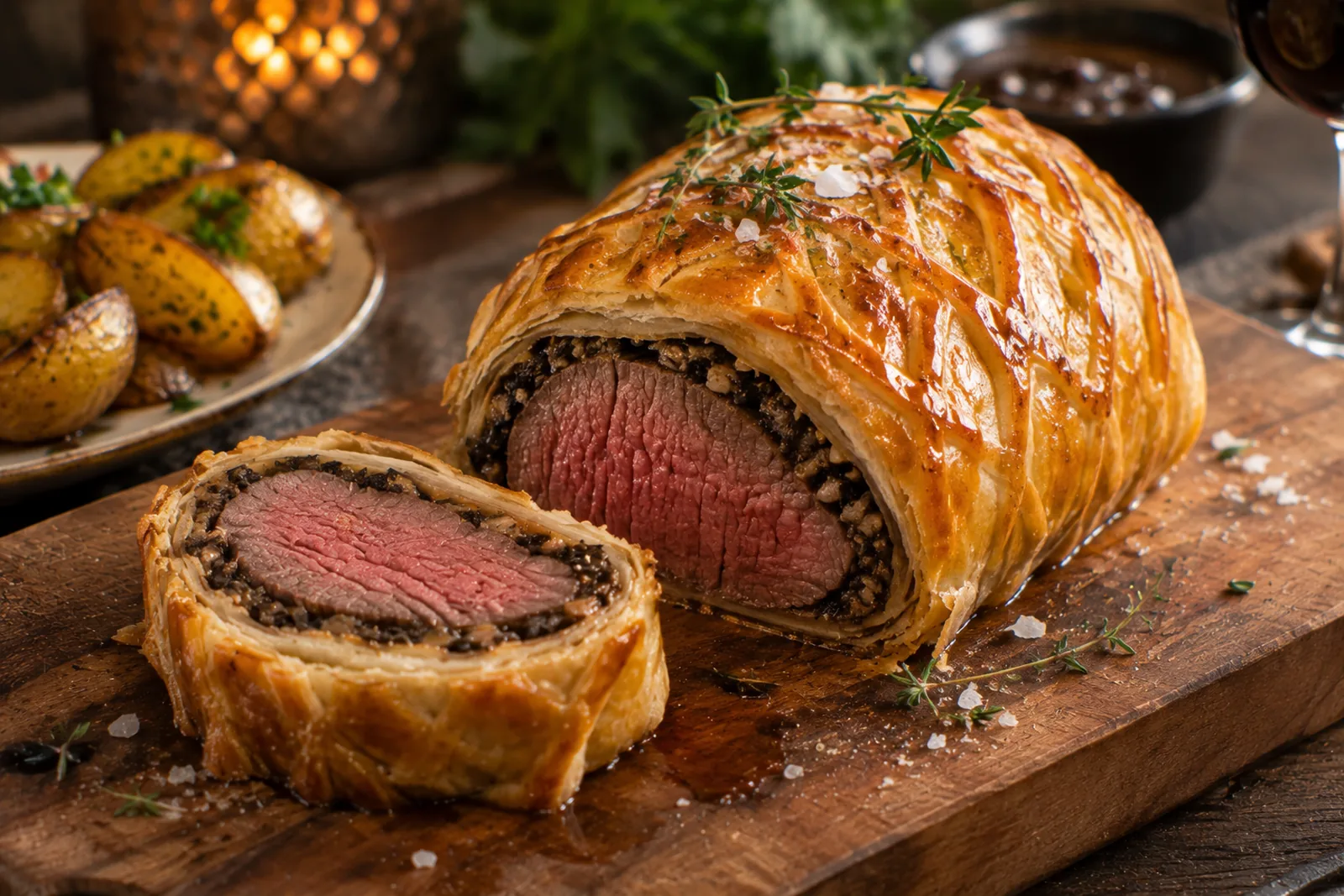
    Beef Wellington cut into thick slices on a chopping board, with pink meat surrounded by dark mushrooms, ham and golden, flaky puff pastry.

    Few dishes make such an impression when they are carried in as a Wellington. A golden, glossy loaf of puff pastry comes out of the oven, and when it is cut at the table the layers show: the flaky pastry, a thin band of ham, dark mushrooms and, in the middle, a pink beef fillet. It is a classic party dish, and it is harder than it looks. But the hard part is about order and patience, not technique.

    Core temperature and resting

    This is the most important part of the whole page. You cannot cut into a Wellington to check, so a meat thermometer is essential.

    • Take it out at 50–52°C in the centre of the fillet for pink meat. During resting the temperature rises by 4–6 degrees, as the pastry holds in the heat. The fillet then ends up around 55–57°C.
    • Take it out at 56–58°C if you want it more done, light pink. It then ends up around 60–63°C.
    • Rest for 15 minutes. Let the loaf stand on the chopping board before you cut it. Otherwise the juices run out and soak the pastry.
    • Insert the thermometer at an angle through the pastry, in the middle of the loaf, so the tip ends up in the centre of the fillet.

    Livsmedelsverket (the Swedish Food Agency) advises that whole cuts of beef be heated to at least 60–65°C, pink but not bloody, for anyone who wants to be safe from the parasite toxoplasma. This applies especially to anyone who is pregnant. More on that further down.

    Method

    1. Trim and sear the fillet. Cut away membranes and sinew. Fold under or cut off the thin tail so the fillet is of even thickness. Dry it and season with salt and pepper. Sear it all over in hot oil, about one minute per side. It should take on colour but not cook. Let it cool and then brush it with mustard.
    2. Chop the mushrooms. Finely chop the mushrooms, onion and garlic in the food processor or with a knife. It should be almost like gravel.
    3. Fry the duxelles dry. Fry the mushroom mixture in butter over medium-high heat. The mushrooms release a lot of liquid – let it boil off completely. Pour in the Madeira and reduce that too. Season with thyme, salt and pepper. The duxelles is ready when it has become a thick, dry mass that holds together, after 15–20 minutes. Let it cool completely.
    4. Assemble on cling film. Lay out two overlapping layers of cling film on the worktop. Lay the ham in a rectangle, with the slices slightly overlapping, big enough to go around the fillet. Spread the duxelles evenly over the ham.
    5. Roll. Put the fillet at the bottom edge of the ham. Lift the cling film and roll the ham and mushrooms tightly around the fillet. Twist the ends of the cling film like a sweet wrapper. Put the roll in the fridge for at least 30 minutes, ideally overnight.
    6. Wrap in puff pastry. Roll the puff pastry out a little larger if needed. Remove the cling film and put the fillet on the pastry. Brush the edges with egg and fold the pastry around the fillet. Let the seam end up underneath. Trim off excess pastry at the ends and fold them in.
    7. Chill again. Put the loaf on a tray with baking paper, seam side down. Brush with egg and milk. Put it in the fridge for 30 minutes, or overnight.
    8. Brush and decorate. Brush once more. Score a criss-cross pattern with the back of a knife without cutting through the pastry. Sprinkle over a little flaky salt.
    9. Bake. Set the oven to 200 degrees. Bake the loaf in the middle of the oven for 30–40 minutes, until the pastry is golden brown and the thermometer reads 50–52°C in the centre. If the pastry gets too dark before the meat is done, lay a piece of baking paper over it.
    10. Make the sauce in the meantime. Fry chopped shallot in a little butter, pour in the wine and reduce by half. Pour in the stock and boil until about half remains. Season and whisk in a knob of cold butter just before serving.
    11. Rest and cut. Let the loaf rest for 15 minutes. Cut it into slices of 2–3 cm with a long knife in sawing movements.

    Have you made this recipe? Rate it

    Be the first to rate this recipe.

    More recipes to try

    All recipes →
    • A large marble board with folded cured ham, bresaola, truffle salami, a whole brie, chunks of aged cheese, blinis with bleak roe, small dark grapes and champagne glasses beside it.

      Luxury charcuterie board for New Year's Eve – cured ham, truffle salami, comté and bleak roe on blinis

      🍽️ 8 people as a starter 🥕 18 ingredients 👣 8 steps

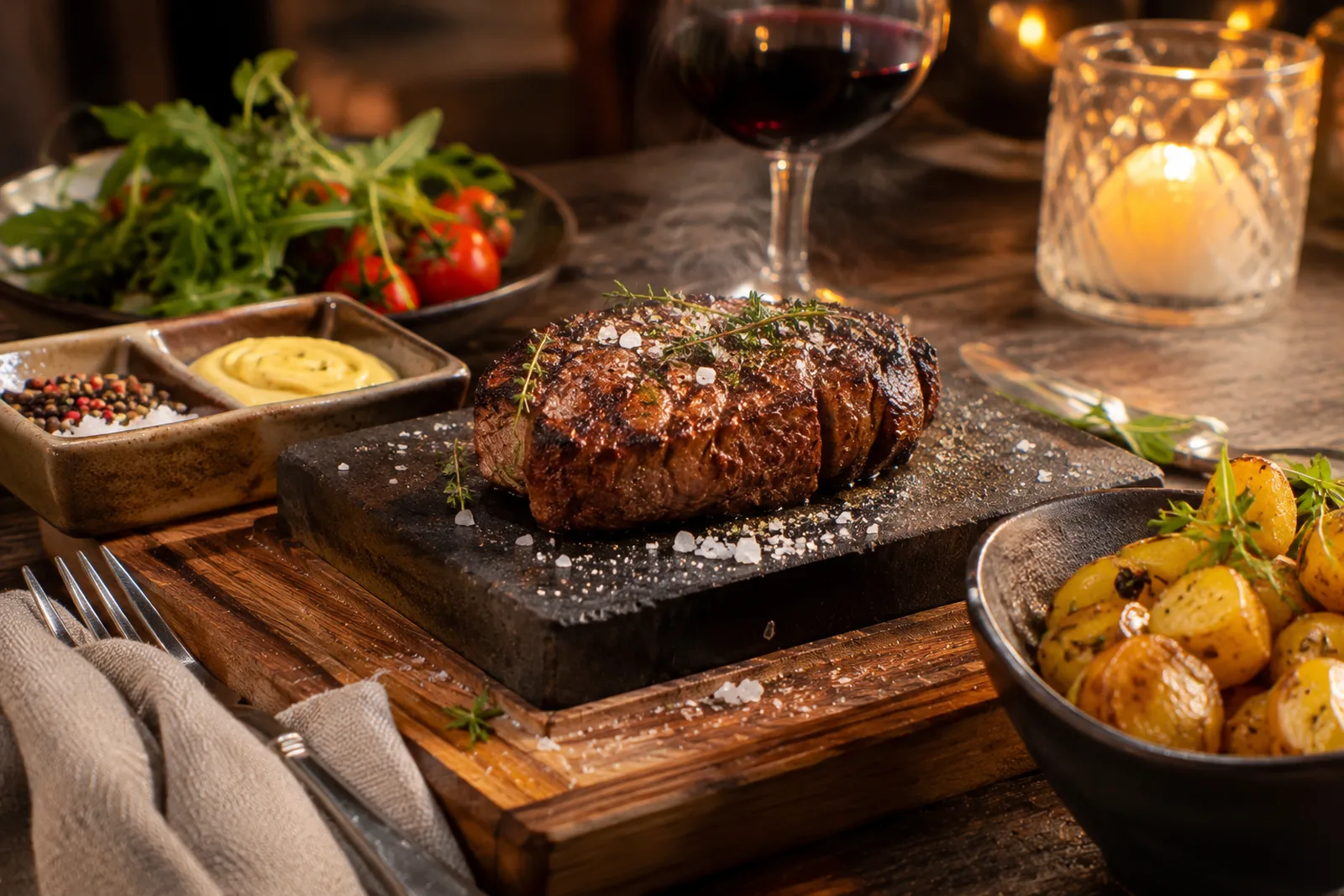
    • Sizzling slices of beef fillet and scampi on a hot black stone on a wooden base, surrounded by bowls of béarnaise, chimichurri and potato wedges.

      Hot stone grill at the table – everyone cooks their own piece on New Year's Eve

      🍽️ 4 servings 🥕 28 ingredients 👣 7 steps

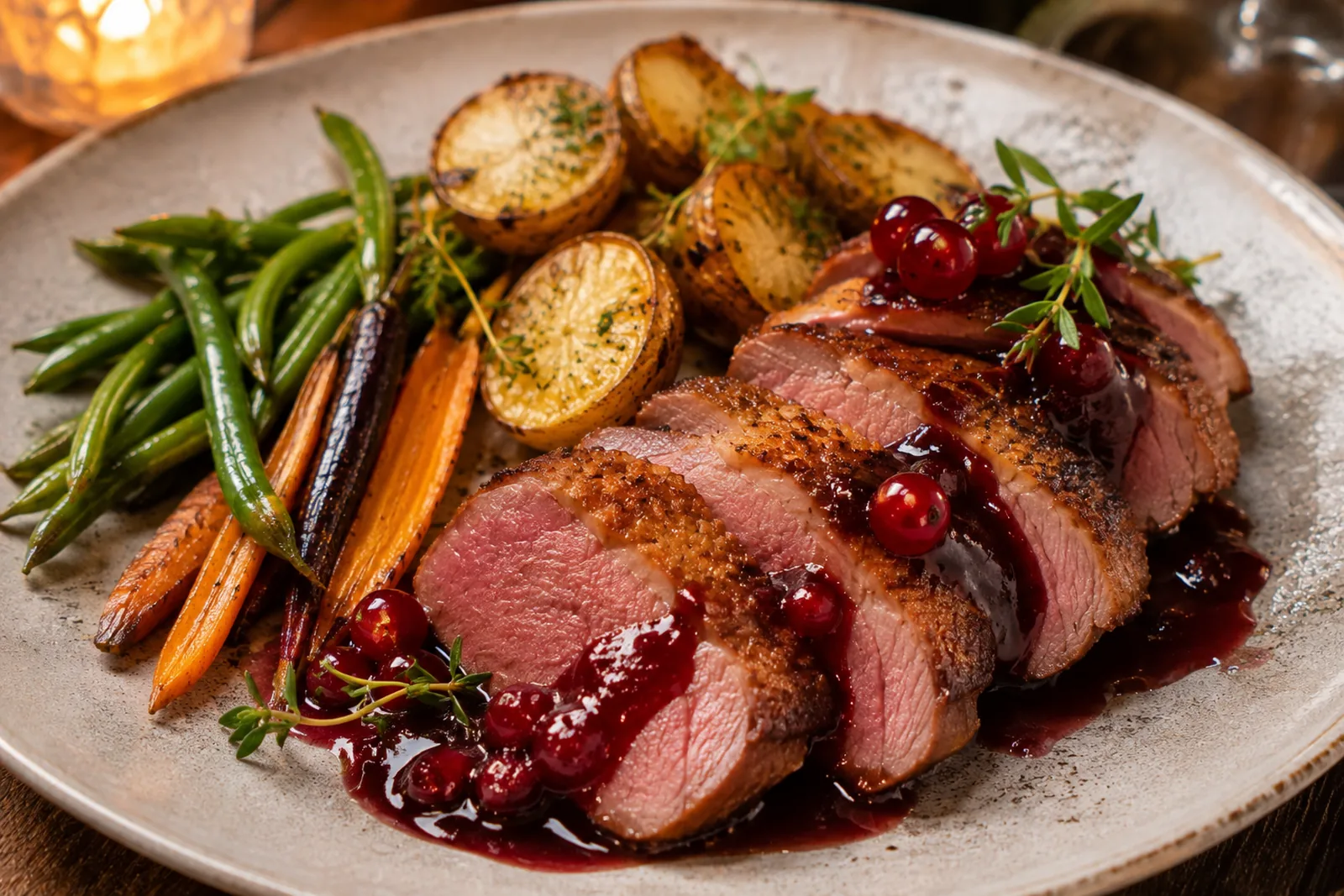
    • Sliced pink duck breast with golden, crispy skin on a dark plate, covered in glossy dark red cherry sauce and whole cherries.

      Duck breast with cherry and red wine sauce – crispy skin and pink meat for New Year's Eve

      🍽️ 4 servings 🥕 17 ingredients 👣 10 steps

    • Twelve small golden tarts with fluted shortcrust edges, some with spinach and crumbled feta and some with ham and cheese, arranged on a rack on a wooden table.

      Mini quiches in a muffin tin – ham and cheese, Västerbotten cheese, and spinach with feta

      🍽️ 12 mini quiches, 6–12 people 🥕 17 ingredients 👣 10 steps

    Timeline for New Year's Eve

    New Year's Eve 2026 falls on a Thursday.

    • Tuesday 29 December: buy the fillet. Ask for a centre cut of even thickness, so you do not have to trim off the tail.
    • Wednesday 30 December: sear the fillet, make the duxelles and roll the fillet up in ham and mushrooms. Leave it in the cling film in the fridge overnight. The red wine sauce can be reduced, without the butter, and refrigerated.
    • New Year's Eve, 16:00: wrap the fillet in puff pastry, brush and refrigerate. Get the potatoes and vegetables ready to reheat.
    • 19:00 – brush and bake the loaf.
    • 19.30–19.40: take the loaf out at the right temperature and let it rest. Reheat the sauce and whisk in the butter.
    • 19.50: carve at the table.

    Tips for a crisp pastry base

    • Dry duxelles. Any liquid left in the mushrooms ends up in the pastry. Fry it until it is really dry.
    • The ham is a barrier. The ham lies between the mushrooms and the pastry and absorbs moisture. Don't skip it.
    • Cold, cold, cold. Chill the fillet after searing, after rolling and after the pastry has gone on. Cold puff pastry rises up flaky in the oven.
    • Hot tray. Heat the tray in the oven and put the loaf on it with the baking paper. The base starts baking straight away.
    • All-butter puff pastry is tastier and flakier than pastry made with margarine.

    How much per person?

    Allow about 150 grams of beef fillet per adult when Wellington is the main course, so 1 kilo for six people. The thin tail, which is cut off, can be fried as minute steaks for New Year's Day lunch. A whole fillet of 1.5–2 kilos is enough for 10–12 people, but is harder to get evenly pink. Then two smaller loaves are often easier.

    Safety and pregnancy

    • Pink meat and toxoplasma. Livsmedelsverket (the Swedish Food Agency) advises pregnant women to avoid bloody meat because of the parasite toxoplasma. Meat heated to at least 60–65°C, pink without blood, is fine. Anyone who is pregnant can have a slice from the ends, which are more well done, or you can take the whole loaf out at 58°C.
    • The air-dried ham bakes inside the pastry and gets warm, but it does not always reach as high a temperature as the fillet. Anyone who is pregnant can have a piece without ham, or the ham can be frozen for three days before you use it. That kills toxoplasma.
    • Raw and cooked. Use a clean chopping board and knife for the finished loaf, not the same ones as for the raw fillet.
    • Leftovers: put leftovers in the fridge within a couple of hours and eat them within a couple of days. The pastry goes soft, but the meat is delicious cold in a sandwich.
    • Allergens: gluten, milk and egg in the pastry and glaze, mustard and possibly celery in the stock.
    • Alcohol in the duxelles and sauce mostly boils off, but not completely. If you want to be completely sure, for example for children, swap the Madeira for stock and the wine in the sauce for more stock and a splash of balsamic vinegar.

    Wellington with children

    Wellington is a dish where children can help, but where the sharp knife and the hot pan are adult jobs.

    • wash and pick the thyme
    • lay out the ham slices in a rectangle on the cling film
    • brush the pastry with egg
    • score the criss-cross pattern with a butter knife
    • cut stars from pastry scraps and put them on the loaf

    Vary the Wellington

    • Small Wellingtons: cut the fillet into four or six steaks and make a parcel of each. They bake in about 20 minutes.
    • With a pancake: a thin, unsweetened pancake between the ham and the pastry absorbs even more moisture.
    • With truffle: stir a teaspoon of truffle oil or a little chopped truffle into the duxelles.

    Common mistakes

    • Wet duxelles – the pastry turns doughy at the base. Fry the mushrooms until dry.
    • Putting a warm fillet on the pastry – the butter in the pastry melts and the pastry turns chewy. Chill the fillet first.
    • Guessing instead of measuring – you cannot cut into a Wellington to check.
    • Cutting straight from the oven – the juices run out. Rest for 15 minutes.
    • Unevenly thick fillet – the tail is overcooked before the middle is done. Fold under or cut off the tail.

    Frequently asked questions

    What internal temperature should beef Wellington have?

    Take it out at 50–52°C in the centre for pink meat. The temperature rises by 4–6 degrees during resting and ends up around 55–57°C. For more well done, take it out at 56–58°C.

    Can you make Wellington the day before?

    Yes. Sear the fillet, make the duxelles and roll the fillet up in ham and mushrooms the day before. Wrap it in puff pastry on the day and bake it just before serving.

    How long should Wellington rest?

    For about 15 minutes. That gives the juices time to settle, and the temperature evens out through the whole fillet.

    How do you stop the puff pastry going soggy?

    Fry the duxelles completely dry, wrap the fillet in ham before the pastry and keep everything cold between the steps. Put the loaf on a hot tray in the oven.

    How much beef fillet do you need for Wellington?

    About 150 grams per adult. 1 kilo is enough for six people.

    Can pregnant women eat beef Wellington?

    Livsmedelsverket (the Swedish Food Agency) advises pregnant women to eat meat that is pink but not bloody, heated to at least 60–65°C. Give anyone who is pregnant a slice from the ends, or take the whole loaf out at 58°C.

    More guides and recipes to read

    More for the New Year's Eve dinner

    The whole New Year's Eve menu

    A starter and dessert that go with Wellington – and a plan for the whole of New Year's Eve.

    To the New Year's Eve menu

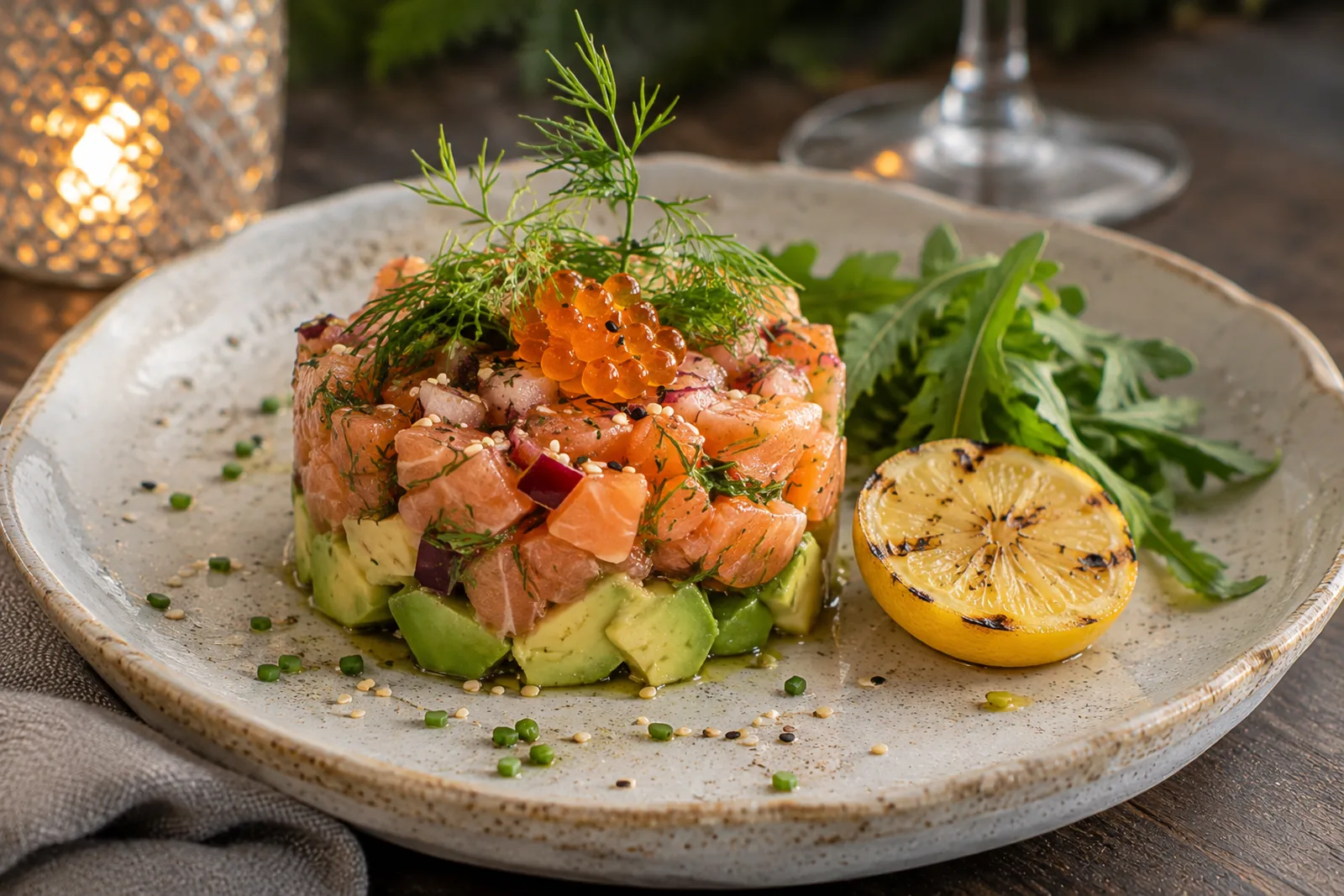
    Salmon tartare before the Wellington

    A cold, tangy starter made in half an hour that does not need the oven while the fillet bakes.

    To the starter

    Chocolate fondant for dessert

    Small cakes with a molten centre that can stand ready in the fridge and bake while you eat.

    Get the dessert recipe