Popular searches

    Hot stone grill at the table – everyone cooks their own piece on New Year's Eve

    A hot stone, thin slices of meat and scampi – everyone cooks for themselves
    • 4 servings
    • Time: 1 hour 30 min (of which 1 hour is the stone in the oven)
    • Difficulty: Easy
    • 28 ingredients
    • 7 steps
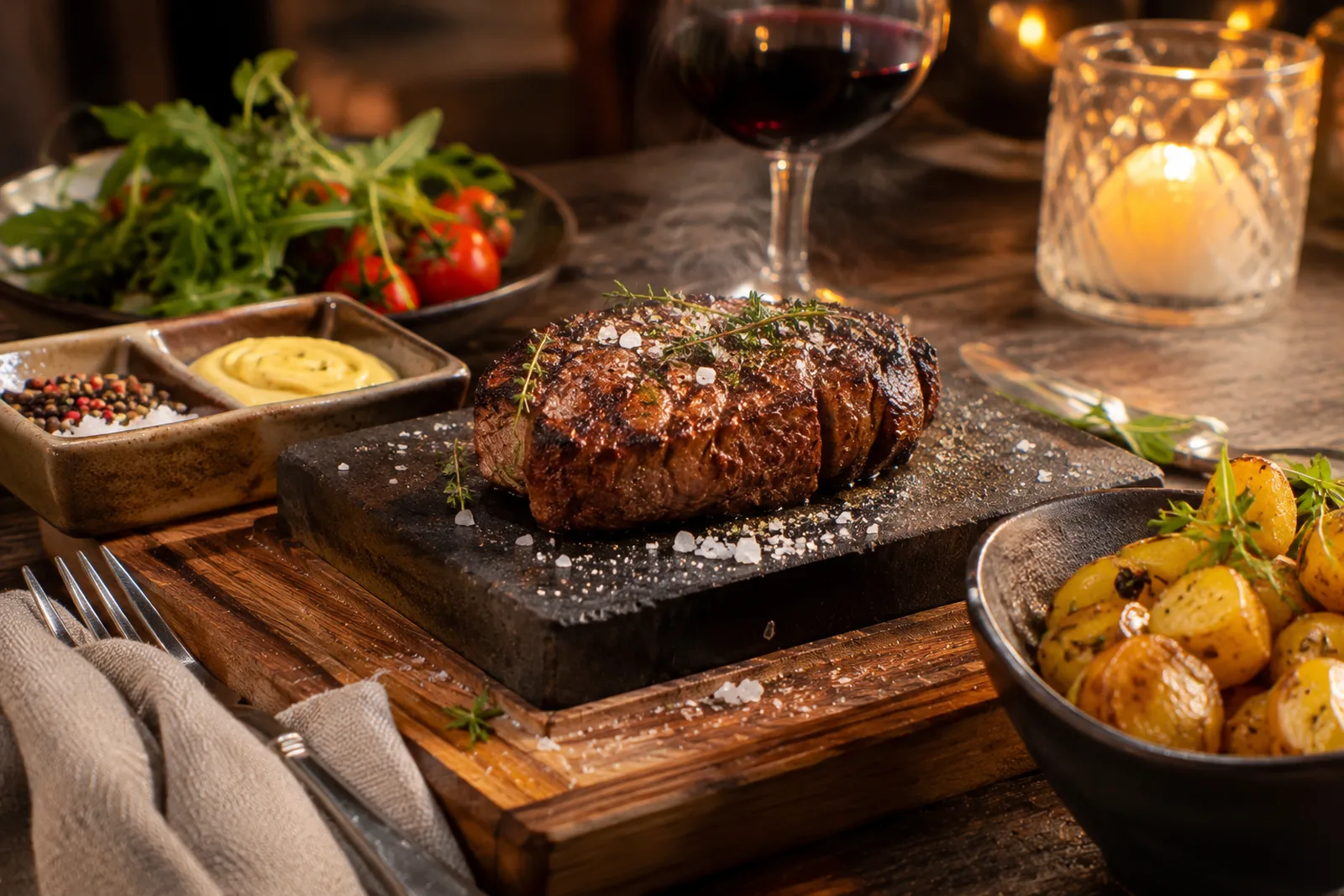
    Sizzling slices of beef fillet and scampi on a hot black stone on a wooden base, surrounded by bowls of béarnaise, chimichurri and potato wedges.

    In the middle of the table sits a black stone, sizzling. Around it are bowls of thinly sliced beef fillet, pink game fillet and scampi, and a few bowls of sauces. Everyone puts their piece on the stone, turns it after a minute and eats it when it's exactly how they like it. Nobody has to stand in the kitchen while the others sit, and nobody gets a steak that's too rare or overdone. It takes time, and that's the point. A New Year's dinner on a hot stone becomes long and chatty in the best possible way.

    Which stone?

    • Lava stones or stone cooking slabs are sold for exactly this. They're dense, handle sudden temperature changes better than ordinary stone and often come with a matching wooden or metal base.
    • Granite or soapstone also works, if it's made to be heated.
    • One stone per 3–4 people. If there are eight of you, you need two stones, or one large slab in the middle.

    Method

    1. Heat the stone slowly. Put the dry stone, at room temperature, in a cold oven and turn the oven to its highest setting, ideally 250–275°C. Let the stone heat for at least 45 minutes, ideally an hour, after the oven has reached full temperature. It should get as hot as the oven.
    2. Slice the meat. Put the beef fillet and game fillet in the freezer for 20 minutes to make them easier to slice. Cut them into slices about a centimetre thick, across the grain. Arrange them on a platter, cover with clingfilm and put in the fridge. Pat the scampi dry with kitchen roll and put it on its own platter.
    3. Make the chimichurri. Finely chop the parsley, oregano, garlic and chilli, or blitz them coarsely. Stir in the vinegar, oil and salt. Leave it for at least half an hour – the flavour becomes rounder.
    4. Make the garlic butter. Crush the garlic and mix it with the butter, parsley, lemon and salt. Put the butter in a small bowl.
    5. Make the béarnaise. Boil the vinegar, water, chopped shallot and dried tarragon until about half remains. Strain. Melt the butter and let it cool slightly. Whisk the egg yolks with the reduction in a bowl over a pan of simmering water until it thickens and turns creamy, roughly like softly whipped cream. Take the bowl off the heat and whisk in the melted butter, first drop by drop and then in a thin stream. Stir in the fresh tarragon, salt and white pepper. Keep the sauce lukewarm, for example in a vacuum flask.
    6. Carry in the stone. Put the base on the table first. Lift the stone out of the oven with oven gloves and set it on the base. Brush it with a little oil and sprinkle over sea salt flakes.
    7. Cook at the table. Put one slice at a time on the stone. Beef fillet and game need about a minute per side for pink. The scampi is done when it has turned pink and opaque all the way through, after about one to two minutes per side. Season with salt and pepper on the stone and eat with the sauces.

    Have you made this recipe? Rate it

    Be the first to rate this recipe.

    More recipes to try

    All recipes →
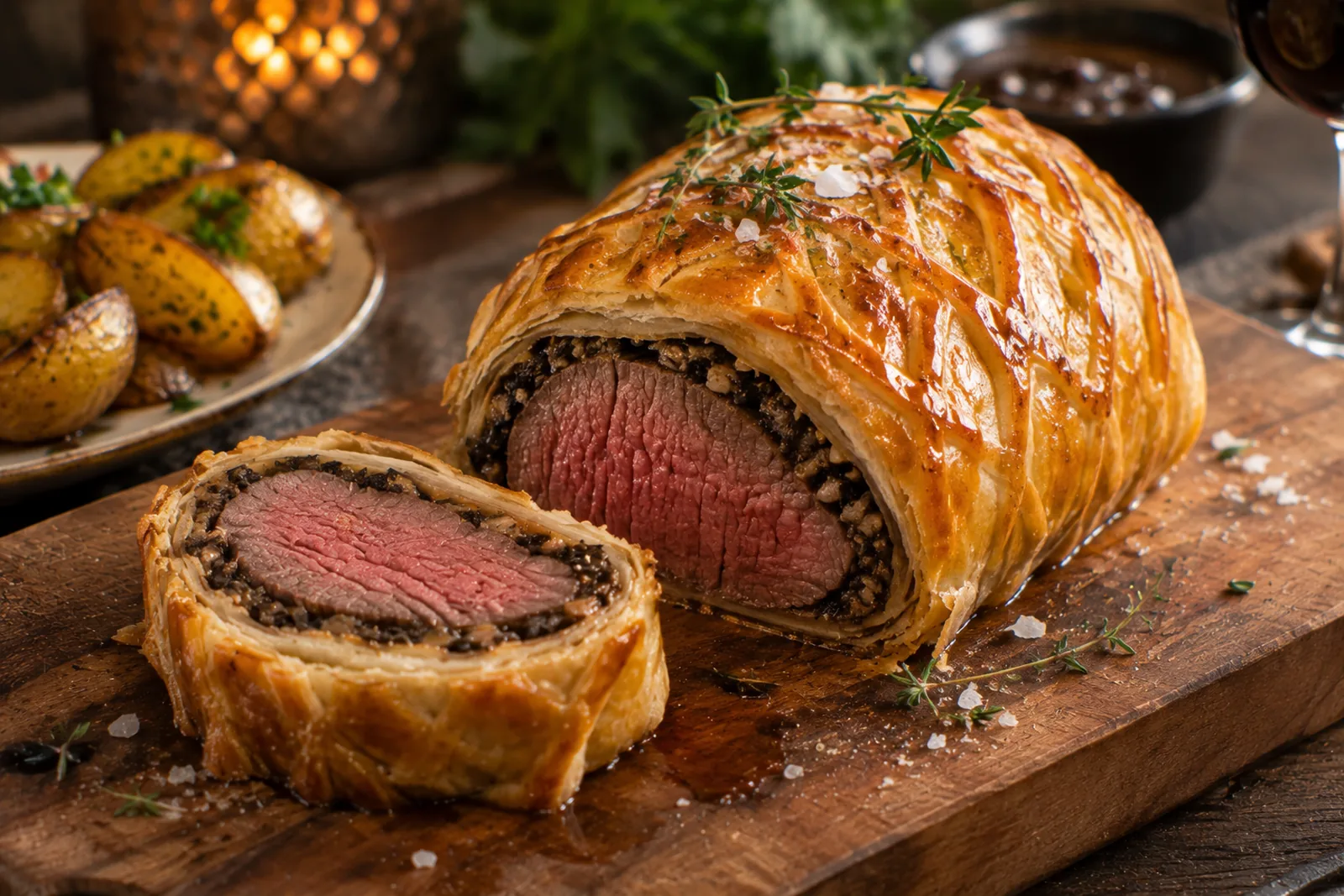
    • Beef Wellington cut into thick slices on a chopping board, with pink meat surrounded by dark mushrooms, ham and golden, flaky puff pastry.

      Beef Wellington – pink fillet in puff pastry for New Year's Eve

      🍽️ 6 servings 🥕 22 ingredients 👣 11 steps

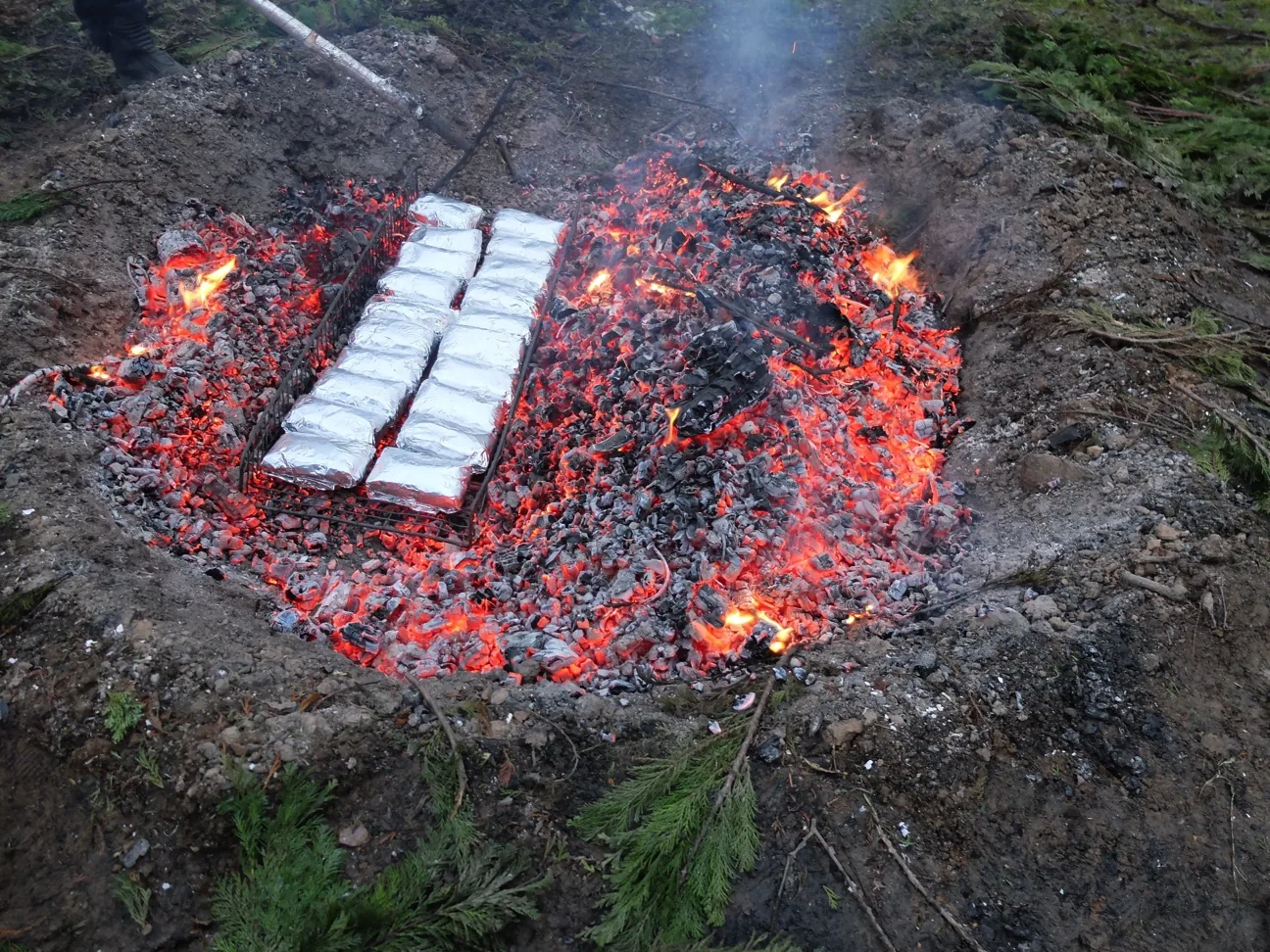
    • Two rows of elongated foil parcels in a wire basket lie in a large bed of red embers in a pit in the ground, with the odd flame at the edge.

      Hajkbomb – the camp's own dinner in a ball of foil

      🍽️ 4 servings 🥕 11 ingredients 👣 12 steps

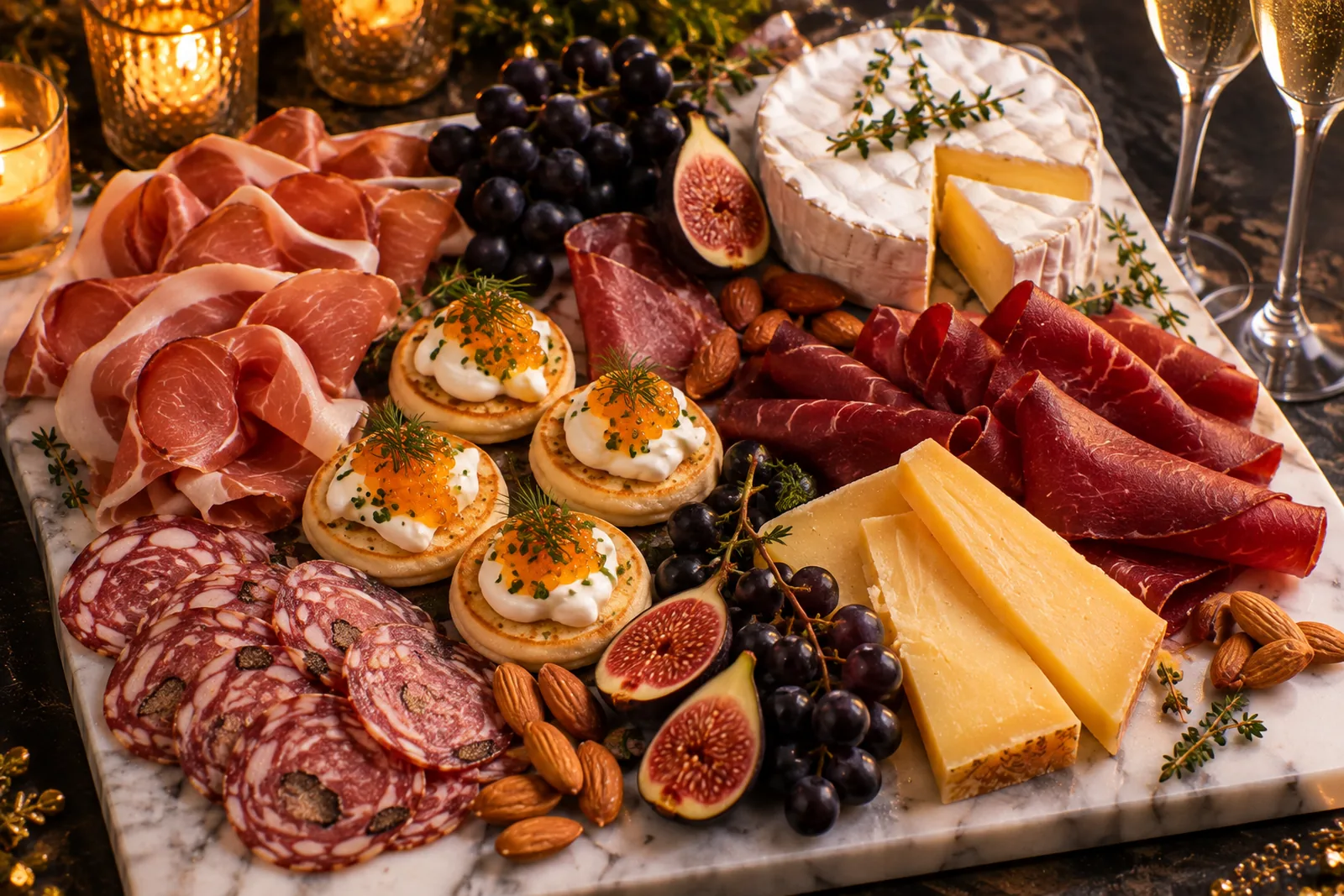
    • A large marble board with folded cured ham, bresaola, truffle salami, a whole brie, chunks of aged cheese, blinis with bleak roe, small dark grapes and champagne glasses beside it.

      Luxury charcuterie board for New Year's Eve – cured ham, truffle salami, comté and bleak roe on blinis

      🍽️ 8 people as a starter 🥕 18 ingredients 👣 8 steps

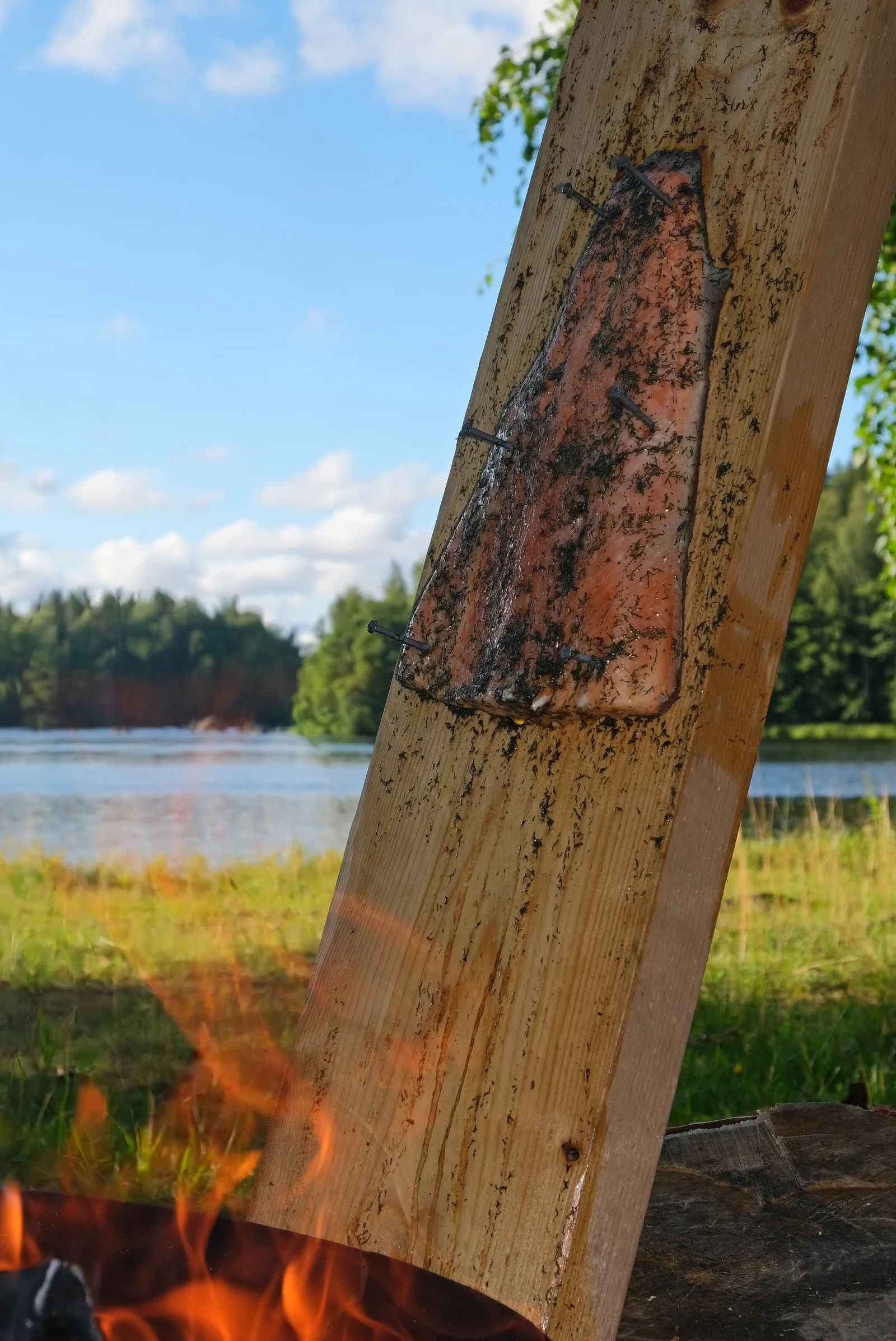
    • A side of salmon with dill is nailed to a pale, untreated board leaning close to the flames of a fire by a lake on a summer's day. 🔥 Over fire

      Flame-grilled salmon – a whole side of salmon on a plank by the fire

      🍽️ 6 servings 🥕 9 ingredients 👣 12 steps

    How much per person?

    Allow 200–250 grams of meat and seafood per adult when the hot stone is the main course. With three kinds, that's about 75 grams of each. Children eat less, often 100 grams, and usually mostly of one kind. The quantities above serve four adults who are also having a starter and dessert.

    Timeline for New Year's Eve

    New Year's Eve 2026 falls on a Thursday. Hot stone dining is one of those New Year's dinners where almost nothing needs doing once the guests have arrived.

    • Tuesday 29 December: buy the meat and scampi. Put frozen scampi in the fridge to thaw for a day before New Year's Eve.
    • Wednesday 30 December: make the garlic butter and put it in the fridge. It keeps for several days.
    • New Year's Eve, 3–4 pm (15–16): make the chimichurri. Peel the potatoes and cut them into wedges. Cut the salad and vegetables.
    • 5 pm (17): slice the meat and arrange it, cover and put in the fridge. Put the stone in a cold oven and turn on the heat.
    • 5.30 pm (17.30): take out the garlic butter so it softens. Roast the potatoes on a rack above the stone, or in a separate oven if you have two.
    • 6 pm (18): make the béarnaise and pour it into a preheated vacuum flask.
    • 6.15 pm (18.15): carry in the stone. The meat comes out of the fridge just before.

    Safety with the hot stone

    The stone that cracks

    • Always heat it in a cold oven. The stone and the oven heat up together. A cold stone in a hot oven can crack.
    • The stone must be completely dry. If it has been washed, let it dry for a day. Moisture inside the stone turns to steam and can crack it.
    • No cold water on a hot stone. Let the stone cool on its base for several hours before washing it.
    • If you see a crack, don't use the stone again.

    Heat and the table

    • The stone is 250°C. It must always sit on its base, never directly on the table, a tablecloth or a glass top.
    • Keep it central. Place the stone so that nobody has to reach over it, and not near the edge of the table.
    • Never lift the stone once you've started eating. It stays hot for several hours afterwards. Leave it where it is until everyone has left the table.
    • No fire or embers indoors. Heat the stone in the oven, never with charcoal, embers or a gas burner at the table. Charcoal and embers indoors produce carbon monoxide, and carbon monoxide is dangerous and has no smell.

    Ventilation

    • Frying meat produces smoke and fumes, especially fat and marinades. Turn on the cooker hood, open a window a crack and choose lean meat. Wipe most of the oil off the meat before it goes on the stone.
    • Don't put too much on the stone at once. It spits less and the stone doesn't lose its heat as quickly.

    Raw and cooked

    • Two forks per person. One for putting the raw food on the stone and one for eating with. Coloured forks or a little label make it easy.
    • Scampi and meat on separate platters, and thaw the scampi in the fridge, never on the worktop.
    • Pink meat is fine. Livsmedelsverket (the Swedish Food Agency) advises that whole cuts of beef and game are heated to at least 60–65°C, so they're pink but not bloody. Anyone who is pregnant should avoid rare meat because of the toxoplasma parasite.
    • Wild boar isn't suitable. Wild boar meat has to be cooked through, so it doesn't belong on a stone where everyone cooks their own. Choose red deer, roe deer, elk or reindeer.
    • The béarnaise is made with egg yolks that are only lightly heated. Choose eggs from Sweden, Finland, Norway or Denmark, where salmonella in eggs is very rare. Anyone who is pregnant or has a weakened immune system can have chimichurri or garlic butter instead.

    Hot stone dining with children

    Children often think the hot stone is the best part of the whole New Year's Eve. But the stone is scorching hot, and children's arms are short.

    • Children under about ten get to point to the piece they want, and an adult cooks it. They can add their own salt and sauce.
    • Older children can cook for themselves with a long fork or tongs, with an adult beside them.
    • Seat the children on the side of the table furthest from the stone, and never where they need to stand up and lean forward.
    • Small pieces, such as little chunks of chicken that need cooking through or pieces of sausage, aren't suitable for the stone. Give the children beef fillet or scampi, which cook quickly.

    Tips for the best hot stone evening

    • Thin slices. A centimetre is about right. Thicker meat burns on the outside and stays cold inside before the stone has had time to heat it.
    • Meat at room temperature cooks more evenly, but it shouldn't sit out for long. Take it out just before the stone is carried in.
    • Salt on the stone stops the meat sticking as easily and gives a salty crust.
    • Scrape in between. If the stone gets sticky from the scampi and meat, scrape it clean with a spatula.
    • Need more heat? Swap stones, or put it in the oven for 15 minutes while you eat the starter.

    Vary the hot stone

    • With fish: firm fish such as tuna, swordfish or salmon in thick pieces work too. Salmon that's to be pink in the middle should be farmed.
    • Vegetarian: halloumi, mushrooms, courgette and asparagus are lovely on the stone.

    Common mistakes

    • Putting a cold stone in a hot oven – it can crack.
    • Thick pieces – the meat doesn't get warm in the middle before the stone has cooled.
    • One fork for everything – raw meat should never reach your mouth.
    • Putting the stone directly on the table – it burns both the tabletop and the cloth.
    • Too much oil – it smokes and spits.
    • Wild boar on the stone – it must be cooked through.

    Frequently asked questions

    How hot should a cooking stone be?

    About 250–300°C. An ordinary home oven reaches 250–275°C, and that's plenty. Heat the stone for at least 45 minutes after the oven has reached full temperature.

    How long does the stone stay hot?

    About 20–30 minutes for cooking, depending on the size of the stone. Ideally have two stones and let one heat while you use the other.

    Why did my cooking stone crack?

    Usually because it was heated too quickly, was damp or got cold water on it while it was hot. Put the dry stone in a cold oven and let it cool completely before washing.

    Which meat is suitable for a cooking stone?

    Tender meat that's good pink: beef fillet, sirloin, red deer, roe deer, elk or reindeer fillet. Scampi and king prawns work well too. Wild boar, chicken and mince have to be cooked through and aren't suitable.

    Can children cook on the stone themselves?

    Older children can cook for themselves with a long fork and an adult beside them. Younger children point to their piece, and an adult cooks it.

    Can you make the béarnaise in advance?

    Yes, an hour or two ahead. Pour it into a preheated vacuum flask and it stays warm without splitting. Don't make it the day before.

    More guides and recipes to read

    More for the New Year's Eve dinner

    The whole New Year's Eve menu

    Starters and desserts that go before and after the hot stone – and what can be done the day before.

    To the New Year's Eve menu

    The same idea over an open fire

    A flat stone in the embers or a plank by the fire – how to cook on stone outdoors when spring comes round again.

    To the stone by the fire

    New Year at home with the children

    A dinner where everyone helps cook, games before midnight and how to keep the evening calm.

    For New Year's Eve with children