
Short answer
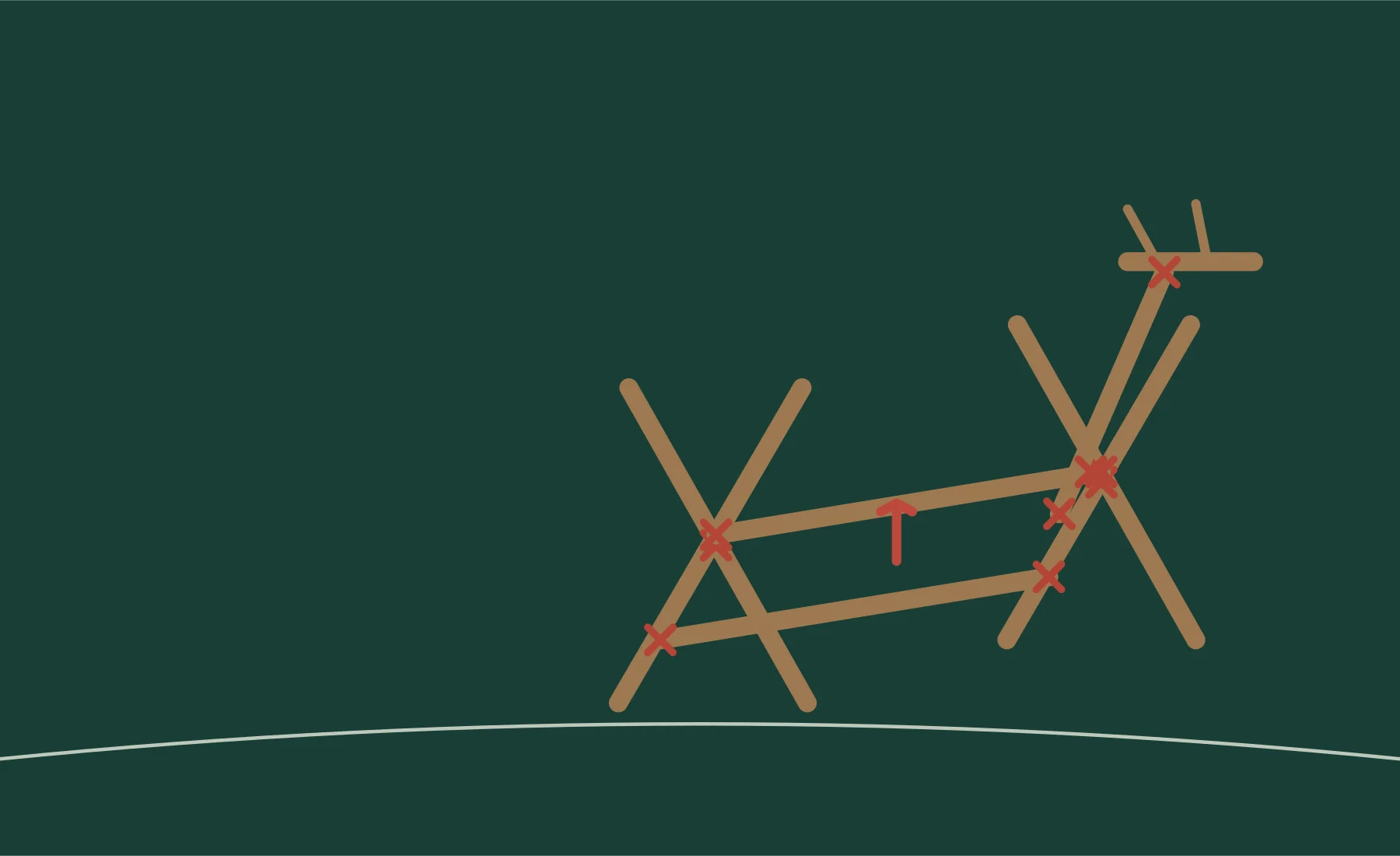
Make two pairs of legs from crossed sticks and bind them together with a back stick. Lay a second stick along the underside as a brace and attach a neck and a small head at the front. Start with a tabletop model of about 25 cm; check that the frame stands steadily before you decorate it with yarn.
What you need
- Four straight leg sticks, about 20 cm
- Two straight sticks, about 25 cm, for the back and the brace
- A neck stick of about 12 cm and a head stick of about 8 cm
- Two short horn sticks, optional
- Thin, strong string, yarn, scissors and a ruler
- Pruning shears or a small saw, used by an adult
Step by step
-

1. Lay out four legs of equal length, two body sticks, and the neck and head. Use dry sticks and trim off any sharp ends.
-
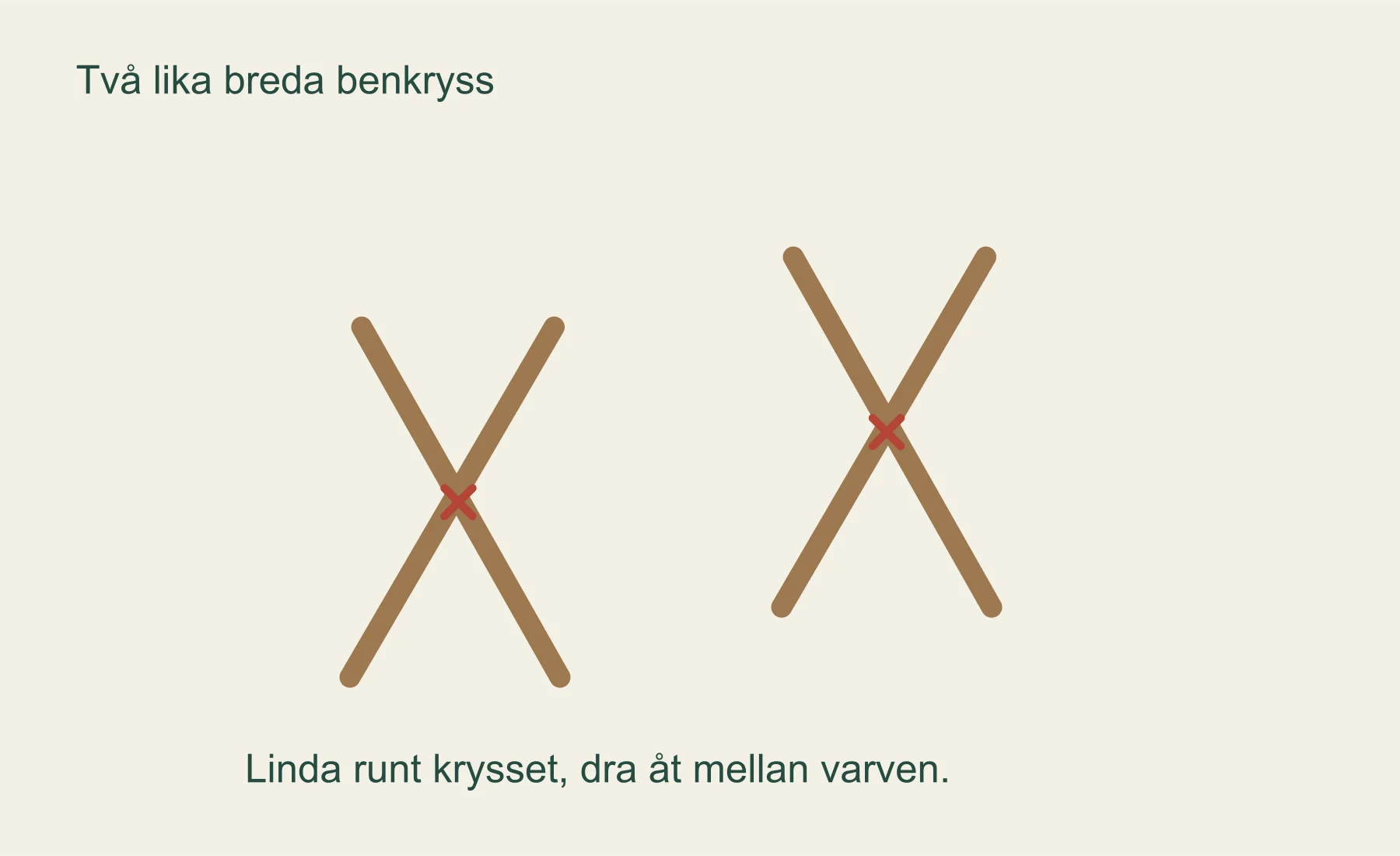
2. Cross two leg sticks so they form an X with short ends above the crossing. Wrap around the crossing and pull tight between the turns. Make an identical pair of legs.
-

3. Stand the pairs of legs one behind the other. Lay the back stick in the upper forks and bind it to both pairs of legs. Tie the brace along one side, lower down between the pairs of legs.
-

4. Bind the neck to the front pair of legs and the back stick at two attachment points. Tie the head across the top end of the neck and add small horns.
-

5. Test the goat on a flat surface. Adjust the feet and tighten any loose bindings before you wrap yarn around the body.
A little Yule goat made of sticks is welcome to look like the sticks it's built from. A bend in the neck can become part of its character, and the yarn can sit visibly around the joints. What has to be right is the legs: four feet on the table and bindings that hold together when you move the goat.
Build the frame first and decorate last. With two leg crosses, a back and a brace, it is easier to see why the goat stands or wobbles. This model is small enough for a shelf or a Christmas table setting. If you would rather hang your decorations in the window, a star made of sticks is an easier build.
Choose straight legs and a stick with character for the neck
Lay four sticks of roughly the same thickness side by side for the legs. They need to be straight in the lower part where the feet will stand. Save the crooked stick for the neck or horns, where the shape can show without affecting the balance.
Start with legs of about 20 cm and body sticks of 25 cm. The neck can be about 12 cm and the head 8 cm. Let the kids sort and measure while an adult cuts. Sticks that crumble in your hand or are soft with rot are set aside.
Pick dry, fallen twigs and check for special rules in nature reserves. Don't break branches off living trees and don't take pieces from dead trunks. Our guide to allemansrätten (the right to roam) covers the consideration to show on the trip. Hunting for materials can become one of your advent outings.
Tie two identical leg crosses
Lay two legs in an X with the crossing a little above the middle. The short upper part forms a fork that the back stick can rest in. Compare with the other pair of legs before you bind: crossings at the same height and feet equally wide apart save adjustment later.
Tie the string tightly at the crossing, wrap several turns around both sticks and then pull a couple of turns between them, around the bundle of string itself. The last turns pull the binding tight. Finish with a knot and test whether the sticks still twist. Wrap again where it's loose instead of hiding the gap with decoration.
One person holds the sticks and one wraps. Swap jobs for the next pair of legs so everyone gets a clear task. Anyone who doesn't want to tie knots can prepare pieces of yarn and lay the parts out in building order.
Bind the legs together with the back and brace
Stand the crosses on the table with about 15 cm between them. Lay the back stick in both forks, with a small overhang at the front and back. Bind it at each cross and then check all four feet.
Attach the second long stick as a lower brace along one side between the pairs of legs. It keeps the distance between the front and back legs when the goat is moved. Put the bindings around real crossings between the sticks; a string that just lies along a smooth stick can slip.
If the goat wobbles, start with the feet. Move or turn one leg a little in its binding and tighten again. Only cut once you have seen that the cause really is one longer foot, and not that the whole pair of legs is standing crooked.
Add the neck, head and yarn
Attach the neck in two places: to the front cross and to the back stick. Two attachments help it keep its direction. Let the neck lean slightly forward, but keep the head light so it doesn't pull down the whole front end.
Tie a short stick across the top end as the head. A couple of little twigs can become horns. Test the balance again before the yarn comes out. Then wrap a few red turns around the body and tie a little bow where the binding is allowed to show.
Let the frame stay visible instead of covering it with lots of material. Next to a orange garland or other decorations from the Christmas guide, a few coloured knots go a long way.
Put the goat where it can stand in peace
Stand it on a steady shelf or table, with room around the horns and legs. An adult handles the saw, pruning shears and sharp ends; put away leftover string and small parts after the craft. Keep wood and yarn away from candles and hot surfaces.
If you want to make several goats, build the next frame only once the first one stands the way you intended. Then you can use what you've discovered about your own sticks: which ones were easy to bind, how wide apart the legs needed to stand and where an extra turn made a difference. A building session can be a slot of its own in your homemade advent calendar.
Frequently asked questions
How many sticks do you need?
Eight for the basic frame: four legs, a back, a lower brace, a neck and a head. Add two small horns if you like.
How do you get the Yule goat to stand steadily?
Set both leg crosses equally wide apart and check that all four feet reach the table. Tighten the bindings and put a brace between the pairs of legs so they can't fold toward each other.
Can you make a big goat with the same proportions?
Keep this model small. A yard goat needs heavier joints, different bracing and anchoring against wind, and is a different build altogether.
