Sleeping outdoors in the middle of winter might not sound appealing to everyone. But with the right equipment, it can become a completely different experience.
A hot tent makes it possible to combine traditional tent life with the warmth of a wood-burning stove. The result is a tent that can stay warm even when the temperature outside is around zero or below.
A hot tent is a tent adapted for use with a wood-burning stove, which lets you heat the tent and camp comfortably even in cold temperatures.
We've tested hot tents ourselves in real winter conditions, giving us a practical understanding of how they work beyond theory.
Want to see all our reviews and gear here.
On this page, we go through what a hot tent is, how it works in practice and what you should consider before trying it yourself.
This page contains affiliate links. As an Amazon Associate we earn from qualifying purchases.
What does hot tent mean?
A hot tent is a tent designed to be used together with a wood-burning stove.
What sets a hot tent apart from a regular tent is that it has a special opening – often in the roof or wall – through which the stove pipe can be routed.
This lets you:
- heat the tent
- cook food
- dry clothes
- create a more comfortable camp in cold weather
How does a hot tent work?
The basics are simple:
- You set up the tent as usual
- You place a tent stove inside the tent
- The stove pipe is routed out through the tent's opening
- You light the stove with wood
When the stove heats up, the warmth spreads quickly through the tent.
In practice, it can get so warm that you can sit in a t-shirt – even when it's cold outside.
Want to see how it works in reality? You can read our review here.

Why use a hot tent?
Hot tents are mainly used for:
- winter camping
- bushcraft
- hunting and fishing
- longer trips in nature
The biggest benefit is comfort.
Instead of just "surviving" the cold, you can:
- stay warm
- cook food in shelter
- sleep significantly more comfortably

Benefits of a hot tent
- much warmer than a regular tent
- the option to dry clothes
- can be used year-round
- works as a small base camp
- provides more comfort on longer trips
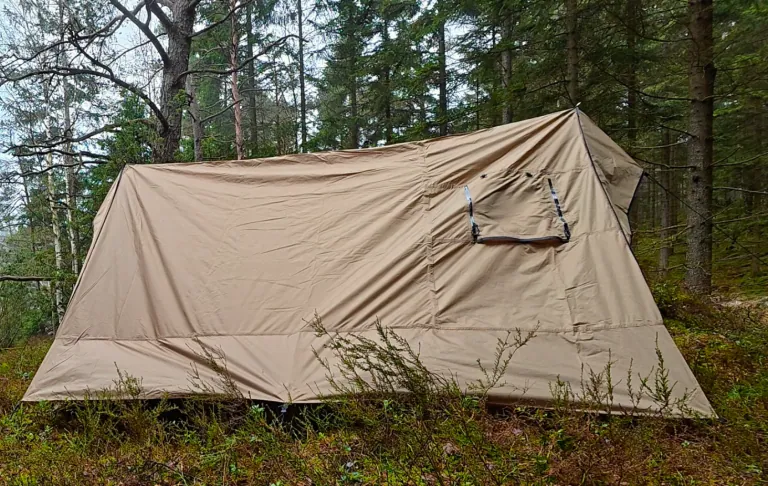
Drawbacks to consider
- requires more equipment (stove + wood)
- takes longer to set up
- requires knowledge of fire management
- can feel cramped in smaller tents
- condensation can build up

Different types of hot tents – which model suits you?
There isn't just one type of hot tent. The construction affects everything from heat distribution to how the tent works in practice.

1. Classic hot tent (stove inside the tent)
- compact
- easy to set up
- cheapest
Drawback: everything happens in the same space
See example →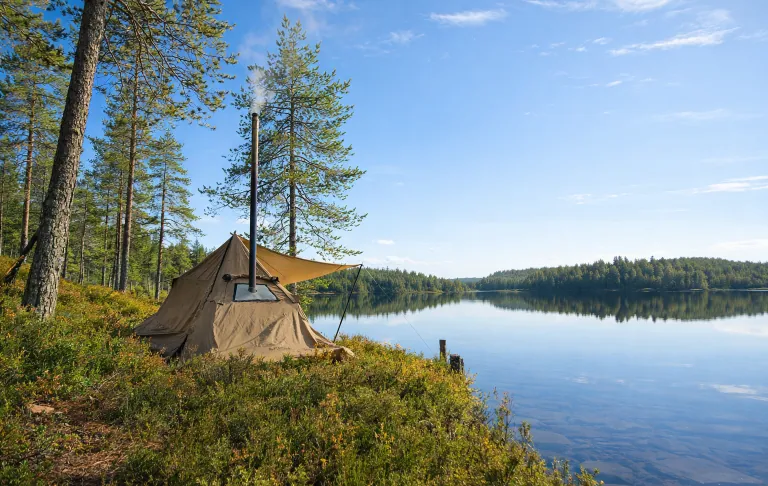
2. Hot tent with vestibule (separate stove zone)
- better order
- cleaner sleeping area
- more practical
Drawback: a bit bigger and more to manage
Read more →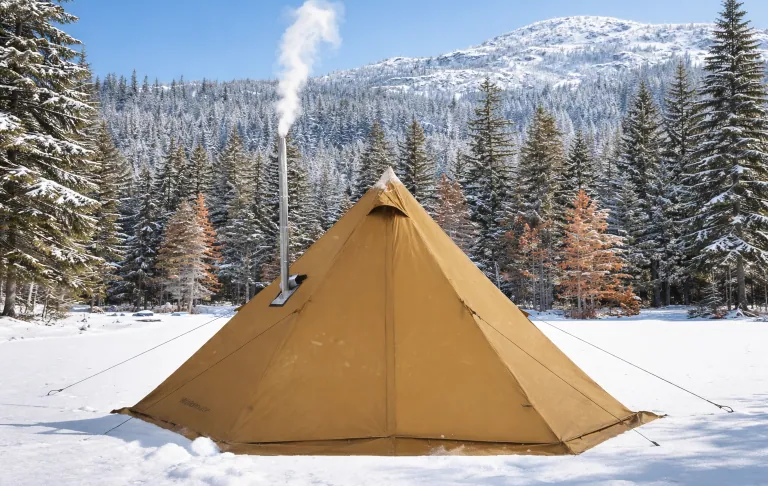
3. Tipi hot tent (conical tent)
- very good heat distribution
- stable in wind
- efficient design
Drawback: less efficient floor space
Perfect for: winter camping and bushcraft

4. Tunnel hot tent
- long, narrow tent
- good zoning
- more space
Drawback: more sensitive to crosswinds
Perfect for: longer trips or more people

5. Canvas / wall tent (heavy-duty)
- extreme durability
- best comfort
- holds heat for a long time
Drawback: heavy and less portable
Perfect for: base camp, hunting, longer stays
What equipment do you need for a hot tent?
To get started, you'll need:
- hot tent
- tent stove
- firewood
- fire-starting material
- a protective mat
Want to see exactly what we use:
Gear we use →You can also compare different options at Outdoorexperten
To Outdoorexperten →
Common mistakes with hot tents
- poor ventilation
- incorrectly fitted chimney
- wet wood
- no protective mat
- tent too small for the stove
These mistakes are common among beginners and can affect both safety and the experience in the tent.

Is a hot tent safe?
Yes – but only if used correctly.
- good ventilation
- correct chimney installation
- distance to tent fabric
- use a protective mat
- never leave a fire unattended

Who is a hot tent suitable for?
- those who want to try winter camping
- bushcraft enthusiasts
- longer trips in nature
- those who want more comfort

Quick summary
A hot tent is a tent where you use a wood-burning stove to create warmth and comfort in nature.
This lets you:
- camp in the cold
- stay warm
- live more comfortably outdoors
Ready to try a hot tent yourself?
Read the review: Hot tent budget model for beginners
See the vestibule version from Vevor
Read about: Stove for hot tent
Frequently asked questions
Does it get warm in a hot tent?
Yes, a hot tent can get very warm with a wood-burning stove – but the temperature depends on several factors.
How warm it gets is affected by, among other things:
- the size of the tent
- how efficient the stove is
- how well the tent retains heat
- the outdoor temperature
- how you tend the fire
In a smaller tent, it can quickly get very warm, sometimes warm enough to sit in a t-shirt even in chilly temperatures. In bigger tents, more wood and a more efficient stove are needed to reach the same warmth.
Can you sleep in sub-zero temperatures?
Yes, with the right equipment, a hot tent works well even in sub-zero temperatures.
With a wood-burning stove, you can heat the tent before going to bed, and with a good sleeping bag you'll stay warm even once the fire goes out during the night.
Is it difficult?
No, but it requires basic knowledge.
You need to understand how to light a fire safely, how ventilation works and how to install the stove correctly. After a few trips, it quickly becomes a natural part of outdoor life.
Is it worth it?
For anyone who wants to camp in colder weather or get more comfort in nature, it's absolutely worth it.
It makes a big difference compared to a regular tent, especially during autumn, winter and early spring.
Do you really need a stove in a hot tent?
Yes – otherwise the tent works like an ordinary tent.
It's the combination of tent and wood-burning stove that makes a hot tent unique, making it possible to create warmth, cook food and get a much more comfortable experience in cold weather.

Hot tent – quick facts
Type: Tent adapted for a wood-burning stove
Use: Winter camping, bushcraft, hunting and fishing
Capacity: 1–4 people depending on the model
Heat source: Wood-burning tent stove
Temperature: Can get very warm even in sub-zero temperatures
Weight: Varies by model, often around 2–10 kg
Setup: Usually 5–15 minutes depending on the tent
Ventilation: Important for safe use
Advantage: Makes it possible to camp comfortably in the cold
Drawback: Requires more equipment than a regular tent
See our full review of a budget model
Here you can see our full review where we sleep in a beginner hot tent during a cold night in nature.
Related reviews & guides
A foldable tent stove can make a huge difference on cold nights in a tent. In the review I go through construction, heat, safety and how it actually performs in practice out in nature.
A compact camping table can make cooking and organising gear considerably easier on outdoor adventures. Here I test a light, portable table that works well for camping and outdoor life.
Adventures where the gear is put to use
Hot tent – tested on a cold night in the forest
How does a hot tent actually work in practice on a cold night in nature? Here I test the tent together with a tent stove and show how the gear performs in real conditions.
Here I've gathered all the outdoor gear I use and test on my adventures – from tents and stoves to small practical items.

All the gear we use
Get inspired by our adventures on film

On our YouTube channel we share experiences from our trips and outings. The hope is to give you ideas and motivation to get out there yourself and create new memories.
About Our YouTube Channel →