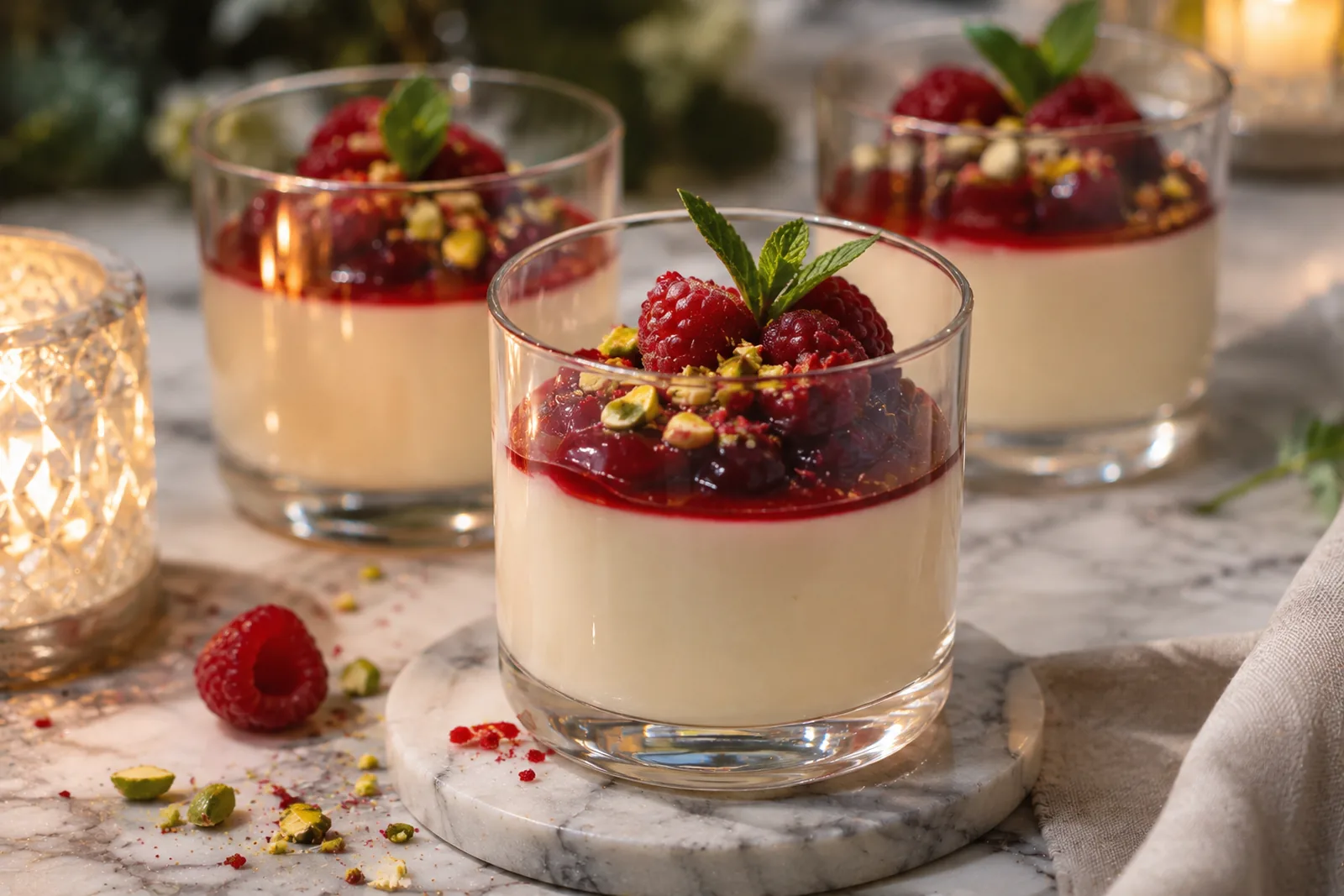
It is the evening of 30 December. The kitchen smells of vanilla, six glasses stand on a tray in the fridge and the surface in them is still trembling as you close the door. You don't need more than that. On New Year's Eve you take out the glasses, pour raspberry sauce or passion fruit on top and put them on the table. No oven, no last-minute whisking and nothing that can go wrong while the New Year's Eve dinner is under way.
Panna cotta means cooked cream in Italian and comes from Piedmont in northern Italy. It is cream, a little milk, sugar and vanilla, set with a small amount of gelatine. The secret is to use as little gelatine as possible. A good panna cotta should barely hold together. It should tremble when you touch the glass and melt on the tongue, not bounce like a jelly. That is why it matters whether you serve it in glasses or want to turn it out onto a plate.
Gelatine or agar?
Both make the cream set, but they work completely differently. That is the most important thing to understand before you start.
Gelatine is made from animals, usually pigs. It gives the classic soft, wobbly texture and melts in the mouth because it melts at about body temperature. Gelatine must not boil. Then it loses its strength and the panna cotta turns loose. The leaves are soaked in cold water and melted in warm, not boiling, cream.
Agar is made from red algae and is vegetarian. Agar has to boil for one or two minutes to work. It sets at about 40°C, in other words while the mixture is still lukewarm, so you have to pour it straight away. The texture is slightly firmer and shorter, more like a soft pudding than a jelly, and it does not melt in the mouth in the same way.
Agar is much stronger than gelatine, and different brands vary in strength. Follow the packet instructions. As a guideline, about ½ teaspoon of agar powder is enough for this batch.
Some fresh fruits contain enzymes that break down gelatine: pineapple, kiwi, papaya and fresh ginger. Never put them in the panna cotta itself. As a topping just before serving they are fine. Passion fruit and raspberries do not affect the gelatine.
Method
1
Soak the gelatine. Put the gelatine leaves in a bowl of cold water for at least five minutes. They should become soft and floppy. If you are making the agar version, skip this step.
2
Heat the cream. Split the vanilla pod lengthwise and scrape out the seeds. Put the seeds and pod in the saucepan with the cream, milk and sugar. Heat, stirring, until the sugar has dissolved and it starts to steam. If you have a vanilla pod, you can let it infuse in the warm cream for ten minutes for more flavour.
3
Gelatine: dissolve the leaves. Take the pan off the heat and fish out the vanilla pod. Squeeze out the gelatine leaves and stir them into the warm cream until completely melted. The cream should be warm, not boiling.
4
Agar: bring to the boil. Stir the agar mixture into the cream. Let it boil, stirring, for one or two minutes and then take the pan off the heat.
5
Strain and pour. Strain the mixture into the jug and divide it between the glasses. With gelatine you can let the cream cool for ten minutes first, stirring now and then, so the vanilla seeds do not sink to the bottom. With agar you pour straight away, before it has time to set in the jug.
6
Chill. Let the glasses cool a little on the worktop and then put them in the fridge, ideally covered with cling film. Gelatine needs at least six hours, ideally overnight. Agar sets in two to four hours.
7
Make the raspberry sauce. Put the raspberries, sugar and lemon juice in a saucepan and boil for at least one minute, ideally two or three, until the raspberries fall apart. Press the sauce through a sieve if you want it smooth and seedless. Let it cool and refrigerate.
8
Prepare the passion fruit. Halve the fruit and scoop out the pulp and seeds with a spoon. Stir in the sugar and orange juice. It can stand in the fridge for a day.
9
Serve. Pour a thin layer of sauce or passion fruit over each glass just before the dessert is served and top with a raspberry and a mint leaf.
Have you made this recipe? Rate it
0.0 out of 5 · 0 votes
out of 5
vote
votes
Be the first to rate this recipe.
Thanks for your vote!
Your vote could not be saved right now. Please try again later.
Mini Västerbotten cheese tarts with creamy chanterelles – bake them the day before New Year's Eve
🍽️ 8 small tarts🥕 17 ingredients👣 9 steps
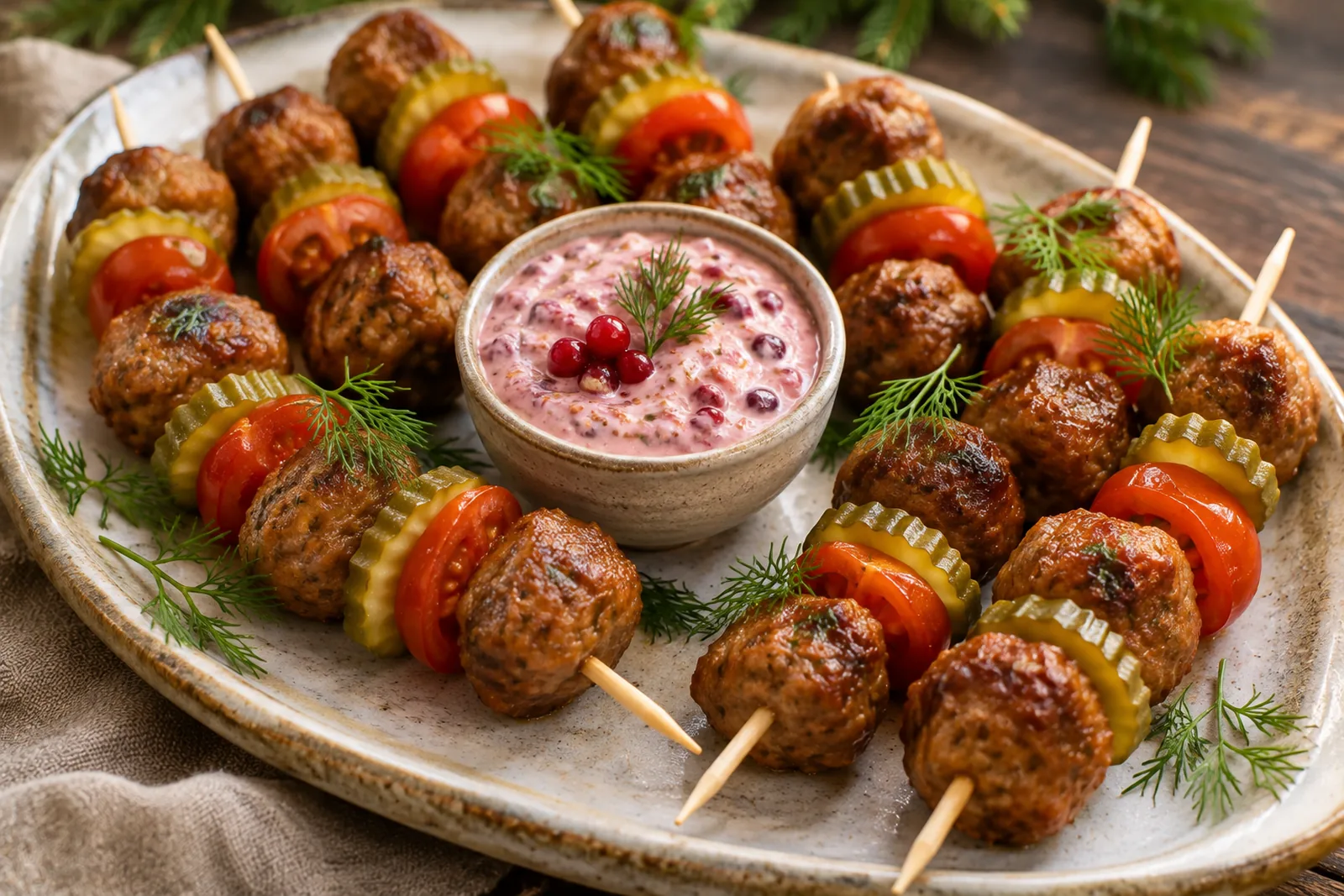
Meatball skewers with lingonberry and mustard dip – small skewers you can make the day before
🍽️ 8 people, about 32 skewers🥕 14 ingredients👣 7 steps
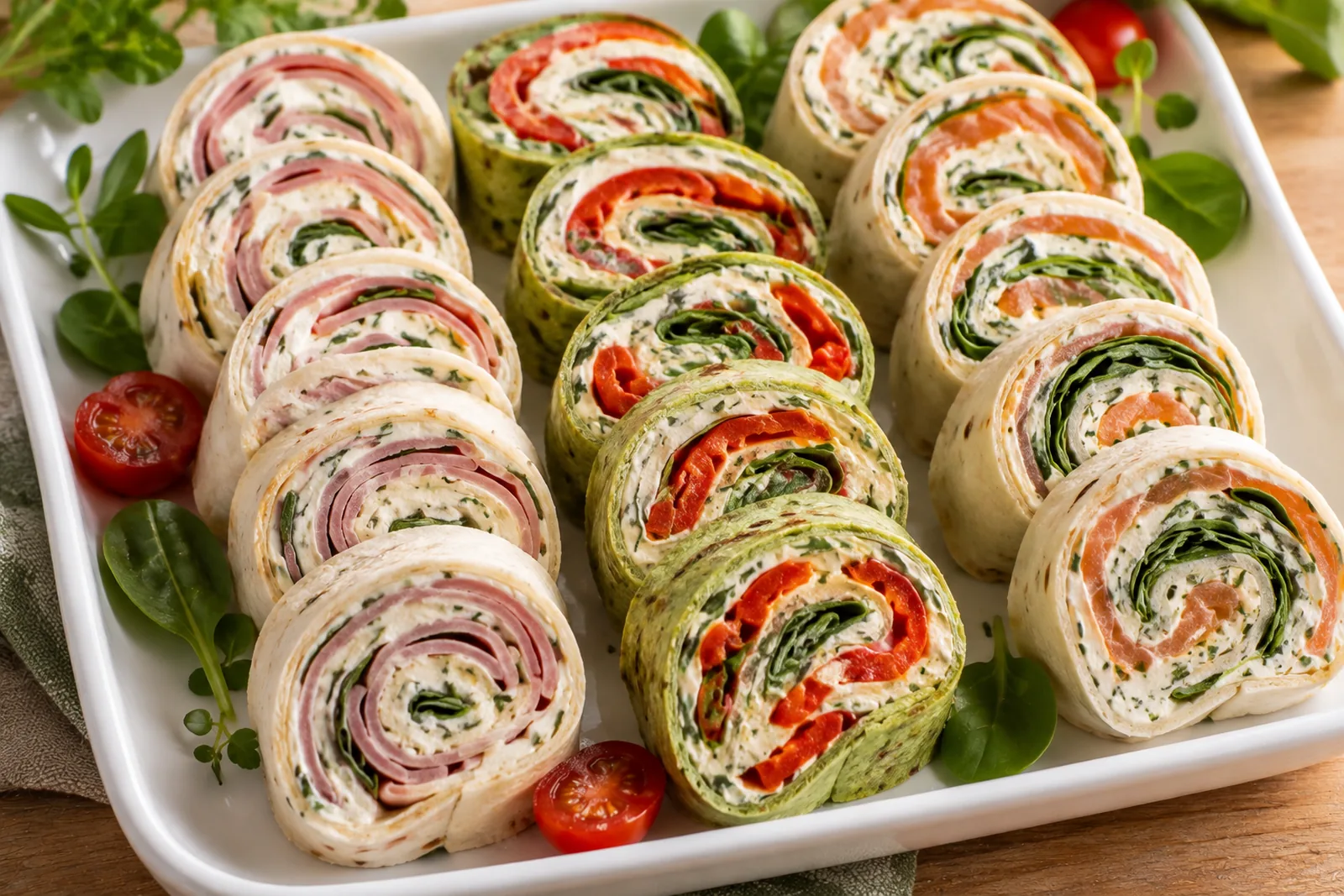
Tortilla pinwheels – cream cheese wraps sliced into spirals and made the day before
🍽️ 8 people, about 48 pinwheels🥕 14 ingredients👣 9 steps
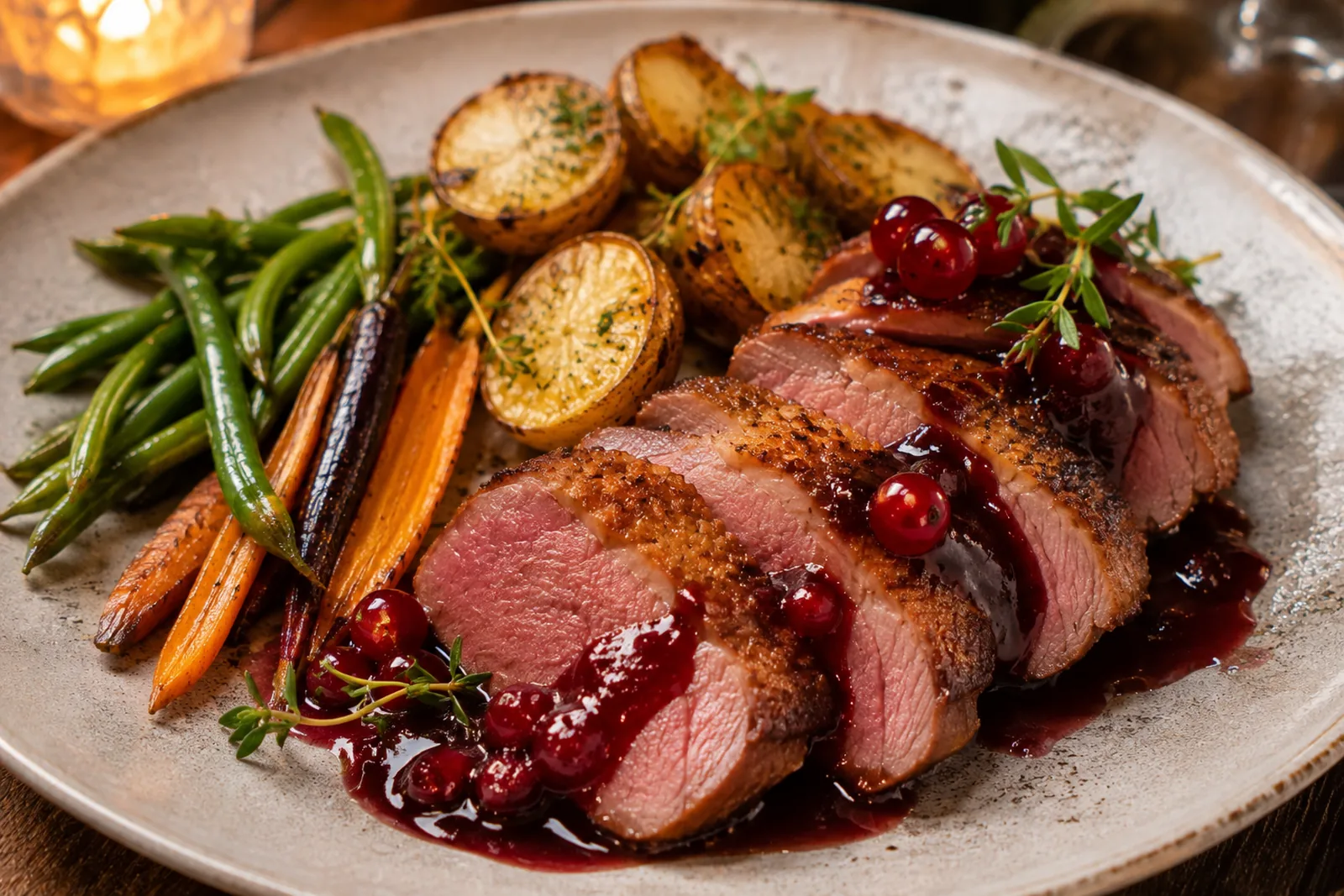
Duck breast with cherry and red wine sauce – crispy skin and pink meat for New Year's Eve
🍽️ 4 servings🥕 17 ingredients👣 10 steps
Turning out onto plates
If the panna cotta is to stand freely on a plate, use 4 gelatine leaves instead of 3. Brush the moulds thinly with neutral oil before you pour in the cream. When serving, dip the mould in hot water for five or ten seconds, run a thin knife around the edge, put a plate on top and turn it over. Give the mould a little shake. If it does not release, dip it again, a couple of seconds at a time. Too long in the water and the surface melts.
Timeline for New Year's Eve
New Year's Eve 2026 falls on a Thursday. The panna cotta is the dish on the menu that benefits most from being made early. The whole evening, course by course, is in the New Year's Eve menu.
Wednesday 30 December, evening: make the panna cotta and put the glasses in the fridge. Make the raspberry sauce at the same time. It takes half an hour in total.
Thursday 31 December, morning: prepare the passion fruit if you are using it. Check that the panna cotta has set.
When the main course is served: take out the glasses so they warm up by a degree or so. Ice-cold panna cotta tastes less of vanilla.
Just before dessert: pour on the sauce and add the toppings.
The panna cotta keeps for two or three days in the fridge covered with cling film. It is fine to make it on the Tuesday too, but do not add the topping until the evening it is eaten.
🛡️
Safety with frozen berries
Livsmedelsverket (the Swedish Food Agency) advises that frozen berries from other countries be boiled for at least one minute before eating, as they can carry norovirus and hepatitis A. The advice applies especially to older people and people with weakened immune systems, but is good for everyone. That is why the raspberry sauce is boiled here, and why frozen raspberries that have only been thawed are not a good topping. Fresh raspberries or Swedish berries you have picked and frozen yourself can be used as they are. You open passion fruit yourself and it does not need boiling.
Allergens: the panna cotta contains milk. Gelatine is an animal product and is not suitable for vegetarians, and many want to know whether it is pork. With agar the dessert is vegetarian. It becomes vegan if you swap the cream and milk for oat cream or coconut milk, but then the texture is different.
count and soak the gelatine leaves and feel how they go soft
pour into the glasses with the jug while an adult holds the saucepan
scoop out the passion fruit
top their own glass with raspberries on New Year's Eve
An adult handles the hot cream. Children who do not like seeds can have the strained raspberry sauce.
💡
Tips for a really creamy panna cotta
Less gelatine is more. Three leaves to six decilitres of liquid give a panna cotta that just holds in the glass. That's how it should be.
Never let the gelatine boil. Lift the pan off the hob before the leaves go in.
Stir while it cools. Otherwise the vanilla seeds settle as a dark band at the bottom.
Swap out some of the cream. A decilitre of Greek yoghurt or crème fraîche, stirred in once the cream has cooled slightly, gives a fresher flavour that works well after a rich beef Wellington.
Taste the raspberry sauce. Raspberries vary in sweetness. A little more lemon makes it fresher against the sweet cream.
Vary the panna cotta
Passion fruit and mango: mix the passion fruit with small dice of ripe mango.
Coffee: dissolve 1 tbsp instant coffee in the warm cream and top with grated dark chocolate.
Citrus: grated zest of a lemon or orange in the cream instead of vanilla.
Lingonberries or cloudberries: a dollop of stirred lingonberries or warm cloudberries, as in vanilla ice cream with warm cloudberries, makes a Nordic New Year's Eve dessert.
Cardamom: a few crushed cardamom seeds infused in the cream and strained out.
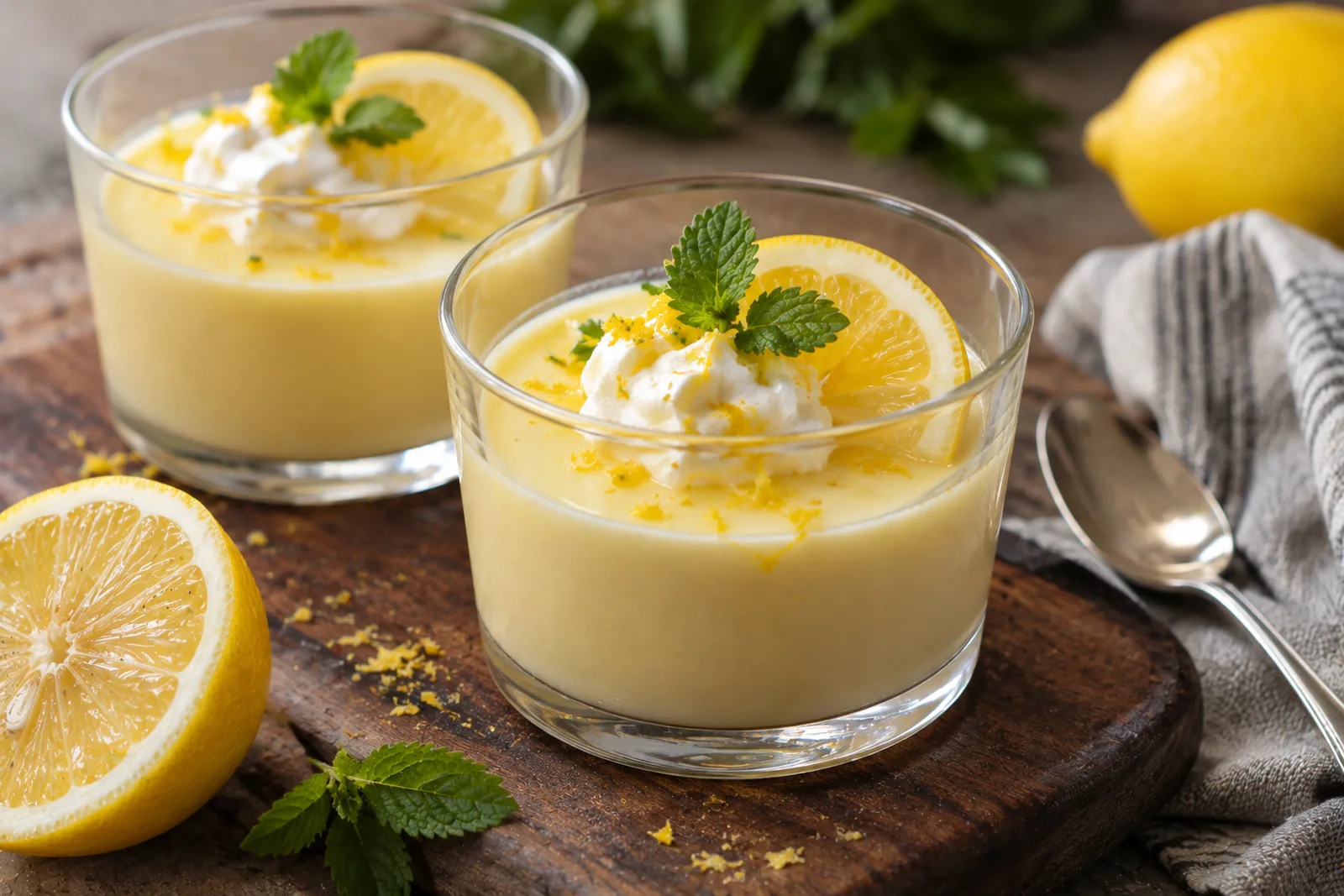
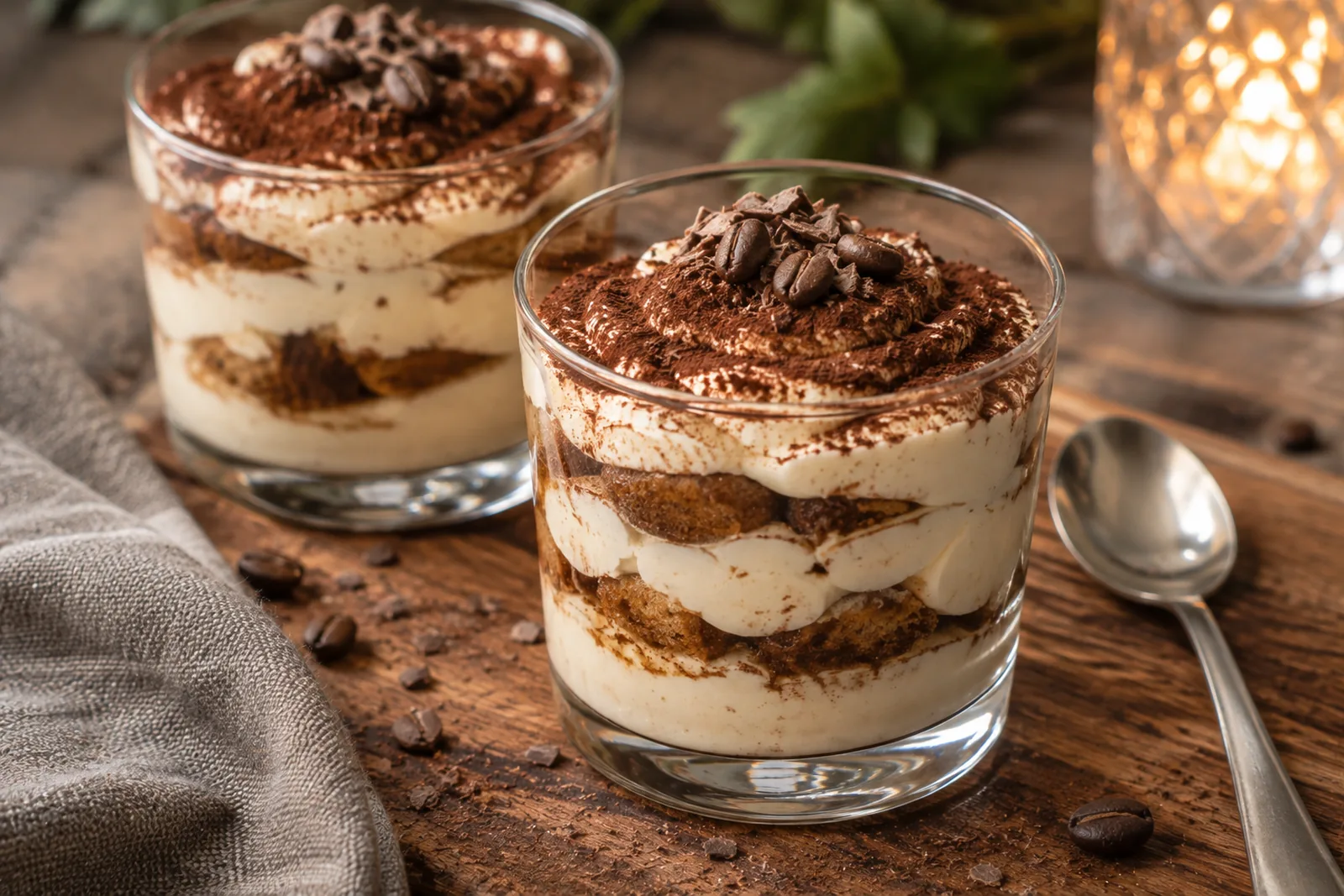
If you want several desserts to choose from on the table, the panna cotta goes well next to a tiramisu in glasses or a lemon posset, which also stand ready in the fridge. Anyone who wants something warm after the cold start can have a chocolate fondant.
⚠️
Common mistakes
The cream boils after the gelatine is in – the panna cotta turns loose or does not set at all.
Too much gelatine – it turns rubbery. Three leaves are enough in glasses.
Agar that has not boiled – then nothing sets.
Agar left standing in the jug – it sets before it reaches the glasses.
Fresh pineapple or kiwi in the cream itself – the enzymes break down the gelatine.
Topping added too early – the sauce bleeds in and the surface gets wet.
Frequently asked questions
How long does panna cotta need in the fridge?
With gelatine it needs at least six hours and ideally overnight. With agar it sets in two to four hours. That is why it is easiest to make it the evening before New Year's Eve.
Can you make panna cotta without gelatine?
Yes. Agar is a vegetarian alternative made from red algae. It has to boil for one or two minutes and sets quickly, so you pour it straight away. The texture is slightly firmer than with gelatine. Follow the packet, as the strength varies between brands.
How many gelatine leaves do you need for panna cotta?
About three leaves to five decilitres of cream and one decilitre of milk when it is to stay in glasses. If it is to be turned out onto a plate, use four leaves so it holds its shape.
Why won't my panna cotta set?
The most common reason is that the cream boiled after the gelatine was added, or that it has not stood long enough in the fridge. Fresh fruit such as pineapple and kiwi in the cream can also stop it from setting.
Do you have to boil frozen raspberries for panna cotta?
Livsmedelsverket (the Swedish Food Agency) advises that frozen berries from other countries be boiled for at least one minute, as they can contain norovirus. The raspberry sauce in this recipe is boiled, so it is safe. Fresh raspberries can be added as they are.
How long does panna cotta keep?
Two or three days in the fridge covered with cling film. Wait with the sauce and topping until the evening it is served.
We would like to use Google Analytics to see which pages are read, so that we can make the site better. It sets cookies from Google. We do not use any advertising cookies.
Accept and Decline only apply to statistics – the site works just as well whatever you choose. More in our cookie policy.