Popular searches

    Pavlova with cream and berries – crisp shell, soft inside and assembled last

    Crisp shell, chewy middle, cream and berries added at the end
    • 8 servings – one large or eight small
    • Time: 30 min + 1 ½ hours in the oven + cooling
    • Difficulty: Medium
    • 13 ingredients
    • 11 steps
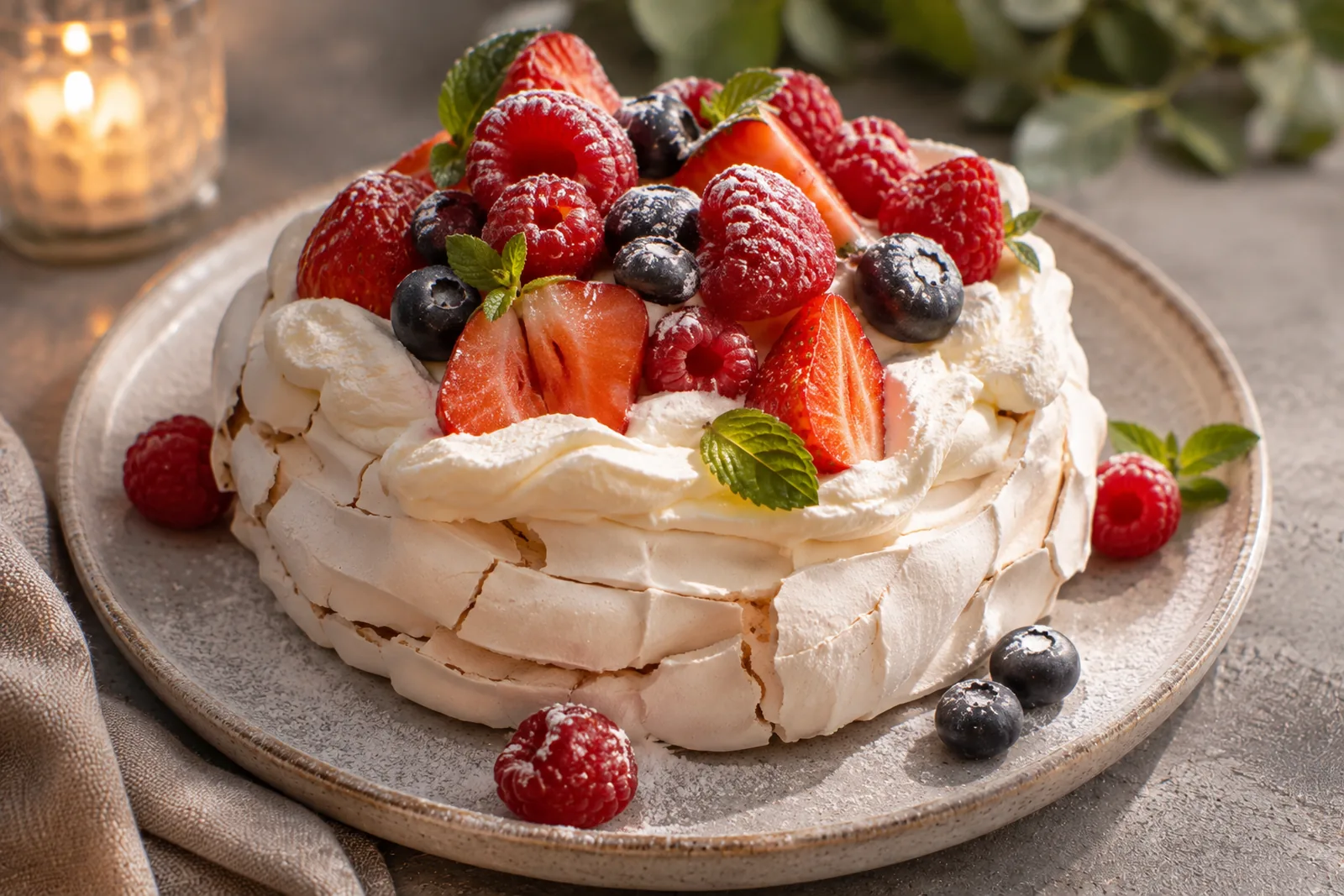
    Round pavlova with a crisp white meringue shell, topped with whipped cream, raspberries, blueberries and pomegranate seeds and dusted with icing sugar.

    Why vinegar and cornflour?

    • The sugar makes the foam stable. It dissolves in the liquid in the whites and forms a thick syrup around the air bubbles, so they do not collapse. That is why the sugar should go in a spoonful at a time and be whisked until you can no longer feel it.
    • The vinegar makes the foam more acidic, which helps the proteins in the egg white hold together better. The meringue becomes sturdier and the centre soft and chewy instead of dry.
    • The cornflour binds moisture in the centre during baking. It keeps the meringue soft inside and stops it from weeping syrup.
    • Low heat dries the shell without the centre having time to turn hard. That is why the pavlova is baked for a long time at 120°C and left to cool in the oven.

    Method

    1. Prepare the oven and tray. Set the oven to 120°C, conventional heat. With a fan oven, use 100–110°C. Draw a 22 cm circle on the baking paper, turn the paper pencil side down and put it on the tray. For small pavlovas, draw eight circles of 8–9 cm.
    2. Separate the eggs. Separate the eggs carefully. A single drop of yolk in the whites can stop them whisking to stiff peaks. Separate one egg at a time over a cup before tipping the white into the bowl. Keep the yolks in a lidded jar in the fridge.
    3. Whisk the whites. Whisk the whites and salt on medium-high speed until they are foamy and white and just hold soft peaks.
    4. Whisk in the sugar. Mix the sugar with the vanilla sugar. Increase the speed and add the sugar a tablespoon at a time, with about half a minute between each spoonful. When all the sugar is in, whisk for another five minutes. The meringue should be thick and glossy and stand in stiff peaks.
    5. Feel for heat. Rub a little meringue between your thumb and index finger. If it feels gritty, the sugar has not dissolved. Whisk for another minute or two and feel again.
    6. Whisk in the vinegar and cornflour. Sprinkle over the cornflour and pour in the vinegar. Whisk briefly, just until even.
    7. Shape. Dab a little meringue under the corners of the paper so it sticks to the tray. Spread the meringue within the circle and make the edge a little higher than the middle, like a hollow for the cream. Make waves and peaks around the edge with the back of a spoon.
    8. Bake. Bake in the middle of the oven. A large pavlova needs 75–90 minutes and small pavlovas 45–55 minutes. Do not open the door for the first hour. The shell should be dry and pale, cream-white or faintly beige, and feel firm when you press lightly.
    9. Let it cool in the oven. Turn off the oven and leave the pavlova in it for at least an hour, ideally until the oven is completely cold. It is normal for it to crack a little as it cools.
    10. Whip the cream. Whip the cream with the icing sugar and vanilla sugar to soft peaks. Fold in the yoghurt or crème fraîche if you are using it.
    11. Assemble. Carefully lift the pavlova onto a plate using the spatula. Spread the cream in the hollow, letting it reach almost to the edge, and top with berries and fruit. Dust with icing sugar and scatter over mint. Serve immediately.

    Have you made this recipe? Rate it

    Be the first to rate this recipe.

    More recipes to try

    All recipes →
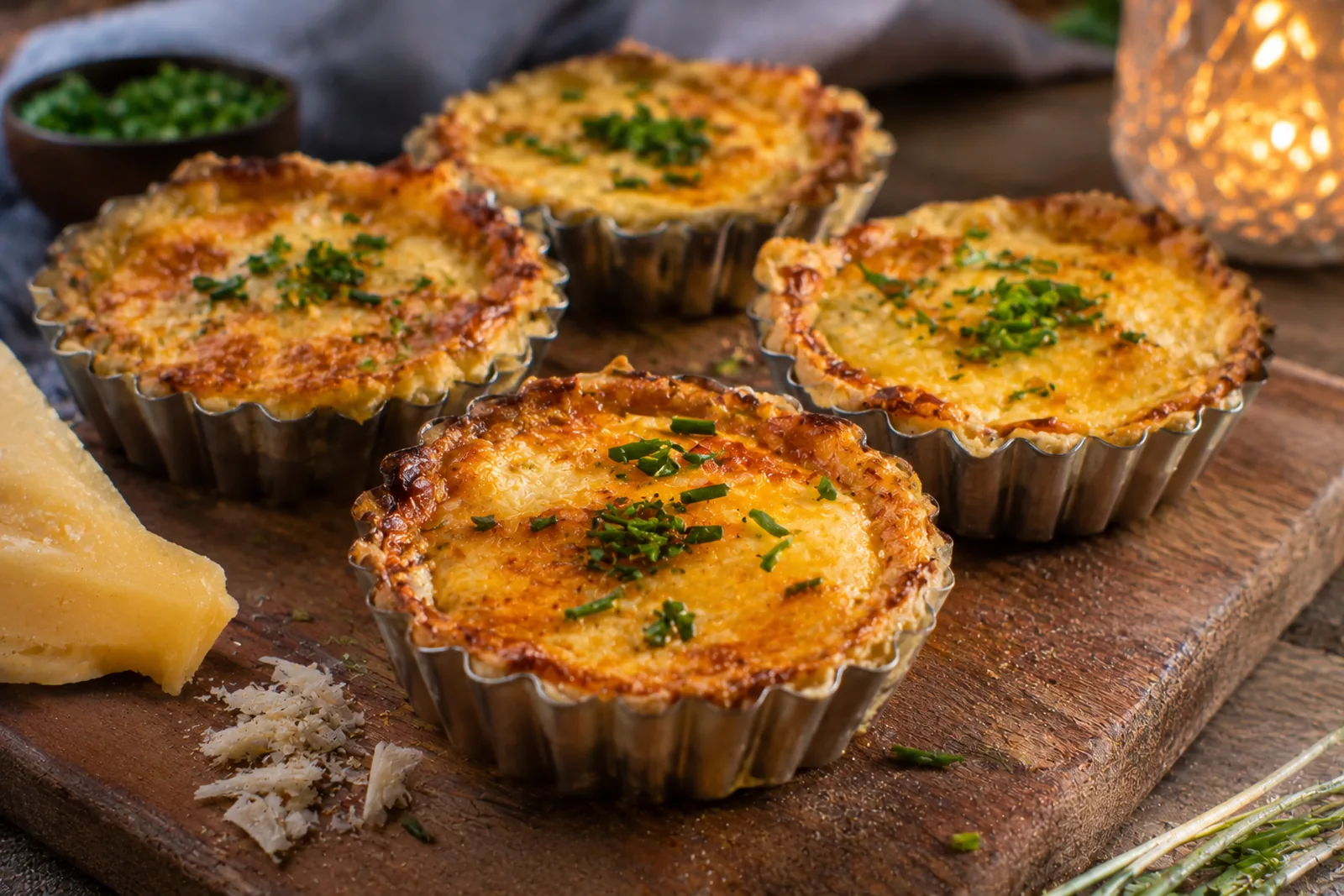
    • Small golden cheese tarts in fluted tins on a wooden table, each topped with butter-fried chanterelles and snipped chives.

      Mini Västerbotten cheese tarts with creamy chanterelles – bake them the day before New Year's Eve

      🍽️ 8 small tarts 🥕 17 ingredients 👣 9 steps

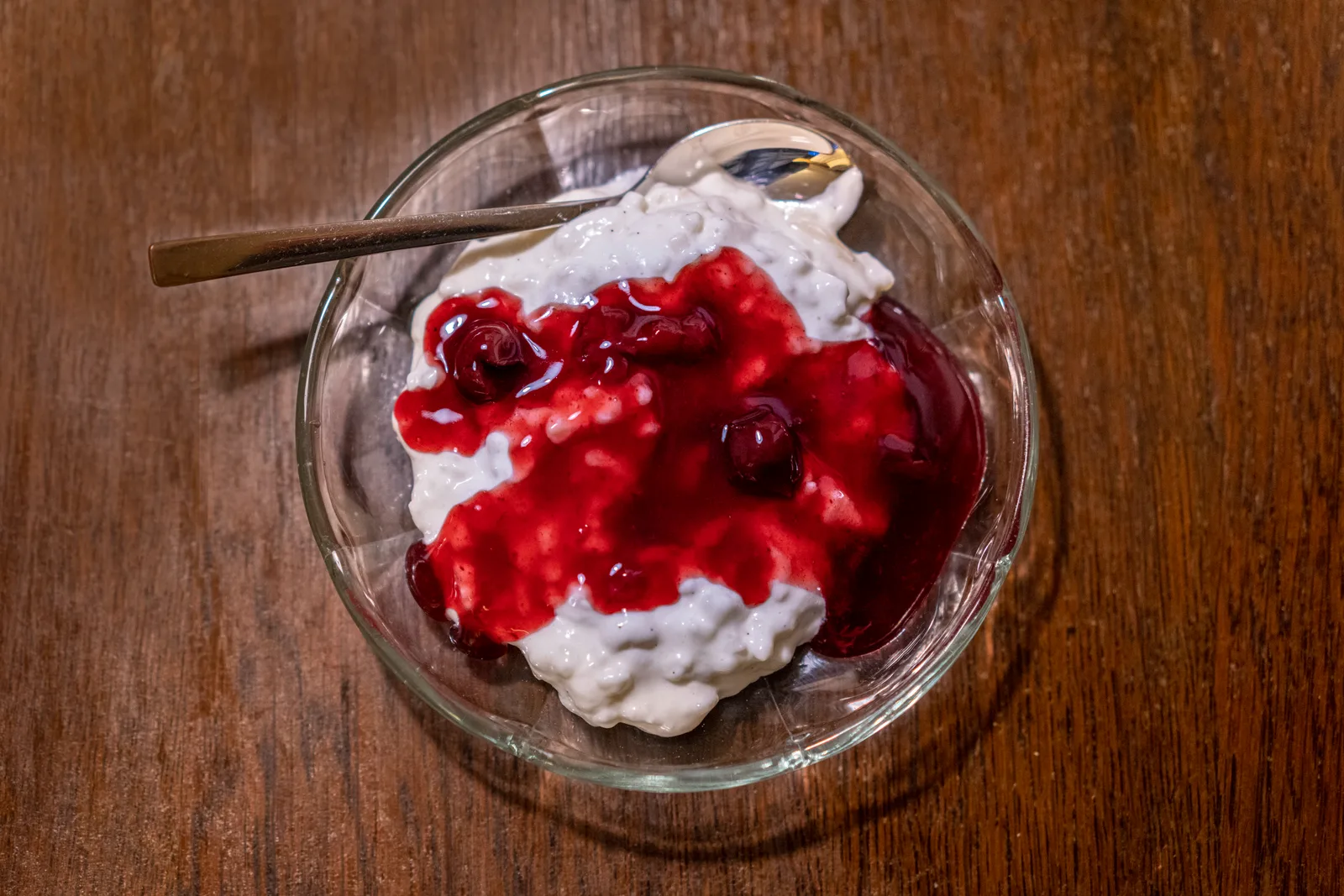
    • A glass bowl of creamy rice dessert with dark red cherry sauce on a wooden table, with a spoon in the bowl.

      Ris à la Malta – cold rice pudding, whipped cream and orange

      🍽️ 6 servings 🥕 15 ingredients 👣 10 steps

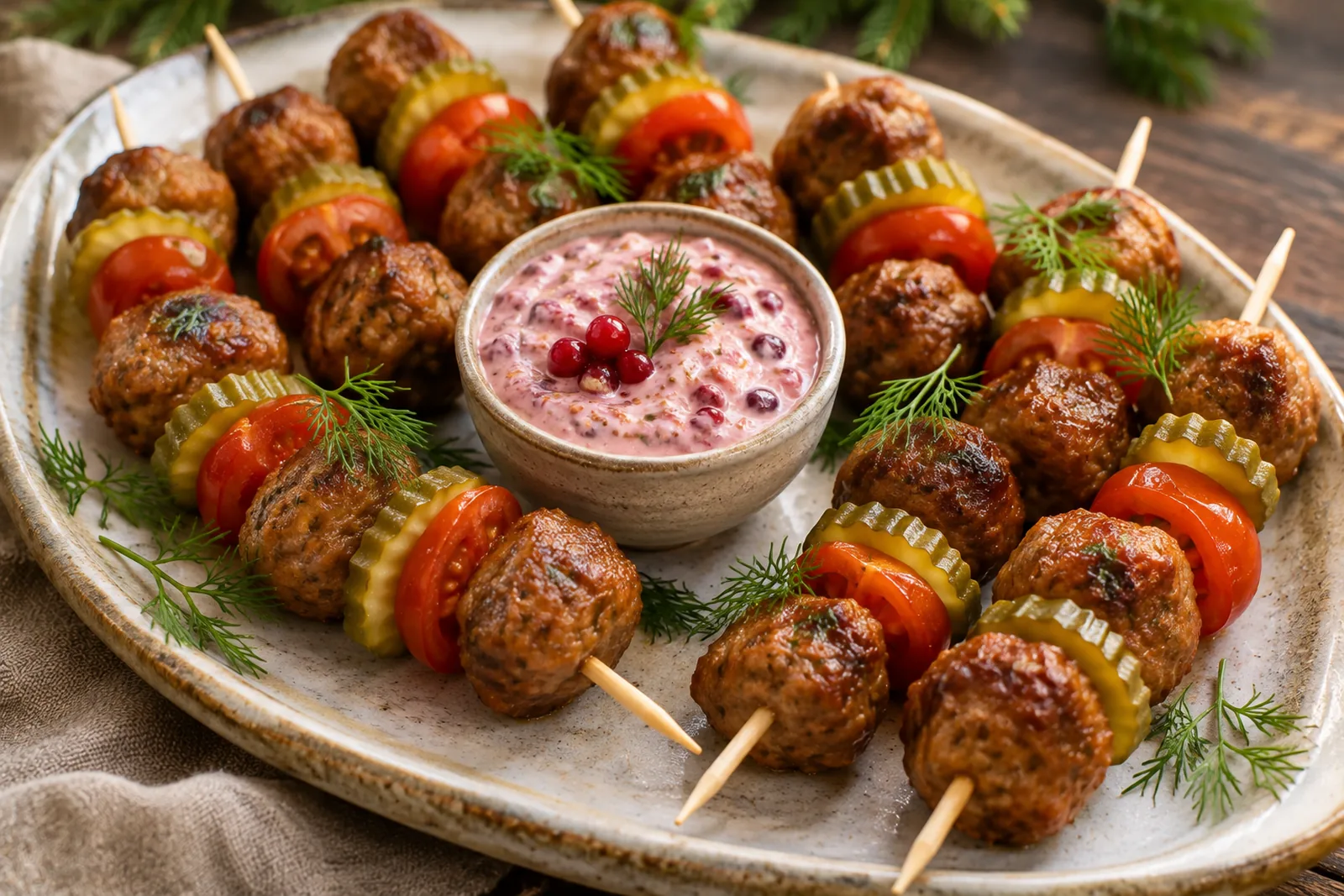
    • Small meatballs threaded on wooden skewers with slices of gherkin and halved cherry tomatoes, arranged on a pale plate with a bowl of pink lingonberry dip in the middle.

      Meatball skewers with lingonberry and mustard dip – small skewers you can make the day before

      🍽️ 8 people, about 32 skewers 🥕 14 ingredients 👣 7 steps

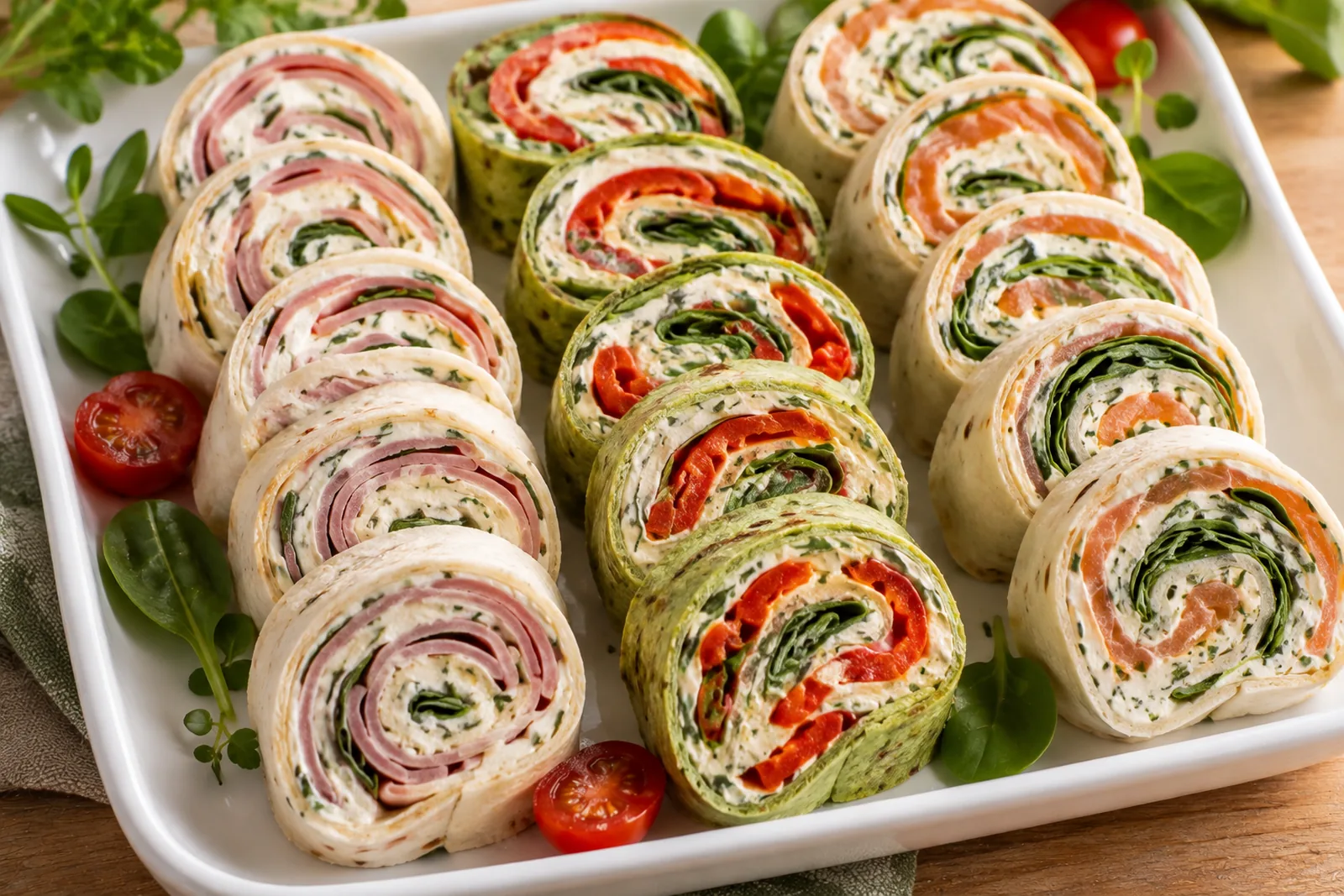
    • Tortilla pinwheels in three colours with cream cheese, ham, pepper and spinach, standing on end in rows on a white tray.

      Tortilla pinwheels – cream cheese wraps sliced into spirals and made the day before

      🍽️ 8 people, about 48 pinwheels 🥕 14 ingredients 👣 9 steps

    Timeline for New Year's Eve

    • Wednesday 30 December, afternoon: bake the meringue and let it cool in the oven, ideally overnight with the door closed. Put it in a jar or box with a tight-fitting lid once it is completely cold.
    • Thursday 31 December, morning: rinse and dry the berries. Halve the passion fruit and seed the pomegranate. Put everything in the fridge. If the berries are frozen and from another country, make a quick compote now so it has time to cool.
    • Just before dessert: whip the cream, assemble the pavlova and carry it to the table. It takes five minutes.

    With the cream on, the pavlova keeps for an hour or two before the meringue starts to soften. Leftovers make a lovely mess the next day: break it into pieces and mix with cream and berries in glasses, much like an Eton mess.

    Store the meringue correctly

    Meringue absorbs moisture from the air. That is the only thing that can ruin a pavlova that turned out well in the oven.

    • Airtight and dry. Store the cold meringue in a jar or box with a tight-fitting lid, at room temperature. It keeps for two or three days.
    • Never in the fridge. The fridge is damp and the meringue turns sticky and soft. That applies until the cream goes on.
    • Not next to bubbling pans. Steam from the stove makes the meringue chewy. Put it away in another room if the kitchen is full of cooking.
    • Room-temperature whites become bigger and airier than cold ones. Take out the eggs an hour before you start.

    Safety with berries and eggs

    Frozen berries: Livsmedelsverket (the Swedish Food Agency) advises that frozen berries from other countries be boiled for at least one minute before eating, as they can carry norovirus and hepatitis A. Fresh berries are best for a pavlova. If you only have frozen imported berries, boil them with a little sugar into a compote, let it cool and spoon it over the cream. Swedish berries you have picked and frozen yourself can be thawed and used as they are.

    The eggs: the meringue is baked in the oven for over an hour. The centre should be soft, but it still stays hot for a long time, and salmonella dies almost immediately at about 70°C. Use Swedish eggs. If you want to be completely sure, for example for small children or pregnant women, you can use pasteurised egg white, which is sold in cartons in some shops. It rises a little less but works.

    Allergens: the pavlova contains egg and milk. It is gluten-free if the cornflour is, which it almost always is.

    What do I do with the egg yolks?

    Pavlova with children

    • draw the circles on the baking paper
    • measure out the sugar and make sure it goes in one spoonful at a time
    • feel between their fingers whether the sugar has dissolved
    • make peaks and waves in the meringue with a spoon
    • put berries on the pavlova, ideally their own little one

    Small pavlovas are extra fun, as everyone gets to decorate their own. An adult handles separating the eggs and the hot oven.

    Tips for a tall, chewy pavlova

    • Grease-free bowl. Wipe the bowl and whisk with kitchen paper and a little vinegar or lemon before you start.
    • Add the sugar slowly. This is the most important step. If the sugar goes in too fast, it turns into syrup that weeps out in the oven.
    • A dry day helps. On a damp day the meringue gets sticky more easily. Then leave it longer in the oven after it has been turned off.
    • A hollow in the middle. A pavlova with a slightly higher edge holds the cream in place when it is cut.
    • Cut with a serrated knife. The shell will crack anyway, and it is supposed to. Serve the pieces with a large spoon.

    Vary the pavlova

    • Chocolate: fold 2 tbsp cocoa and 50 g chopped dark chocolate into the meringue after the vinegar. Top with raspberries.
    • Winter: pomegranate, orange segments and a little grated dark chocolate – fruit that is available in January.

    Common mistakes

    • Yolk in the whites or grease in the bowl – the whites never get stiff.
    • Sugar added too fast – the meringue turns heavy and weeps syrup.
    • Oven too hot – the shell turns brown and the centre dry.
    • Oven door opened early – the pavlova collapses.
    • Meringue in the fridge – it turns sticky and soft.
    • Cream added too early – the meringue softens and sinks.

    Frequently asked questions

    Can you make pavlova the day before?

    Yes, the meringue is ideally baked the day before. Let it cool in the oven and store it in a jar or box with a tight-fitting lid at room temperature. Wait with the cream and berries until just before it is eaten.

    Why is the pavlova soft inside?

    The vinegar and cornflour help the centre retain moisture and stay chewy, and the low oven heat dries only the shell. That is how a pavlova should be, unlike ordinary meringue, which is dry all the way through.

    Why is my pavlova weeping syrup?

    Usually the sugar has not fully dissolved, because it went in too fast or was not whisked long enough. Add the sugar a tablespoon at a time and feel between your fingers that the mixture is not gritty.

    Should pavlova be stored in the fridge?

    Not the meringue. The fridge is damp and the meringue turns sticky. Once the cream is on, it should be eaten within a couple of hours, and leftovers are kept in the fridge and eaten the next day.

    Can you use frozen berries on pavlova?

    Fresh berries are best. According to Livsmedelsverket (the Swedish Food Agency), frozen berries from other countries should be boiled for at least one minute, so make a compote with them, let it cool and spoon it over the cream. Thawed frozen berries also make the cream soggy.

    How long should small pavlovas be in the oven?

    About 45–55 minutes at 120°C for pavlovas 8–9 cm across, compared with 75–90 minutes for a large one. Then let them cool in the switched-off oven.

    More guides and recipes to read

    More for the New Year's Eve dinner

    Grilled lobster as a starter

    Lobster halves with garlic butter and cheese under the grill – a luxurious start to the New Year's Eve dinner that ends with pavlova.

    To the lobster

    Beef Wellington as the main course

    Beef fillet in puff pastry with mushrooms – the big main course of New Year's Eve, and it takes the oven on the night while the meringue is already done.

    To the Wellington

    New Year in the mountains

    New Year's Eve in the cabin with snow, fireworks and food you can prepare ahead – small pavlovas travel well in a box.

    Read about New Year in the mountains