

Keep the waffle iron black and non-stick
Seasoning in the oven or over embers, washing up at the fire pit and how to pack the iron for the trip home without it rusting in the car.
To the cast-iron guideHot iron, a thin film of fat and the steam that tells you when
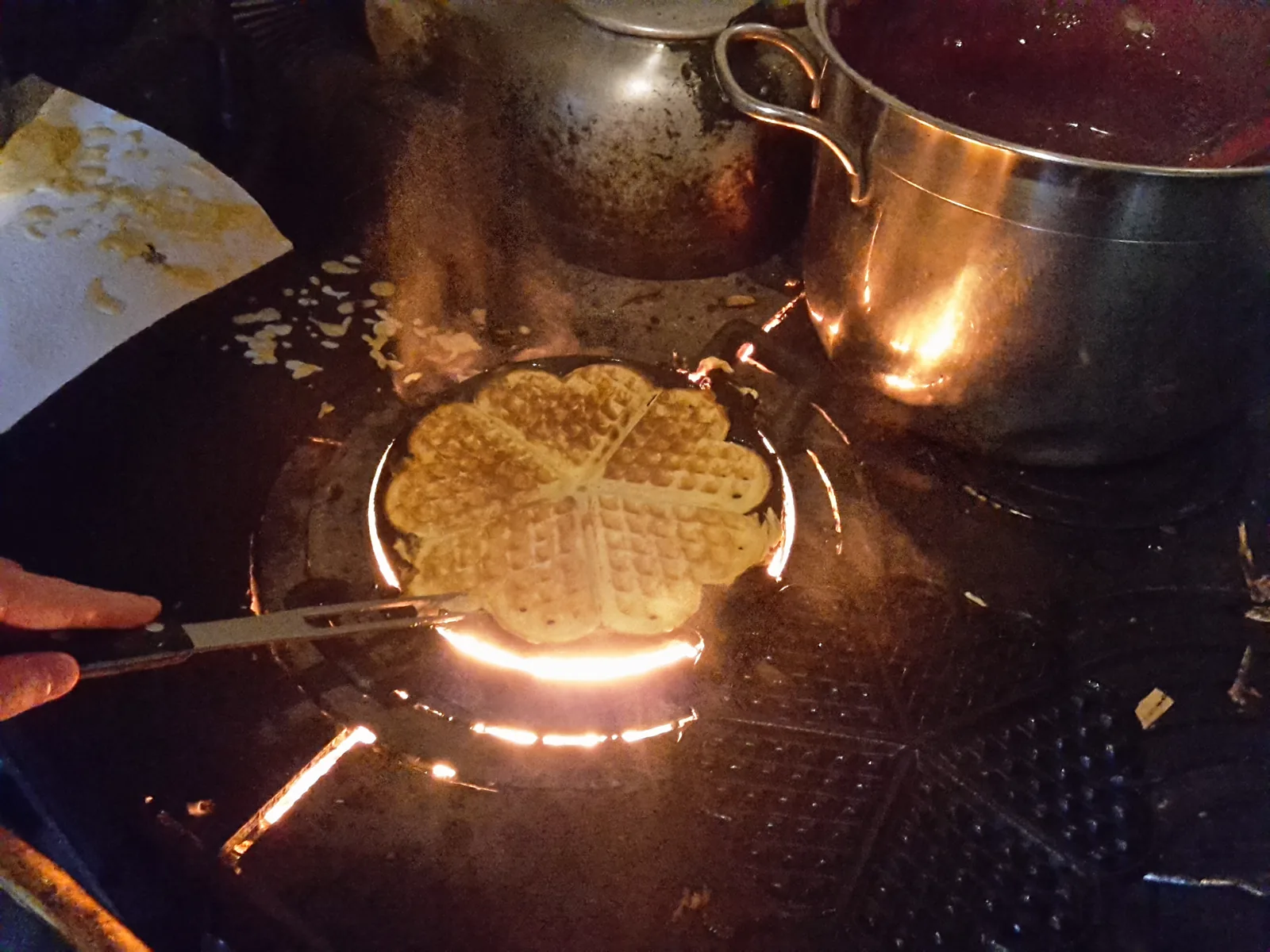
Steam hisses out of the seam in the iron, first in a thick cloud and then fainter and fainter. Someone says "now", the iron is lifted out of the embers, the catch is released and the plates are opened up. There lie five golden hearts, still sizzling a little at the edges, and the jam is already open on the stone next to them.
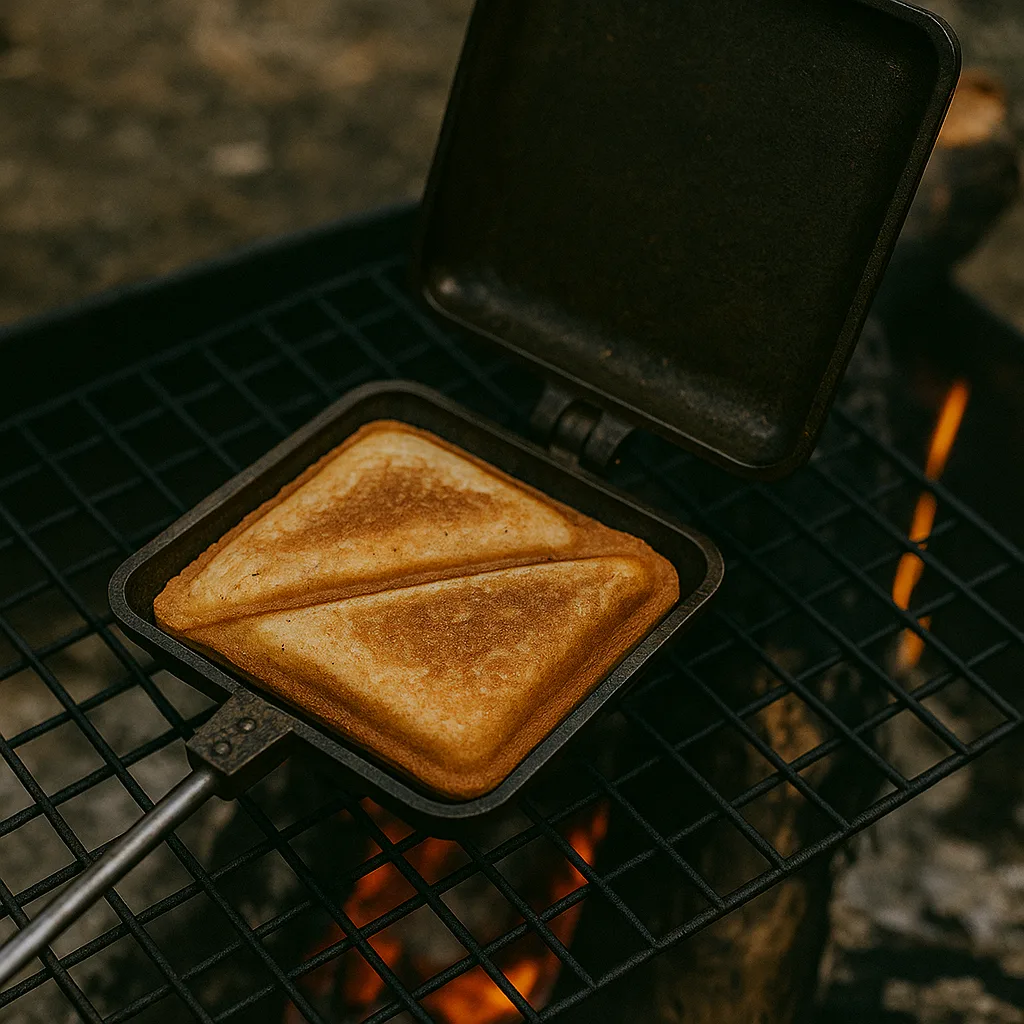
Waffles over an open fire are made in a waffle iron with long handles, in cast iron or aluminium, which is held over the embers and turned by hand. There's no light that comes on when the iron is hot and no beep when the waffle is done. Instead you learn to read the iron: how hot it is, how slick it is and when the steam goes quiet.
A waffle is at its crispiest in the first few minutes, so eat them while they're warm. More about telling when baking is done without an oven can be found in baking over a fire without an oven.
Have you made this recipe? Rate it
0.0 out of 5 · 0 votes
out of 5
vote
votes
Be the first to rate this recipe.
Thanks for your vote!
Your vote could not be saved right now. Please try again later.
 🔥 Over fire
 🔥 Over fire
 🔥 Over fire
 🔥 Over fire
The batch makes about 6–8 round waffles in a Swedish heart-shaped iron, depending on the size of the iron.
Three words are all you need to make waffles over a fire. Say them in this order every time.
The times below are approximate. The heat of the embers, the wind and the thickness of the iron make a big difference, and a thick cast-iron waffle iron behaves completely differently from a thin aluminium one. The clock tells you when to start checking. The steam and the colour tell you when the waffle is done.
A new cast-iron waffle iron is often sold pre-seasoned, but an extra round of seasoning makes it much more non-stick. Wash it, dry it over the heat and rub a thin layer of oil onto the plates, the outside and the handles near the plates. Then wipe almost all of it off again. Season it in the oven or over embers a few times, just like a frying pan. How to do it, why the oil should be so thin and what to do about rust and stickiness is explained in the guide to cast iron.
Before each session, brush the plates thinly with fat while the iron is hot. The heart pattern has lots of small squares and corners where batter likes to stick, so brush down into the squares and not just over the surface.
The first waffle is the test waffle. It's more likely to stick, turn out uneven or be the wrong colour. It shows you how hot the iron is and how much batter is needed. Eat it yourself, or share it among those waiting.
An aluminium iron often has a coating or a smooth surface and doesn't need seasoning. Grease it anyway before the first few waffles.
Afterwards, scrape off leftover batter with a wooden stick while the iron is lukewarm, wipe it out with paper and let it cool completely on a stone. Take the iron home dry, and wash and oil it there. More about washing up at the fire pit can be found in hygiene and washing up outdoors.
Batter in a bottle. A wide-necked bottle is the handiest way to bring the batter. You can shake it, pour straight from it and screw the lid back on, and it won't leak in the rucksack.
Dry and wet kept separate. Measure the flour, baking powder and salt into a sealed bag at home. Crack the eggs into the bottle and pour in the milk, and bring the butter melted in a small jar or as a block to melt by the fire. By the fire, pour the dry ingredients into the bottle and shake. That way the batter is fresh and you don't have a bowl to wash.
All the batter made at home. You can also mix everything at home and bring the batter ready in the bottle. Waffle batter can stand for a couple of hours, and it often gets a little thicker. If so, thin it with a splash of milk or water. The batter contains egg and milk and is a chilled food. On a warm day it shouldn't be left out for more than two hours at most, and never in the sun. Keep the bottle in the cool box until it's time to start cooking.
By the fire. Light the fire before anything else. While it burns down, set out the iron, the gloves, the fat, the batter and a stone or rack where the finished waffles can stand. Put a pan of kokkaffe (boiled coffee) at the edge of the embers while the iron heats up, or a saucepan of warm apple juice for the children.
Long handles and gloves. The handles are long to keep your hands well away from the embers, but they get hot nearest the plates and can get hot all the way along if the iron has been in the embers a long time. Wear fire gloves the whole time. Hold the iron with both hands when you turn it, as a cast-iron waffle iron weighs several kilos and tips easily.
The risk of trapped fingers. The hinge and the seam between the plates close hard, and the handles snap together when the iron is shut. Keep your fingers away from the hinge and from the gap between the handles, and let only one person at a time handle the iron. Give a shout before you close it.
Fat that flares up. Fat and batter dripping into the embers can flare up around the iron. Lift the iron to one side until the flames have died down, and grease more thinly next time. Never pour water on burning fat.
Never cool a hot iron in water. A hot cast-iron waffle iron can crack if it's dunked in the lake or put in the snow. Let it cool on a stone, and never put it down on dry grass or moss while it's hot.
Acidic food against aluminium. Livsmedelsverket (the Swedish Food Agency) advises against cooking, heating or storing acidic foods, such as berries, fruit and rhubarb, in aluminium without a protective coating. An ordinary waffle batter made with milk isn't one of the acidic foods mentioned. If you want to make waffles with filmjölk (Swedish soured milk) or stir berries into the batter, it's safest to use a cast-iron iron or one with a coating. Put berries and jam on the finished waffle rather than in the iron.
Don't taste raw batter. That goes for adults and children alike, even if the eggs are Swedish. Flour isn't heat-treated and can carry bacteria, including EHEC. No Swedish cases are known, but outbreaks in North America have been linked to flour and raw dough, and the batter only becomes safe once the waffle is cooked through. This applies especially to young children. Give the children a finished waffle each instead, and wash your hands after handling the flour.
The eggs. Eggs from Sweden, Norway, Finland and Denmark are fine to bake with, because salmonella is very rare in them. Eggs from other countries should not be eaten raw. In a waffle that's cooked through they pose no risk, but it's one more reason to leave the batter alone. More about eggs outdoors can be found in boiled eggs over a fire.
If someone gets burnt. Cool with cool water for about a quarter of an hour, no longer, and never with ice or snow. Seek medical care if the blisters cover an area larger than the injured person's own hand, if the burn is on the face or hands, and always if the child is one year old or younger. More about a safe zone around the fire can be found in fire safety in nature.
The fire. Check whether there's a fire ban before you light up. It's the county administrative board's or the municipality's decision that counts, and the rules are in lighting fires outdoors.
Allergens: the waffles contain egg, milk and wheat. Milk and butter can be swapped for plant-based alternatives and oil, and there are gluten-free flour mixes. Without egg the waffle turns out more brittle and sticks more easily, so grease the iron extra carefully.
Waffles suit children well, because most of the fun happens a little way from the embers. The ages are a rough guide. Go by your child's experience and maturity.
Closing the iron and lifting it out of the embers is a job for an adult, because that's where both the risk of trapped fingers and the heat are greatest. Agree on a boundary around the fire that the children stay behind when the iron is turned. Let each child build their own waffle with toppings, and the wait for the next one becomes part of the fun. More ways to give the children roles by the fire can be found in cooking with children over a fire.
Waffle Day (Våffeldagen) is celebrated in Sweden on 25 March. The name comes from vårfrudagen ("Our Lady's Day"), the old name for the Feast of the Annunciation, which in everyday speech became våffeldagen, "waffle day". The custom of eating waffles came from the name. The church holiday has moved to a Sunday in late March, but Waffle Day has stayed on the date. In late March there's often still snow with a hard crust in many places, so it's a good time to take the iron on a trip. More ideas for an outdoor fika can be found under snacks and treats.
Allow about 1.5–3 minutes on each side, so 3–6 minutes per waffle, once the iron is properly hot. The first one usually takes longer. The times are approximate and depend on the embers and the iron. Lift the iron when the steam from the seam has almost stopped, and take a look.
Usually the iron is too cold, the plates have too little fat or the iron is opened before the waffle is done. Heat it for longer, brush down into the squares and wait until the steam has gone quiet. If it still sticks on a cast-iron waffle iron, it probably needs seasoning again.
Lay it closed over a flat bed of embers, heat for about 3–5 minutes on each side, turning it over. Flick a few drops of water onto the plate. If they sizzle away immediately, the iron is ready.
Yes. The batter can stand for a couple of hours in a bottle and only gets a little thicker. It contains egg and milk, so keep it in the cool box and don't leave it out for more than two hours at most on a warm day. You can also keep the dry ingredients in a bag and shake everything together by the fire.
No, not with raw batter. Flour can carry bacteria, including EHEC, and the batter only becomes safe once the waffle is cooked through. That applies even if the eggs are Swedish. Give the children the first finished waffle instead.
A cast-iron waffle iron holds the heat evenly and gives crisp waffles, but it's heavy and has to be seasoned and kept dry. An aluminium one is light and heats up quickly, but it also cools quickly, and an uncoated aluminium iron isn't suitable for acidic batter. Both work, as long as the iron has long handles and sits over embers.
More for the waffles by the fire
Keep the waffle iron black and non-stick
Seasoning in the oven or over embers, washing up at the fire pit and how to pack the iron for the trip home without it rusting in the car.
To the cast-iron guideSugar-stirred lingonberries or jam on your waffle
A classic on a waffle with cream. Make the jam at home, or stir the lingonberries with sugar, and bring a jar to the fire.
To the lingonberry jamKokkaffe while the iron heats up
Put the pan at the edge of the embers while the iron preheats, and there'll be coffee when the first pile of waffles is ready.
To the kokkaffe