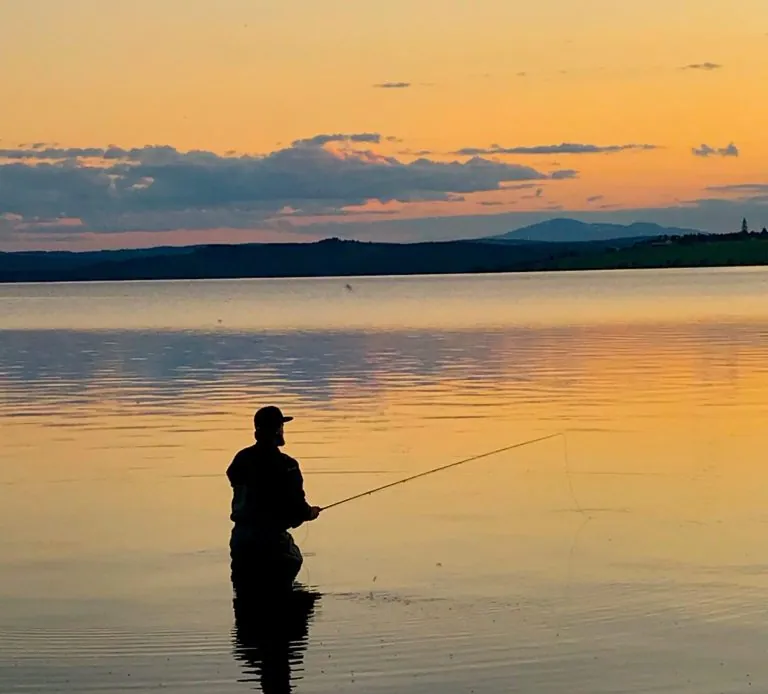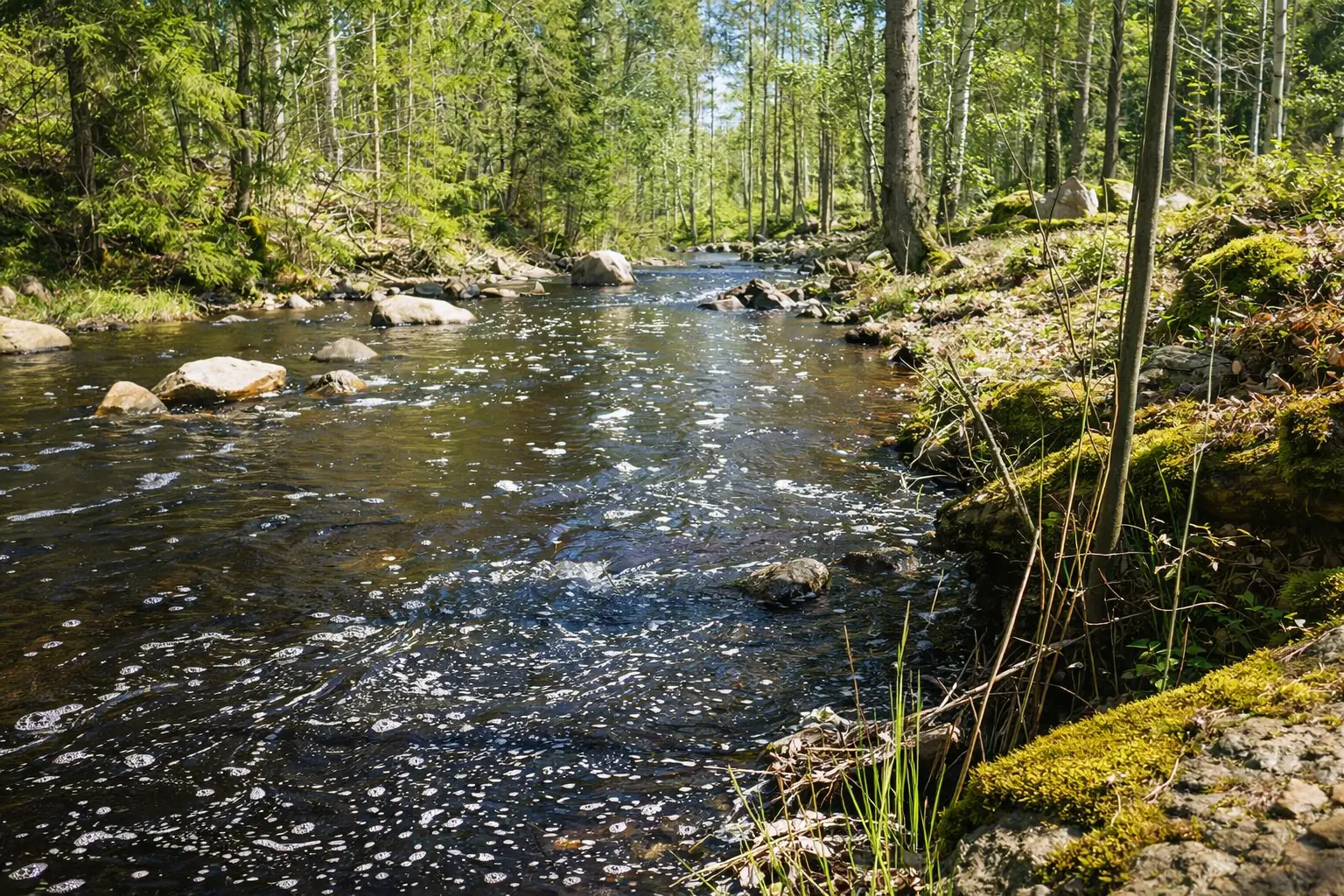
Snärjebäcken as a fishing experience
Snärjebäcken is one of those fishing waters that's often underestimated at first glance, but which rewards those who take the time to understand the place. Unlike many classic put-and-take lakes, Snärjebäcken offers a stream environment with variation, where flowing sections, calm-flowing stretches and dammed parts create a more technical and lively fishing experience.
This is a fishing water that suits several types of anglers at once. For beginners and families, the accessibility is high and the setting easy to read, while more experienced fly anglers can be challenged by selective fish and demands on presentation. Snärjebäcken is therefore not just a water for quick catches, but also a place for methodical fishing and learning.
The fact that Snärjebäcken also has a long history, clear local roots and active management makes the fishing here feel thoughtfully managed rather than incidental. It's exactly this combination of easy accessibility and technical variation that makes Snärjebäcken an interesting choice for anyone who wants to experience put-and-take fishing in a more natural-feeling setting.
Snärjebäcken's history and background
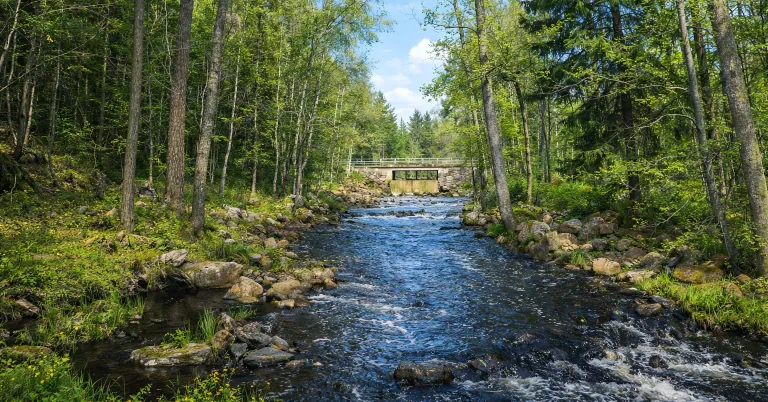
Snärjebäcken has long played a significant role in the landscape, well before sport fishing took its current form. Historically, the stream served as an important boundary stream, among other things in connection with Ryssby parish, which gave it geographic and administrative significance in the area.
For many years, Snärjebäcken was also known for its crayfish fishing, which was an important resource for the local population. This fishing stopped abruptly in 1967 when crayfish plague wiped out the population, something that affected large parts of Sweden during the same period. The consequences of the crayfish plague marked a clear break in the stream's history of use.
The area around the stream, particularly the so-called Åmaden, was previously used as a hay meadow with high yields, which shows how closely tied the stream was to traditional agriculture. During the 1970s, land use changed when the then owners decided to convert the former meadowland, which in turn affected the landscape around the water.
Alongside these changes, interest in organized sport fishing also grew. Modern management, which today focuses on accessibility, fisheries conservation and clear rules, has given Snärjebäcken a new role – from a utility water to a recreational and sport-fishing water with long-term ambition.
Geography, landscape and natural setting
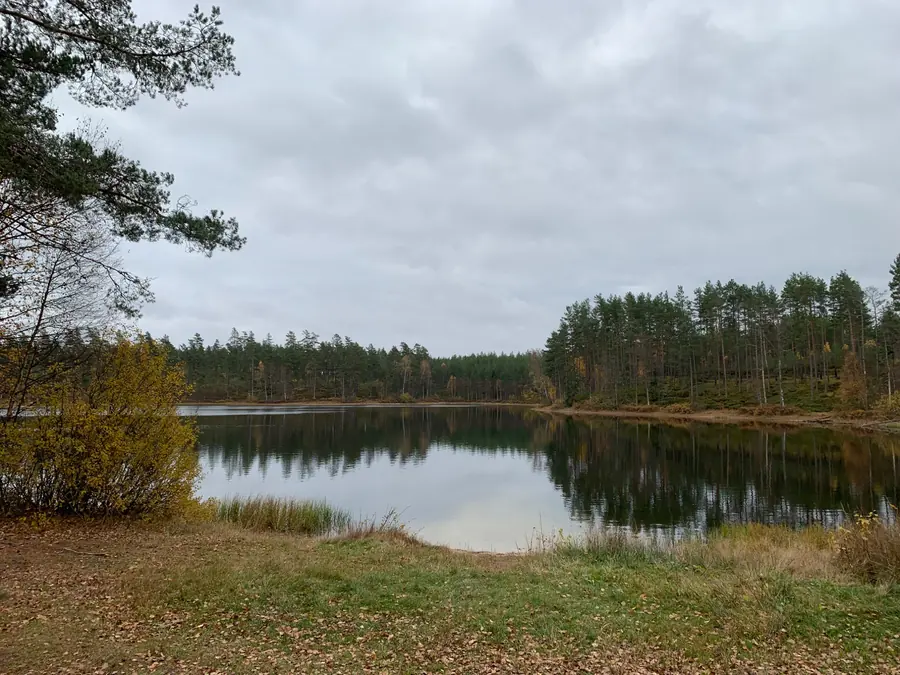
Snärjebäcken is located in Kalmar County, in a landscape characterized by lowland terrain with both forest and open farmland. Unlike mountain-adjacent waters or larger forest lakes, the setting here is more accessible and open, which affects both the fishing and the experience around the water.
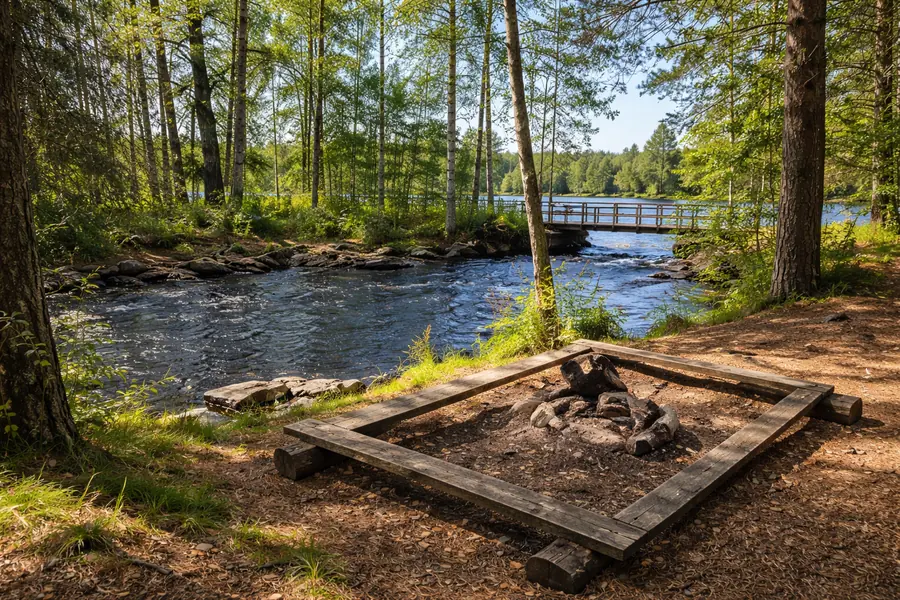
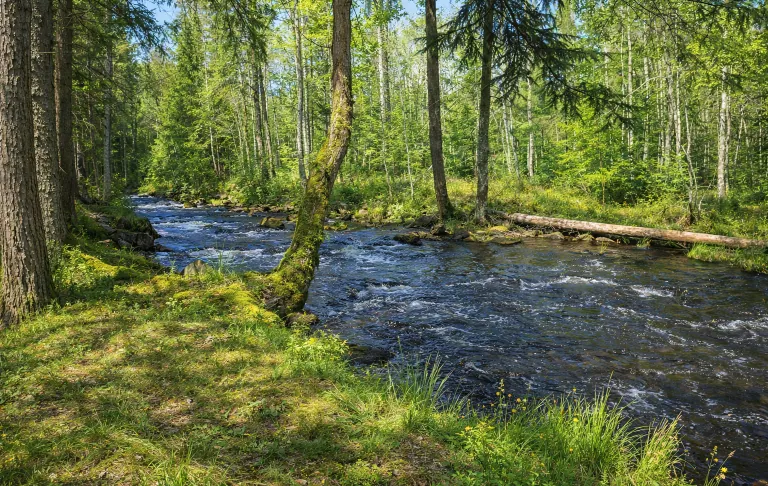
The stream runs through varying natural types, where some sections are more shaded by vegetation, while others are more open and more clearly affected by weather and light. These differences create natural holding spots for the fish, especially in the transitions between calmer and flowing water.
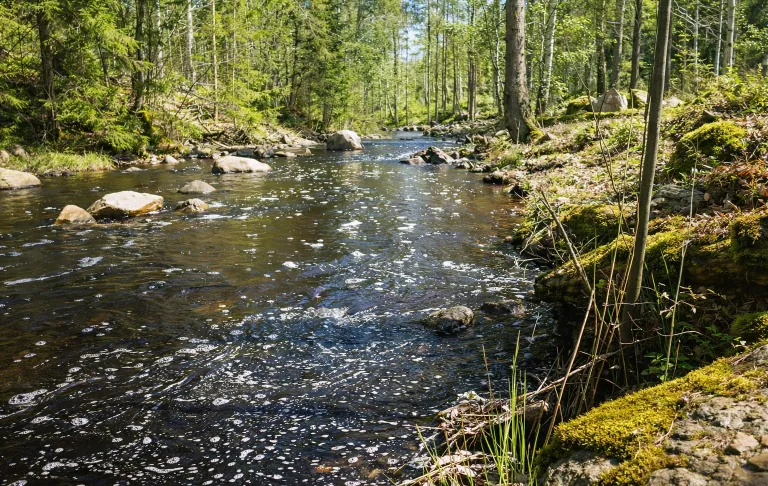
The bottom structure consists mainly of gravel, sand and softer sediment, with deeper sections in the dammed parts. This provides good conditions for both insect life and the fish's movement patterns. During warmer periods, fish often seek cooler, more oxygen-rich sections, while calmer water can be productive at colder temperatures.
The natural setting around Snärjebäcken contributes to fishing that feels close and easy to take in, rather than large-scale. For many anglers, it's exactly this closeness that makes the spot attractive – you fish actively, continuously read the water and adapt your fishing to small changes in the environment.
The water's structure – stream, ponds and flowing sections
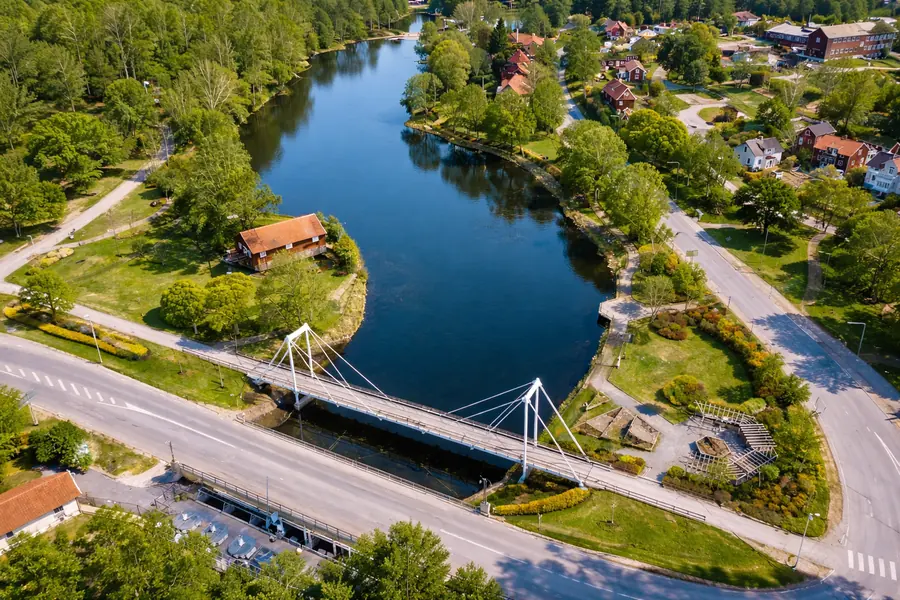
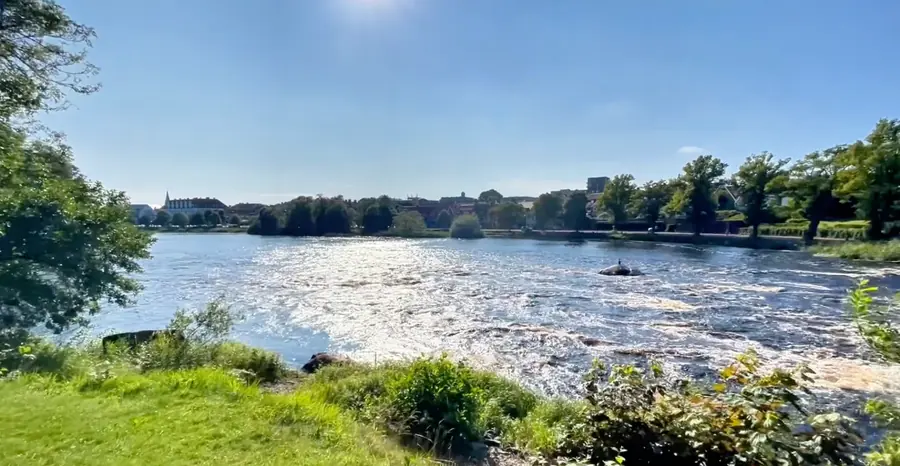
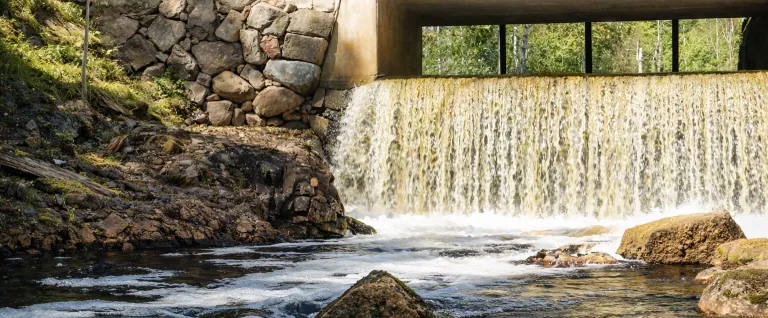
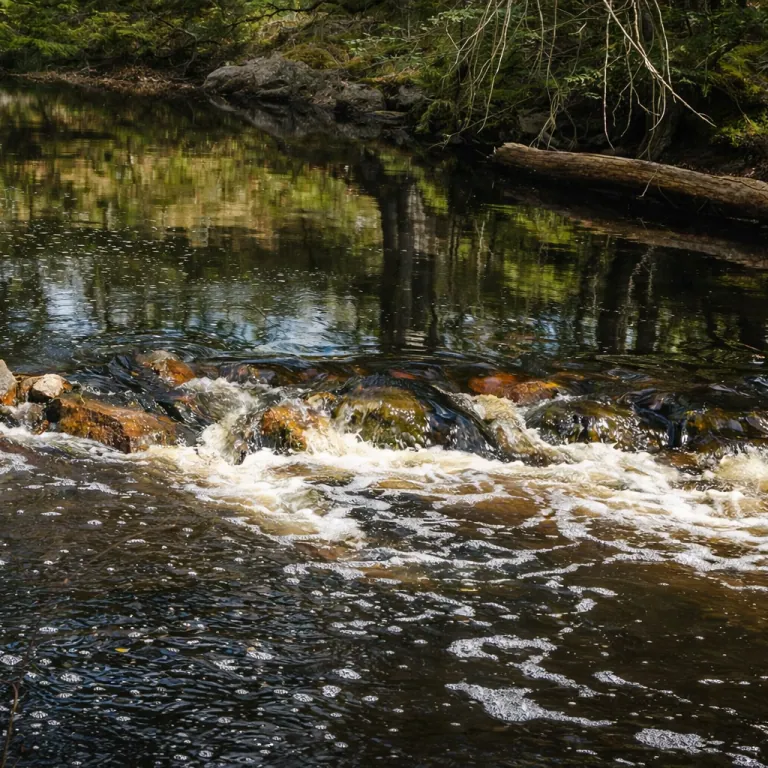
One of Snärjebäcken's greatest strengths is how the water is structured. The fishing area doesn't consist of a single uniform stretch, but of several different types of water that together create variety. Here you'll find calm-flowing stream sections, more distinct current passages, and dammed sections that almost take on the character of small ponds.
The flowing sections often serve as natural travel routes for the fish and offer classic holding spots behind rocks, along edges and in deep pools. These parts are especially well suited for nymph fishing and controlled streamer fishing, where presentation is crucial.
The calmer and dammed sections offer different opportunities. Here the fish often move more on patrol, and both fly and spin fishing can be effective if you fish methodically and at the right pace. The depth variations in these sections can make the fish hard to locate, but reward those who read the water carefully.
The fact that Snärjebäcken offers this kind of internal variation means the fishing rarely feels monotonous. It's entirely possible to have to change method, depth and pace several times within the same session, which makes for active and instructive fishing.
Fish species in Snärjebäcken
The dominant species in Snärjebäcken is rainbow trout, which is stocked regularly and forms the basis of the sport fishing here. Rainbow trout adapt quickly to the stream environment and often display behavior that differs from fish in still put-and-take lakes. In flowing sections, the fish tend to hold more stationary, while in calmer water they move over larger areas.
In addition to rainbow trout, brown trout also occur periodically, depending on stocking and management decisions. Brown trout are generally seen as more selective and often require a more careful presentation, especially in clear water and during low activity.
Pike also occur in the area and are mainly relevant for winter fishing or as a secondary target during periods of low temperature. Pike are not the main focus in Snärjebäcken, however, but rather a complement for anyone who wants to vary their fishing.
A common trait of fishing in Snärjebäcken is that the fish, regardless of species, quickly learn from fishing pressure. This means simple solutions rarely work long-term, and adaptation and variation become the key to success.
Fly fishing in Snärjebäcken
Fly fishing in Snärjebäcken is often what surprises most positively for those used to traditional put-and-take lakes. Here the fishing is less about long casts and more about controlled presentation, correct depth and the ability to read the current. The stream setting means the fish in many cases behave more like river-dwelling fish than classic stocked fish.
In the flowing sections, rainbow trout are often positioned behind rocks, along edges or in transitions between faster and slower water. Nymph fishing with an indicator or the tight-line technique is often effective here, especially when the fly is presented near the bottom with a natural drift. Shorter casts and careful placement generally give better results than covering large areas.
In calmer sections and dammed parts, the fishing changes character. Here the fish move more freely and can be harder to locate. Streamer fishing with a slow retrieve often works well, especially when fishing systematically through different depths. Pace rarely pays off here – rather the opposite. Long pauses and subtle movement are often decisive.
A common mistake in Snärjebäcken is fishing too fast or too shallow. Even when the fish show activity, patience and a thoughtful presentation are often needed to trigger a strike.
Spin fishing and reel fishing
Spin fishing in Snärjebäcken is a very viable option and suits beginners, families and anyone who wants to fish effectively without complicating their gear. Just as with fly fishing, however, pace and adaptation are decisive for the result.
In the calmer and dammed parts, small to medium-sized lures work best. Spinners, smaller spoons and subtle lures that can be fished slowly near the bottom often give the best results. The fish rarely respond well to fast, aggressive retrieves, especially after the water has been heavily fished.
In flowing sections, extra control is required. The lure should be fished at an angle downstream or across the current, with careful control of depth. Here it's important to avoid lures that are too heavy and get stuck on the bottom, while still reaching down to the fish's holding spots.
Spin fishing is often most effective in Snärjebäcken:
- early in the season
- shortly after stocking
- during periods of low insect activity
Recommended flies and lures – spot-adapted choices
Based on current catch reports and observations from Snärjebäcken, it's clear that simple, natural patterns dominate. It's rarely extreme colors or large silhouettes that give the best results.
Flies
- Nymphs: Small to medium nymphs in natural colors such as olive, brown and grey work consistently, especially in flowing sections.
- Streamers: Subtle streamers in white, olive or darker shades are effective in calmer water, fished slowly with pauses.
- Dry flies: Can work during clear insect hatches, but are generally more situation-dependent than in larger river waters.
Spin lures
- Small spinners with a subtle action
- Light spoons
- Lures that can be fished slowly and in a controlled way
The most important thing isn't the exact fly or lure choice, but how the lure is presented in each part of the water.
Fishing times, season and openings
Snärjebäcken offers fishing for much of the year, with specific openings regulated by management. These openings often mark the start of seasons with high activity, but also increased fishing pressure.
Spring and early summer can offer very good fishing, especially around stocking and stable water levels. During warmer summer days, the fish often seek deeper and cooler sections, which places higher demands on technique and presentation.
Autumn is often characterized by more stable fishing, as lower temperatures make the fish more active for longer stretches of the day. During mild winters, winter fishing also occurs, including targeted pike fishing in certain parts of the area.
Fishing permits, rules and responsible fishing
Fishing permits for Snärjebäcken are purchased digitally via iFiske, where current information on prices, validity and availability is always collected. The rules are clearly designed to ensure sustainable fishing over time.
The regulations cover, among other things:
- permitted fishing methods
- number of fish per permit
- handling and dispatching
- special provisions during openings
Following the rules is crucial for the long-term quality of the fishing. Snärjebäcken is a water that's quickly affected by heavy fishing pressure, so responsible fishing is a prerequisite for the experience to remain good in the future.
You'll find fishing permits and current rules here at iFiske.se
Accommodation near Snärjebäcken – camping, tenting and caravan
One of the advantages of Snärjebäcken is its proximity to several established accommodation options, especially around Rockneby. For anyone who wants to combine fishing with nature experiences and comfortable accommodation, there are good options for both camping, tenting and caravan life in the area.
Nearby there are several campgrounds that work excellently as a base for the fishing. Many choose to combine the fishing with camping and tenting in Sweden, where you can easily adapt your stay to the weather, season and the family's needs. The option to stay anywhere from a single night to longer periods makes the area flexible and easy to plan.
For anyone who prefers simpler, more nature-close accommodation, complete packing list for tent camping is a good starting point, especially if you want to travel light and avoid forgetting gear. The combination of fishing, cooking outdoors and calm evenings at the campsite fits well with Snärjebäcken's character.
caravan holidays and motorhome life are also popular options in the area, especially during spring and summer when the fishing is most accessible. For anyone who wants a fixed base with the option of outings between different fishing spots, this offers a comfortable and family-friendly setup.
All in all, the accommodation options around Snärjebäcken make it easy to create an all-round experience where fishing, rest and nature experiences go hand in hand – whether you travel light with a tent or prefer the comforts of campground life.
Accessibility and practical planning
Snärjebäcken is a fishing water well suited for anyone who wants easily planned, hassle-free fishing, with no need for long hikes or complex logistics. The area is easy to reach by car and requires no long walks to access the fishable stretches.
Parking is available right by the fishing area, and it's relatively easy to move along the stream. The terrain is generally flat, making it possible to fish comfortably even for those who don't want to, or can't, move through more demanding settings. This is a clear advantage compared to many river waters where accessibility can be limited.
Wading isn't necessary in most cases, and much of the fishing is done effectively from the shore. This reduces both risk and equipment requirements, while also making the fishing more accessible to children and less experienced anglers.
For anyone planning their visit carefully, it's wise to:
- check current water levels
- read through the rules before arrival
- adapt the gear to whichever part of the stream you'll be fishing
The practical accessibility makes Snärjebäcken a water that works just as well for spontaneous fishing sessions as for planned outings.
Family-friendliness and a beginner's perspective
Snärjebäcken is one of the more family-friendly put-and-take waters in the region. The combination of an accessible setting, clear rules and varied yet easy-to-read fishing means both children and beginners can have a positive first experience of sport fishing.
For children, it's an advantage that the fishing spots are easy to reach and that the water is relatively easy to read visually. That makes it easier to understand where the fish might be and how the fishing works in practice. At the same time, the variation in the water makes it possible to demonstrate different fishing methods without having to change location.
For beginners, Snärjebäcken is a good water for learning:
- basic presentation
- the importance of pace
- how fish react to fishing pressure
In terms of safety, the area is easy to oversee, but as always when fishing in flowing water, children should be supervised. With reasonable precautions, this is a water well suited for introducing the next generation to sport fishing.
Our own experiences at Snärjebäcken
Snärjebäcken feels like fine, nature-close fishing in flowing water, where the setting itself adds to the overall experience. The water feels alive and easy to read, and the fishing happens in close contact with the current, the bottom structure and the surrounding nature.
The fishing largely matches what you'd expect from a well-managed put-and-take water in a stream setting. It's neither unnecessarily difficult nor overly simple, but it does require you to be attentive and adaptable. Once the fish are positioned right and you present the right fly at the right moment, the willingness to strike can be very good.
One clear takeaway is that fly choice matters a lot, but not in the form of a single "miracle pattern." Instead, it's about reading the situation and adapting the fly to the season, water temperature and current insect activity. When the fly matches what the fish are feeding on at that moment, they often react quickly and decisively.
That's why it's important not to lock yourself into one choice. Changing flies, adjusting size or color and trying different presentations is often what decides your fishing luck in Snärjebäcken. Anglers who are willing to experiment and adapt their fishing are rewarded far more often than those who fish statically.
Similar fishing waters to discover
Those who appreciate Snärjebäcken and its nature-close, methodical fishing in flowing water tend to also enjoy other sport-fishing waters with a similar character. For anyone who wants to broaden their experiences and compare different types of put-and-take and sport-fishing waters, there are several well-described alternatives to explore further here on Swilderness.com.
A natural next step is Baltak, which offers classic river fishing in a more pronounced river system, where presentation, drift and an understanding of current seams play a decisive role. For anyone who wants to read more, there's a complete guide to fishing at Baltak here.
Another water that resembles Snärjebäcken in both accessibility and fishing pressure is Sunnedamm, a sport-fishing water where patience, pace and adaptation often decide your fishing luck. Just as in Snärjebäcken, anglers willing to change method and read the water carefully are rewarded. An in-depth rundown of fishing at Sunnedamm can be found here.
For anyone looking for a larger and more varied sport-fishing area, Harasjömåla Sport Fishing is a strong complement. Here lakes, flowing water and put-and-take fishing combine in a bigger setting, making it possible to compare how fish behavior differs between different types of water. Read more about Harasjömåla here.
Summary – who Snärjebäcken is perfect for
Snärjebäcken is a well-managed put-and-take water that offers more than its name suggests. Here easy accessibility and technical variation meet in a setting that suits beginners, families and more experienced anglers alike.
For anyone looking for:
- a water that's easy to plan
- fishing where presentation and method are rewarded
- a setting that works just as well for short sessions as longer stays
Snärjebäcken is a very strong option. With nearby accommodation, clear rules and fishing that requires thought rather than brute force, this is a water that can be fished again and again without ever feeling worn out.
Find us!
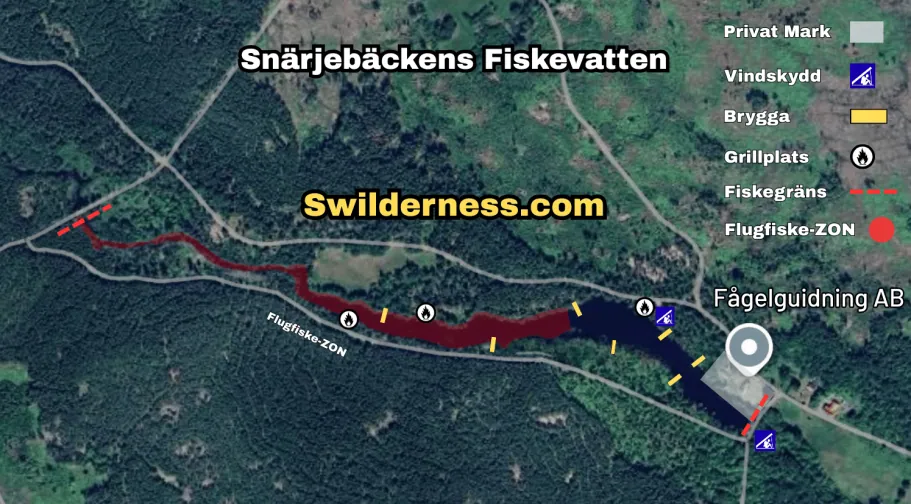
Finding your way here is easy. Use the map above to see the exact location and get directions straight from where you are now.
We recommend using Google Maps or another map service for the current route, travel time and any traffic updates.
See the image higher up in the article for approximate fishing boundaries.
The map loads from Google Maps only when you click.