Short answer
Start with the head and breast: the great tit has a black head and a black stripe down its yellow belly, the blue tit a blue cap. The tree sparrow has a brown cap and a black cheek spot. Compare with the house sparrow and the blackbird, write down what you see and keep the feeder clean.
The bird feeder is a place to keep coming back to. The same branch can get visits from a yellow and black great tit, a little blue tit and a brown sparrow within a few minutes. Start with two features on one bird at a time; that makes it easier to see the differences.
Look at the head and breast first. The colour of the cap, cheek spots and a black stripe can tell you more than the fact that the bird is small. Great tits, blue tits and tree sparrows are the most common visitors to Swedish bird feeders, and here we compare them with the house sparrow and the blackbird. How to make the food itself is in bird feeder for the winter.
Start with a good viewing spot
Choose a spot where you can stand or sit without walking back and forth near the birds. A window looking out on the feeder makes it easy to watch for a short while and come back later. Put a bird book, a pencil and a small piece of paper where they can stay.
Describe what you see before deciding on the species: black head, white cheek, yellow underside or brown cap. Whoever is watching can say the features out loud while someone else compares with the guide. Then the children don't have to both spot the quick bird and read at the same time.
Binoculars can help at a distance, but start with birds that are already easy to see. Keep the feeding spot as the birds' space. If they fly off every time someone comes near, it's better to stay further away.
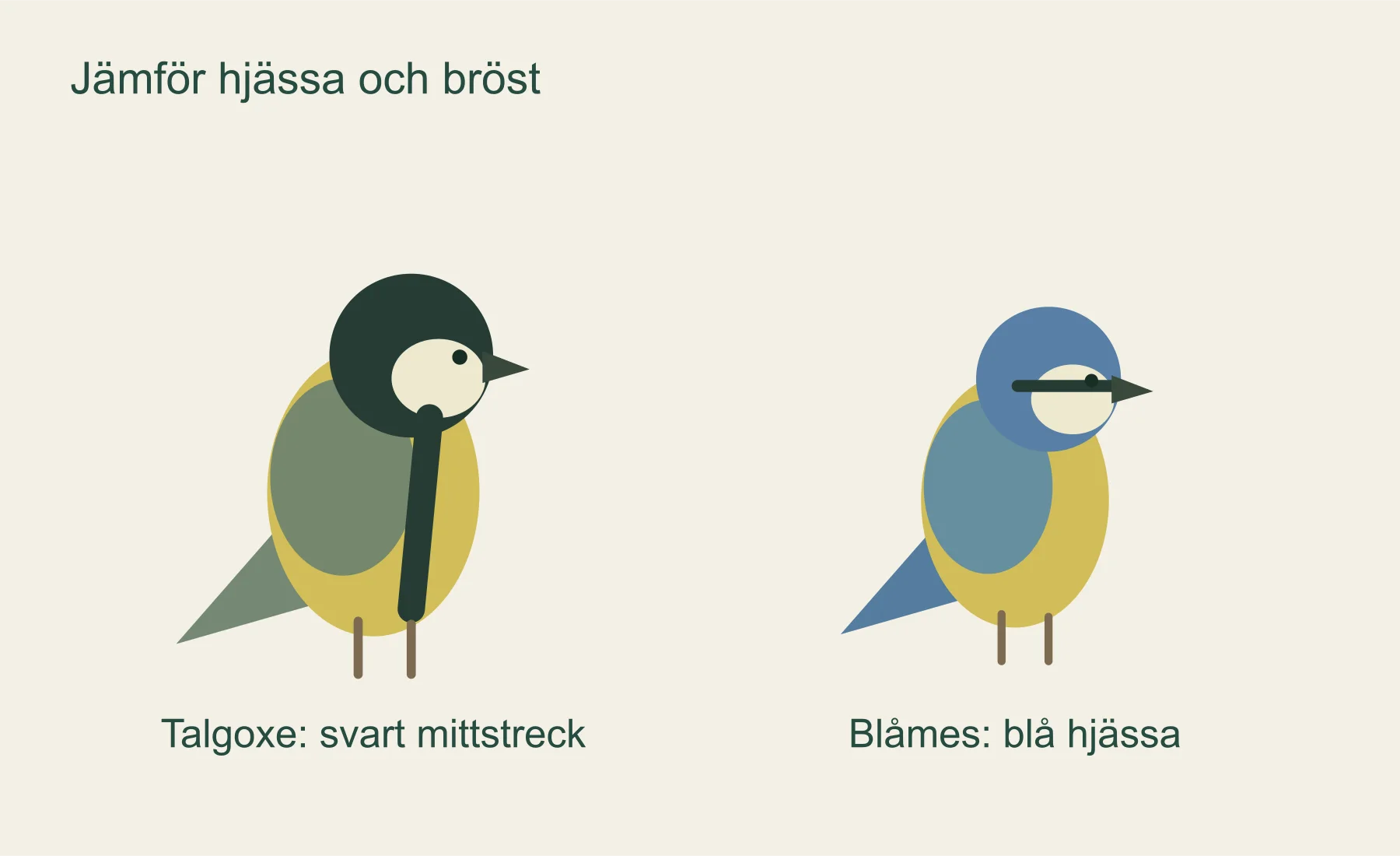
Great tit and blue tit – compare the heads
The great tit has a black head, large white cheeks and a yellow underside with a black stripe down the middle. See if you can follow the stripe down the breast. It's a good feature to look for when the bird turns to face you.
The blue tit has a blue cap and blue patches on its wings, a white cheek and a dark stripe through the eye. Its yellow underside can make it look like a great tit at first, but it lacks the great tit's bold black stripe down the belly.
Start with just those two species. Let the children say “blue cap” or “black head and tie” before they learn the name. Once you've seen both, the next task can be to spot the same features on a new bird, not to find five more species straight away.
Tree sparrow and house sparrow – look at the cheek
The tree sparrow has a brown cap and a clear black spot on its pale cheek. Both males and females have that pattern. Look for the cheek spot when the bird turns side-on.
The male house sparrow has a grey cap and a black bib. The female is a more even greyish brown and lacks the male's clear head pattern. So a small brown bird isn't automatically a tree sparrow.
If you can't see the head properly, write “sparrow” and look again next time. That's a useful note, and there's no reason to decide on a species from a glimpse of its back.
Blackbird – compare with the smaller birds
The adult male blackbird is all black with a yellow to orange-yellow beak. The female is dark brown. The blackbird is bigger and has a different silhouette from the tits, with a longer body and tail.
Look below the feeder too, and at any fruit you've put out. The blackbird doesn't have to sit on the same little perch as the tits to visit. Write down where the bird was seen, so the species list also describes how the garden is used.
Five birds to compare
| Species | Start with this | Common mix-up to sort out |
|---|---|---|
| Great tit | Black head, white cheek, yellow belly with black centre stripe | The blue tit's cap is blue. |
| Blue tit | Blue cap, white cheek and dark eye stripe | A yellow underside isn't enough to say great tit. |
| Tree sparrow | Brown cap and black spot on a pale cheek | Compare the cheek and cap with the house sparrow. |
| House sparrow | Male's grey cap and black bib; female greyish brown | Females and males look different. |
| Blackbird | Larger dark bird; adult male with yellow beak | The female is brown, so look at shape and size too. |
Keep the table as a help while you watch. For a walk where sounds and other winter finds count too, there's our winter bingo.
Let the food suit the place and the birds
Feed during the winter months and vary the food: sunflower and hemp seeds, oats and unsalted peanuts in a feeder that hangs freely, so the birds don't trample and poo in the food. Apples and other fruit attract thrushes like the blackbird. Bread is only emergency food in small amounts.
Hang the feeder a couple of metres from bushes the birds can fly into. Otherwise, bushes that give cover right down to the ground become hiding places for cats. If you live in a block of flats, the housing association may have rules about feeding from the balcony, so check before you put up a feeder. On a walk you can just as well watch at a feeder someone else already looks after.
You can use the observations as a small part of the Advent outing or a quiet morning at home during the Christmas holidays. The birds don't need to come up with a new species every time you look.
Keep the feeding spot clean
An adult does the cleaning and removes wet, stale or mouldy food. Wash the feeder with its own brush outdoors or in a well-ventilated space, never in the kitchen. Dampen old droppings before brushing them off so they don't make dust, and wash your hands afterwards.
If you see sick or dead birds at the spot, pause feeding for a few weeks. Keep children and pets at a distance, and never go closer to a fluffed-up bird that doesn't fly off just to take a photo.
Write a short list you can use again
Note the date, species and the highest number of the same species seen at the same time. That way you don't automatically count every return as a new bird. Add a feature or a small drawing on the line.
A short while at a time is enough. An empty line just means the bird wasn't seen right then – weather and disturbance affect which visitors show up.
If you'd like to contribute your numbers, you can take part in BirdLife Sverige's (the Swedish ornithological society) bird count Vinterfåglar inpå knuten at the end of January. There you report exactly that: the highest number of each species seen at the same time.
When you want to swap the window for an outing, there are more ideas among child-friendly nature activities and our guides to nature experiences. Bring the same way of looking: a few clear details before the name is decided.
Frequently asked questions
How do you tell a great tit from a blue tit?
The great tit has a black head and a black stripe down its yellow underside. The blue tit has a blue cap and lacks the great tit's long black centre stripe.
How do you tell a tree sparrow from a house sparrow?
The tree sparrow has a brown cap and a black spot on its white cheek in both sexes. The male house sparrow has a grey cap and a black bib; the female is greyish brown.
Should the bird feeder be washed in the kitchen?
No. Bird droppings can spread infection, so clean the feeder with its own brush outdoors or in a well-ventilated space. Wash your hands thoroughly afterwards.