

Choose the stove to suit the food
The soup needs to fit and be possible to stir. See how pot, burner and food plan fit together before you pack.
To the outdoor stove guideRed lentils, tomato and carrot in the same pot

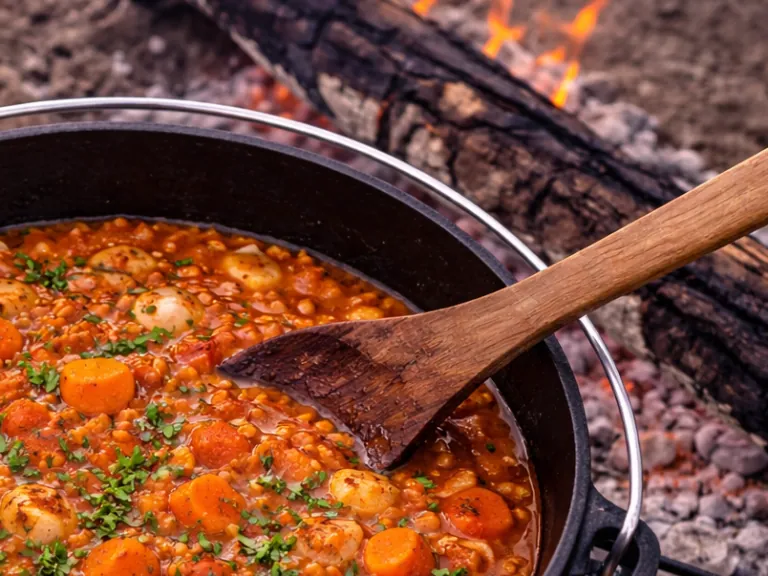
Red lentils, tomato and carrot make a hot lunch that can be cooked in the same pot all the way through. Here the cooking starts with the lentils and water; the tomato goes in once the lentils have softened. That way you can check the consistency before the final seasoning, without needing a blender outdoors.
The recipe makes two servings with bread and is cooked in a 1.75-litre pot. With a one-litre pot, you cook half the amount at a time. That leaves room to stir without the soup sitting close to the rim. If the food is part of a longer trip, there are more set-ups in the guide to outing food.
Have you made this recipe? Rate it
0.0 out of 5 · 0 votes
out of 5
vote
votes
Be the first to rate this recipe.
Thanks for your vote!
Your vote could not be saved right now. Please try again later.
 🔥 Over fire

 🔥 Over fire
Measure out lentils and spices into separate labelled containers. Keep the lentils apart from the stock and the water until cooking, so you can follow the order of work without sorting through the ingredients on site.
Whole vegetables mean you don't have to transport chopped food. If you want to chop ahead, it should be stored and transported cold. Pack the bread separately and protect it from moisture. What will be eaten straight away doesn't need to sit among kitchen parts that get sooty or wet.
Bring water for the rest of the outing and for hand hygiene too. The recipe's 5.5 decilitres is cooking water, not a calculation of the family's total water needs. For the work around the meal itself there is a guide of its own to hygiene and washing up outdoors.
Divide all the ingredients into two equal parts and cook two half batches. A half batch fits in a pot of about 1 litre. Use 0.75 dl lentils, 100 g tomato, 2.75 dl water and half of the vegetables and spices. Save 0.5 dl of the water for thinning.
Two batches mean two rounds of cooking. Plan so the first can be served and eaten while the next is cooked, and so an adult still keeps an eye on the stove. For four people you need two whole batches. Serve the first round while the next is cooked, or choose a meal that can be finished at home.
If you would rather bring a fully prepared meal, choose that set-up from the start and arrange safe cooled transport and reheating. For cold and winter conditions there is specific advice in cooking outdoors in winter.
Feel the lentils, don't just go by the clock. Scoop up a few with the ladle and let them cool before you taste. They should be soft, without a hard core. A stated time helps the planning but can't replace checking your own ingredients and cooking.
Thin a little at a time. Once the tomato is in, you can judge how much reserve water is needed. A soup that has become too thick is easier to adjust than one that has already been thinned more than you wanted.
Stir along the bottom. Bubbles on the surface don't show what it looks like where the heat meets the pot. If the soup catches on the bottom, lower the heat and stir more often. Turning up the heat to catch up with the clock doesn't solve that problem.
If you want to make a different kind of lentil dish next time, there are lentil stew with root vegetables and chickpea stew. They have different ingredients and methods; don't just swap the pulse in this soup.
Start with the basic soup and change one thing at a time. Lemon at serving is a way of letting everyone choose for themselves. Anyone who wants chilli can spice their finished portion, without the whole pot having to get the same strength.
Check the stock's contents when you cook for someone with an allergy or another special diet. The bread and any accompaniments need to suit that person too. The recipe's vegetables don't automatically make the whole meal free of a particular allergen.
Follow the stove's instruction manual. An adult handles the stove. The kids can count bowls and divide up the bread at a spot away from the burner. The pot, handle and soup stay hot even when the flame is out. Don't use a tent or porch tent as a cooking spot in the rain.
Preferably cook the amount you're going to eat. Food that is to be saved needs to cool quickly and then be kept cold. A lukewarm leftover in the rucksack isn't planned cold storage. If you have no way of handling leftovers properly, adjust the amount before the trip. If you're going to cook over a campfire another day, there's more about the fire spot in fire safety in nature.
Ordinary split red lentils don't need soaking. Still read the preparation instructions on the packaging and use the right kind of lentils for the recipe.
Not as a direct swap with the same method. They have different cooking properties. Choose a recipe made for the lentil you want to use.
No. Here the lentils are meant to soften and the carrot is finely chopped. It makes a soup with some texture, not a completely smooth purée.
Plan on about 45 minutes including preparation. The lentils need about 15–20 minutes of simmering; fine chopping, bringing to the boil and the final heating with the tomato take the rest of the time.
Bring ready-made bread. Then the side doesn't need to be heated at the same time. If you want to bake at another meal, there is frying-pan bread as a recipe of its own with its own cooking time.
Plan the next lunch outdoors
Choose the stove to suit the food
The soup needs to fit and be possible to stir. See how pot, burner and food plan fit together before you pack.
To the outdoor stove guideSort the washing-up at home
Pack for hand hygiene, leftovers and cleaning so lunch gets a good finish even without an ordinary sink.
Plan hygiene outdoorsGet the rest of the packing together
Once the kitchen parts are chosen, bowls, a change of clothes and whatever helps the kids during the break also need to fit.
To the camping packing list