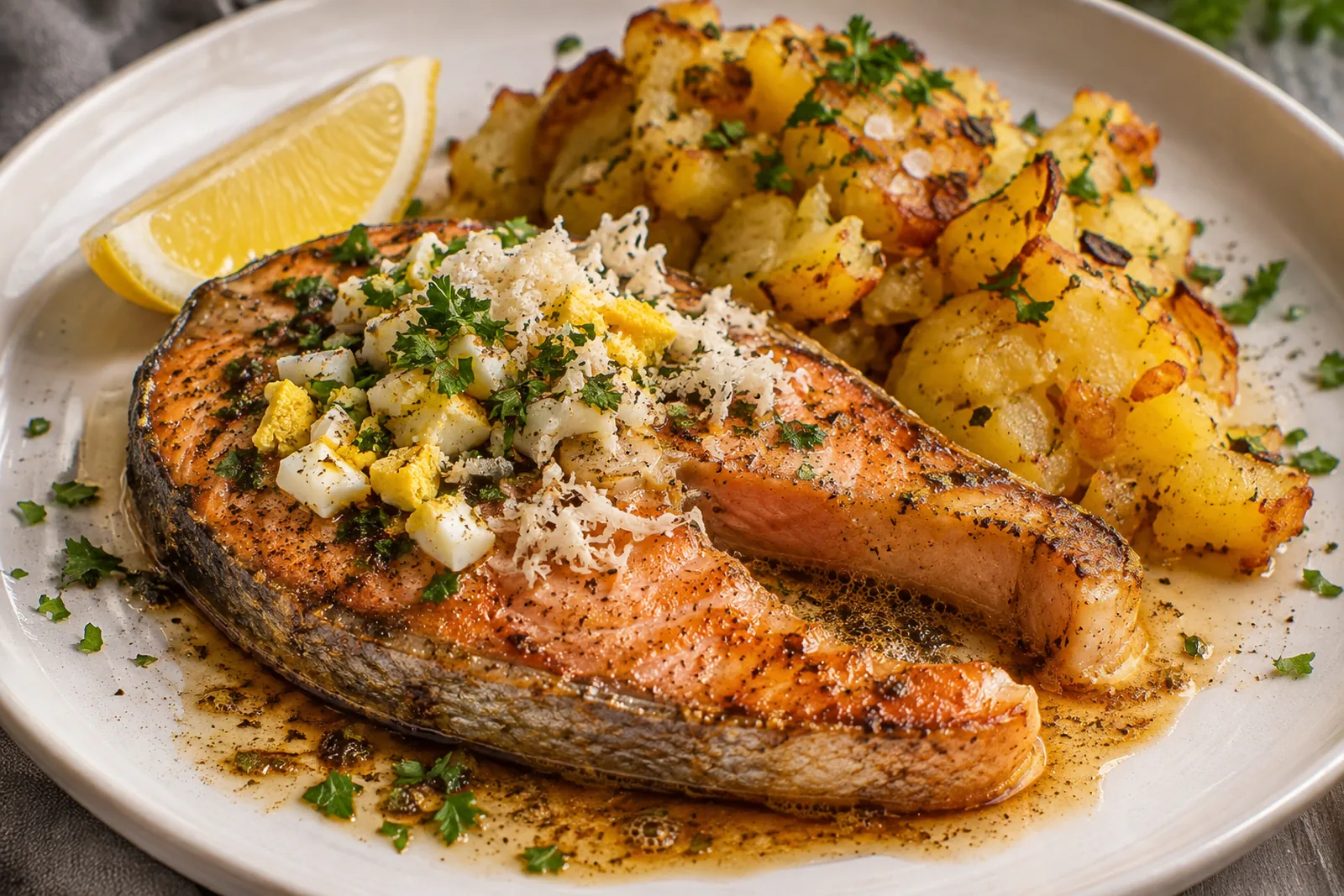
A salmon steak is not a fillet. It is cut across the whole salmon, straight through the backbone, so each piece becomes a thick slice with the bone in the middle and skin all around. Two flaps of belly meat hang down from the back, one on each side, which is why Swedes sometimes call the steaks "laxbyxor" – salmon trousers: put one on the plate and it looks like a pair of shorts, with the back as the waistband and the belly flaps as two legs. The bone keeps the fish juicy in the oven, and the skin around the edge protects the flesh.
Salmon steaks are an old-fashioned dish that deserves a place on the New Year's Eve menu. They are easy to cook, hard to dry out and look generous on the plate. Brown butter and freshly grated horseradish is the Nordic way of serving fish when it needs to be a little smarter: the butter is nutty and rich, the horseradish sharp and fresh, and the salmon carries both. The whole dish takes half an hour, and the fish spends most of that time in the oven.
Ask the fish counter to cut the steaks
Salmon steaks are not always available ready-cut, but any fish counter that sells whole salmon can cut them. It takes a heavy knife or a saw to get through the backbone, so ask for help rather than doing it at home.
Ask for salmon steaks 2.5–3 cm thick. Thinner steaks dry out quickly. Thicker ones take longer and cook unevenly.
Take them from the middle of the salmon. That is where the pieces are most even. Steaks near the tail are small and have no belly flaps.
Allow one steak per person, 200–250 grams with bone and skin.
Farmed or wild-caught? It should say on the label or packaging. It matters for how hot the fish needs to get in the centre (see the safety section).
Order a couple of days before New Year's Eve if you can. The fish counters are very busy on 30 and 31 December.
Method
1
Take out the salmon. Let the steaks stand at room temperature for 20 minutes. Set the oven to 150 degrees.
2
Dry and feel for bones. Dry the steaks with kitchen paper. Run a finger along the belly flaps and pull out any pin bones you can grip with the tweezers. The backbone and the small bones around it stay in and come away easily once the fish is done.
3
Shape, if you like. The steaks can be baked as they are. If you want a round, even piece, fold the two belly flaps in towards each other under the back to make a medallion, and secure them with a cocktail stick or a loop of kitchen string. That way the thin flaps do not dry out before the middle is done.
4
Season. Grease the dish. Put in the steaks, season them with salt and pepper on both sides and squeeze over a little lemon.
5
Bake. Put the dish in the middle of the oven. The salmon is done when it reads 50–54°C in the thickest part near the bone. It takes 15–22 minutes depending on thickness. The flesh should just have lost its sheen and flake apart, but still be juicy and slightly glossy in the centre.
6
Meanwhile, boil the eggs, if you are using them, for 9 minutes. Cool them in cold water and chop them.
7
Grate the horseradish. Peel the piece and grate it finely. Do this just before serving, as the sharpness fades quickly once the root is grated.
8
Brown the butter. Melt the butter in the saucepan over medium heat. It sizzles, foams and goes quiet. When the sediment turns hazelnut brown and it smells of toasted nuts, it is done, after 4–6 minutes. Take the pan off the hob straight away and squeeze in the lemon juice. It will sizzle.
9
Plate up. Lift the steaks onto warm plates and remove the string or cocktail sticks. Pour the brown butter over the fish. Scatter over the horseradish, parsley, chopped egg and capers. Serve with potatoes and lemon wedges and the rest of the butter in a small jug.
Have you made this recipe? Rate it
0.0 out of 5 · 0 votes
out of 5
vote
votes
Be the first to rate this recipe.
Thanks for your vote!
Your vote could not be saved right now. Please try again later.
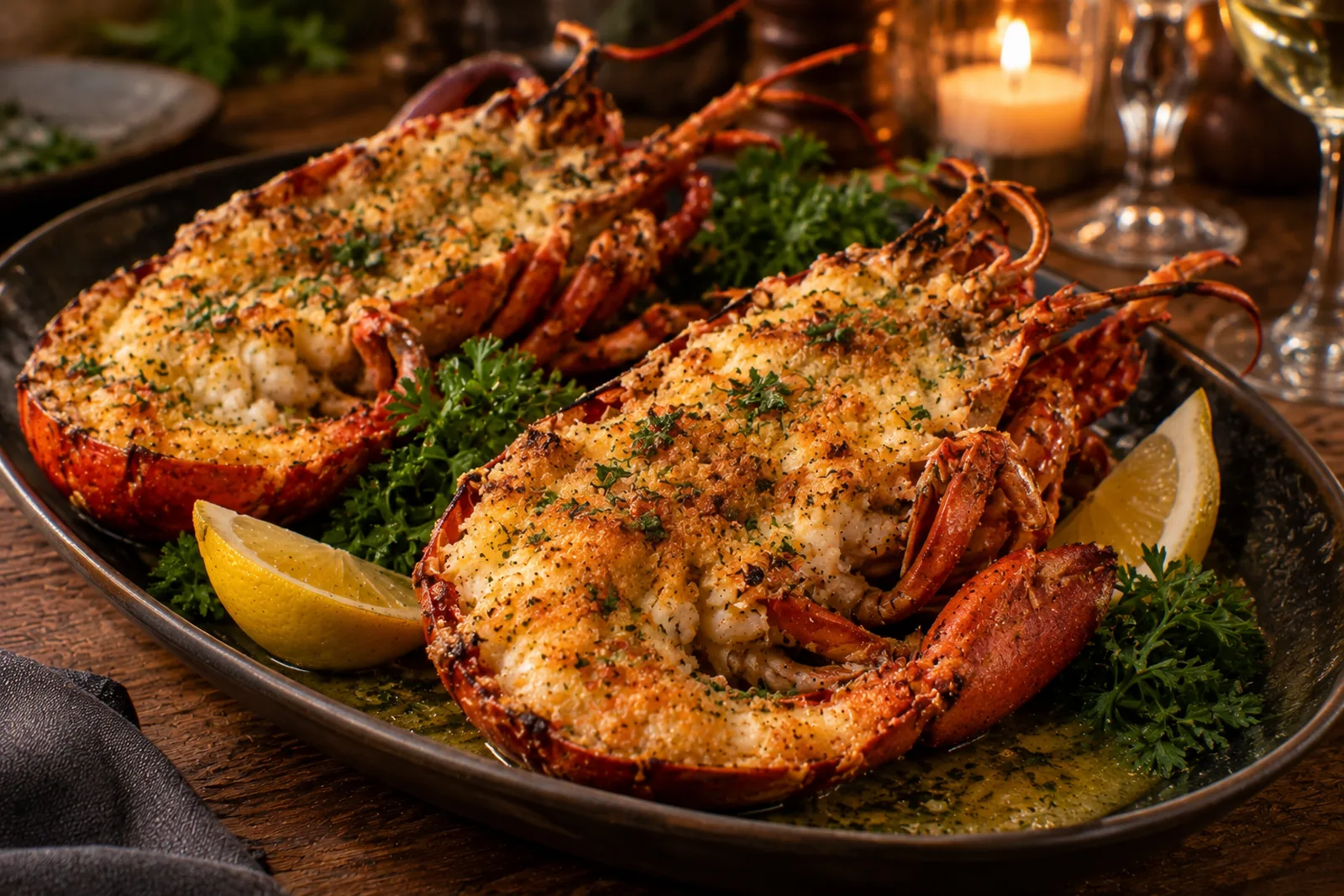
Lobster gratin with garlic and parsley butter – half a lobster per guest
🍽️ 4 servings🥕 14 ingredients👣 9 steps
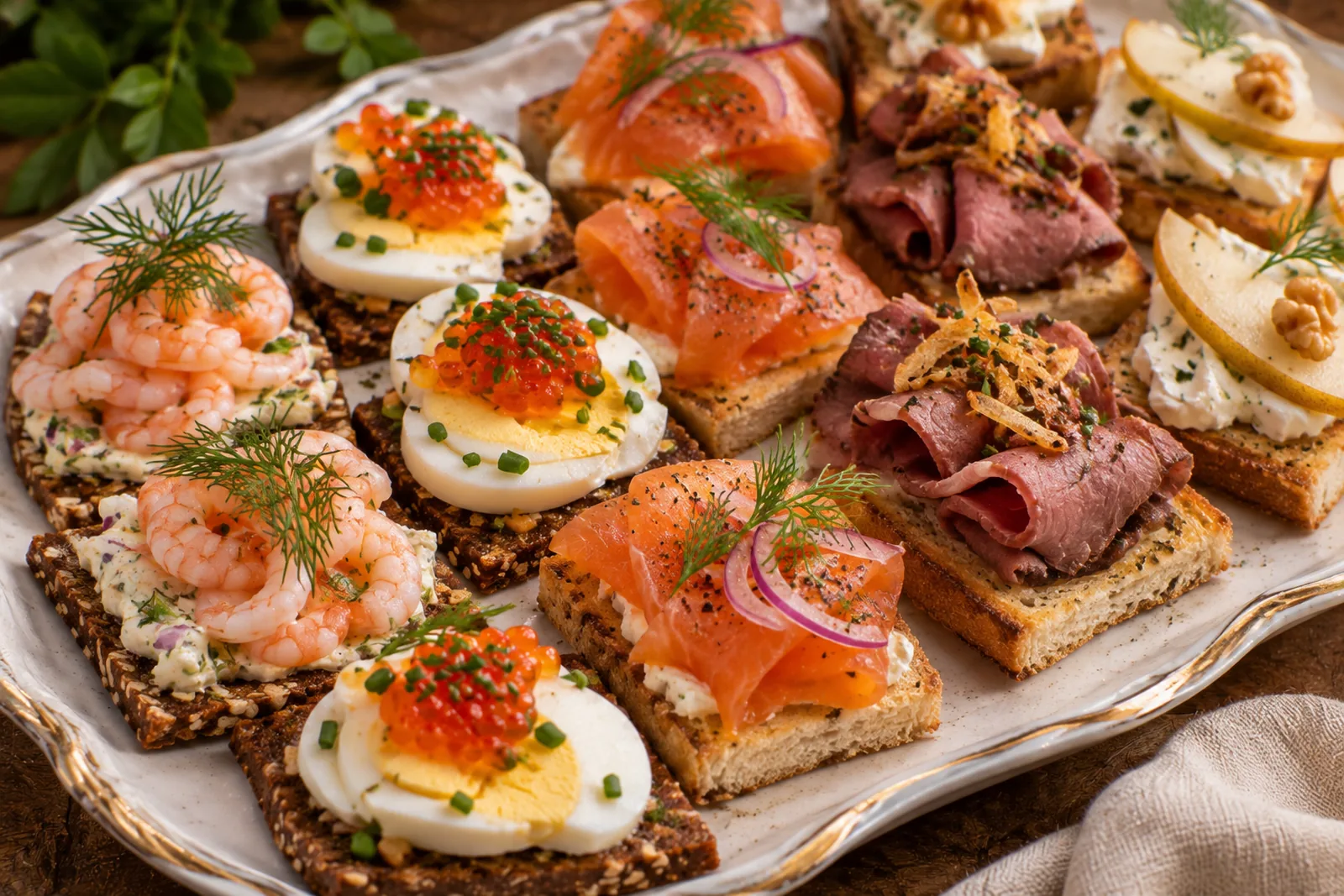
Classic Swedish canapés – prawns, egg and caviar, salmon, roast beef and Västerbotten cheese on small breads
🍽️ 40 canapés🥕 24 ingredients👣 6 steps
Rainbow Trout with Lemon & Dill Sauce
🍽️ 4 servings🥕 13 ingredients👣 4 steps
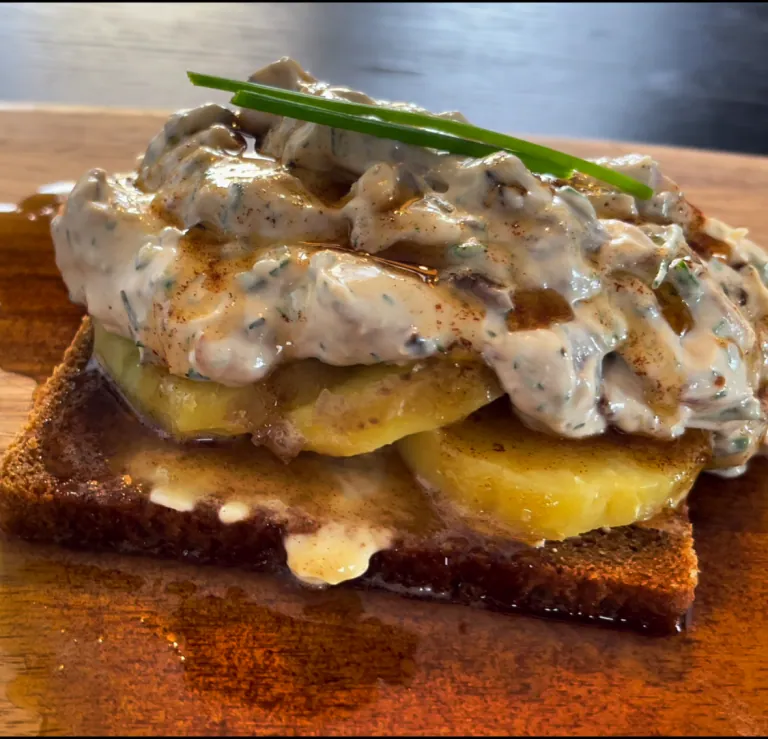
Recipe - Egg & Anchovy Salad with Browned Butter
🥕 9 ingredients👣 8 steps
How to eat a salmon steak
The bone is what keeps the steak juicy, but it should not get in the way at the table. Run the knife along the backbone and the flesh falls away in two pieces. The belly flaps often have a few small bones left, and they come away easily once the fish is done. Put out a small bowl for bones and skin, and tell your guests that the fish is on the bone, especially the children.
If you want to avoid bones completely, you can remove the backbone before cooking: cut along both sides of the bone with a thin knife and lift it out, then roll the flesh into a medallion. It is a bit fiddly, but it can be done.
Timeline for New Year's Eve
New Year's Eve 2026 falls on a Thursday. Salmon steaks are one of the main courses on the New Year's Eve menu that take the least work once the guests have arrived.
Monday 28 or Tuesday 29 December: order the steaks at the fish counter and collect them the day before or on the day.
New Year's Eve afternoon: pull out the bones, shape the medallions and put the steaks in the dish, covered, in the fridge. Boil the eggs and chop them. Peel the potatoes and chop the parsley.
45 minutes before you eat: put the potatoes on. Take out the salmon and set the oven to 150°C.
25 minutes before: salmon into the oven.
5 minutes before: grate the horseradish and brown the butter.
At the table: plate up and pour over the butter.
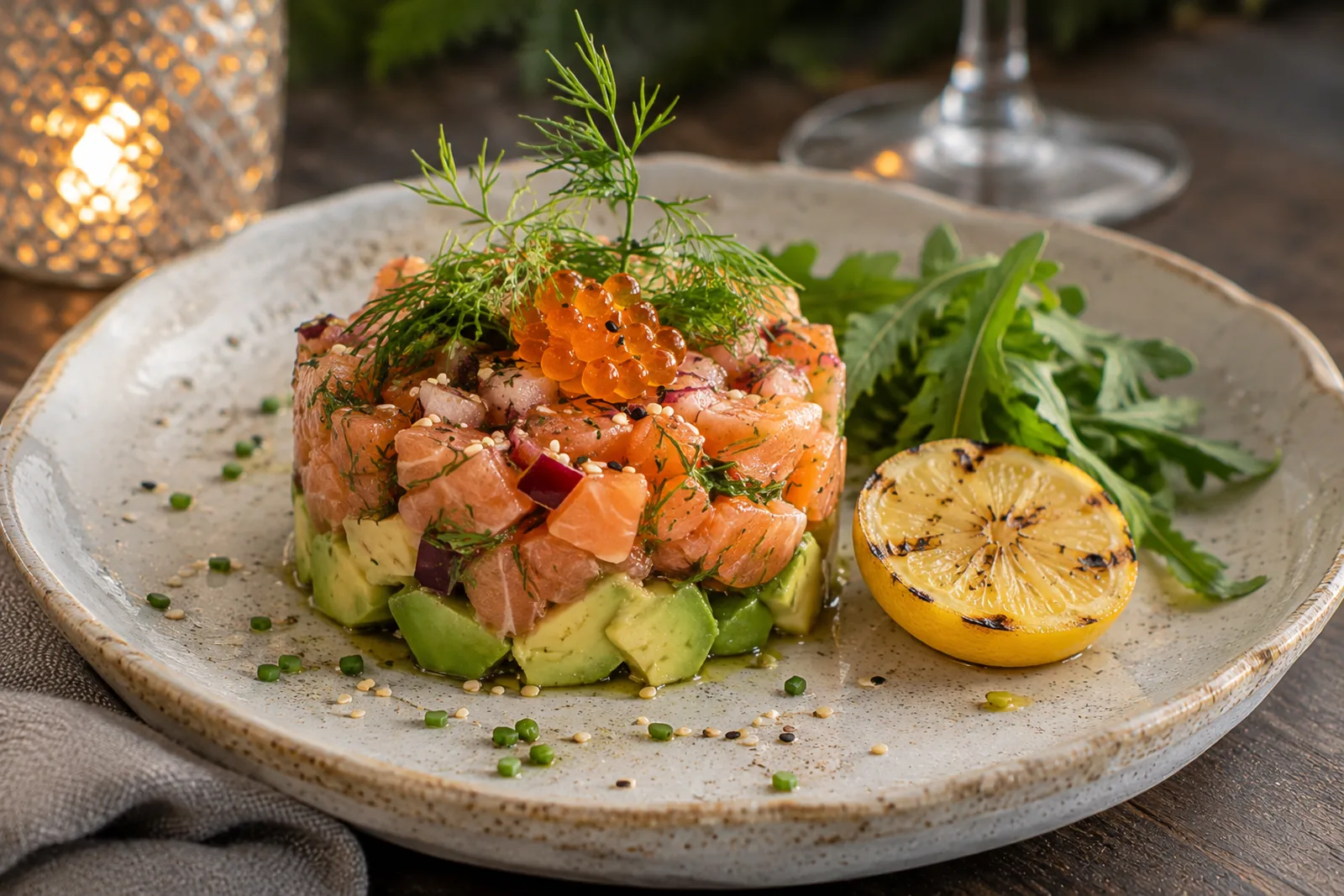
If you have a cold starter, such as Toast Skagen or salmon tartare with avocado, the salmon can go into the oven when the starter is served. The salmon tartare and the steaks can also come from the same piece of salmon, if you buy a larger centre cut and ask the fish counter to cut both steaks and a piece of fillet. The dessert, for example lemon posset, is made the day before and stands ready in the fridge.
🛡️
Safety: how hot should the salmon get?
Salmon baked to 50–54°C is juicy and slightly translucent in the centre. Whether that is enough depends on which salmon it is.
Farmed salmon doesn't need freezing. Livsmedelsverket (the Swedish Food Agency) considers the risk of parasitic worms in farmed salmon to be negligible, and it can be served juicy in the centre.
Wild-caught salmon may contain parasites, such as herring worm. They die if the fish is held at 55–60°C for at least one minute, or if it has been frozen at minus 18°C for at least three days. If the salmon is wild-caught and not frozen, bake it to at least 60°C in the thickest part.
Pregnant women, small children, older people and people with weakened immune systems should have their fish cooked through. Leave their steaks in the oven until they read about 60°C and the flesh is opaque all the way through.
Wild-caught salmon from the Baltic Sea may contain more environmental pollutants. Pregnant women and children should eat such salmon rarely, and farmed salmon is then a better choice.
Fish should be kept cold until cooking, and leftovers should go into the fridge within a couple of hours and be eaten within a day or two.
💡
Tips for a juicy steak
Low oven heat. At 150°C the salmon cooks evenly from edge to bone, and it releases less of the white protein (albumin) that otherwise settles on the surface.
The thermometer next to the bone. That is where the fish heats up last.
Take it out a little early. The salmon keeps getting hotter for a few minutes after the oven.
Horseradish last. Grated horseradish loses its sharpness within fifteen minutes. Grate it while the butter browns.
Horseradish from a jar can be used if fresh is not available, but it is milder and more acidic. Do not mix it into the hot butter; scatter it over.
🧒
Salmon steaks with children
Salmon steaks are a good fish for children: mild, juicy and with one big bone that is easy to find. Remove the bones for the youngest before they get their piece, and feel for the small pin bones in the belly flaps. Horseradish is too strong for most children, so let them have the butter, lemon and chopped egg without horseradish.
Older children can help chop parsley, peel the eggs and squeeze lemons. Grating horseradish is a job for adults, ideally with the window open, as it stings the eyes.
Vary the salmon
Horseradish cream instead of butter: stir grated horseradish into whipped cream or crème fraîche with a little lemon and salt. Milder, and cold against the hot fish.
Brown butter with prawns: fold 100 grams of peeled prawns into the brown butter just before serving.
Steaks of other fish: cod, pike-perch and halibut are cut the same way. Cod is leaner and done at a lower temperature. The classic cod dish with Sandefjord sauce is another New Year's Eve option.
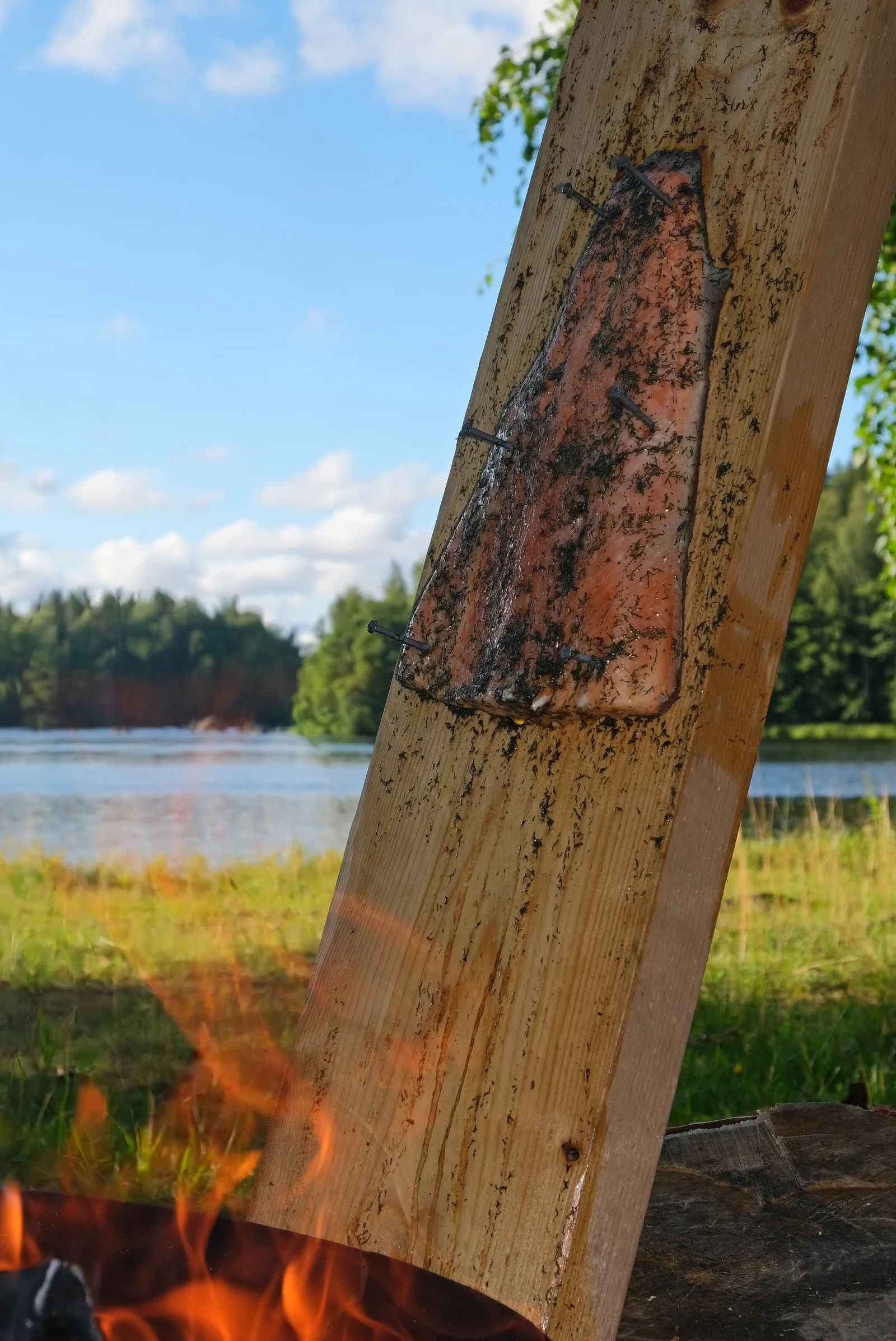
Over the fire: salmon on the bone can also take an open fire. There is an idea in flame-grilled salmon.
Steaks too thin – under two centimetres they dry out before they have picked up any flavour.
Oven too hot – the edges dry out and white protein seeps out onto the surface.
Measuring in the belly flap – it is thin and heats up first; measure near the bone.
Burnt butter – it should be nut brown, not black. Take the pan off the hob in time.
Horseradish grated too early – it has time to turn mild and bland.
Frequently asked questions
What is a salmon steak?
A salmon steak is a slice cut across the whole salmon, straight through the backbone. It has the bone in the middle, skin all around and two flaps of belly meat hanging down.
Why are salmon steaks called "laxbyxor" in Swedish?
Because the two belly flaps hanging down from the back look like a pair of trouser legs, with the back as the waistband – "laxbyxor" means salmon trousers. The name is mostly used in everyday speech.
How long should salmon steaks be in the oven?
At 150°C, steaks 2.5–3 cm thick take about 15–22 minutes. Measure rather than time: 50–54°C near the bone gives juicy farmed salmon.
What core temperature should salmon steaks have?
50–54°C gives juicy salmon. Wild-caught salmon that has not been frozen should reach at least 60°C, and pregnant women and small children should have their fish cooked through.
Where do you buy salmon steaks?
At the fish counter. If they are not available ready-cut, ask the staff to cut steaks from a whole salmon. Ask for slices 2.5–3 cm thick from the middle.
Can you cook salmon steaks in a frying pan?
Yes. Fry them in butter over medium heat for 3–4 minutes per side and then let them rest for a few minutes over low heat under a lid. The oven gives more even results, especially for several steaks at once.
We would like to use Google Analytics to see which pages are read, so that we can make the site better. It sets cookies from Google. We do not use any advertising cookies.
Accept and Decline only apply to statistics – the site works just as well whatever you choose. More in our cookie policy.