Short answer
San Martino di Castrozza is a ski village at around 1,400 metres in Trentino, directly beneath the cliffs of the Pale di San Martino. The ski area has around 60 kilometres of pistes up to 2,357 metres and is part of Dolomiti Superski. Beginners start in the Nasse Park a few minutes from the centre or in the Kinderland on Alpe Tognola, lessons take children from age four, and in Italy everyone must wear a helmet.
Quick facts
- Country / region
- Italy, Trentino (Primiero)
- Ski area
- San Martino di Castrozza – Passo Rolle (Dolomiti Superski)
- Altitude (village – top)
- 1,404 – 2,357 m above sea level
- Pistes
- 60 km
- Season
- late November – early April
- Nearest airports
- Treviso (approx. 85 km) · Venice (approx. 110 km) · Verona (approx. 170 km)
- Train
- Train to Feltre, then a Trentino Trasporti bus from the station
- Price level
- ●●●●● (1 = cheap, 5 = expensive)
Family rating
3,8 / 5
- Beginner slopes The Nasse Park at the edge of the village and the practice slope on Alpe Tognola, with a button lift and magic carpet, but more than half the piste network is red.
- Children's lift passes Free for children born in 2019 or later with an adult's Dolomiti Superski day pass, and junior passes for those born up to 2009.
- Snow reliability The village sits at around 1,400 metres and the lifts reach 2,357. There is snowmaking, and the season lasts until early April.
- Distance from accommodation to lifts The gondola to Alpe Tognola and the Nasse Park are close to the centre, and a free ski bus runs in from the surrounding area.
- More than skiing Sledging and snow rafting in the Nasse Park, cross-country trails at Prà delle Nasse and a floodlit Col Verde at Christmas, but otherwise quiet evenings.
The rating is our overall assessment for families with children based on the criteria above – not a paid placement.
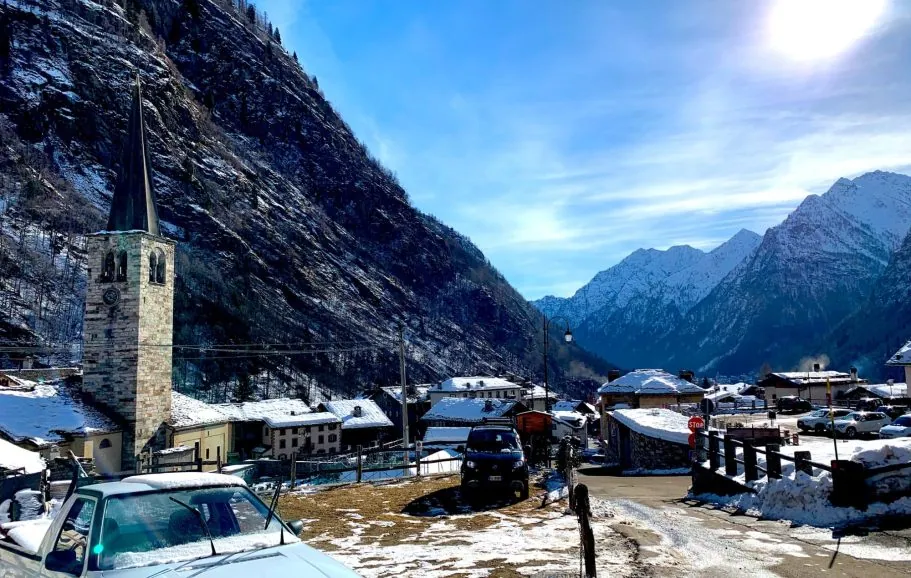
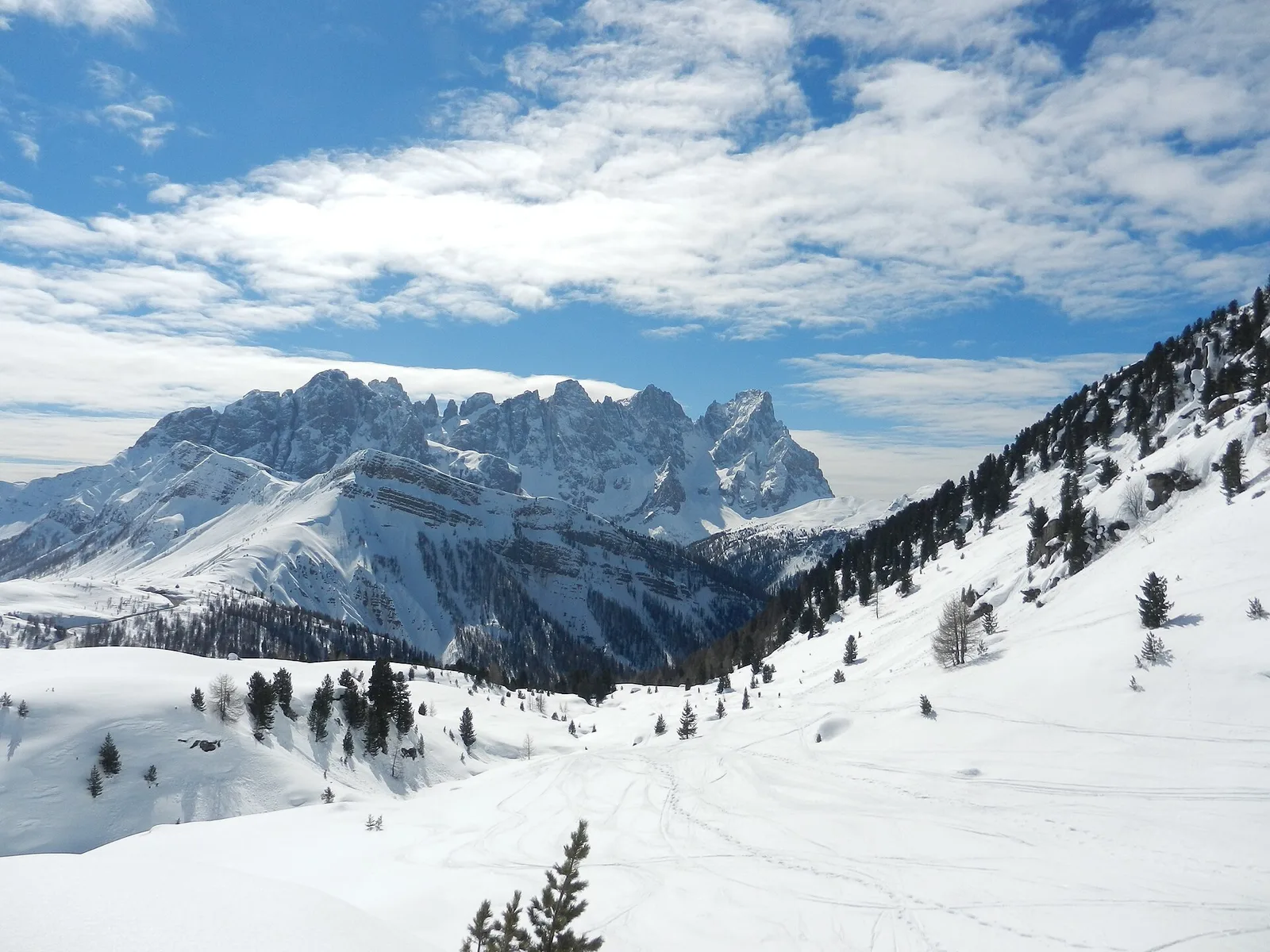
San Martino di Castrozza lies in Primiero at the far eastern end of Trentino, and the first thing you see is the Pale di San Martino. The pale wall of rock rises straight above the houses, and in the evening sun it turns pink. The village is small and has never been built up into a big resort. That makes it easy to find your way around, for children and parents alike.
For a Swedish family, the point is that San Martino is just the right size. The ski area is enough for a week, the children's slopes are close by, and everything is included in Dolomiti Superski if you want to venture further. More Italian family resorts are in skiing holidays in Italy.
The ski area – Tognola, Ces and Passo Rolle
The ski area is called San Martino di Castrozza–Passo Rolle and has around 60 kilometres of pistes between 1,404 and 2,357 metres. The main part is the Carosello delle Malghe, which links Alpe Tognola and Malga Ces via Cima Tognola, Val Cigolera and Punta Ces. From the village you take the gondola up to Tognola, and the Col Verde run comes all the way down into the centre.
Passo Rolle, higher up towards the pass, is a separate section with around 15 kilometres. A lift link there from the village is under construction but won't be ready for the 2026/27 season, so you get there by road.
Roughly half the piste kilometres are red, just over a quarter blue and the rest black. Children who have just finished ski school are therefore wise to stick to the blue slopes around Tognola and Ces.
New for 2026/27:
- A new piste, Larici, on Alpe Tognola.
- Dolomia Funslope runs along the new piste, with turns and rollers for children who want more.
- San Martino Snowpark has been completely rebuilt.
The season starts on 28 November 2026 and runs until 4 April 2027, snow permitting. The lifts run from 9am to 4pm. Over Christmas, Col Verde is floodlit, so you can ski down towards the village until late in the evening.
The children's slopes – two places to choose from
San Martino has two places where the youngest start out, and which one suits you depends mostly on where you're staying.
| Area | Where | What's there |
|---|---|---|
| Nasse Park and Prà delle Nasse | At the edge of the village, less than five minutes from the centre | Two gentle slopes, a button lift, a magic carpet, a sledging run and a snow-rafting run |
| Kinderland Alpe Tognola | At the top station of the Tognola gondola | A heated children's room for children up to age ten, a magic carpet and childcare that continues through lunch |
| The Baby practice slope | Alpe Tognola, around 2,200 metres | A practice slope within walking distance of the gondola top station |
Nasse Park is best for the very youngest, because you don't need the gondola. The slope is very gentle, and the same spot has a sledging run where children under seven ride together with an adult. For bigger children there's Ski-Slit, a sledge that is pulled up by the lift. It doesn't always run all day.
Up on Alpe Tognola the snow is better, and the view of the Pale di San Martino is what you'll remember. This is where most lessons start.
Are your children skiing for the first time? How many days of lessons are about right is covered in the beginners' guide.
Ski schools and age rules
- Scuola Italiana Sci Dolomiti runs its lessons at the Tognola lifts: Baby for ages 4–6 and Junior for ages 6–12, and in high season Ski Total Kids for confident skiers aged 6 to 14.
- Scuola Italiana Sci San Martino teaches beginners in the Nasse Park and at Prà delle Nasse.
The Kinderland takes children up to age ten and can look after a younger sibling while the older ones are in ski school. Book your course week early if you're travelling over Christmas or during the February half-term (sportlov, the Swedish winter school holiday).
Helmets, insurance and lift passes
Since the 2025/26 season, the helmet requirement in Italian ski areas covers all ages, not just children. The requirement applies to skiing, snowboarding and sledging. Without a helmet you risk a fine, and anyone who ignores the rule repeatedly can lose their lift pass. Since 2022, everyone on the slopes must also have third-party liability insurance that is valid on the pistes. Many ski areas sell it at the ticket office, but check first whether your own insurance already covers it.
Lift passes come in three levels: a local pass for San Martino and Passo Rolle, the pass for Val di Fiemme and Obereggen, and Dolomiti Superski for the whole network. With Dolomiti Superski, children born 2019 or later ski free when an adult buys a valid day pass at the same time, one child per adult. Afternoon passes and three-hour passes don't count. Anyone born 2009–2018 needs a junior pass. You'll see what the passes cost when you book.
How to get to San Martino di Castrozza
- Flights: Treviso is around 85 kilometres away, Venice around 110 and Verona around 170.
- Train and bus: from Venice airport, take the bus to Venezia Mestre and the train to Feltre. The Trentino Trasporti bus leaves from outside the station, and tickets are sold at the station or on board. From Verona, take the train to Trento and continue by bus via Borgo Valsugana. If you want to take the train all the way from Sweden, see the train guide to the Alps.
- Direct bus: direct buses run from Venice and Treviso airports to Primiero and San Martino.
- Fly Ski Shuttle: on Saturdays and Sundays in winter, a transfer bus runs from Venice, Treviso, Verona and Bergamo, among other places.
- By car: from Bolzano, take the A22 to Egna-Ora, drive through Val di Fiemme to Predazzo and then over Passo Rolle, around 70 kilometres. From the south, the road goes via Feltre and up through Primiero.
Which way of travelling suits you best can be weighed up in the comparison of ways to travel to the ski resort.
San Martino compared with its neighbours
For families looking for a small village with the children's slopes close by and the Dolomites outside the window, San Martino is a good choice. Over Passo Rolle and Predazzo lies Val di Fassa, with more villages and bigger ski areas, and Obereggen on the Latemar is another small family mountain on the same pass network. When everyone in the family wants to ski further, Alta Badia is the next step. The whole mountain region is described in the Dolomites, and more family resorts are compared in the Alps with children.
Packing for San Martino – the things that are easy to forget
Frequently asked questions
Is San Martino di Castrozza good for families with children?
Yes, especially for families with children aged three to ten. The Nasse Park, with its practice slope and sledging run, is a few minutes from the centre, and up on Alpe Tognola there's the Kinderland and a practice slope of its own. The village is small and quiet, and the ski area is just the right size for a week.
From what age can children go to ski school in San Martino di Castrozza?
Scuola Italiana Sci Dolomiti runs the Baby group lessons for four- to six-year-olds and Junior for six- to twelve-year-olds, on Alpe Tognola. Scuola Italiana Sci San Martino teaches the youngest in the Nasse Park at the edge of the village. The Kinderland on Alpe Tognola takes children up to age ten.
Do children have to wear a helmet on the slopes in Italy?
Yes, and since the 2025/26 season it applies to all ages. The requirement covers skiing, snowboarding and sledging. Fines can be issued, and repeat offenders can lose their lift pass. Everyone on the slopes must also have liability insurance that is valid on the pistes.
Do young children ski free in San Martino di Castrozza?
With Dolomiti Superski, children born in 2019 or later ski free when an adult buys a valid day pass at the same time, one child per adult. Afternoon passes and three-hour passes are excluded. Children born 2009–2018 need a junior pass, and you'll find the prices when you book.
When is the 2026/27 season in San Martino di Castrozza?
The San Martino di Castrozza–Passo Rolle ski area opens on 28 November 2026 and closes on 4 April 2027, as long as the snow lasts. The lifts run from 9am to 4pm.
How do you get to San Martino di Castrozza from Venice?
Take the bus from the airport to Venezia Mestre, the train to Feltre and then the Trentino Trasporti bus that leaves from the station. There are also direct buses from Venice and Treviso airports, and on winter weekends the Fly Ski Shuttle runs.