
Short answer
Lucia 2026 falls on Sunday 13 December, the same day as the third Advent, so Lucia processions at preschools and schools are usually held on Friday 11 December. At home, white gowns, a red sash, tinsel, an elf hat and battery candles are all you need – never real candles in children's hair. Wake the family in the dark, walk in singing and serve saffron buns, gingerbread biscuits and something warm.
Roles in the Lucia procession
| Role | Clothes | Suits | Carries |
|---|---|---|---|
| Lucia | White gown, red sash at the waist, crown with battery candles | From about age 6 | The tray of saffron buns, or nothing at all |
| Attendant | White gown, tinsel in the hair and around the waist | All ages | A battery candle in the hand |
| Star boy | White gown, a tall paper cone with stars | All ages | A star on a stick |
| Tomte (elf) | Red hat, ideally a red jumper | The youngest | A lantern or nothing |
| Gingerbread man | Brown jumper and trousers, white icing dots made of tape or fabric | The youngest | A basket of gingerbread biscuits |
Any child can take any role. Getting to choose your own role is often half the fun.
Lucia is one of the cosiest mornings of the year with children: dark outside, singing in the hallway and saffron buns on the bed. In 2026 Lucia falls on Sunday 13 December and coincides with the third Advent. That means Lucia processions at preschools and schools are usually held as early as Friday 11 December – and that the family has a whole free morning for its own Lucia procession at home.
This guide is about exactly that: a Lucia morning at home that can be done without stress, with roles for all ages and candles that cannot catch fire.
How to plan the Lucia morning
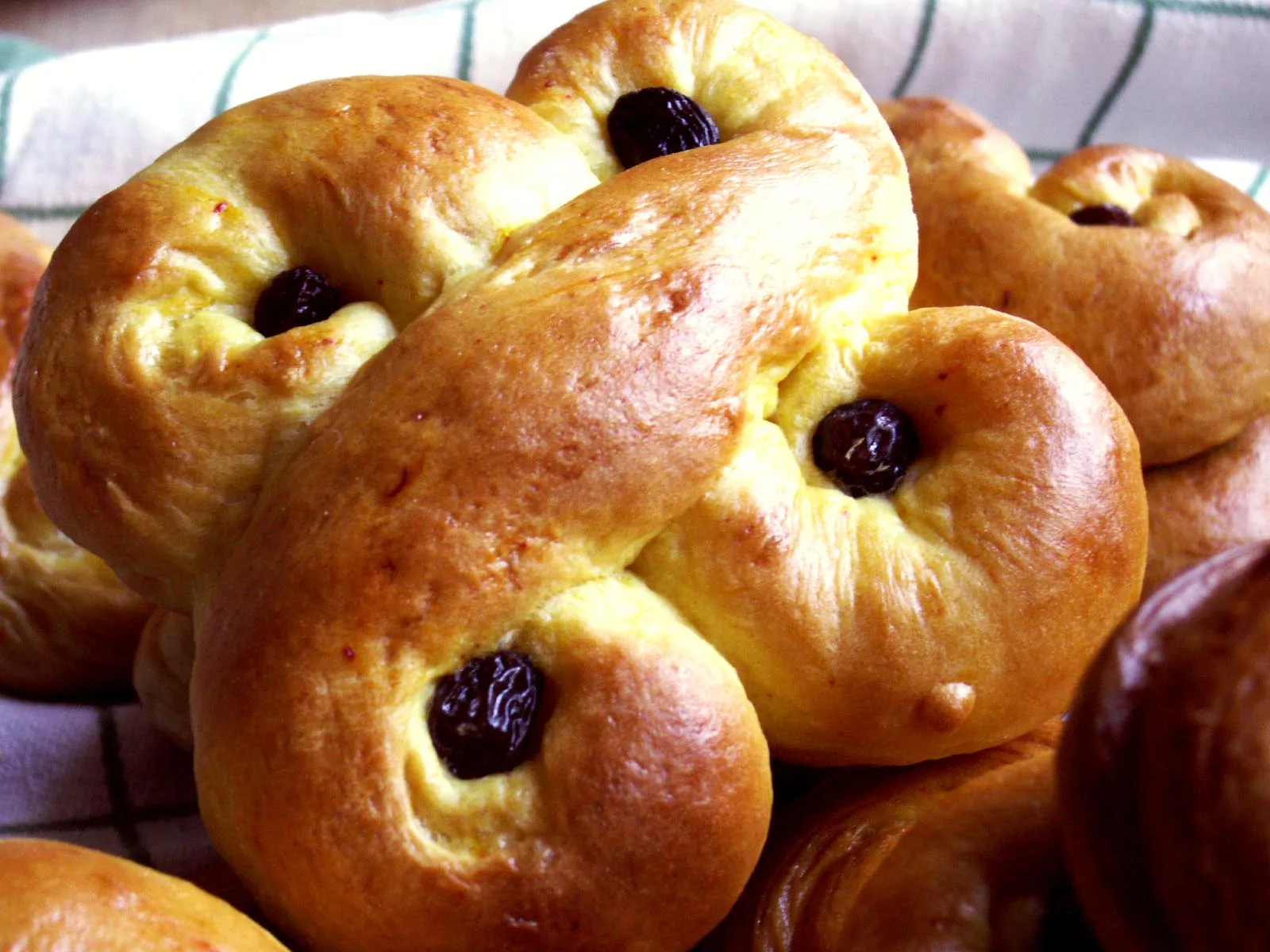
Most of the work is done the evening before. That is when you lay out the costumes, try on the crown, change the batteries and set out the tray. The saffron buns are best baked the weekend before and frozen straight away – in the morning they thaw in half an hour. The recipe and the freezing tip are in lussekatter.
In the morning the procession gathers in another room while someone switches off all the lights. On 13 December the sun does not rise until just after half past eight in Stockholm, a quarter to nine in Gothenburg and a quarter to ten in Luleå, so it is dark even if you wait until eight. The procession switches on its battery candles, lines up with Lucia at the front and walks in singing to whoever is being woken. Then it is fika in bed or at the kitchen table – hot chocolate for the children, coffee or glögg for the adults.
Let an older sibling be the one who "wakes" the parents. It feels more real for the little ones if someone stays in bed pretending to sleep.
Roles for all ages
A Lucia procession doesn't need a Lucia and six attendants. At home two children are enough, and the youngest are often happiest as a tomte or a gingerbread man, where it doesn't matter if the hat ends up crooked. The table above shows what each role usually wears and carries.
The costumes don't have to be bought new. A white gown can be a large white T-shirt or an old nightdress, tinsel can be found in the Christmas decoration box, and a cone hat can be made from white card with stars stuck on. Shorten the gowns so that they end above the ankles – long gowns on a dark staircase are a common reason someone trips.
The candles – why they should be battery-powered
Real candles in the hair belong in the old pictures, not in children's Lucia processions. December is the month when the most fires are caused by candles, according to MSB about four in ten, and a candle leaning against tinsel or a loose gown can catch fire very quickly. So always choose:
- A crown with battery candles. It sits better if you fasten it with a couple of hairpins or a thin band under the chin.
- Battery-powered hand candles with a drip guard that protects the hand – it looks like a real candle and the children can walk at their own pace.
- New batteries the evening before. It is a shame when the crown goes out in the middle of the first verse.
You can light real candles on the table where you have fika, away from crowns, tinsel and spruce branches, with an adult keeping an eye on them.
Songs to practise
Start practising a couple of weeks before, ideally in the car or at bedtime. A short procession with three songs is plenty:
- Sankta Lucia – the song you walk in to. The melody is an Italian song, and the Swedish lyrics were written in the 1920s.
- Staffan var en stalledräng or Tomtarnas julnatt – children love them, and the tomtar get to take an extra turn.
- Nu tändas tusen juleljus – calm and short, good to finish with while the fika is laid out.
If you don't know all the verses, singing the first verse twice is fine. Nobody is counting.
A Lucia procession outdoors at dusk
Since Lucia 2026 is a Sunday, there is time for another procession in the afternoon – outdoors. The sun sets between a quarter to three and half past three in southern Sweden and as early as one in Luleå, so by about four it is dark enough in most of the country. Build a snow lantern in the garden if there is snow, set out outdoor candles along the path or hang lanterns in a tree, and let the procession walk around the house with head torches under the hats and the hand candles lit.
Finish by a fire or a grill with glögg over an open fire and a children's glögg made from cordial, and the rest of the the gingerbread biscuits. More ideas for the weekends before and after are in Advent outings.
Why do we celebrate Lucia?
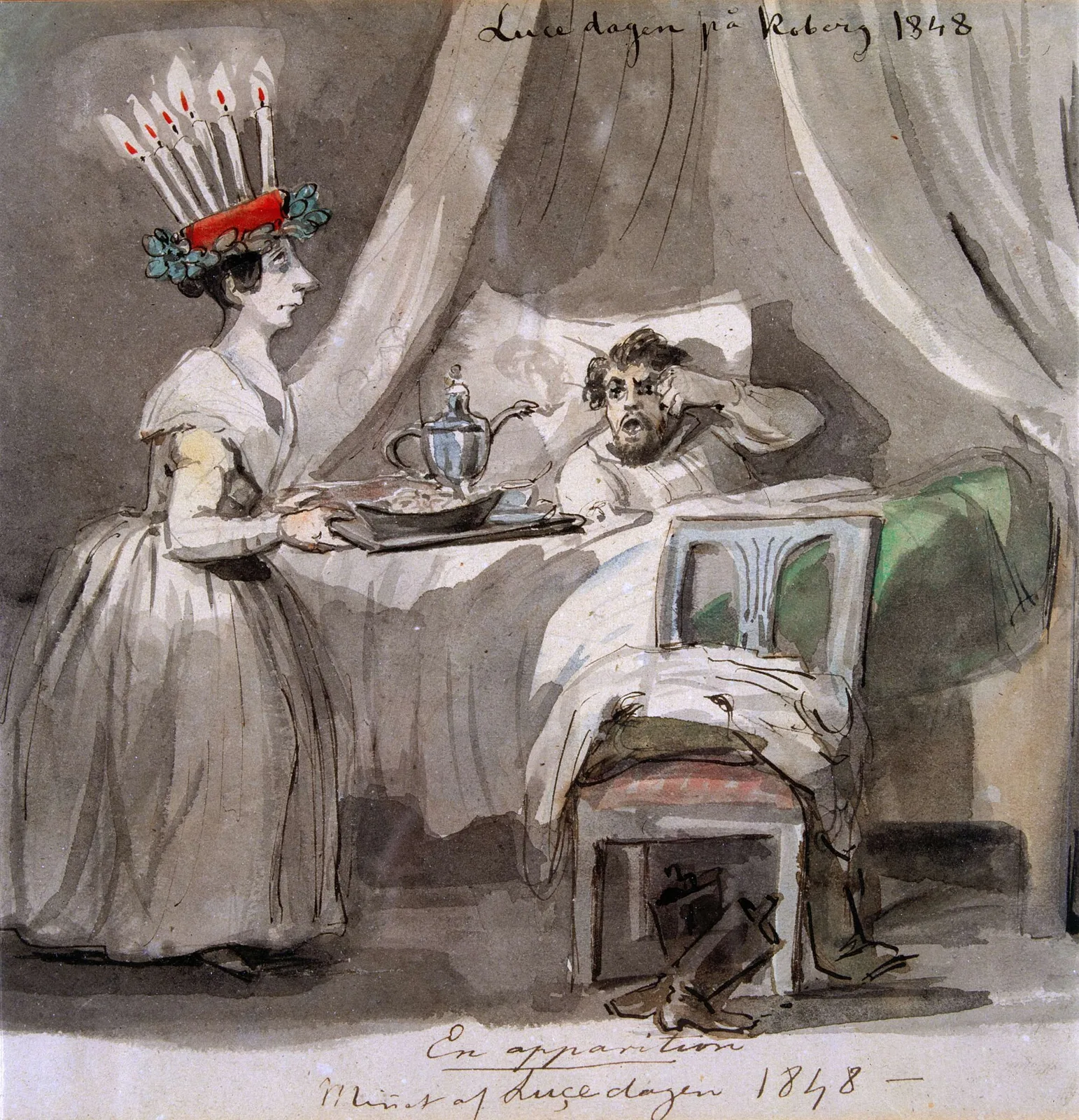
Lucia was a saint from Syracuse in Sicily, and the name comes from the Latin lux, light. But the Swedish Lucia morning has more to do with old farming beliefs about lussenatten, Lucia night. The night before 13 December was counted as the longest of the year, and it was associated with spirits and dangers. In western Sweden it was called "lusse långnatt", Lucia's long night, and young people went round in costume collecting food.
The first Lucia dressed in white with candles on her head serving breakfast appears in 1764 at Horn manor in Västergötland. In the 19th century it was mainly a custom in well-to-do homes in western Sweden. Around the middle of the century it spread to the university towns, and during the 20th century to the rest of the country. In the 1950s Lucia became something almost everyone celebrated, in schools, at workplaces and in churches. The star boys have a history of their own: they come from the medieval star plays, where the star bearers represented the Three Wise Men.
More about Christmas 2026 – dates, Christmas markets and an outdoor Christmas – is collected in the Christmas guide.
The evening before
Frequently asked questions
When is Lucia 2026?
Lucia is on 13 December, and in 2026 it is a Sunday, so Lucia Day and the third Advent are celebrated together. Preschools and schools therefore usually hold their Lucia procession on Friday 11 December.
Can children have real candles in the Lucia crown?
No, always choose a crown with battery candles for children. Real candles in the hair, often together with tinsel and a loose gown, are a serious fire risk. December is the month when the most fires are caused by candles.
What do you wear in a Lucia procession?
Lucia wears a white gown, a red sash at the waist and a crown. The attendants wear white gowns, tinsel in their hair and carry a candle. The star boys wear white gowns, a paper cone on their heads and carry a star on a stick. Tomtar wear red hats and gingerbread men a brown costume.
What songs are sung at Lucia?
The classic is Sankta Lucia, often followed by Natten går tunga fjät. For a children's procession, Staffan var en stalledräng, Tomtarnas julnatt and Nu tändas tusen juleljus also work well.
Why is Lucia celebrated on 13 December?
It is the feast day of Saint Lucia. In the old farming society the night before 13 December was counted as the longest of the year, and it was associated with spirits and dangers. The Lucia dressed in white with candles in her hair first appears in 1764, at a manor in Västergötland.