Safety when the environment changes
Travelling, heading out on an adventure or going on day trips means freedom, movement and new experiences – but also new risks. Whether it's road trips, skiing, fishing, family outings or spontaneous stops along the way, the same thing applies: when something happens, you're often the first help available on the scene.
This guide gives a comprehensive, practical overview of first aid in situations where the environment keeps changing, the distance to help can be uncertain, and equipment is limited. The focus is on basic principles, decision-making and what actually makes a difference when an accident happens.
Important legal information
This article is written for informational and guidance purposes. The content does not replace first aid training, medical care or rescue service. In an emergency, every individual is responsible for their own actions and for acting within the limits of their knowledge, training and applicable law. In serious accidents, professional help should always be called as quickly as possible.
This guide focuses on the basic principles of first aid that apply regardless of environment. For environment-specific situations such as hiking, separate in-depth guides are available.

What is first aid in a changing environment?
First aid is about the first steps before professional care takes over. While travelling or on a day trip, the goal isn't to complete treatment, but to:
- save lives
- prevent conditions from worsening
- buy time until help arrives
The difference compared to being at home is that:
- you often lack full equipment
- the surroundings can be unfamiliar
- evacuation can take time
That makes basic knowledge, calm and structure extra important.
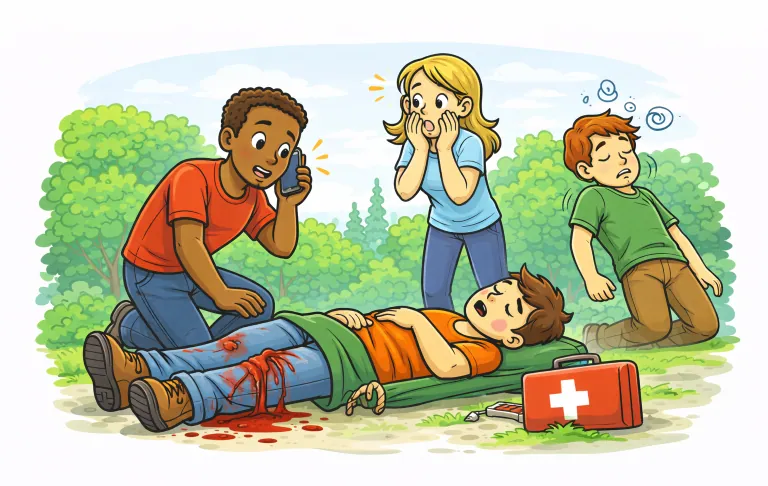
The first encounter with an injured person
In accidents, people react differently – both the injured person and the one helping.
Common reactions in the helper:
- stress and tunnel vision
- shaking, elevated pulse
- freezing up or becoming overactive
These are normal stress reactions. First aid always starts with taking control of yourself.
Basic principle:
- Make sure you're safe yourself
- Make contact with the injured person
- Assess life-threatening conditions
- Call for help early
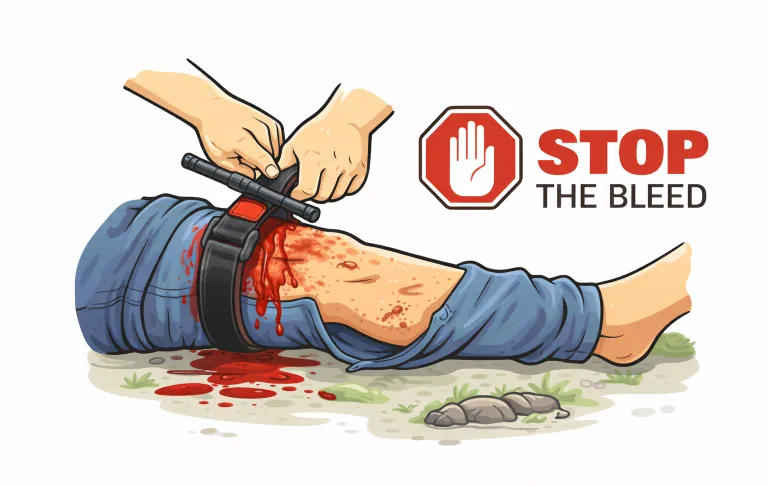
Stop the Bleed – serious bleeding during trips and adventures
Massive bleeding – for example from arteries or deep wounds with heavy blood loss – is one of the most common causes of death from trauma, but also one of the most treatable with the right action in time.
Positive and negative pressure in the body – why the location of the injury matters
When serious bleeding occurs, it's not just how much blood is lost that matters, but also where on the body the injury is. Different parts of the body behave differently when it comes to pressure, air and blood flow.
In arms and legs, bleeding can often be controlled effectively with pressure from outside. In the torso, the situation is more complex, since the body's natural pressure conditions can cause air to be drawn into the body and worsen the injury. That's why injuries to different parts of the body require different actions.
Limbs (arms and legs):
Here positive pressure generally applies, which means bleeding can often be controlled effectively.
Actions:
- direct pressure with a hand or compress
- a pressure bandage
- a tourniquet for life-threatening bleeding (only if you know how)
Torso (chest, abdomen and neck):
Here negative pressure can occur, especially in the chest, which means air can be drawn into the chest cavity and cause a lung collapse. Heavy bleeding in these areas is harder to control.
Actions:
- cover open wounds with pressure or a sealing dressing if available
- let the injured person sit or lie half-upright if breathing is affected
- do not use a tourniquet on the torso or neck
- call 112 immediately
Tourniquet
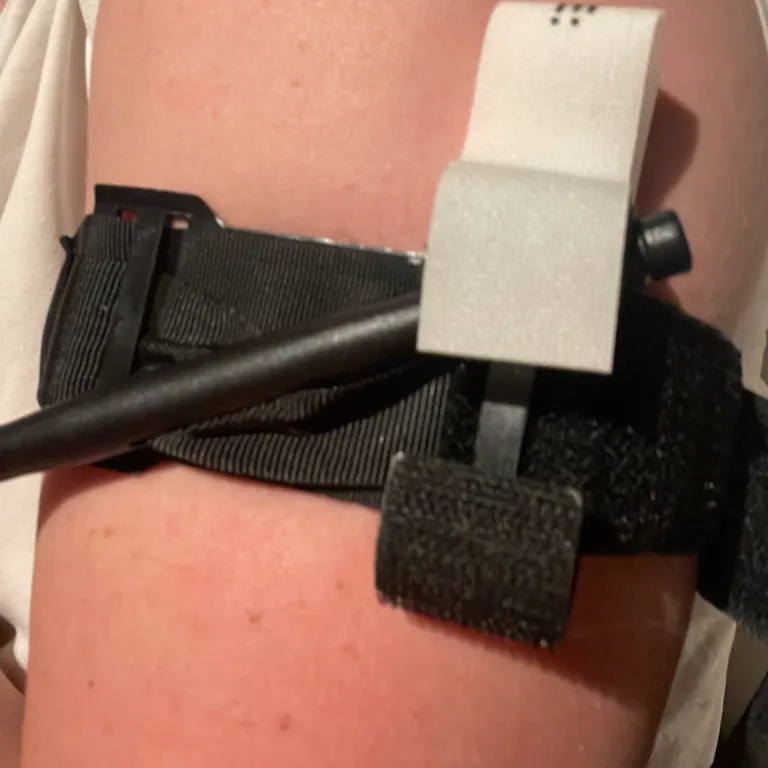
A tourniquet is used to quickly stop or greatly reduce blood flow in life-threatening bleeding from the arms or legs. It's placed high and tight above the injury, and the time of application should be noted.
A tourniquet is used to immediately control bleeding and create time for further action. It shouldn't be released until medical professionals take over, unless this is done within trained trauma care.
A tourniquet should only be used on limbs (arms and legs). It must never be placed on the torso, neck, head or in transition zones such as the groin or armpit.
Wound packing
With deep wounds, wound packing may be necessary to control bleeding directly at the source of the injury.
- In areas where a tourniquet can't be used (groin, armpit), wound packing is the first-choice method.
- With serious limb injuries, wound packing can be done after a tourniquet has been applied, to secure bleeding control if the tourniquet should loosen or need to be eased later.
Packing should be done with a finger directly against the source of the bleeding and built up with tight gauze, combined with firm, sustained pressure. Hemostatic gauze increases the effect and is developed specifically for this type of trauma.
This method requires knowledge and training. If you're unsure – prioritise direct pressure, a pressure bandage, and calling 112 as quickly as possible.
Hemostatic gauze and other specialist dressings – when the difference matters most
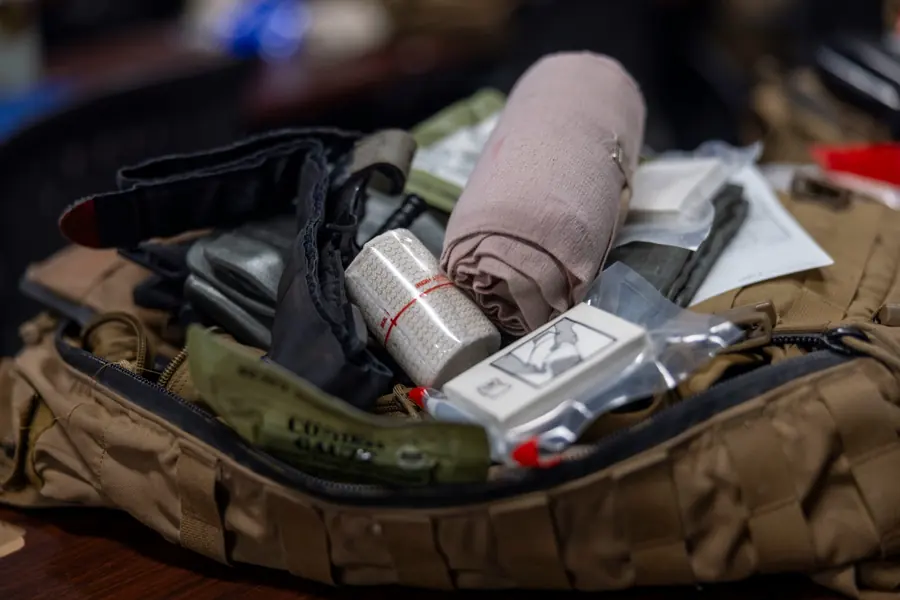
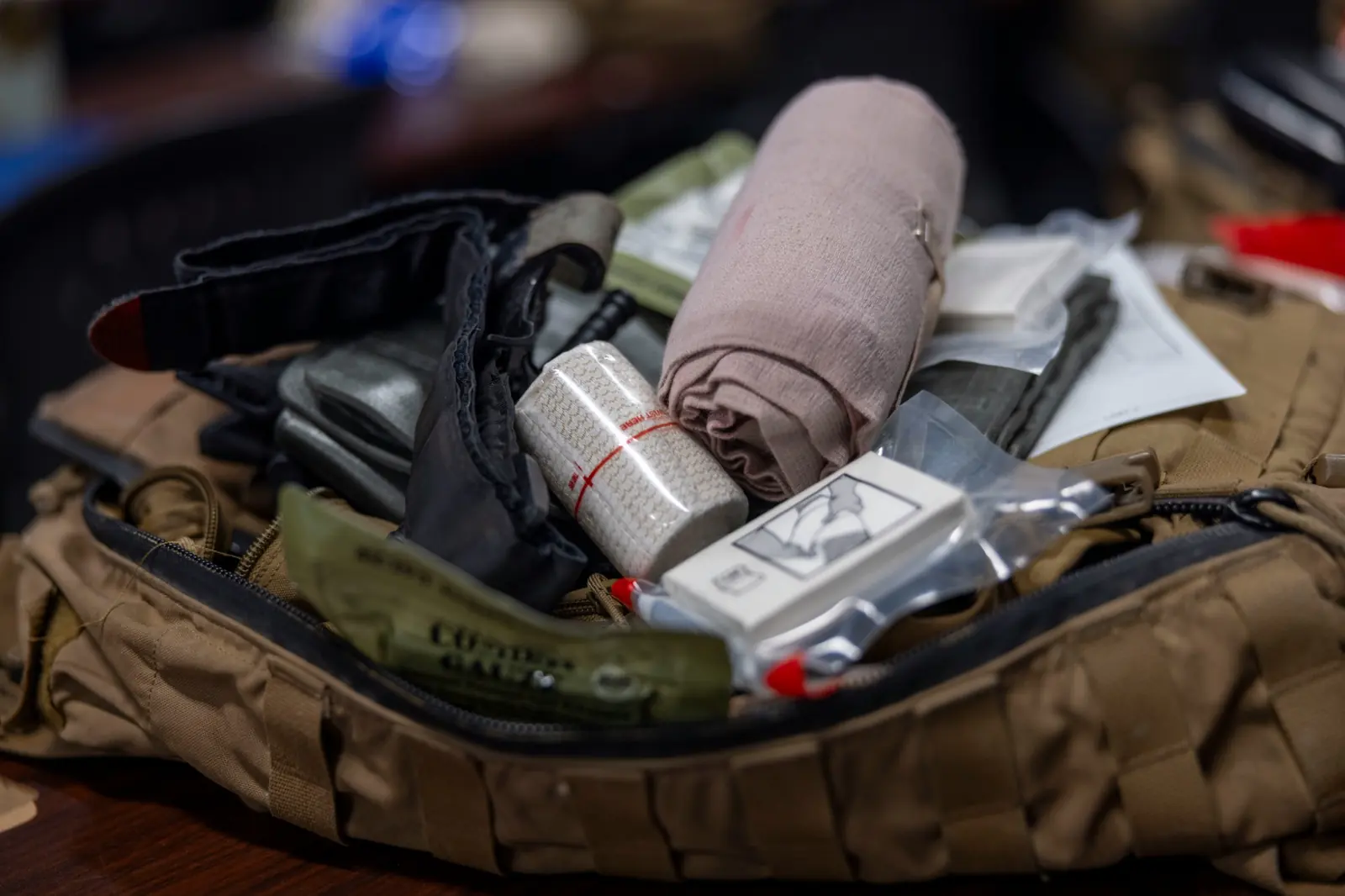
With heavier bleeding, the right materials make a big difference. Hemostatic gauze is developed to speed up blood clotting and can be crucial for deep or hard-to-stop wounds where an ordinary dressing isn't enough.
The difference between having – or not having – the right dressing can come down to the minutes that decide the outcome.
The same principle applies to burns. Early cooling and a protective dressing reduce both pain and tissue damage. Without the right action, the injury risks getting worse quickly.
It's not about over-equipping yourself, but about understanding what kinds of injuries you might realistically encounter – and being prepared for exactly those.
Important notes on knowledge and responsibility with wound packing
Wound packing is an advanced technique that requires training and hands-on practice. Only perform it if you're trained in the method and understand how bleeding control needs to be maintained over time.
If you lack training, the focus should always be on:
- firm, direct pressure on the wound
- a pressure bandage if possible
- calling 112 quickly
Incorrect or insufficient wound packing can delay effective bleeding control and, in the worst case, make the injury worse. Buying time with the right basic measures is always better than attempting advanced techniques without training.
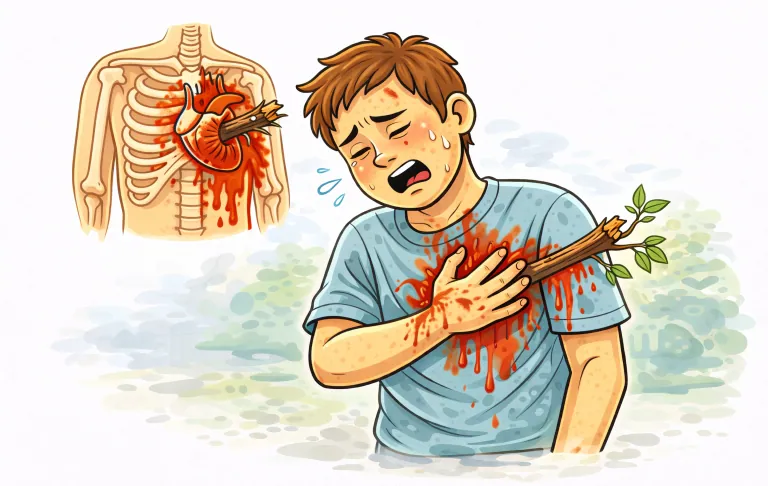
Penetrating injuries to the torso
With penetrating chest injuries, there's a risk that air is sucked into the chest cavity during inhalation, which can cause a lung to collapse. This is a serious condition that can quickly worsen breathing.
Actions:
- If a special chest bandage is available (vented bandage), use this to cover the wound
- If special bandage is not available, a sealed material can be used to reduce air infiltration, while exhalation is allowed as much as possible
- Keep the injured person as still as possible and warm
- Call 112 immediately
These are complex and life-threatening injuries where fast help, correct wound protection and heat-preservation measures are critical until medical care takes over.
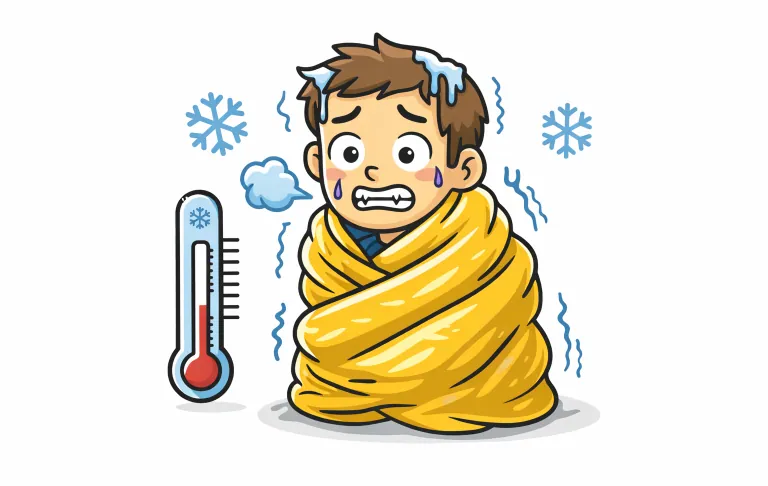
Shock and hypothermia
Shock is a life-threatening condition where the body doesn't get enough circulation to vital organs. It can occur in several different situations where the body is subjected to severe stress or injury.
Shock can occur from, among other things:
- trauma and major bleeding, for example after falls or accidents in terrain
- serious injuries in traffic accidents, even if external injuries aren't always visible
- burns or crush injuries
- severe hypothermia or dehydration
Common signs:
- pale, cold and clammy skin
- restlessness or lethargy
- rapid pulse
Actions:
- stop the bleeding
- keep the person warm
- calm and create security
- avoid food and drink
Getting cold makes bleeding and shock worse – warmth is life-saving.
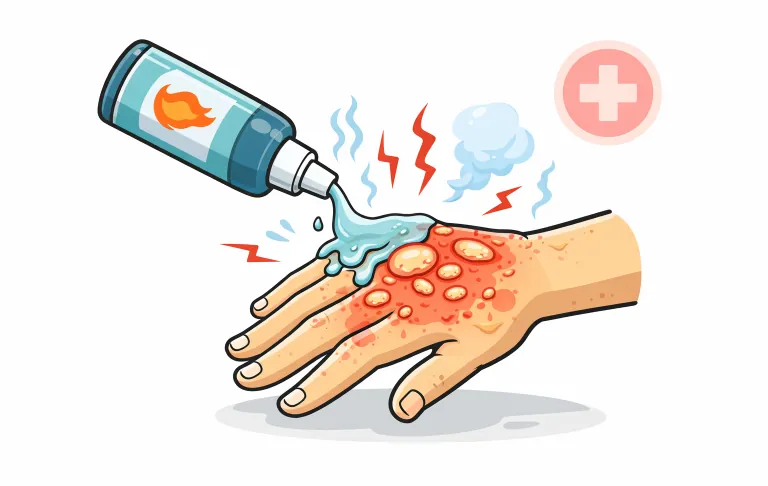
Burns
Burns can happen quickly while cooking, around a fire, or from contact with hot surfaces – and can become serious even when they look harmless at first. How serious a burn is isn't decided by pain alone, but by several factors.
Burns are assessed based on:
- depth (how far into the skin the injury goes)
- extent (how much of the body is affected)
- location on the body (face, hands and joints are especially sensitive)
Actions:
- cool the injury early with cool, running water
- continue cooling for several minutes to limit the extent of the injury
- protect the area from dirt and further damage
Large, deep or painful burns – and burns to the face, hands or joints – always require medical assessment.
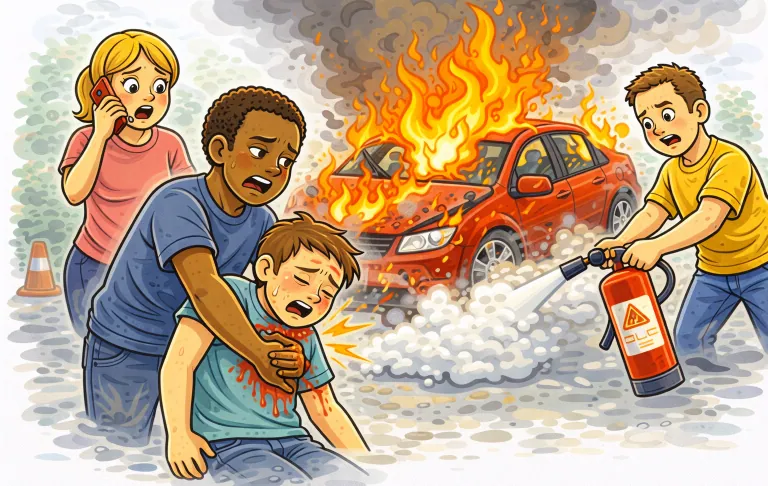
Vehicle fires after an accident – what do you do?
In traffic accidents, vehicles can quickly start smoking or catch fire, especially if fuel, oil or electrical components are damaged. A car fire often develops quickly and can become life-threatening in a very short time.
Order of priority:
- Evacuate people first. Help everyone out of the vehicle and to a safe spot, at least 50 metres from the car if possible.
- Don't try to put out the fire until everyone is safe. Personal safety always comes before property.
- Call 112 immediately. State that it's a traffic accident with a fire risk or a vehicle fire.
- Only extinguish the fire if it's safe to do so. If a fire extinguisher is available and the fire is small, you can start extinguishing it – but stop immediately if the fire grows or there's heavy smoke.
- Never open the bonnet fully during a fire. That can add oxygen and cause the fire to flare up strongly.
Modern vehicles can contain fuels, gas or high-voltage systems that add extra risk. If in any doubt – keep your distance and wait for the emergency services.
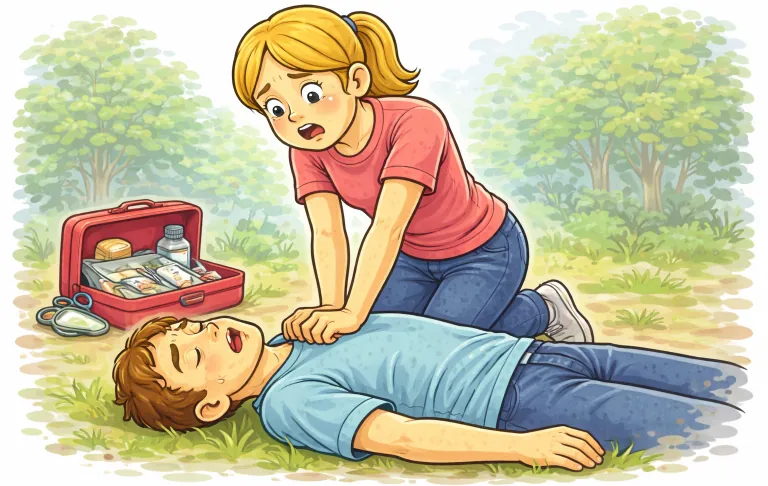
Cardiopulmonary resuscitation (CPR)
CPR combines chest compressions with rescue breaths to keep blood and oxygen circulating.
How to perform CPR on an adult:
- Check consciousness and breathing
- Call 112 and shout for help
- 30 chest compressions in the centre of the chest
- 2 rescue breaths (mouth-to-mouth)
- Keep going until help takes over
If you can't or don't want to give rescue breaths: do chest compressions only. That's always better than not acting at all.
Defibrillator
A defibrillator analyses the heart's rhythm and can deliver an electric shock in life-threatening rhythm disturbances, such as cardiac arrest.
Important facts:
- a defibrillator can't deliver a shock if it isn't needed
- it gives clear step-by-step voice instructions
- it's safe to use even without medical training
Time to defibrillation is often crucial for survival. That's why defibrillators are now placed in many public locations, such as museums, shopping centres, sports facilities and other popular destinations with larger crowds.
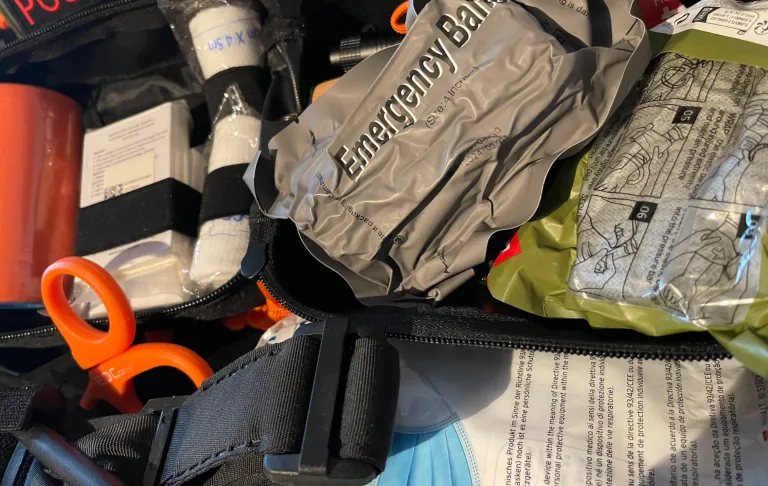
What should a first aid kit in the car contain?
A first aid kit in the car should be easy to access, clearly organised and suited to the kinds of accidents that can happen while travelling. The car often serves as a base for day trips, journeys and spontaneous stops – and makes it possible to carry better equipment than what you'd bring on foot.
A car-based kit should cover both everyday injuries and more serious events until professional help arrives.
Basic contents – for most car trips:
This covers the majority of injuries that can occur while travelling and on day trips:
- blister plasters
- plasters in various sizes
- sterile dressings
- elastic bandage
- tape
- wound wash or antiseptic wipes
- disposable gloves
- pain relievers
- tweezers (for splinters, ticks or small objects)
- scissors (for cutting clothing or dressings)
- a mylar blanket / emergency blanket (for warmth during shock or inactivity)
- oral rehydration salts
On car trips with children or several passengers
When more people travel together, both needs and margins increase:
- extra plasters in various sizes
- fever reducers for children
- a cold pack (for bumps, sprains and swelling)
- extra sterile dressings
When risk increases during a trip
On longer car trips, trips to rural areas, winter conditions, or activities with a higher accident risk, it can be wise to add a basic trauma kit to the car:
- pressure dressing / trauma gauze (for heavier bleeding)
- extra highly absorbent dressings
- a sturdy elastic bandage (can also be used for splinting or support)
A tourniquet can be relevant for severe, life-threatening bleeding, but:
- should only be carried if you know how to use it
- isn't standard equipment in most homes
- never replaces a pressure dressing as the first option
Incorrect use can cause more harm than good.
To be better prepared when it really matters, we at Swilderness.com recommend taking a course in first aid, CPR and Stop the Bleed.
In Sweden, this type of training is offered through the Stop the Bleed Sweden initiative, which focuses on stopping life-threatening bleeding quickly and correctly.
Weight, selection and reality – the car as a base
How you choose to build your car first aid kit is closely linked to:
- how and where you travel
- how many people usually travel with you
- whether children or older people are along
- your own level of first aid knowledge
A kit you understand and dare to use is always better than a big kit you don't know how to handle.
First aid in the car isn't about having everything – it's about having the right things. You rarely need a hundred plasters, but having a dressing that can actually stop bleeding when the plasters run out can be decisive.
A well-thought-out car kit gives you staying power and margin when an accident happens – whether it's a traffic accident, a day trip, or a stop far from help.
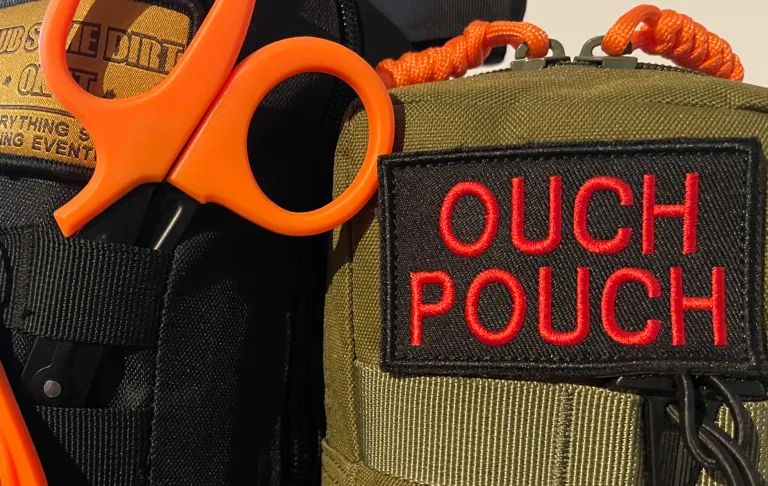
Ouch Pouch - A small kit that always comes along out of the car
Besides the car's fixed first aid kit, it's wise to always have a small "Ouch Pouch" that comes along in a backpack, pram or day pack whenever you leave the car.
A kit this small is often enough with:
- a few plasters
- a dressing or gauze
- an elastic bandage or tape
- disposable gloves
When children are along, plasters with their favourite character can quickly turn a hard moment into comfort and a smile. That's also part of first aid – calming and creating control.
Common accidents while travelling & on day trips
Traffic accidents
- secure the scene
- call 112
- stop the bleeding
- keep the injured warm
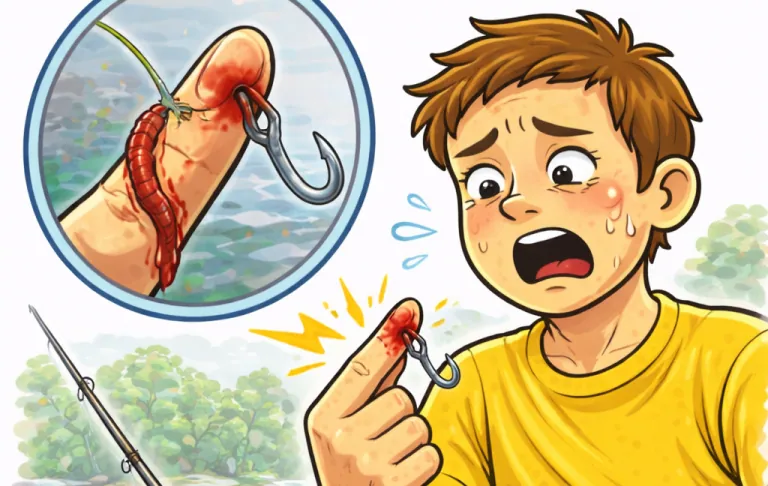
Fishing and hook injuries
- cut the hook if needed
- protect the wound
- seek care for a deep wound or infection
Skiing and winter environments
- fall injuries
- getting cold
- isolation from help
Day trips with kids
- falls, bumps and cuts
- fever and dehydration
- security and calm are part of first aid
Summary
First aid on trips, adventures and day outs isn't about knowing everything – it's about daring to act, understanding the basic mechanisms, and buying time until professional help takes over.
The environment can shift between car, mountains, ski slope, beach or city. The principles of first aid stay the same, but the risks, distances and decisions change. That's why calm, structure and the right priorities are often more important than advanced equipment.
Knowledge brings security – and security saves lives. Whether the accident happens in everyday life, during a trip, on a day out or in the middle of an adventure, the first few minutes are crucial.
If you want to deepen your understanding further, especially around everyday accidents at home and basic first aid, we also recommend our guide:
First aid – everyday knowledge
Together, the guides give a complete picture of first aid – suited for both everyday life and adventure.
100 Swedish Hiking Trails!
Looking for the perfect hiking trail? We've gathered 100 of Sweden's most interesting, challenging, and scenic hiking trails in one list!